


Let’s talk about something heavy — but important.
Post-traumatic stress disorder affects millions of people worldwide. Veterans, first responders, survivors of abuse, accident victims, anyone who’s lived through something their brain couldn’t fully process at the time. The flashbacks. The hypervigilance. The emotional numbness. The nightmares that make sleep feel like enemy territory.
For decades, PTSD treatment has relied on a fairly narrow toolkit — SSRIs, talk therapy, exposure therapy, and a lot of “give it time.” And while those approaches help some people, the reality is that a staggering number of PTSD sufferers don’t get better. They try treatment after treatment, and the trauma stays locked in place.
That’s why the emerging research on psilocybin for PTSD is generating so much excitement — and so much hope. Early clinical trials are showing that psilocybin-assisted therapy may offer something the current system can’t: rapid, lasting relief from symptoms that have resisted everything else.
This isn’t hype. This is science. And it’s moving fast.
What Is PTSD, Really?
Before we get into how psilocybin might help, let’s make sure we’re on the same page about what PTSD actually is — because it’s widely misunderstood.
PTSD isn’t just “being stressed” or “having bad memories.” It’s a clinical condition where the brain essentially gets stuck in survival mode after a traumatic event. The threat is long gone, but the nervous system hasn’t gotten the memo. It keeps firing as if the danger is still present — every day, sometimes for years or decades.
Common PTSD symptoms include:
- Re-experiencing: Flashbacks, intrusive memories, nightmares that feel like you’re reliving the event
- Avoidance: Steering clear of people, places, or situations that remind you of the trauma
- Hyperarousal: Being constantly on edge, irritable, easily startled, unable to sleep
- Negative changes in mood and thinking: Emotional numbness, guilt, shame, feeling disconnected from others, loss of interest in things you used to enjoy
Here’s a number that puts the problem in perspective: approximately 13 million Americans are living with PTSD at any given time, and only two pharmacological treatments have been approved in the last two decades. Both are SSRIs (sertraline and paroxetine), and their effectiveness — particularly for veterans — leaves a lot to be desired.
The need for something new isn’t just real. It’s urgent.
Why Current PTSD Treatments Fall Short
Let’s be blunt about the current landscape.
SSRIs: The Default Prescription
SSRIs (Selective Serotonin Reuptake Inhibitors) are the most commonly prescribed medications for PTSD. They work by increasing serotonin levels in the brain, which can help regulate mood. But here’s the problem: for many people with PTSD — especially veterans — they simply don’t work well enough.
Response rates are modest. Side effects (weight gain, sexual dysfunction, emotional blunting) are common. And they need to be taken daily, often indefinitely. For a condition rooted in deep psychological trauma, a pill that tweaks your brain chemistry by a few percentage points often isn’t enough to break the cycle.
Psychotherapy: Effective but Incomplete
Evidence-based therapies like Cognitive Processing Therapy (CPT), Prolonged Exposure (PE), and EMDR can be genuinely helpful. But they have significant limitations:
- High dropout rates. PTSD therapy is hard. It requires you to deliberately engage with your worst memories, and many people can’t sustain that over weeks or months of sessions.
- Limited access. Qualified trauma therapists are in short supply, wait times are long, and cost is a barrier for many.
- Non-response. A substantial percentage of people complete the full course of therapy and still meet diagnostic criteria for PTSD afterward.
The result? Millions of people stuck in a loop — cycling through treatments that don’t fully work, often losing hope along the way.
Enter Psilocybin: A Different Approach to Trauma
Psilocybin isn’t a new discovery. Indigenous cultures have used psilocybin-containing mushrooms for thousands of years in healing and spiritual ceremonies. But in the context of modern psychiatric research, psilocybin represents something genuinely novel — a treatment that doesn’t just manage symptoms, but may actually help the brain process and release the underlying trauma.
Here’s the key distinction: most PTSD medications work by dampening symptoms. Psilocybin appears to work by temporarily opening a window of psychological flexibility — a state where the brain can revisit traumatic material without the usual overwhelming fear response, process it differently, and form new, healthier neural pathways around it.
It’s not about numbing the pain. It’s about finally being able to move through it.
How Psilocybin Works in the Brain
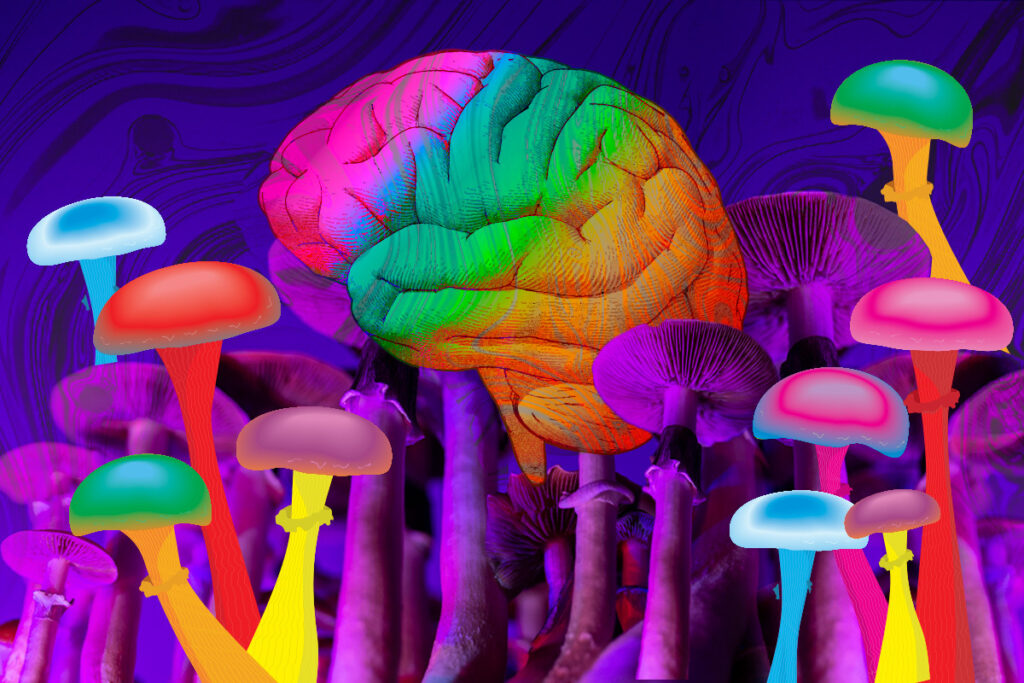
To understand why psilocybin might be uniquely suited for PTSD, we need to look at what it does at the neurological level.
The Default Mode Network
Your brain has a network of interconnected regions called the Default Mode Network (DMN). The DMN is most active when you’re engaged in self-referential thinking — ruminating about the past, worrying about the future, constructing your sense of identity, running the same mental loops over and over.
In people with PTSD, the DMN is often overactive. It’s like a broken record player stuck on the worst tracks. The same traumatic memories, the same fear responses, the same rigid thought patterns — playing on repeat, day after day.
Psilocybin temporarily quiets the DMN. It doesn’t shut it off — it loosens its grip. This creates a state where rigid mental patterns become flexible, and the brain can form new connections that weren’t available before. Researchers describe it as a “reset” — a temporary window where entrenched neural pathways can be restructured.
Fear Extinction
One of the most exciting findings in recent preclinical research is that psilocybin appears to enhance fear extinction — the process by which the brain learns that a previously threatening stimulus is no longer dangerous. This is essentially what exposure therapy tries to accomplish, but psilocybin may supercharge the process.
A 2024 study published in ACS Chemical Neuroscience found that psilocybin enhanced fear extinction in animal models, with effects that lasted well beyond the dosing period. Importantly, the effect was most pronounced when psilocybin was administered alongside extinction exposure — suggesting that combining psilocybin with therapy may be the key to unlocking its full potential for PTSD.
Neuroplasticity
Psilocybin also promotes neuroplasticity — the brain’s ability to form new neural connections. Trauma essentially carves deep grooves in the brain’s wiring, making certain fear-based pathways automatic and hard to override. Psilocybin may help by encouraging the growth of new connections (particularly in the prefrontal cortex) that can compete with and eventually replace those trauma-driven pathways.
Research from Yale has shown that a single dose of psilocybin can increase dendritic spine density — the tiny protrusions on brain cells that receive signals from other neurons — and that these changes can persist for at least a month. For someone whose brain has been stuck in survival mode for years, this kind of structural rewiring could be transformative.
Emotional Processing Without the Panic
Perhaps the most relevant effect for PTSD: psilocybin reduces activity in the amygdala, the brain’s fear-processing centre. Under normal PTSD conditions, the amygdala hijacks the response to any trauma-related trigger, flooding the system with fight-or-flight hormones. It’s what makes a car backfiring feel like a mortar round, or a crowded room feel like an ambush.
With psilocybin, people report being able to access traumatic memories without the usual overwhelming emotional reaction. The memory is still there, but the terror is softened. This creates an opportunity to process the event from a new perspective — often with a therapist guiding the experience — and to integrate it into your life story in a way that doesn’t keep re-traumatizing you.
What the Research Says: Clinical Trials and Key Studies
The clinical evidence for psilocybin and PTSD is still early-stage compared to depression research, but it’s building rapidly — and the results so far are genuinely encouraging.
Compass Pathways: COMP360 Phase 2 Trial
One of the most significant studies to date comes from Compass Pathways, a biotechnology company developing psilocybin-based treatments. Their Phase 2 trial evaluated a single 25 mg dose of synthetic psilocybin (COMP360) in 22 patients with PTSD. The results, published in the Journal of Psychopharmacology in 2025, showed that COMP360 was well tolerated with no serious adverse events, and patients showed both rapid and durable improvement in PTSD symptoms out to 12 weeks after a single dose.
The FDA has since accepted Compass Pathways’ Investigational New Drug application to proceed with larger clinical trials of COMP360 for PTSD — a major step toward potential approval.
VA Palo Alto: Veterans with Treatment-Resistant Depression and PTSD
A landmark pilot study at the Veterans Affairs Palo Alto Healthcare System gave 25 mg of psilocybin to 15 veterans with severe treatment-resistant depression — many of whom also had comorbid PTSD. At three weeks, 60% of participants met response criteria and 53% achieved remission. At 12 weeks, 47% still showed a response and 40% remained in remission. Long-term follow-up data through 12 months continued to show sustained benefits.
Notably, comorbid PTSD did not negatively impact the treatment outcomes — suggesting that psilocybin may be effective even in people carrying both conditions simultaneously.
The VA Begins Funding Psychedelic Research
In a historic move, the U.S. Department of Veterans Affairs issued a request for research proposals to study psilocybin and MDMA for treating PTSD and depression in veterans. This was the first time since the 1960s that the VA funded research into psychedelic compounds — a massive signal that the institutional tide is turning.
Psychedelic Retreats for Veterans
Outside of formal clinical trials, observational research on veterans attending psychedelic retreats has also shown promising results. A 2025 study published in PMC found significant improvements across eight mental health outcomes following psychedelic retreats, with the greatest improvements found for depression (29.1%) and PTSD (26.1%). Veterans attending psilocybin retreats showed improvements in seven out of eight outcomes measured.
How Psilocybin-Assisted Therapy Actually Works
It’s crucial to understand: we’re not talking about someone eating mushrooms alone in their bedroom and hoping for the best. Psilocybin-assisted therapy is a structured, multi-phase clinical process.
Phase 1: Preparation Sessions
Before any psilocybin is administered, patients go through multiple preparation sessions with trained therapists. These sessions build rapport, establish trust, set intentions for the experience, and prepare the patient for what they might encounter during the psilocybin session — including the possibility of confronting difficult emotions or traumatic memories.
This phase is especially important for PTSD patients, who may have deep-seated mistrust of authority figures and institutions. Creating a sense of safety is foundational.
Phase 2: The Psilocybin Session
The actual dosing session takes place in a comfortable, controlled clinical environment — nothing like a hospital room. Think soft lighting, comfortable furniture, curated music playlists, and two trained therapists present at all times.
The patient takes the psilocybin dose (typically 25 mg in clinical trials) and lies down, often with an eye mask and headphones. The therapists don’t direct the experience — they provide a safe container for whatever arises. Sometimes that’s profound emotional release. Sometimes it’s vivid imagery related to the trauma. Sometimes it’s a deep sense of peace and interconnection. The experience typically lasts 6–8 hours.
Phase 3: Integration Sessions
This is arguably the most important phase. In the days and weeks following the psilocybin session, patients work with their therapists to make sense of what they experienced — to integrate the insights, emotions, and perspectives into their daily life.
Without integration, the psilocybin experience can remain a powerful but isolated event. With it, the insights from the session become lasting changes in how the person relates to their trauma, their identity, and their future.
Psilocybin vs. MDMA for PTSD
You might be wondering: what about MDMA? It’s been in the PTSD headlines even more than psilocybin.
MDMA-assisted therapy and psilocybin-assisted therapy both show tremendous promise for PTSD, but they work differently and may serve different needs.
MDMA primarily works by increasing feelings of empathy, trust, and emotional safety. It allows people to revisit traumatic memories without the usual fear response, making it an ideal companion for talk-based therapy. MDMA-assisted therapy has shown 71% long-term PTSD relief rates in clinical trials — genuinely remarkable numbers.
Psilocybin works differently. It disrupts rigid brain patterns, enhances neuroplasticity, and can trigger profound mystical or self-transcendent experiences that fundamentally shift perspective. It’s less about opening up emotionally in a therapy session and more about restructuring the brain’s relationship with trauma at a deep, sometimes pre-verbal level.
The FDA rejected MDMA therapy in 2024, asking for additional data. That setback has actually accelerated interest in psilocybin as an alternative pathway — and Compass Pathways is now actively pursuing psilocybin specifically for PTSD through advanced clinical trials.
It’s possible the future will involve both substances being available for different types of trauma, different patient profiles, and different stages of recovery. They’re not competitors — they’re complementary tools.
Can You Self-Treat PTSD with Psilocybin?
This is the elephant in the room, so let’s address it directly.
Many people with PTSD — especially veterans who’ve exhausted their options within the VA system — are turning to psilocybin on their own. Some travel to retreats in Jamaica, Costa Rica, or the Netherlands. Others access mushrooms through grey markets or grow their own. And some are finding genuine relief.
But we need to be honest about the risks:
PTSD makes psychedelic experiences unpredictable. Trauma can surface during a psilocybin session in ways that are overwhelming, disorienting, or re-traumatizing — especially without a trained professional present. The very thing that makes psilocybin potentially healing (its ability to unlock repressed material) is also what makes it potentially harmful if the experience isn’t properly supported.
Set and setting matter enormously. The research consistently shows that the therapeutic benefits of psilocybin are strongly tied to the preparation, environment, and integration support surrounding the experience. A solo trip in your apartment is a fundamentally different thing from a professionally guided session.
Dosing matters. Too little might not be therapeutic. Too much can be destabilizing. And the potency of different mushroom strains varies significantly — something we cover in detail in our guide on How Different Strains Affect Your Experience.
We’re not going to tell you what to do. But we will say this: if you’re dealing with PTSD and considering psilocybin, please do your homework. Learn about how mushrooms actually make you feel. Consider whether microdosing — a much gentler starting point — might be a better first step. And if possible, work with someone experienced.
Microdosing for PTSD: A Gentler Path
Not everyone is ready for a full psychedelic experience — and that’s completely valid.
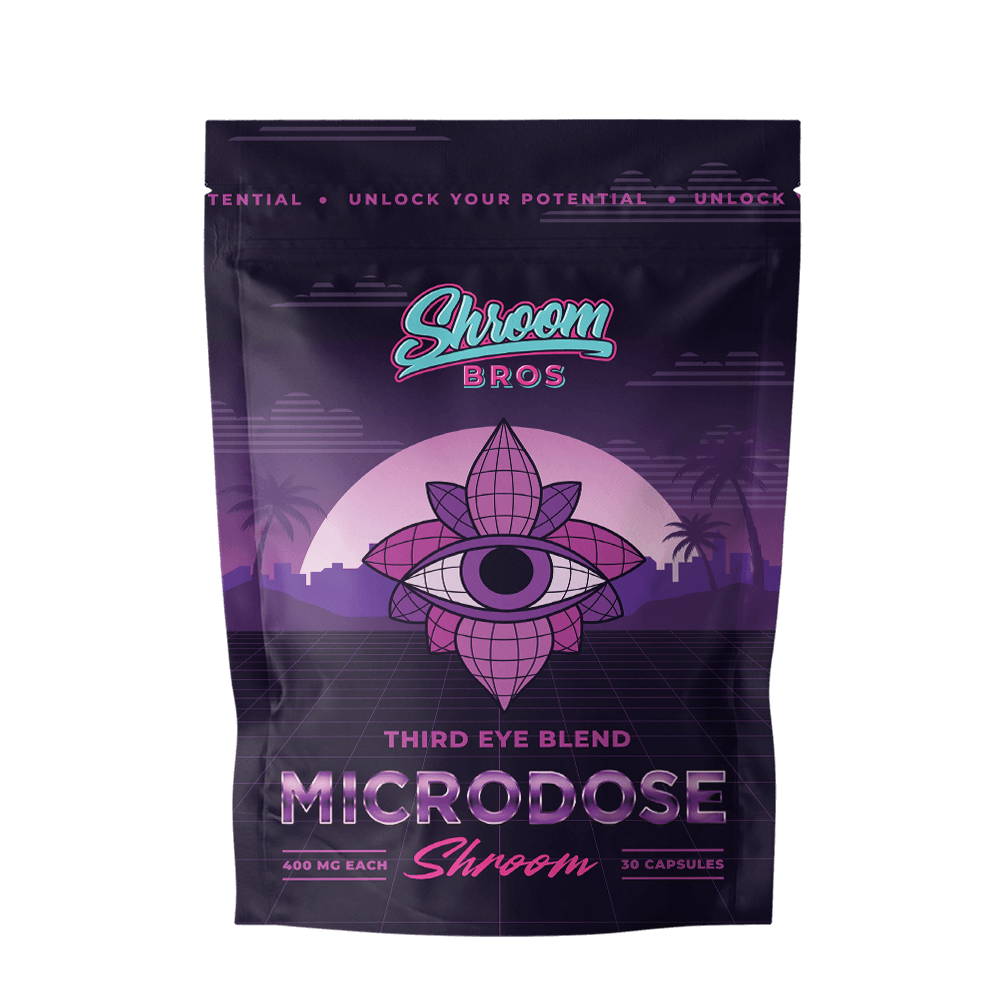
Microdosing (taking sub-perceptual doses of psilocybin, typically 0.1–0.3g) is increasingly being explored by people with PTSD as a way to gently shift their neurochemistry without the intensity of a full trip. The experience is subtle — no hallucinations, no altered reality — just a quiet lift in mood, a softening of emotional reactivity, and often a sense that the world feels slightly less threatening.
Survey data supports what many microdosers report anecdotally: people who microdose tend to report lower levels of depression, anxiety, and stress compared to non-microdosers. While we don’t yet have clinical trials specifically testing microdosing for PTSD, the overlap between PTSD symptoms and the conditions microdosing appears to improve (anxiety, depression, emotional rigidity) is compelling.
If you’re curious about this approach, our Microdosing 101 guide covers everything from protocols to common mistakes. And our blog on The Science of How Microdosing Helps with Depression and Anxiety goes deeper into the mechanisms.
The Road Ahead: What’s Coming Next
The psilocybin-for-PTSD research pipeline is fuller than it’s ever been:
- Compass Pathways is advancing COMP360 into late-stage clinical trials specifically for PTSD, with FDA acceptance of their Investigational New Drug application.
- The VA is funding multiple studies on psilocybin and MDMA for veteran populations — a historic shift in institutional policy.
- Johns Hopkins has listed PTSD among the conditions it’s actively studying in its Center for Psychedelic and Consciousness Research.
- Ohio State University has an ongoing open-label pilot study combining psilocybin-assisted therapy with psychotherapy specifically for veterans with severe, treatment-resistant PTSD.
- University of Washington is enrolling veterans and first responders with co-occurring alcohol use disorder and PTSD for a psilocybin treatment study.
We’re still in the early chapters of this story. Psilocybin hasn’t been FDA-approved for PTSD yet, and it may be years before it is — if the clinical trials continue to show positive results. But the trajectory is unmistakable, and the need is too great to ignore.
Frequently Asked Questions
Is psilocybin FDA-approved for PTSD?
Not yet. Psilocybin is still a Schedule I substance in the United States and remains controlled in Canada under the CDSA. However, the FDA has granted breakthrough therapy designation to psilocybin for treatment-resistant depression, and clinical trials for PTSD are now underway. In Canada, limited access exists through Health Canada’s Special Access Program.
How is psilocybin therapy different from just taking mushrooms?
Psilocybin-assisted therapy involves structured preparation sessions, a professionally supervised dosing session in a therapeutic environment, and follow-up integration sessions with trained therapists. It’s a complete therapeutic framework — not just a drug. The therapy component appears to be a critical part of why it works.
Can psilocybin make PTSD worse?
It’s possible. Psilocybin can bring suppressed traumatic material to the surface in ways that feel overwhelming, especially without proper support. People with dissociative symptoms, active psychosis, or certain personality disorders face additional risks. This is why clinical trials use extensive screening and always have trained therapists present.
What about microdosing for PTSD?
Microdosing is a much lower-risk approach that some people with PTSD are exploring. It doesn’t produce the dramatic breakthroughs seen in full-dose therapy sessions, but many users report gradual improvements in mood, emotional regulation, and stress response over time. Check out our microdose capsules guide if you’re interested.
Is psilocybin legal in Canada for PTSD treatment?
Psilocybin is classified as a controlled substance under Canada’s Controlled Drugs and Substances Act. However, healthcare professionals can request access on behalf of patients through Health Canada’s Special Access Program, and individual exemptions can be granted. Our blog on The Legal Status of Magic Mushrooms in Canada has more detail.
How long do the effects of psilocybin therapy last?
Clinical trials have shown symptom improvement lasting anywhere from several weeks to 12 months or more after a single dose. This durability is one of the most remarkable aspects of psilocybin therapy — a single session producing effects that outlast months of daily medication.
The Bottom Line
PTSD is a condition that locks people in their past. The trauma becomes a prison — one that’s invisible to everyone else but inescapable for the person living inside it.
What makes psilocybin so promising isn’t just that it reduces symptoms. It’s that it appears to help the brain actually process the trauma — to loosen the rigid neural patterns that keep people stuck, to open a window of flexibility where healing can happen, and to do all of this in a way that feels profoundly meaningful to the people going through it.
We’re not there yet. The research is still early. The legal barriers are still high. And self-treatment carries real risks that shouldn’t be minimized.
But the direction is clear. And for millions of people living with trauma that hasn’t responded to anything else, that direction is hope.
If you want to learn more about how psilocybin affects the brain and body, start with our guide on How Shrooms Make You Feel. If you’re exploring microdosing as a starting point, browse our full product selection or check out our microdose capsules.
Stay informed. Stay safe. And stay hopeful.
Sources
- Compass Pathways — Phase 2 Study of COMP360 Psilocybin for PTSD (2025) — Compass Pathways Press Release
- U.S. Department of Veterans Affairs — Psychedelic-Assisted Therapy for PTSD — https://www.ptsd.va.gov
- VA News — VA to Fund Studies on Psychedelic Therapies for PTSD — https://news.va.gov
- Johns Hopkins Center for Psychedelic and Consciousness Research — https://www.hopkinsmedicine.org
- Journal of Psychopharmacology — McGowan et al. (2025), Safety and Tolerability of Psilocybin for PTSD — https://journals.sagepub.com
- CPR News — Can Psilocybin Help Veterans with PTSD? (2025) — https://www.cpr.org
- PMC — Exploring Therapeutic Effects of Psychedelics in Military Veterans (2025) — https://pmc.ncbi.nlm.nih.gov
- GlobalRPH — Psychedelic Therapy in 2025: Clinical Outcomes — https://globalrph.com
Disclaimer: This blog is for educational and harm reduction purposes only and is not medical advice. If you are experiencing PTSD symptoms, please consult a qualified healthcare professional. Magic mushrooms are classified as controlled substances in most jurisdictions. Always research the laws in your area before considering any psychedelic substance.