


If you’ve spent any time in the microdosing world, you’ve almost certainly heard the name Paul Stamets. And if you’ve heard his name, you’ve almost certainly heard about the Stack.
The Stamets Protocol — a specific combination of psilocybin, Lion’s Mane mushroom, and niacin — has become one of the most talked-about, debated, and widely practiced microdosing regimens in the world. Silicon Valley professionals microdose it for cognitive edge. Depression sufferers use it as a therapeutic bridge. Neuroscience enthusiasts follow it for its neuroplasticity potential. And thousands of ordinary people use it simply because they heard Paul Stamets describe it on a podcast and couldn’t stop thinking about it.
But what exactly is the Stamets Stack? What does each ingredient actually do? How does the combination work? And most importantly — what does the science actually say?
This blog breaks it all down. No hype, no oversimplification — just a clear, honest look at one of the most interesting neurochemical experiments happening in kitchens and capsule makers around the world right now.
Who Is Paul Stamets?

Before we get into the Stack itself, it helps to understand who developed it and why.
Paul Stamets is one of the most decorated and prolific mycologists alive today. Author of six books on mushrooms including the landmark Psilocybin Mushrooms of the World, Stamets has spent decades studying the medicinal, ecological, and neurological potential of fungi. He holds over 20 mushroom-focused patents. He starred in the documentary Fantastic Fungi. He runs Fungi Perfecti, one of the most respected medicinal mushroom companies in North America. And he has dedicated the latter part of his career to advocating for the responsible scientific investigation of psilocybin.
Stamets introduced the idea of stacking psilocybin, lion’s mane, and niacin as a way to promote what he calls “epigenetic neurogenesis” — suggesting that the combination could help the brain grow new cells and pathways. He was motivated significantly by the alarming rise of neurodegenerative conditions like Alzheimer’s disease.
In 2018, Stamets filed a formal patent application with the U.S. Patent and Trademark Office for a composition combining psilocybin or psilocin with erinacines or hericenones (Lion’s Mane bioactives) and niacin — claiming it as a unique method for enhancing neuroregeneration and cognition. The patent describes methods for “enhancing neurogenesis, resolving neuropathy and improving neurological health and functioning” using this combination.
That’s the origin story. Now let’s get into the science of each ingredient.
Ingredient #1 — Psilocybin: The Neuroplasticity Catalyst
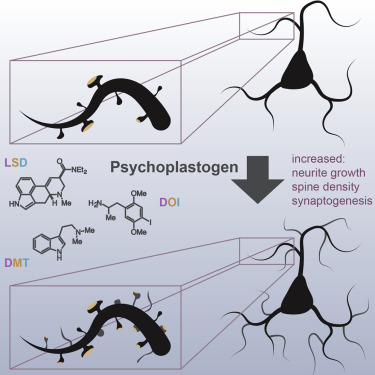
Psilocybin is the star of the Stack. In the Stamets Protocol, it’s used at microdose levels — sub-perceptual amounts that produce no psychedelic effects whatsoever, but appear to produce meaningful neurological changes.
A standard microdose of psilocybin in the Stamets Stack is approximately 0.1 to 0.3 grams of dried Psilocybe cubensis — roughly 1/10th to 1/20th of a recreational dose. At these levels, you won’t experience visual distortion, ego dissolution, or any significant alteration of consciousness. What you may notice is a subtle lift in mood, a slight sharpening of focus, and a feeling of mental flexibility that’s hard to precisely describe but consistently reported.
At the pharmacological level, psilocybin is converted in the body to psilocin, which binds to serotonin 2A receptors (5-HT2A) in the prefrontal cortex. At microdose levels, this activation is gentle — but it’s still triggering the same fundamental neuroplasticity cascade that makes high-dose psilocybin so remarkable.
Specifically, psilocybin at even sub-perceptual doses is believed to encourage neuroplasticity — the brain’s ability to reorganize and form new neural connections. Research from Yale University published in Neuron in 2021 showed that a single dose of psilocybin produced approximately a 10% increase in dendritic spine density in the frontal cortex of mice — new physical connections between neurons — that persisted for at least a month. That’s the structural change Stamets is trying to support chronically and gently with the microdosing protocol.
Stamets also theorized specifically that psilocybin at low doses creates a “window” of enhanced neuroplasticity — and that this window is when Lion’s Mane’s nerve growth factors can most effectively build and reinforce new neural structures. Psilocybin opens the door; Lion’s Mane walks through it.
For a full deep dive into psilocybin’s neuroplastic effects, read our blog on how psilocybin grows new brain connections.
Ingredient #2 — Lion’s Mane: The Neural Builder
Lion’s Mane (Hericium erinaceus) is the non-psychedelic powerhouse of the Stack — and the ingredient that most clearly complements psilocybin’s effects at a molecular level.
Lion’s Mane is a shaggy, tooth-like fungus that has been used in traditional Chinese medicine for centuries and naturally grows in North America, Europe, and Asia. What makes it remarkable from a neuroscience perspective is its unique bioactive compounds: hericenones (found in the fruiting body) and erinacines (found in the mycelium). Both classes of compounds have been shown in preclinical research to stimulate the production of Nerve Growth Factor (NGF).
NGF is a protein that supports the survival, growth, and maintenance of nerve cells — essentially biological fertilizer for your neurons. It promotes the formation of new neural connections, supports the health of existing ones, and plays a critical role in the maintenance of the basal forebrain cholinergic system — the brain region most devastated by Alzheimer’s disease.
Research published in PubMed confirmed that hericenones and erinacines isolated from Lion’s Mane can induce NGF synthesis in nerve cells. Crucially, both hericenones and erinacines can easily cross the blood-brain barrier — which means they don’t just circulate in the bloodstream but actively reach and act on brain tissue.
Multiple studies have examined Lion’s Mane’s clinical effects:
- A 2009 double-blind clinical trial showed improvements in mild cognitive impairment in adults aged 50–80 after 16 weeks of Lion’s Mane supplementation. The improvements were observed throughout the trial but not at the follow-up 4 weeks after cessation — suggesting prolonged supplementation is necessary to maintain benefits.
- Animal studies have shown that Lion’s Mane extract reduces anxiety and depressive behaviors by promoting hippocampal neurogenesis in the adult mouse brain.
- A 2023 study in the Journal of Neurochemistry found that hericerin derivatives from Lion’s Mane activate a pan-neurotrophic pathway in central hippocampal neurons, converging to ERK1/2 signaling and enhancing spatial memory.
- Erinacine A, one of the most studied compounds from Lion’s Mane mycelium, has been shown in multiple animal models to reduce amyloid-beta deposition associated with Alzheimer’s disease, and in a 49-week human trial to produce improvements in Mini-Mental State Examination scores in patients with mild Alzheimer’s.
Stamets has specifically called Lion’s Mane the “second smart mushroom,” emphasizing that it “reinforces psilocybin’s ability to occasion neurogenesis.” The rationale is elegant: psilocybin creates the neuroplastic conditions for new neural growth, while Lion’s Mane provides the NGF that fuels that growth and gives it structural support.
By including Lion’s Mane in the stack, Stamets aimed to provide the brain with building blocks for regeneration and cognitive enhancement — not just creating neuroplasticity, but filling it with meaningful biological material.
Curious about our Lion’s Mane and functional mushroom options? Explore our full microdose capsule collection.
Ingredient #3 — Niacin: The Delivery Driver
Of the three ingredients, niacin is the one that raises the most eyebrows. It’s a B vitamin. Why is a B vitamin in a neurogenesis stack?
This is where Stamets’ thinking gets genuinely creative.
Niacin (Vitamin B3), specifically in its flushing form — nicotinic acid — causes a phenomenon called the niacin flush when taken at doses of 50mg or higher. This flush is a prickly, warm, reddening sensation caused by the release of prostaglandins that widen blood vessels and dilate capillaries throughout the body. Within 15–20 minutes of taking niacin, blood flow to the skin and peripheral tissues surges noticeably.
Stamets’ hypothesis is that this vasodilation does something critically important: it drives the active compounds of both psilocybin and Lion’s Mane to the far reaches of the nervous system — to the nerve endings in the peripheral nervous system where, according to Stamets, the majority of neurogenesis actually occurs. Stamets reports that niacin works as a flushing agent and carries compounds across the blood-brain barrier, helping to distribute the psilocybin and Lion’s Mane deeper into the brain and nervous system, enhancing their healing potential.
Stamets also notes that psilocybin tends to mildly constrict blood vessels, while niacin dilates them — making niacin a pharmacological counterbalance that potentially improves the bioavailability and distribution of psilocin throughout the nervous system.
Importantly, Stamets specifies using flushing niacin (nicotinic acid) — not the “no-flush” form sold as niacinamide. The flush is not a side effect to be avoided. It is the mechanism. Non-flushing versions of vitamin B3 do not offer the same delivery benefits and are not part of this protocol.
Beyond its delivery role, niacin has independently documented brain health benefits. One large epidemiological study found that higher dietary niacin intake was associated with a lower risk of Alzheimer’s disease and age-related cognitive decline. Niacin is also essential for cellular energy metabolism as a precursor to NAD⁺, plays a role in DNA repair and cell signalling, and has anti-inflammatory properties.
Stamets has also noted a clever harm-reduction feature built into niacin’s inclusion: the flush acts as a deterrent to high-dose misuse. If someone attempts to take a full psychedelic dose alongside a high niacin dose, the intense, uncomfortable flush — deep redness, itching, and burning sensation — will make that experience deeply unpleasant and discourage repetition. The niacin acts, in his words, as a built-in “anti-abuse” mechanism.
The Synergy: Why Three Is Greater Than One
The power of the Stamets Stack lies not in each ingredient individually — but in the theorized interaction between all three. Here’s how Stamets envisions they work together:
Psilocybin — at microdose levels — binds to 5-HT2A receptors in the prefrontal cortex, triggering a cascade of neuroplastic changes. New dendritic spines begin forming. The brain enters an enhanced state of structural flexibility.
Lion’s Mane simultaneously floods the brain with hericenones and erinacines — compounds that stimulate NGF and BDNF production. These growth factors provide the biological “materials” needed to build new neural connections. The psilocybin-induced neuroplasticity window gives those growth factors more surface area to work with.
Niacin opens the circulation highways, driving both sets of compounds deeper into the nervous system — particularly to the peripheral nerve endings where Stamets believes neuroregeneration is most needed and where the compounds might otherwise struggle to penetrate.
In his own words from the patent application: “psilocin and its analogs are neurotransmitters, and substitute for serotonin, acting as an agonist exciting serotonin receptors, their ability to enhance neurotransmission while in combination with nerve growth factors such as erinacines and hericenones, provides a unique opportunity for spurring neurogenesis. When combined with niacin, which causes nerve ending excitement, and additionally combined with mushroom and plant extracts, compounded neurogenic benefits are anticipated.”
In short, the theory is: psilocybin opens the window, Lion’s Mane builds through it, and niacin makes sure delivery reaches the furthest corners of the house.
What Does the Science Actually Say?
This is the question that separates enthusiasts from researchers — and the honest answer is: promising but not yet proven.
Here’s what we actually know:
On psilocybin alone: The neuroplasticity evidence is robust and growing. The 2021 Yale study on dendritic spine density, the 2025 Cornell study on psilocybin rewiring entire brain networks, and multiple human clinical trials at Johns Hopkins confirm that psilocybin produces real, measurable, lasting structural brain changes. The evidence for psilocybin’s neuroplasticity effects — even at low doses — is the strongest leg of the Stack.
On Lion’s Mane alone: The preclinical evidence (primarily in cell cultures and animal models) for NGF stimulation via hericenones and erinacines is well-established. Human clinical data is more limited but encouraging — particularly the 2009 cognitive impairment trial and emerging Alzheimer’s research. A 2022 observational study published in Nature Scientific Reports found that microdosers using psilocybin combined with Lion’s Mane and niacin reported better mental health outcomes than those microdosing psilocybin alone.
On the full Stack: This is where the evidence gap becomes clear. The full synergistic combination — all three components together — has not yet been the subject of a robust, placebo-controlled human clinical trial. A large 2022 observational study of nearly 1,000 microdosers found that those using the Stamets Stack reported better mental health outcomes than psilocybin-only microdosers, and critically, adults over 55 who used the full Stack exhibited greater improvements in psychomotor performance compared to psilocybin alone.
However, the researchers correctly acknowledged that this was observational, self-reported data. The improvements could reflect expectancy effects (placebo), reporting bias, or genuine pharmacological synergy — it’s not possible to distinguish between them without a controlled trial.
The honest scientific assessment: each ingredient has individual evidence, a promising observational signal exists for the combination, and rigorous controlled trials are the next necessary step. Stamets himself has co-founded MycoMedica Life Sciences, which has raised $60 million and is working toward exactly these clinical trials.
The Protocol: How to Actually Do It
The Dosing Schedule
The Stamets Protocol follows a rhythmic cycle designed to prevent tolerance buildup in the psilocybin component while allowing the neuroplastic changes to stabilize and mature:
4 days ON → 3 days OFF
During the 4 ON days, you take all three components. During the 3 OFF days, you take nothing (though you can continue Lion’s Mane on off days if desired, as it is non-psychoactive and tolerance to it is not a concern).
This weekly cycle is typically repeated for 4 consecutive weeks (one month), followed by a reset period of 2–4 weeks with no psilocybin. Many microdosers repeat multiple rounds over months or choose to cycle indefinitely with regular reset periods.
The Doses
Based on Stamets’ recommendations and the most commonly reported protocol in the microdosing community:
Psilocybin (dried Psilocybe cubensis):
0.1g to 0.3g dried mushrooms — equivalent to approximately 1–3mg of psilocybin. This is the foundational microdose range. Start at 0.1g and adjust based on your sensitivity. If you feel anything perceptual at all, your dose is too high — reduce it.
Lion’s Mane extract:
500mg to 1000mg of a quality Lion’s Mane extract. Stamets recommends mycelium-based extracts as potentially most beneficial for neurological applications, given that erinacines (the most potent neuroactive compounds) are found in the mycelium rather than the fruiting body. That said, fruiting body extracts containing hericenones also have substantial research support.
Niacin (flushing nicotinic acid — not niacinamide):
100mg to 200mg. Start at 50mg if you are sensitive to flushing. Work up gradually. Do not substitute with “no-flush” niacinamide — it does not produce the vasodilation that is central to Stamets’ delivery theory.
Timing
Most practitioners take all three components simultaneously in the morning, on an empty or light stomach, to align the niacin flush with the subtle onset of psilocybin’s effects. Some prefer to take niacin 10–15 minutes before the other two to allow the vasodilation to begin before the psilocybin is absorbed.
What to Expect
On a well-calibrated Stamets Stack, you should feel nothing dramatic. That’s the point. Common reports from long-term stackers include:
- A gentle warmth or flush 15–20 minutes after dosing (niacin)
- A barely perceptible brightening of mood or mental clarity within 60–90 minutes
- Slightly enhanced creative thinking or problem-solving flexibility
- A mild feeling of being “more present” or engaged
- Reduced emotional reactivity over the course of weeks
- Gradual improvements in focus and memory over a 4-week protocol
If you feel visually altered, anxious, dissociated, or noticeably “high” — your psilocybin dose is too high. Reduce it immediately. The goal is sub-perceptual. Always.
Who Is the Stamets Stack For?
Based on community data and the theoretical framework of the Stack, it appears most relevant for:
People interested in cognitive enhancement: The combination of neuroplasticity (psilocybin), NGF stimulation (Lion’s Mane), and improved delivery (niacin) creates a theoretically compelling stack for those seeking to optimize focus, creativity, and memory.
People managing depression or anxiety: Microdosing psilocybin has shown small-to-medium improvements in mood and mental health in observational studies. The Stack adds Lion’s Mane’s independently documented mood-supporting and anti-depressive effects — a meaningful addition for those looking for gentle, consistent support.
Older adults interested in neurological health: The 2022 observational study found that adults over 55 using the full Stack showed greater improvements in psychomotor performance than those using psilocybin alone — one of the most concrete signals to date that the combination may have age-specific benefits.
Anyone interested in long-term brain health: Stamets was motivated primarily by neurodegenerative disease prevention. The combination of psilocybin’s neuroplasticity, Lion’s Mane’s NGF stimulation, and niacin’s circulatory support represents a multi-angle approach to maintaining and enhancing brain function over time.
Who it may NOT be for:
- People currently on SSRIs or MAOIs (significant drug interactions possible)
- People with a personal or family history of psychosis or schizophrenia
- People with a history of liver disease (niacin at high doses can affect liver enzymes)
- Pregnant or breastfeeding individuals
- Anyone with blood pressure sensitivity (niacin’s vasodilation can interact with blood pressure medications)
Always consult a healthcare professional before beginning any microdosing protocol. And always check our full Microdosing 101 Guide before getting started.
The Stamets Stack vs. The Fadiman Protocol
For those already familiar with microdosing, you may wonder how the Stamets Stack compares to the better-known Fadiman Protocol — named after psychedelic researcher Dr. James Fadiman.
The Fadiman Protocol is simpler: 1 day ON, 2 days OFF, psilocybin only. No supplemental stack.
The key differences:
Frequency: Stamets doses more frequently (4 days on vs. 1 day on). This increases total psilocybin exposure but potentially also tolerance risk — mitigated in the Stack by the 3-day break.
Complexity: Stamets adds Lion’s Mane and niacin; Fadiman uses psilocybin alone. This makes the Stack harder to attribute specific effects to any single component.
Goal orientation: Fadiman’s protocol was developed primarily for general wellbeing and mental health enhancement. The Stamets Stack is specifically oriented toward neurogenesis and long-term neurological optimization.
Evidence: Both protocols have observational data supporting benefits, but neither has robust placebo-controlled clinical trial evidence for the specific regimen as a whole.
For a full comparison of microdosing protocols, read our Microdosing 101 Guide.
Practical Tips for Running the Stamets Stack
Start Low, Move Slow
Many people make the mistake of starting at the top of the dose range. Psilocybin sensitivity varies enormously. Begin at 0.1g, 50mg niacin, and 500mg Lion’s Mane. Evaluate for one full week before considering any adjustment.
Use Flushing Niacin — Not Niacinamide
This cannot be overstated. Niacinamide is the non-flushing form of B3 — it does not cause vasodilation and does not serve Stamets’ delivery hypothesis. If you’re not flushing, you’re not running the Stack as intended.
Track Your Experience
Keep a simple daily journal. Note mood, focus, creativity, sleep quality, and any unusual sensations. Over a 4-week cycle, patterns emerge that are difficult to perceive day by day but obvious in retrospect.
Choose Quality Lion’s Mane
The Lion’s Mane supplement market is full of products with poor potency, mycelium-on-grain products with minimal erinacine content, or adulterated formulas. Stamets himself recommends mycelium-based extracts for maximum erinacine content. Choose products that clearly specify their extraction method and active compound concentration.
Respect the OFF Days
The 3-day break in the Stamets Protocol serves two purposes: preventing psilocybin tolerance, and allowing the neuroplastic changes stimulated by the ON days to consolidate and mature. Skipping the OFF days undermines both purposes.
Plan Your Integration
Even at microdose levels, the Stamets Stack can surface unexpected emotional material over the course of a full protocol. Journaling, meditation, and regular reflection during the 4-week cycle will help you integrate what arises. Read our Integration Guide for full support.
What Stamets Is Really Claiming — And What He Isn’t
It’s worth being clear about the distinction between what Stamets has theorized, what he has claimed in patents, and what science has confirmed.
What Stamets claims: That the combination of psilocybin, Lion’s Mane, and niacin synergistically promotes neurogenesis, repairs neurological damage, and could benefit conditions ranging from Alzheimer’s and PTSD to general cognitive enhancement in healthy individuals.
What science has confirmed: Each ingredient individually has meaningful neurological activity. Psilocybin promotes neuroplasticity with growing evidence. Lion’s Mane stimulates NGF and BDNF with strong preclinical and growing human evidence. Niacin supports circulation and brain health with independent evidence. The combination has shown a promising signal in a large observational study. The specific synergistic mechanism Stamets proposes has not yet been formally tested in a controlled human trial.
Stamets has been criticized by some in the scientific community for the breadth of his patent claims and the ahead-of-evidence enthusiasm of his public statements. Those criticisms are fair. But the core idea — that combining a neuroplasticity catalyst, a nerve growth factor stimulator, and a circulatory enhancer might produce additive or synergistic neurogenic benefits — is not only plausible but scientifically grounded in the known properties of each compound.
The rigorous trials are coming. The signal is there. And until the controlled data arrives, the Stack remains one of the most scientifically coherent and well-reasoned approaches to neurological optimization available to curious, harm-reduction-oriented individuals.
Frequently Asked Questions
Do I need all three ingredients for the Stack to work?
Stamets designed the Stack with all three working synergistically. However, many people run psilocybin + Lion’s Mane without niacin if the flush is uncomfortable or contraindicated. Some run Lion’s Mane + niacin without psilocybin due to legal restrictions. Each combination has theoretical value, but the full three-ingredient Stack is Stamets’ specific protocol.
Can I take Lion’s Mane on my OFF days?
Yes. Lion’s Mane is non-psychoactive and does not produce tolerance. Many practitioners take it daily regardless of psilocybin dosing days to maintain consistent NGF stimulation.
Will the niacin flush go away over time?
Yes. With regular use, niacin tolerance develops and the flush diminishes — sometimes disappearing almost entirely. Some practitioners take a break from niacin periodically to restore the flush, believing it indicates the vasodilatory mechanism is actively engaged.
Can I use Lion’s Mane capsules instead of fresh mushroom?
Yes. Fresh Lion’s Mane is excellent if available, but quality extract capsules are the most practical format. Stamets recommends mycelium-based extracts for higher erinacine content, though fruiting body extracts with hericenones are also effective. Aim for 500mg–1000mg of a quality extract daily.
Is this the same as the Fadiman Protocol?
No. The Fadiman Protocol uses psilocybin alone on a 1-day-on, 2-days-off schedule. The Stamets Protocol adds Lion’s Mane and niacin on a 4-days-on, 3-days-off schedule. Both are legitimate microdosing protocols with different theoretical bases and practical rhythms.
How do I source the psilocybin component in Canada?
Browse our full selection of psilocybin microdose capsules at Shroom Bros — precisely dosed, consistent quality, and formulated for exactly this kind of protocol.
The Bottom Line
The Stamets Stack is not a magic bullet. It’s not a pharmaceutical. It’s not a proven cure for anything.
What it is: a thoughtfully constructed, theoretically grounded, and increasingly well-observed protocol that combines three compounds with individually meaningful neurological properties — in a configuration designed to address the brain’s neuroplasticity, neurogenesis, and circulatory health simultaneously.
Psilocybin creates the neuroplastic conditions. Lion’s Mane builds through them with nerve growth factors. Niacin drives both compounds deeper into the nervous system where the real work happens. Together, the theory goes, they do something none of them can do alone.
The controlled trials will come. The signal is already there. And for those who approach it with intention, patience, and appropriate medical guidance, the Stamets Stack represents one of the most genuinely interesting experiments in modern cognitive wellness — grounded in the ancient wisdom of fungi and the cutting edge of neuroscience at the same time.
Happy microdosing.
Ready to start? Browse our full selection of magic mushrooms and microdose capsules, or read our complete Microdosing 101 Guide before you begin.
Sources
- Stamets Patent Application (2018) — “Compositions and methods for enhancing neuroregeneration and cognition by combining mushroom extracts containing active ingredients psilocin or psilocybin with erinacines or hericenones enhanced with niacin” — https://patents.google.com/patent/US20180021326A1/en
- Rootman et al. (2021) — “Adults who microdose psychedelics report health-related motivations and lower levels of anxiety and depression compared to non-microdosers” — Scientific Reports — https://pmc.ncbi.nlm.nih.gov/articles/PMC8602275/
- Rootman et al. (2022) — “Psilocybin microdosers demonstrate greater observed improvements in mood and mental health at one month relative to non-microdosing controls” — Scientific Reports — https://www.nature.com/articles/s41598-022-14512-3
- Shao et al. (2021) — “Psilocybin induces rapid and persistent growth of dendritic spines in frontal cortex in vivo” — Neuron — https://pubmed.ncbi.nlm.nih.gov/34228959/
- Lai et al. (2013) — “Neurotrophic properties of the Lion’s mane medicinal mushroom, Hericium erinaceus” — PubMed — https://pubmed.ncbi.nlm.nih.gov/24266378/
- Ratto et al. (2019) — “Hericerin derivatives activates a pan-neurotrophic pathway in central hippocampal neurons” — Journal of Neurochemistry — https://onlinelibrary.wiley.com/doi/10.1111/jnc.15767
- Phan et al. (2023) — “Neurohealth Properties of Hericium erinaceus Mycelia Enriched with Erinacines” — PMC — https://pmc.ncbi.nlm.nih.gov/articles/PMC5987239/
- Quantified Citizen / Paul Stamets (2022) — Microdosing Study with Stamets Stack Results — https://finance.yahoo.com/news/latest-psilocybin-microdosing-study-powered-170000932.html
- DoubleBlind Magazine — “The Stamets Stack: Microdosing for Brain Health” — https://doubleblindmag.com/stamets-stack/
- Yale School of Medicine — Paul Stamets January 2023 Seminar — https://medicine.yale.edu/media-player/stamets-yale-seminar/
- Zamnesia — “What Is Paul Stamets’ Microdosing Stack?” — https://www.zamnesia.com/blog-paul-stamets-protocol-n2010
- Health Canada — Psilocybin and Psilocin — https://www.canada.ca/en/health-canada/services/substance-use/controlled-illegal-drugs/magic-mushrooms.html
Disclaimer: This blog is for educational and harm reduction purposes only and is not medical advice. Always consult a healthcare professional before beginning any supplement or microdosing protocol.