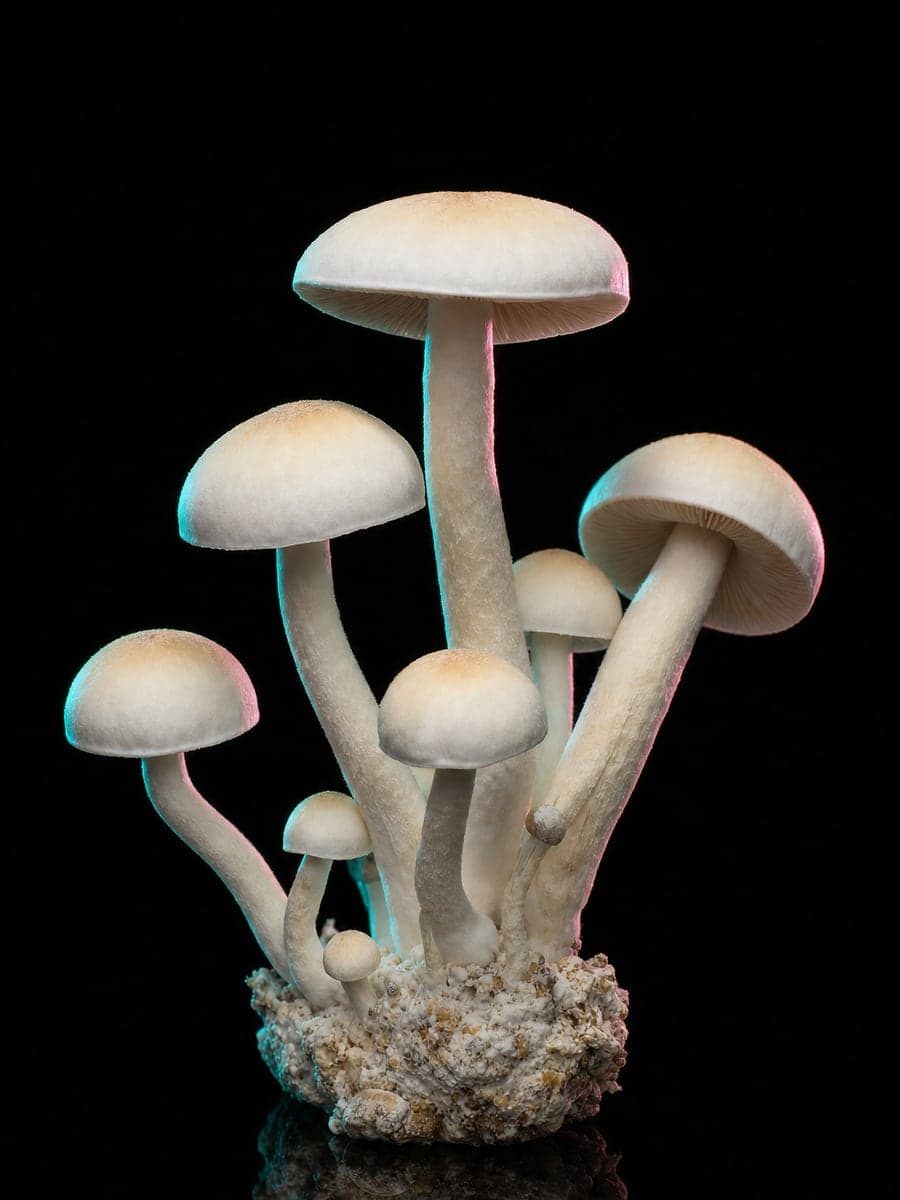
Albino Treasure Coast
A pale selection of the old Florida strain.
Its parent, Treasure Coast, was described in early-2000s strain notes as having light caramel caps that are sometimes almost white or albino.
The usual Treasure Coast story has it found on dung near Florida's coast, then cultured and passed around as prints; the albino form is said to come from that line.
Where Albino Treasure Coast comes from
Albino Treasure Coast is a pale, near-white form of the Florida Treasure Coast cubensis, sold as grow kits in Europe and as spores in North America. Its parent was long known for throwing occasional white fruits, but how the albino line was made is told two ways and is poorly documented.
- Origin
- In cultivation, from the Treasure Coast line (Florida, reputed); breeder disputed
- Family
- Albinos · Unknown · Uncommon
- Lineage
- One seller calls it a targeted cross by Mr. G, another a Treasure Coast × Albino A+ hybrid; neither gives details.
Its parent, Treasure Coast, was described in early-2000s strain notes as having light caramel caps that are sometimes almost white or albino.
Shroomery forum: reposted early vendor strain descriptionsA spore seller still describes Treasure Coast as throwing occasional albino-like fruits under some conditions, while not being a true albino.
Spore Genetics: Treasure Coast spores (vendor page)A European grow-kit seller lists Treasure Coast Albino as a targeted cross by the grower known as Mr. G, with strikingly pale fruits, dark near-black spores, and growth a little slower than the original.
Linda Seeds: Treasure Coast Albino grow kit (vendor page)A North American spore seller instead describes Albino Treasure Coast as a cross of Treasure Coast and Albino A+, with white to ivory caps and thick creamy stems.
Zombie Mushrooms: Albino Treasure Coast (vendor page)
The usual Treasure Coast story has it found on dung near Florida's coast, then cultured and passed around as prints; the albino form is said to come from that line.
Mr. G, the controversial grower often credited with Treasure Coast itself, is also named by some sellers as the maker of the albino version.
What it looks like
- Caps
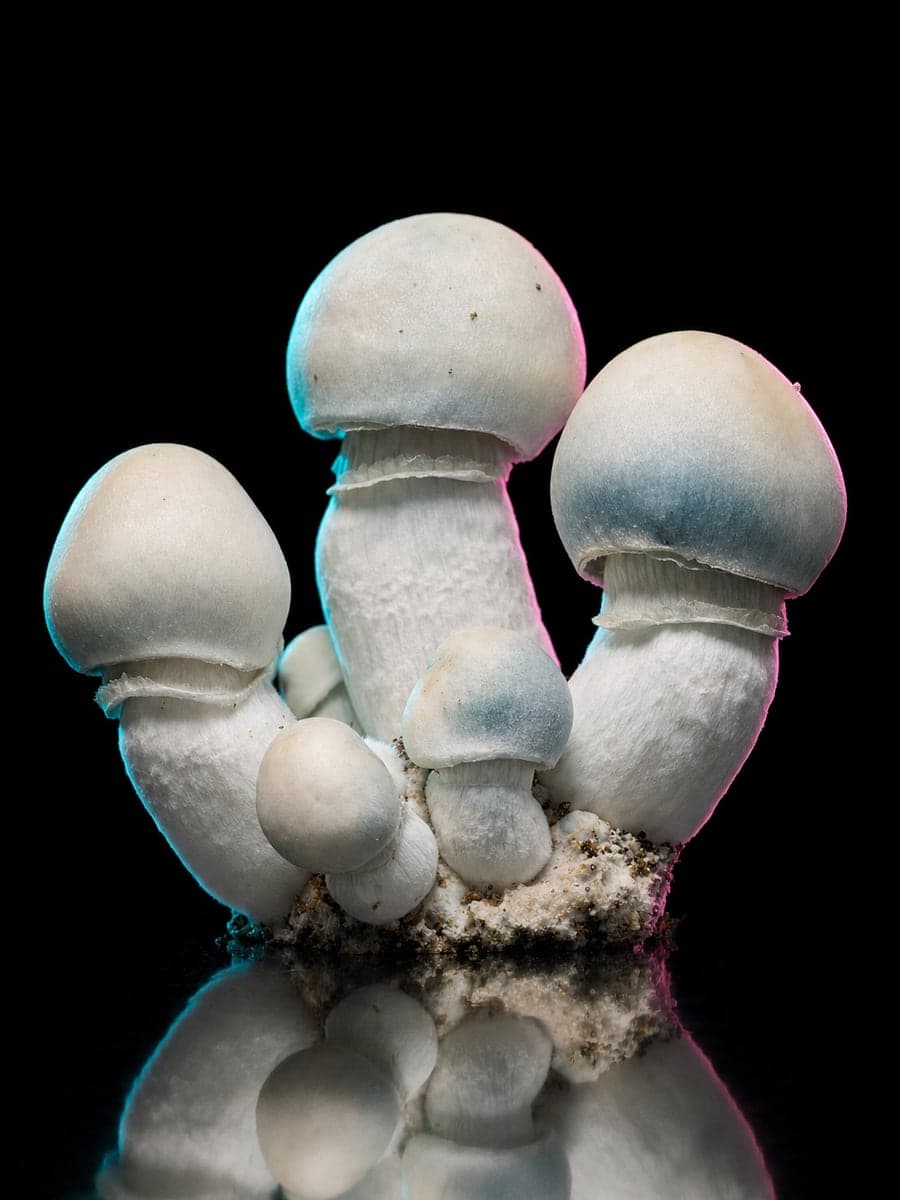
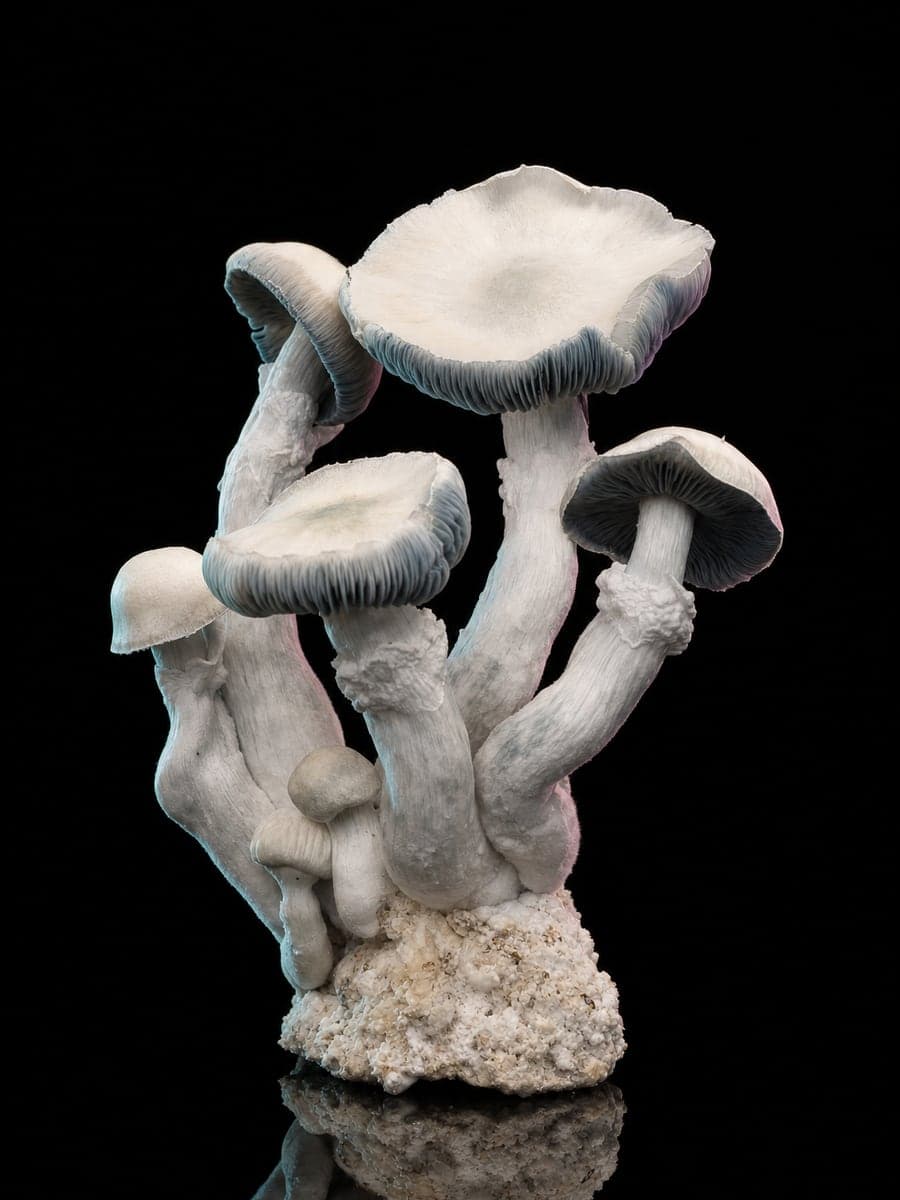
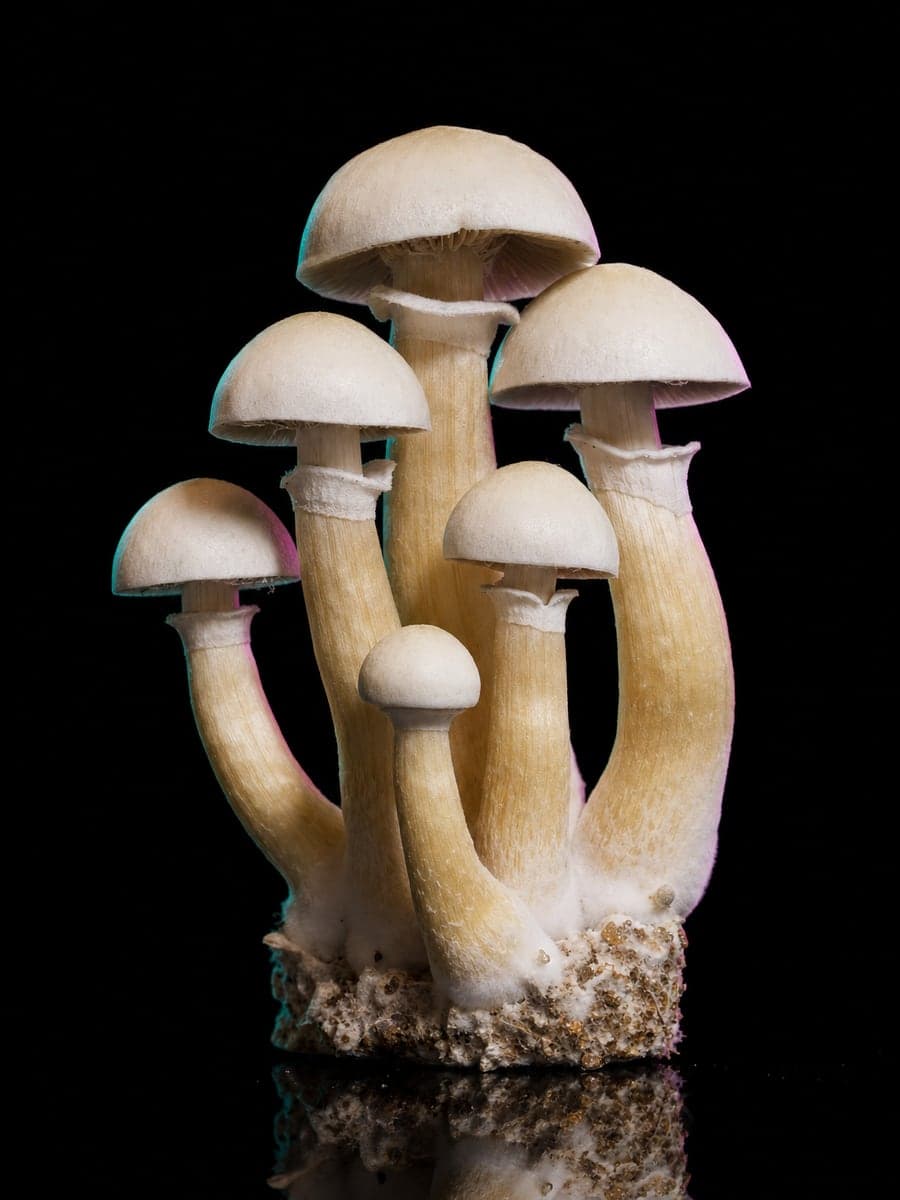
- Pale cream to ivory, rounded to bell-shaped, flattening with age.
- Stems
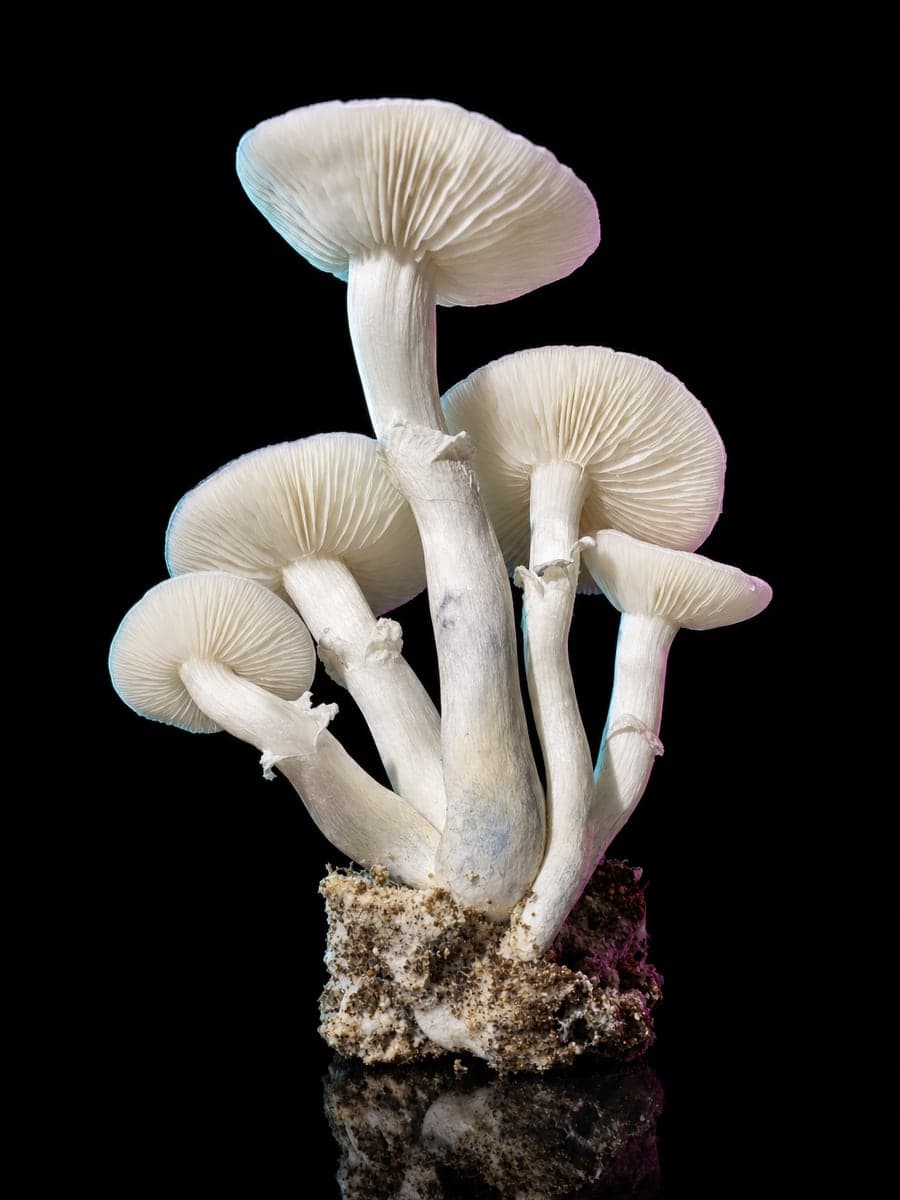
- Pale, fairly thick and fleshy; one vendor photo shows tall, wavy stems in a dense cluster.
- Notes
- One grow-kit seller reports dark, almost black spores, which would make it leucistic (pale but not truly albino). Otherwise said to look like Treasure Coast without the caramel colour.
- Growing
- Sellers describe it as a little slower than standard Treasure Coast and more sensitive to light and swings in conditions, as pale lines often are.
How it is described
Albino Treasure Coast is usually described the way its parent is: a balanced, cheerful cubensis with a moderate body feel. Sellers often call it above average in strength, but no lab results were found.
Based on: The parent strain's reputation and vendor descriptions; no lab data and no strain-specific trip-report consensus found.
Albino Treasure Coast, asked and answered
Where does the Albino Treasure Coast strain come from?
It comes from the Treasure Coast line, a cubensis reputed to come from Florida that sometimes throws pale fruits. One seller credits the grower Mr. G with the albino cross, another calls it Treasure Coast × Albino A+.
What does Albino Treasure Coast look like?
Like Treasure Coast without the caramel: pale cream to ivory caps on fairly thick, pale stems, often in dense clusters.
Is Albino Treasure Coast strong?
Sellers describe it as above average, but no lab tests were found. Its parent has a reputation as a classic, middle-strength cubensis, and strength varies between grows.
Is Albino Treasure Coast a true albino?
Probably not. One seller reports dark spores, which in growers' usual terms makes a pale strain leucistic rather than truly albino.
The Shroomdex records history and reputation, not advice: how a strain is described is never a promise of how it will feel, and nothing here is medical advice. Strength varies from batch to batch. Start low and see our dose calculator. Never forage from a website: deadly look-alikes grow wild.