


Last updated: 2026
Microdosing vs macrodosing is one of the most common forks in the psilocybin world—and one of the most misunderstood. They are not “small trip vs big trip” on the same spectrum alone; they are often different intentions, different schedules, and different integration needs.
This guide explains when people choose microdosing mushrooms versus macrodosing (full sessions), how the experiences differ in practice, and how to think about switching between them without tolerance confusion or unrealistic expectations.
Educational harm reduction only—not medical advice or dosing instructions.
Related: Microdosing 101, 1–2 Gram Timeline, 5 Gram Timeline, Integration: First 72 Hours.
Disclaimer: Educational content only. Not medical advice. Never drive impaired.
Microdosing vs Macrodosing: Quick Definitions
Microdosing (sub-perceptual use)
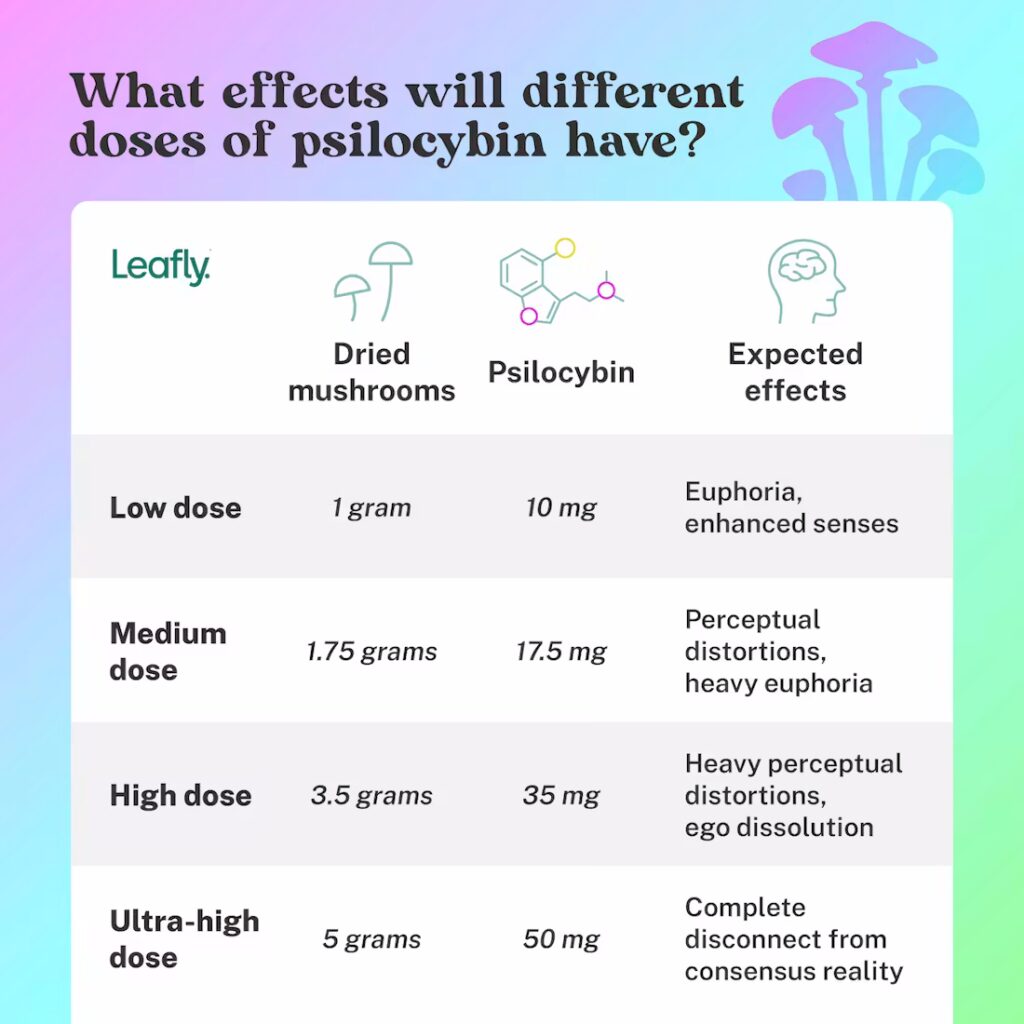
Microdosing usually means taking a small amount of psilocybin on a schedule—often described as sub-perceptual (no full trip, no strong visuals). People commonly report goals like mood support, focus, creativity, or routine alignment—not a visionary session.
Deep dive: Microdosing 101 · Stamets Protocol.
Macrodosing (full or partial psychedelic sessions)
Macrodosing means taking enough psilocybin to produce a clearly altered state—come-up, peak, comedown—for many hours. In community language this includes “museum doses,” moderate sessions, and high-dose journeys.
Timelines: 1–2 Gram Timeline · 5 Gram Timeline · How Long Do Shrooms Last?
Clinical research on psilocybin for mental health typically uses supported macrodose sessions, not microdosing schedules (Johns Hopkins Center for Psychedelic Research).
When People Choose Microdosing
Common reasons people pick microdosing over macrodosing:
- Life has to continue: work, school, parenting, driving—microdosing is chosen when a 6–8 hour session is not feasible
- Gradual exploration: testing sensitivity without a full altered state
- Creativity/productivity framing: “nudge” days vs “journey” days
- Fear or prior difficulty: after a challenging macro experience, some people step down to micro
- Protocol culture: Fadiman-style every-other-day or Stamets stack curiosity
Microdosing studies in humans are growing but still mixed on measurable benefits vs placebo in some trials—expectation and schedule matter (microdosing psilocybin vs placebo research literature—search ongoing RCTs). Community enthusiasm runs ahead of uniform clinical proof; honest framing helps readers.
What microdosing is bad at (usually)
- replacing deep emotional processing of a supported macro session
- “fixing” everything on a chaotic schedule with no off days
- clearing tolerance by taking more every week (Tolerance Guide)
When People Choose Macrodosing
Common reasons people pick macrodosing over microdosing:
- Intentional inner work: grief, patterns, meaning, spiritual curiosity
- Breakthrough emotional material: things that do not surface on sub-perceptual days
- Clinical-style models: one or few high-dose sessions with integration (therapy contexts)
- Resetting relationship with self: after long microdosing, some people want a “real conversation” with the psyche
- Ceremonial or group contexts: retreat, trusted friends, sitter-supported sessions
Macrodose research emphasizes preparation, monitoring, and integration—because intensity requires support (Johnson et al., hallucinogen research safety guidelines).
What macrodosing is bad at (usually)
- fitting into a random Tuesday between meetings
- being repeated weekly without tolerance and emotional cost
- substituting for sleep, therapy, or medical care
Microdosing vs Macrodosing: Side-by-Side Comparison
Time: Micro = minutes to ingest, normal day-ish; Macro = 6–8+ hour commitment + landing
Intensity: Micro = subtle; Macro = obvious altered state
Integration: Micro = weekly journaling; Macro = 72-hour+ recovery window (Integration Guide)
Sitter: Micro = usually none; Macro = often recommended, especially beginners (Trip Sitter Playbook)
Tolerance: Both build; macro same-day redosing is especially messy (Redosing Too Soon)
Sleep: Micro late-day doses can disrupt sleep; macro often causes wired-then-crashed nights (Sleep After Psilocybin)
Format: Micro often capsules; macro = dried, tea, edibles (Microdose Capsules Guide)
Goals Map: Match the Tool to the Job
People often choose microdosing when the goal is…
- show up to normal life with a slight shift
- support a creative project over weeks
- explore psilocybin without visions
- maintain a routine (with off days)
People often choose macrodosing when the goal is…
- face a big emotional theme directly
- experience ego dissolution or mystical-type states (higher doses)
- make a deliberate “chapter break” in life narrative
- simulate clinical session architecture (prep + session + integration)
Neither is inherently “more spiritual” or “more serious.” The mismatch problem is using microdosing when you need macro integration—or macrodosing weekly because you avoid daily life changes.
Can You Switch Between Microdosing and Macrodosing?

Yes—but spacing and clarity matter.
Micro → Macro
- take a tolerance break from microdosing before a full session
- stop expecting macro intensity if you microdosed recently
- plan set/setting like a real session, not a “slightly bigger micro day”
Macro → Micro
- allow recovery sleep and emotional landing first
- don’t microdose the day after to “stabilize”—often blurs signals
- integrate before restarting any schedule (First 72 Hours)
SSRIs/SNRIs can change both paths—never adjust meds because of a blog (Psilocybin + SSRIs/SNRIs).
Microdosing vs Macrodosing and Mental Health Framing
Online discourse blurs “self-care microdose” with “therapeutic macro session.” They overlap in popularity but not in evidence or risk profile.
Macrodose clinical trials for depression/anxiety use controlled settings; microdosing trials show mixed results in some controlled studies—media headlines oversimplify both (Imperial College Psychedelic Research Centre).
If you have psychiatric history, pregnancy, or active crisis, professional guidance matters more than Reddit protocols. This article cannot assess individual suitability.
Common Mistakes in the Microdosing vs Macrodosing Decision
- Microdosing daily without off days → tolerance + muddy self-tracking
- Macrodosing monthly for escape → spiritual bypassing without integration
- Calling a strong trip a “microdose gone wrong” → dose/format confusion
- Stacking cannabis/alcohol on either path → unpredictable outcomes (Cannabis + Psilocybin)
- Ignoring sleep and food on macro landing days (Food Prep)
Who Should Be Extra Cautious With Each Path
Microdosing caution flags
- history of mania/psychosis (professional advice essential)
- using it to push through burnout indefinitely
- dosing late in the day with insomnia
- unclear capsule potency / blend confusion (Capsules Guide)
Macrodosing caution flags
- first-time users without sitter/support
- unstable environment or active interpersonal conflict
- tendency toward panic/dissociation without grounding tools
- redosing impatience with edibles (Redosing Guide)
Frequently Asked Questions
Is microdosing safer than macrodosing?
Different risk profiles—not a simple hierarchy. Microdosing can hide tolerance and daily disruption; macrodosing can produce overwhelming sessions. Both need respect.
Can I microdose and macrodose in the same week?
Many experienced users avoid that overlap because tolerance and interpretation get messy. Spacing and breaks are the usual harm-reduction norm.
Which is better for creativity?
Anecdotes favor both; some people get steady micro flow, others get macro breakthroughs. Trial at modest scale with integration notes—not hype.
Do I need integration after microdosing?
Less intense than macro, but yes—weekly review helps you notice placebo, tolerance, and real changes.
How do I know if I picked the wrong one?
If you wanted depth but only microdosed, you may feel underwhelmed. If you wanted normal function but macrodosed on a busy day, you feel overstretched. Adjust the format, not just the story.
Are edibles different for micro vs macro?
Same molecules, different targets. Micro edible products vs macro chocolates/gummies have different timing and planning needs (Edible Dosing Math).
The Bottom Line
Microdosing vs macrodosing comes down to intention and architecture: micro fits into weeks; macro demands a day and a landing. Choose micro when you need subtlety and continuity; choose macro when you need depth, support, and integration time—not when you need to skip life maintenance.
Whichever path you explore, pair it with honest tracking, tolerance awareness, and recovery. The dose is not the whole practice.
More guides: Magic Mushroom Blog · Do’s & Don’ts.
Sources
- Johns Hopkins Center for Psychedelic Research — hopkinsmedicine.org
- Imperial College Psychedelic Research Centre — imperial.ac.uk
- Johnson M.W. et al. — hallucinogen research safety guidelines — PubMed
- Psilocybin overview — Wikipedia
- Microdosing clinical literature (search ongoing trials) — PubMed search: psilocybin microdosing
Disclaimer: Educational harm reduction only. Not medical advice. Consult qualified professionals for health and medication questions.