



Last updated: 2026
Nausea is one of the most common complaints people report with magic mushrooms—and one of the most searchable. If you’ve ever felt queasy during the come-up, wondered whether ginger for mushroom nausea actually works, or debated eating before shrooms vs taking them on an empty stomach, you’re not alone.
This guide explains why psilocybin mushrooms cause nausea, when it usually shows up, and what people commonly try to reduce it: ginger, shroom tea, and timing with food. It’s educational harm reduction—not medical advice, and not a guarantee any method will work for you.
For the original deep dive on chitin and beta-glucan, see Why Do Magic Mushrooms Cause Nausea?. For tea-focused benefits, see Benefits of Shroom Tea.
Disclaimer: Educational information only. Not medical advice. If vomiting is severe, persistent, or accompanied by concerning symptoms, seek qualified medical care.
Magic Mushroom Nausea Is Common—and Usually Not “All in Your Head”
Survey data and community reports consistently place GI discomfort among the top unpleasant side effects of psilocybin mushrooms. For many people it’s mild and passes. For others it can dominate the come-up—or return later—and occasionally leads to vomiting.
That matters because nausea is not just physical. During a psychedelic come-up, stomach unease can become psychological fuel: “Something is wrong” → anxiety → more body distress → a loop.
Understanding the mechanisms helps you choose smarter strategies (tea vs whole mushrooms, light food vs empty stomach, ginger vs nothing)—without expecting a perfect fix every time.
Why Do Shrooms Cause Nausea? The Main Mechanisms

There is no single official cause. In practice, most nausea stories involve a mix of the factors below.
1) Chitin and mushroom “body load”
Like culinary mushrooms, psilocybin fungi have tough cell walls rich in chitin—a material humans do not digest smoothly. When you eat dried caps and stems, your GI tract works hard on fibrous material it was never optimized to break down cleanly.
Many people describe this as body load: heaviness, bloating, stomach churning, or nausea before visuals and emotional effects fully arrive.
This is a major reason people switch formats—especially shroom tea, which extracts actives while leaving much of the fibrous bulk behind.
2) Beta-glucans and stomach chemistry (the “indigestion” theory)
Some mycology-informed explanations point to beta-glucans in fungal cell walls interacting unpleasantly with stomach acidity during breakdown. Whether or not you remember the grade-school “acid + base” image, the practical takeaway is simpler: raw-ish fungal material in the stomach can feel rough, especially on an empty or stressed gut.
Your 2021 article on this topic goes deeper: Why Do Magic Mushrooms Cause Nausea?
3) Psilocybin → psilocin conversion still happens in the gut
Even when people take synthetic psilocybin in research settings, nausea still gets reported—so it’s not only mushroom fiber. Your body converts psilocybin to psilocin, and that pharmacological process (plus serotonin-related signaling) may contribute to GI sensations for some individuals.
Translation: even “pure” psilocybin routes can still upset sensitive stomachs, though many people notice whole dried mushrooms feel worse than tea or filtered formats.
4) Come-up anxiety shows up as stomach symptoms
Anticipation, fear, or overstimulation can produce nausea-like feelings independent of mushrooms. On psilocybin—when interoception ( sensing your body ) is amplified—minor stomach signals can feel enormous.
That’s one reason calm set/setting and a sober sitter help: they reduce the anxiety layer that makes nausea worse.
Related: Trip Sitter Playbook
5) Dehydration, sleep debt, and “you were already fragile”
Dehydration, low sleep, hangover states, and general GI sensitivity can turn mild mushroom nausea into a bigger problem. If your baseline is already irritated, mushrooms may not be the only variable—but they can be the trigger you notice.
When Mushroom Nausea Usually Hits (and Why Timing Strategies Matter)
Early come-up (15–45 minutes for many oral routes)
This is the classic window: stomach churning before or as effects begin. Strategies here target GI load (tea vs chewing), food timing, and calming the nervous system.
Mid-experience resurgence
Some people feel fine early, then nausea returns during movement, heat, strong smells, or emotional spikes. Hydration, temperature, and environment matter more here.
After edibles or delayed formats
Mushroom chocolate, gummies, and tea can shift onset. Nausea may arrive later than expected—especially if someone ate a heavy meal beforehand or re-dosed too early.
Read: Psilocybin Edible Dosing Math and Why Mushroom Chocolate Hits Different.
What People Try for Mushroom Nausea: Ginger
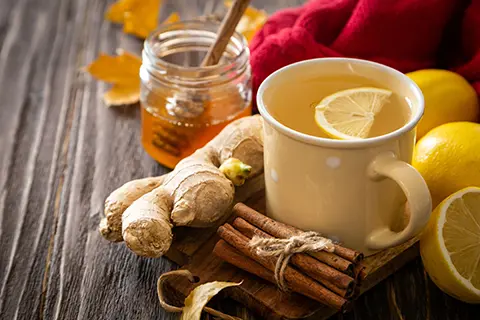
Ginger for shroom nausea is probably the most popular “folk + wellness” recommendation online—and one of the few options with at least some general GI literature behind it (mostly for pregnancy-related nausea and motion sickness, not psilocybin specifically).
Why ginger gets recommended
- People already associate ginger with settling the stomach
- It’s easy to add to tea rituals people already use for mushrooms
- It improves taste and “ritual comfort,” which can reduce anticipatory anxiety
Important honesty check: there is no robust clinical trial proving ginger prevents psilocybin nausea. Community success stories are real; they’re just not guaranteed.
Common ginger formats people use
- Fresh ginger tea (sliced root simmered or steeped)
- Ginger + mushroom tea blends (often with honey/lemon)
- Candied ginger (easy to nibble—watch sugar and portion size)
- Ginger capsules (some take these 30–60 minutes beforehand—individual tolerance varies)
- Ginger beer/ale (often more sugar/carbonation than ginger; not the same as tea)
Practical ginger notes (harm reduction, not rules)
- Start with a familiar ginger format you’ve tolerated before on normal days
- Carbonated sugary drinks can worsen bloating for some people
- Combining ginger with other substances (alcohol, cannabis) adds variables—see Cannabis + Psilocybin and Alcohol + Psilocybin
What People Try: Shroom Tea (and Why It Helps Some Stomachs)
Shroom tea for nausea is popular because it changes the delivery problem: less fibrous mushroom material in the stomach, faster access to dissolved actives, and room to add ginger, mint, or chamomile.
Why tea often feels gentler than chewing dried mushrooms
- Less chitin bulk ingested
- Warm liquid can feel soothing during come-up anxiety
- Easier pacing (sip slowly vs swallowing everything at once)
- Straining reduces gritty plant matter
Full tea guide: Benefits of Shroom Tea. Product category: Magic Mushroom Tea.
Tea add-ins people combine for nausea and taste
- Ginger (most common anti-nausea add-in)
- Peppermint or spearmint (cooling stomach feel for some)
- Chamomile (calming ritual; not a pharmacological anti-nausea drug)
- Lemon (flavor + lemon tek angle—see below)
- Honey (palatability; blood sugar comfort for some)
Tea mistakes that can still cause nausea
- Boiling aggressively (some people report harsh brews feel worse—gentler steeping is common)
- Drinking too fast on an empty stomach
- Leaving sludge in the cup and swallowing mush residue anyway
- Assuming tea eliminates all nausea (it often reduces GI load, not all pharmacological effects)
Lemon Tek and Nausea: Related, but Not the Same as “Ginger Tea”
Lemon tek is often discussed alongside nausea because citric acid may begin breaking down fungal material before ingestion—and because it converts some psilocybin toward psilocin earlier in the process.
Community reports are mixed:
- Some people feel less stomach distress because they’re not chewing as much material
- Some feel more intensity faster—which can include anxiety-linked nausea
- Onset compression can skip the gradual ramp some people prefer
Guides: Lemon Tek: The Ultimate Guide and How to Lemon-Tek Your Magic Mushrooms.
Also see alternatives to eating whole mushrooms: How to Take Psilocybin Without Eating Mushrooms.
Timing With Food: Empty Stomach vs Light Snack vs Full Meal
This is one of the most debated topics in mushroom forums—and one of the biggest sources of “worked for me / failed for me” contradictions.
Empty stomach (common but not automatically “best”)
Pros people report: faster/more predictable onset; less food competing for digestion.
Cons people report: harsher GI irritation; sharper come-up; nausea for sensitive stomachs.
Light snack 1–3 hours before (very common compromise)
Examples people use: toast, banana, oatmeal, crackers, small rice portion—bland and easy.
Why it helps some people: stomach isn’t completely empty; blood sugar feels steadier; psychological comfort of “not doing this starving.”
Tradeoff: may delay onset slightly and can soften peak intensity for some users (not always—individual variance is huge).
Full heavy meal shortly before (often problematic)
Greasy, large, or slow-digesting meals can:
- delay onset unpredictably
- increase bloating and reflux sensations during come-up
- make people think “nothing is happening” and re-dose too early (especially with edibles)
Simple food-timing framework (non-prescriptive)
- If you often get nauseous on empty stomach → try a light bland snack beforehand
- If you want faster onset and tolerate GI load → empty or near-empty may work better
- If you ate heavy → expect delay; avoid redosing impatience
- Keep post-ingestion food light during come-up (avoid rich/smelly cooking)
Other Nausea Strategies People Mention (Quick Reality Check)
Hydration (before, not chugging during peak)
Dehydration worsens nausea. Sip water steadily across the day—not a huge chug right at ingestion if your stomach is already reactive.
Peppermint tea or mint
Popular for soothing stomach feel. Evidence in psilocybin context is anecdotal, but low-risk for many people.
Fresh air and temperature
Overheating, stuffy rooms, and strong smells (food prep, incense, perfume) can trigger or worsen nausea during come-up. Cool air and simpler environments help.
Anti-nausea OTC meds
Some people discuss OTC options in forums. We are not recommending any medication here—interactions, individual health conditions, and timing with psychedelics can matter. If you’re considering meds, talk to a qualified clinician.
“Just throw up and you’ll feel better”
Some people do feel relief after vomiting; others feel worse physically and psychologically. If vomiting is repeated or severe, that’s a medical concern—not a “normal trip rite.”
Format Matters: Dried, Tea, Chocolate, Gummies, Capsules
Your ingestion format changes nausea risk:
- Whole dried mushrooms: highest fibrous load for many users
- Tea / filtered brew: often less GI bulk
- Capsules: still contains mushroom powder—can still nauseate, but skips taste/gag reflex triggers
- Chocolates/gummies: less mushroom texture, but fat/sugar and delayed onset can create different stomach profiles
- Freeze-dried products: texture and stomach response vary by user and preparation
See: Freeze-Dried vs Air-Dried and Microdose Capsules: Benefits & What to Expect.
If You’re a Trip Sitter: Nausea Support That Actually Helps
- Keep a bin or bag nearby without making a big announcement about it
- Reduce smells (pause cooking, incense, harsh cleaners)
- Offer water in small sips, not forced chugging
- Offer a cool cloth, fresh air, or lower room temperature
- Use calm, short language: “This is common. It often passes.”
- Don’t mock, debate, or dramatize vomiting—shame makes everything worse
More sitter tools: How to Be a Good Trip Sitter.
What Probably Won’t Fix Nausea by Itself
- Trying to “power through” on a severely unsettled stomach while adding more substances
- Re-dosing because you think nausea means “it didn’t work”
- Strongly flavored or greasy food during come-up
- Assuming every online “one simple trick” works the same for all bodies
Nausea reduction is usually a stack of small improvements—format + timing + environment + calm support—not one magic hack.
Frequently Asked Questions
Why do I feel nauseous before the trip starts?
Common reasons include GI load from mushroom material, anticipatory anxiety, dehydration, and individual sensitivity. Come-up nausea often precedes obvious psychedelic effects.
Does ginger actually help mushroom nausea?
Many people report yes, especially in tea form—but psilocybin-specific evidence is limited. It may help stomach comfort and ritual calm more than “blocking” pharmacological nausea entirely.
Is shroom tea better than eating dried mushrooms for nausea?
Many users report less nausea with strained tea because less fibrous material is ingested. Results vary by brew method and individual GI sensitivity.
Should I eat before taking magic mushrooms?
There is no universal rule. Empty stomach may increase GI harshness for some; heavy meals may delay onset and increase bloating. A light bland snack 1–3 hours prior is a common middle path.
Does lemon tek stop nausea?
Sometimes it helps by reducing chewed material; sometimes faster onset feels more intense. It is not a guaranteed anti-nausea method.
Can mushroom nausea turn into vomiting?
Yes, for some people. Occasional vomiting is reported in community use. Repeated, severe, or concerning vomiting deserves medical attention.
Does nausea mean my mushrooms are bad or “wrong”?
Not necessarily. Nausea is commonly reported even with well-tolerated material. Persistent unusual symptoms or signs of illness are different—those warrant caution and professional advice.
The Bottom Line
Magic mushroom nausea usually comes from a mix of fungal GI load (chitin/fiber), individual psilocybin sensitivity, and come-up anxiety—not a single switch you can flip off. That’s why people experiment with ginger, tea, and food timing rather than one universal fix.
If nausea has been a dealbreaker for you, the highest-leverage experiments are often: switch from whole dried mushrooms to strained tea, try a light pre-session snack, add ginger you already tolerate, and improve set/setting support. Track what changes onset, intensity, and stomach feel—without expecting identical results every time.
More guides: Magic Mushroom Blog.
Sources (general)
- Community and clinical reporting on psilocybin GI effects
- Mycology references on chitin and fungal cell wall composition
- General ginger literature for nausea (non-psilocybin-specific contexts)
- Harm-reduction literature on set/setting and challenging experiences
Disclaimer: Educational content only. Not medical advice. Consult a qualified professional for personal health questions.