Hawaiian
Named for a Hawaiian spore shop, not a Hawaiian field.
The strain takes its name from Pacifica Exotica Spora (PES), a spore retailer based in Hawaii. Strain lists give its true origin and founder as unknown.
A common forum guess is that the culture really came from somewhere else, possibly South America, and was simply given a local name by the seller.
Where Hawaiian comes from
Hawaiian is an old Psilocybe cubensis culture sold by Pacifica Exotica Spora (PES), a Hawaii-based spore retailer, and named after the company's home state. Where it was actually collected is unknown. Growers have kept it in circulation for decades as a dependable, fast-colonising cube.
- Origin
- Unknown; distributed by Pacifica Exotica Spora (PES), Hawaii · Unknown; in circulation by the early 2000s
- Family
- Classics · Unknown · Common
- Lineage
- The PES Hawaiian and PES Amazon were sold by the same company but are treated by growers as separate cultures.
The strain takes its name from Pacifica Exotica Spora (PES), a spore retailer based in Hawaii. Strain lists give its true origin and founder as unknown.
Shroomery forum: 'Some strain info.' (Mycomancer's origin list, 2004)Shroomery forum: 'A Huge List of Psilocybe Cubensis Variety description' (LulzSwag, 2022–24)Early-2000s strain lists note that P. cubensis is not documented as a native wild mushroom in Hawaii, so the name points to the seller rather than a collection site.
Shroomery forum: 'Some strain info.' (Mycomancer's origin list, 2004)Shroomery forum: 'STRAIN DESCRIPTION ie the hawks eye' (compiled descriptions, 2004)Reposted vendor descriptions from 2003–04 describe fruits of about 5–7 inches with caramel to dark red, spotted caps, and spawn colonised in under two weeks.
Shroomery forum: 'THE STRAIN THREAD!' (compiled vendor descriptions, 2003)Shroomery forum: 'Mushroom strains....' (compiled list, 2004)In a 2005 grower thread, the original poster reported fast germination, heavy pinning and good yields, though one of his syringes gave only small fruits.
Shroomery forum: 'PES HAWAIIAN' grower thread (2005)
A common forum guess is that the culture really came from somewhere else, possibly South America, and was simply given a local name by the seller.
One long-time grower reported a lot of laughter in his group on PES Hawaiian, which he thought was unusual for a cube; that story still follows the strain.
What it looks like
- Caps
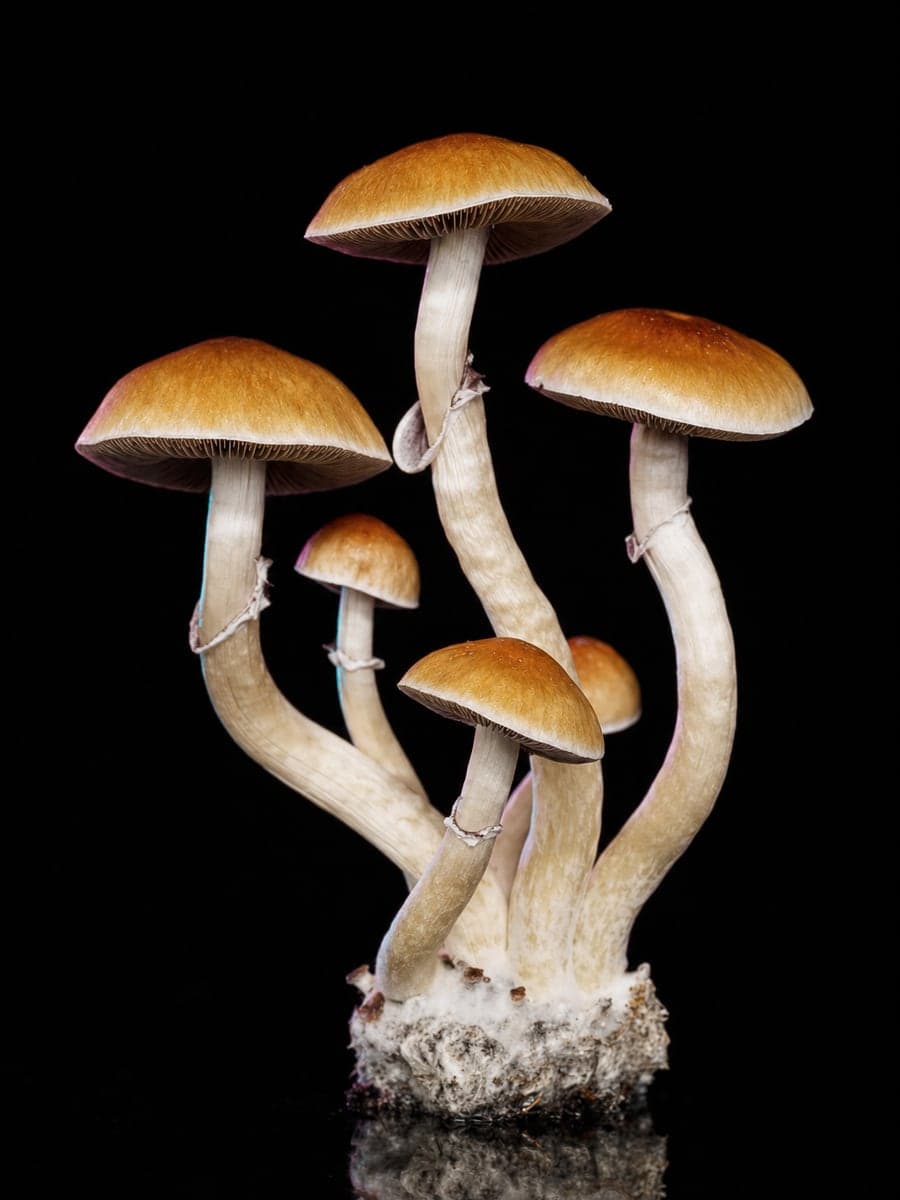
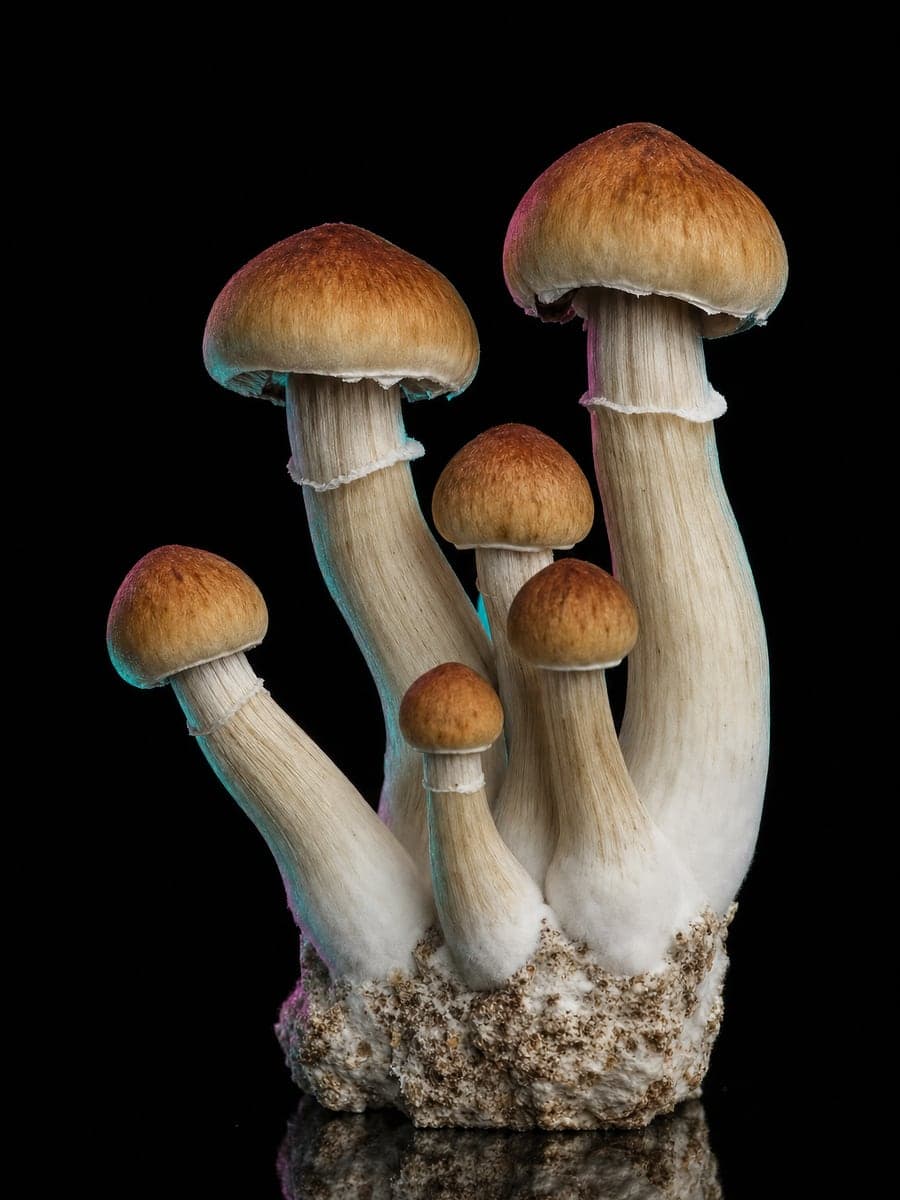
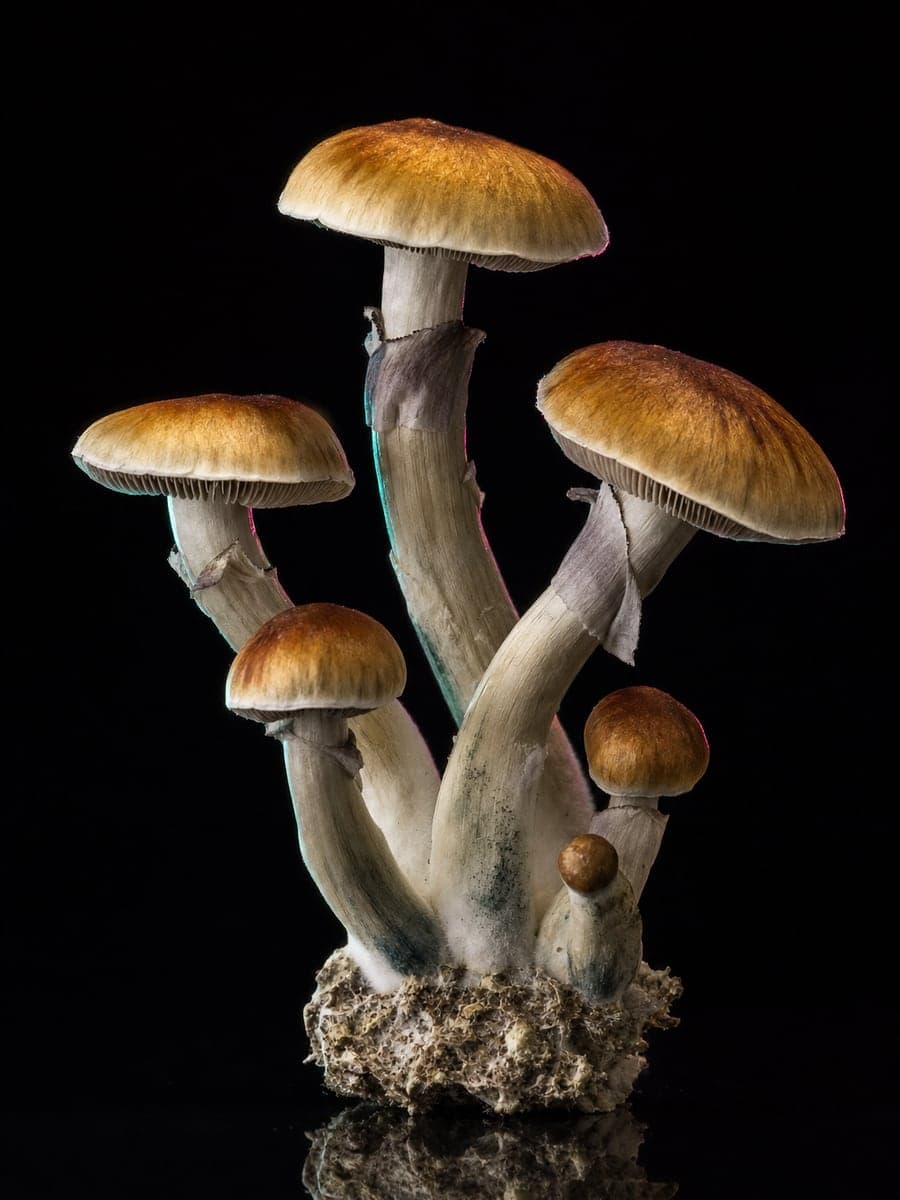
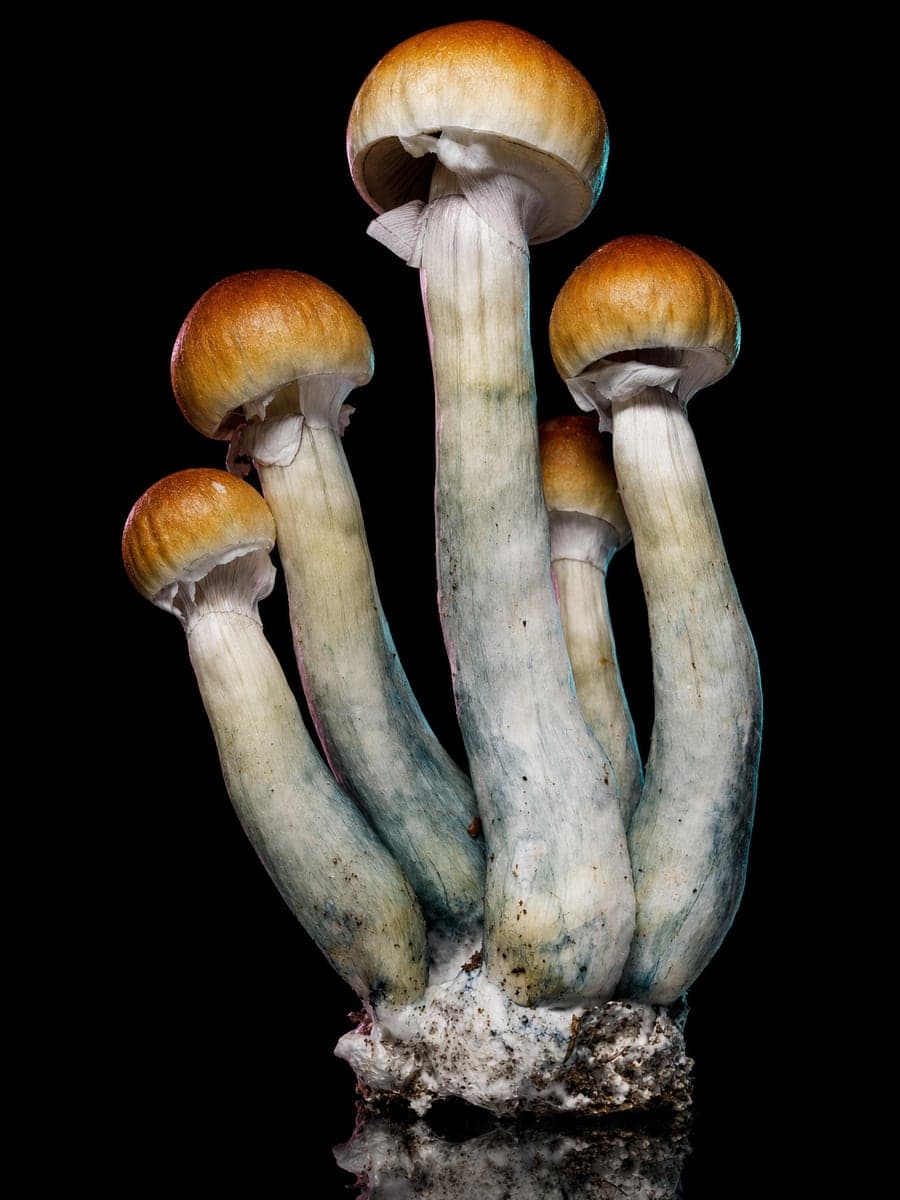
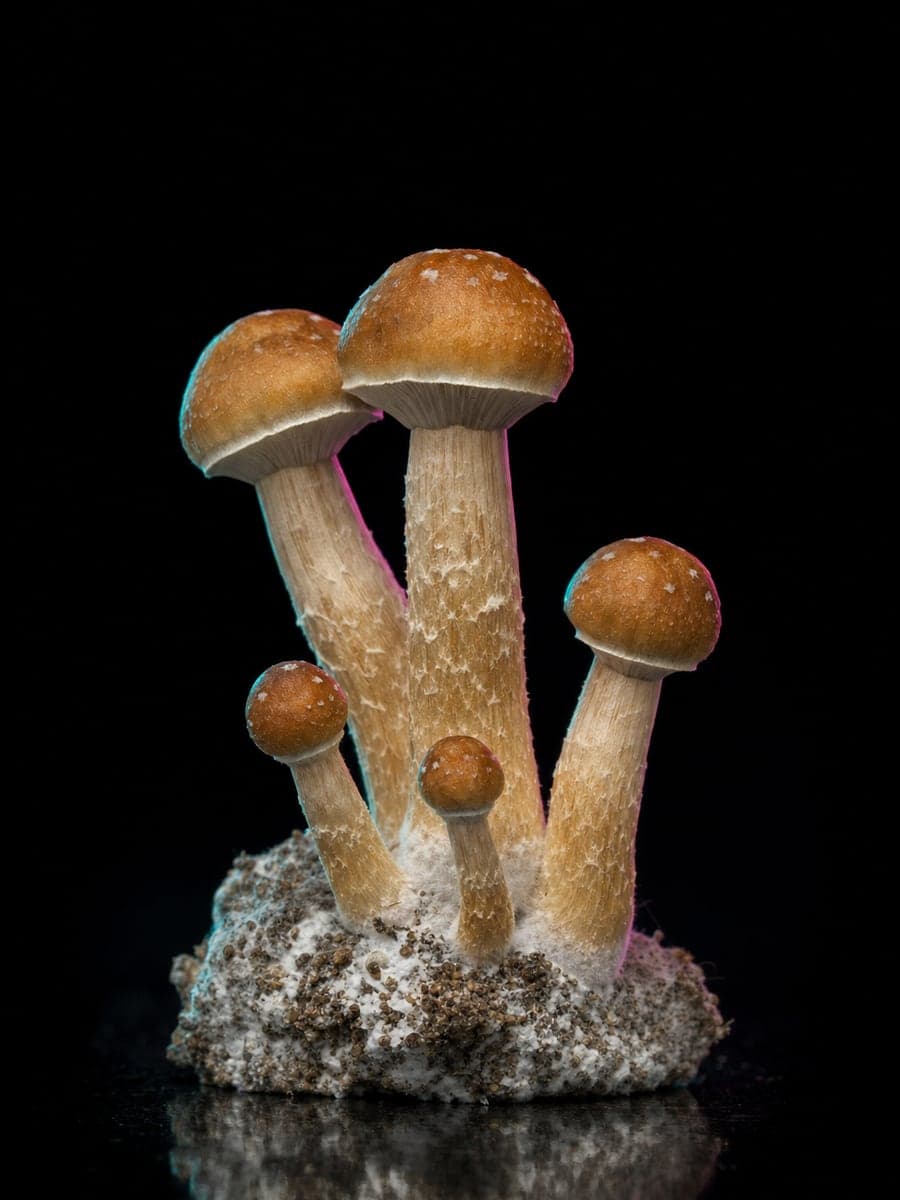
- Caramel to dark red caps, about 1–3 inches across, with pronounced spotting in older descriptions.
- Stems
- Fruits around 5–7 inches tall; stems described as fleshy but not very robust.
- Notes
- No distinctive traits beyond the classic cubensis look are documented; descriptions come from reposted vendor text.
- Growing
- Has a long-standing reputation as an easy, quick coloniser that pins readily; as with any multispore line, results can vary from syringe to syringe.
How it is described
Hawaiian is usually described as a moderate-to-potent classic cube. One often-cited grower account links it with a giggly, social mood, but other growers have said they noticed little difference from other strains.
Based on: A handful of grower comments on Shroomery (2003–05); no lab data and no broad trip-report consensus found.
Hawaiian, asked and answered
Where does the Hawaiian strain come from?
It is named after Pacifica Exotica Spora, a spore seller based in Hawaii. Where the original culture was collected is unknown, and cubensis is not documented as native to Hawaii.
What does Hawaiian look like?
Older descriptions mention fruits of about 5–7 inches with caramel to dark red caps, often spotted, on fleshy stems.
Is Hawaiian strong?
Its reputation is moderate to potent, in line with a classic cube. No lab results for this strain were found.
What does PES stand for?
Pacifica Exotica Spora, the Hawaii-based spore company that sold the PES Hawaiian and PES Amazon cultures.
The Shroomdex records history and reputation, not advice: how a strain is described is never a promise of how it will feel, and nothing here is medical advice. Strength varies from batch to batch. Start low and see our dose calculator. Never forage from a website: deadly look-alikes grow wild.