Nimbus Cloud
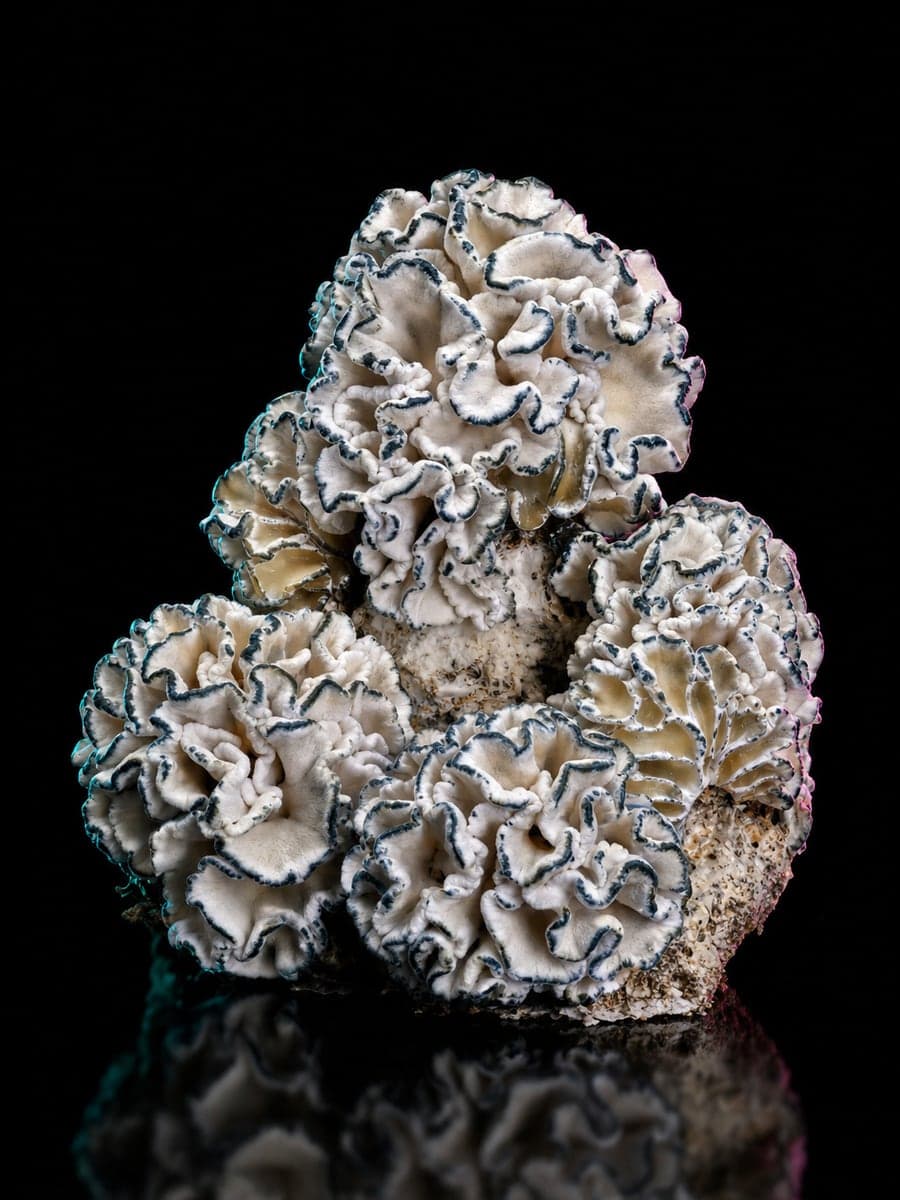
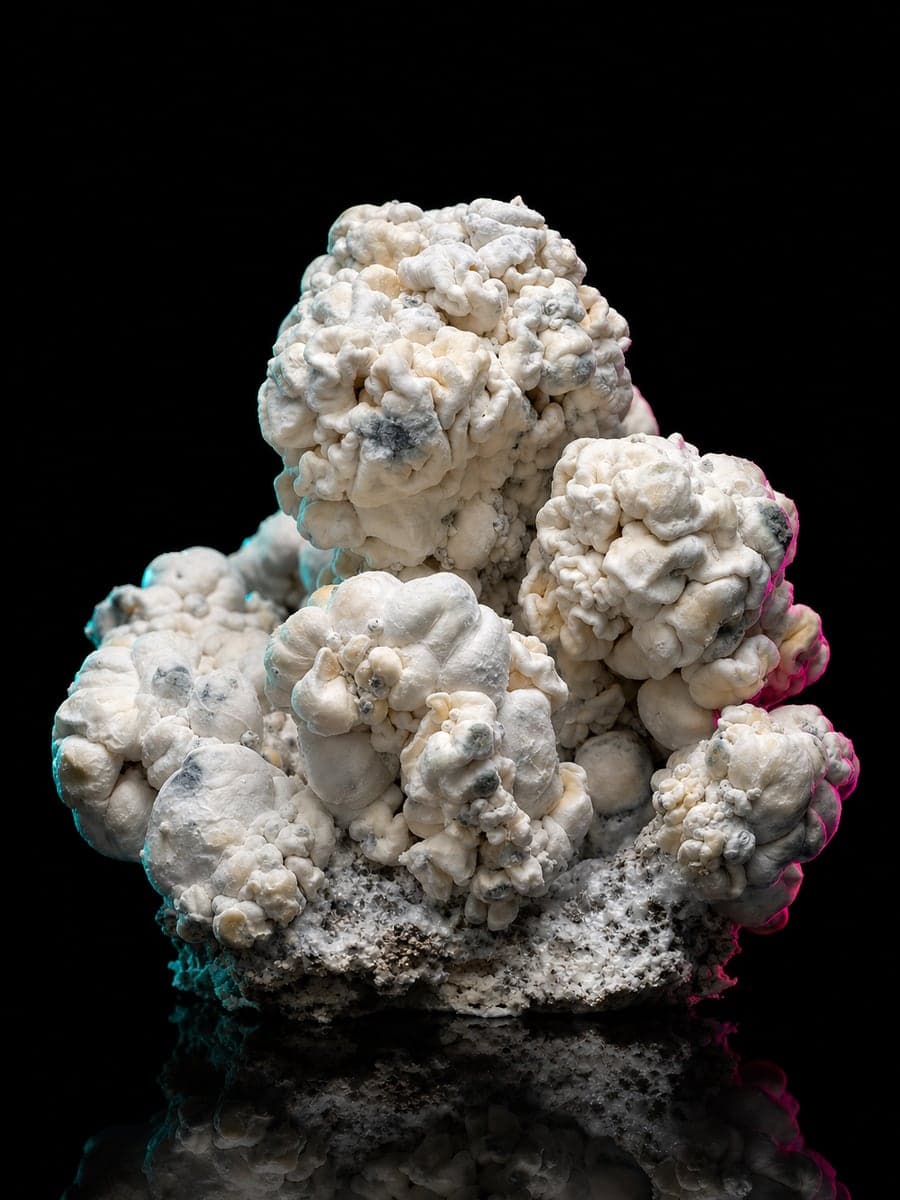
Soft, pale clusters like a bank of cloud.
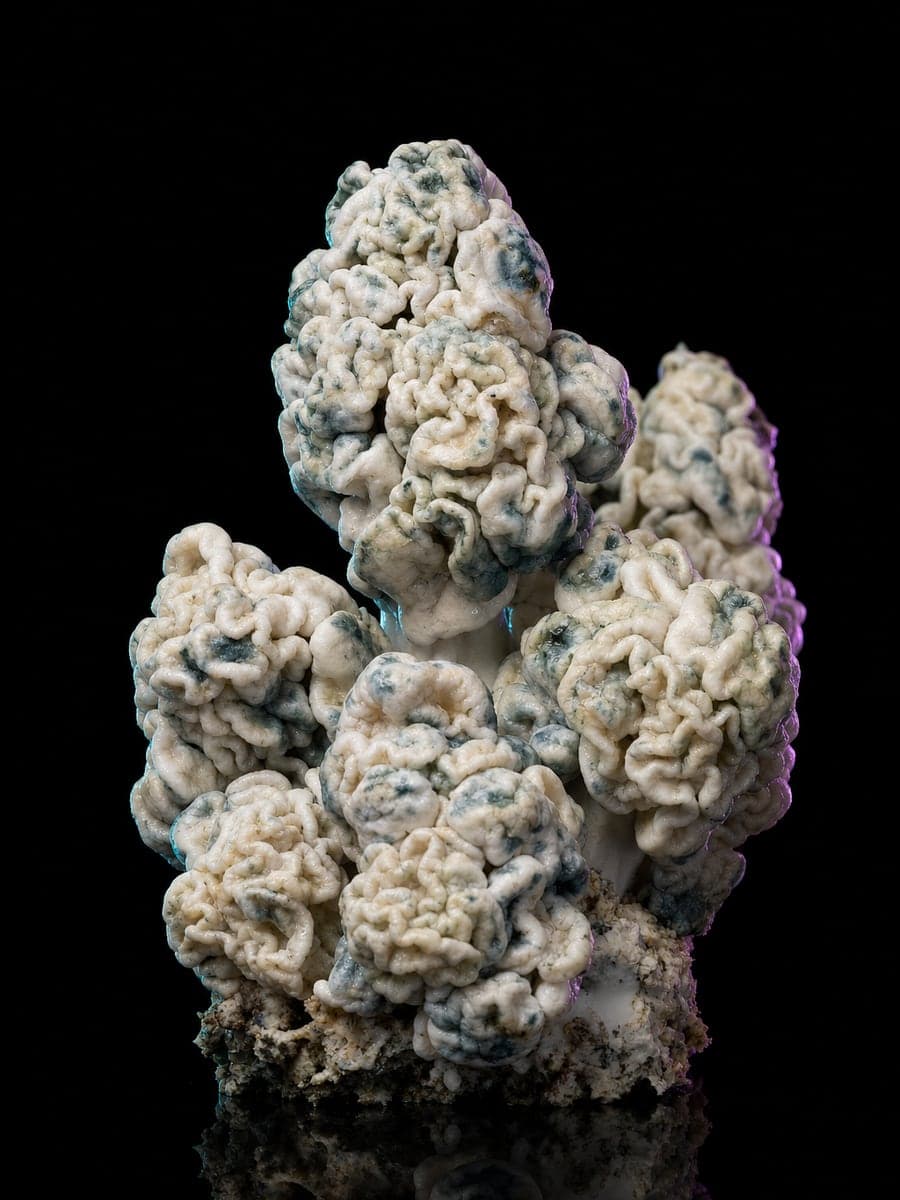
A home grower posted 'Nimbus, the Brain Cloud Mushroom' in 2025: brain-like white masses that took a long time to colonise and spent about six weeks in fruiting conditions.
The name is said to come from the way the dense, rounded clusters look like drifting cumulus clouds.
Where Nimbus Cloud comes from
Nimbus Cloud is a blob-type cubensis that grows dense, rounded, cloud-like masses instead of ordinary caps and stems. Home growers have posted a blob strain called Nimbus since 2025, and strain databases list a Nimbus Omni, an Omni blob isolate; whether the store's Nimbus Cloud is the same culture is not recorded. The store's notes name a different parent, a Mooncakes line.
- Origin
- Unknown · Unknown; a blob called Nimbus was grown by 2025
- Family
- Mutations · Unknown · Rare
- Lineage
- Mooncakes is the store's named parent and no source describes it. Mycopedia's Nimbus Omni comes from Omni instead; if the store's culture is that one, its parent would be Omni.
A home grower posted 'Nimbus, the Brain Cloud Mushroom' in 2025: brain-like white masses that took a long time to colonise and spent about six weeks in fruiting conditions.
Reddit r/MushroomGrowers: 'Nimbus, the Brain Cloud Mushroom' (grower's post, 2025)The Mycopedia strain database lists Nimbus Omni, also called Geode and Big Melty, as a blob isolation of Omni (itself from the Melmac line), worked by a cultivator known as Turtle Hermit and known for large, odd fruit structures, fins and brainy blobs.
Mycopedia: Nimbus OmniGrowers post Nimbus Omni Geode as dense blobs with blue hues inside and out, picked when they turn soft to the touch; one weighed 364 g fresh.
Reddit r/MushroomGrowers: 'Nimbus Omni Geode (Big Melty) 364gram blob' (grower's post, 2026)The store's notes describe Nimbus Cloud as a selected phenotype from the Mooncakes line, kept for its pillowy, cloud-like clusters in creamy ivory to soft pearl white, which take the place of normal caps and stems and bruise blue where handled.
Shroom Bros product page
The name is said to come from the way the dense, rounded clusters look like drifting cumulus clouds.
What it looks like
- Caps
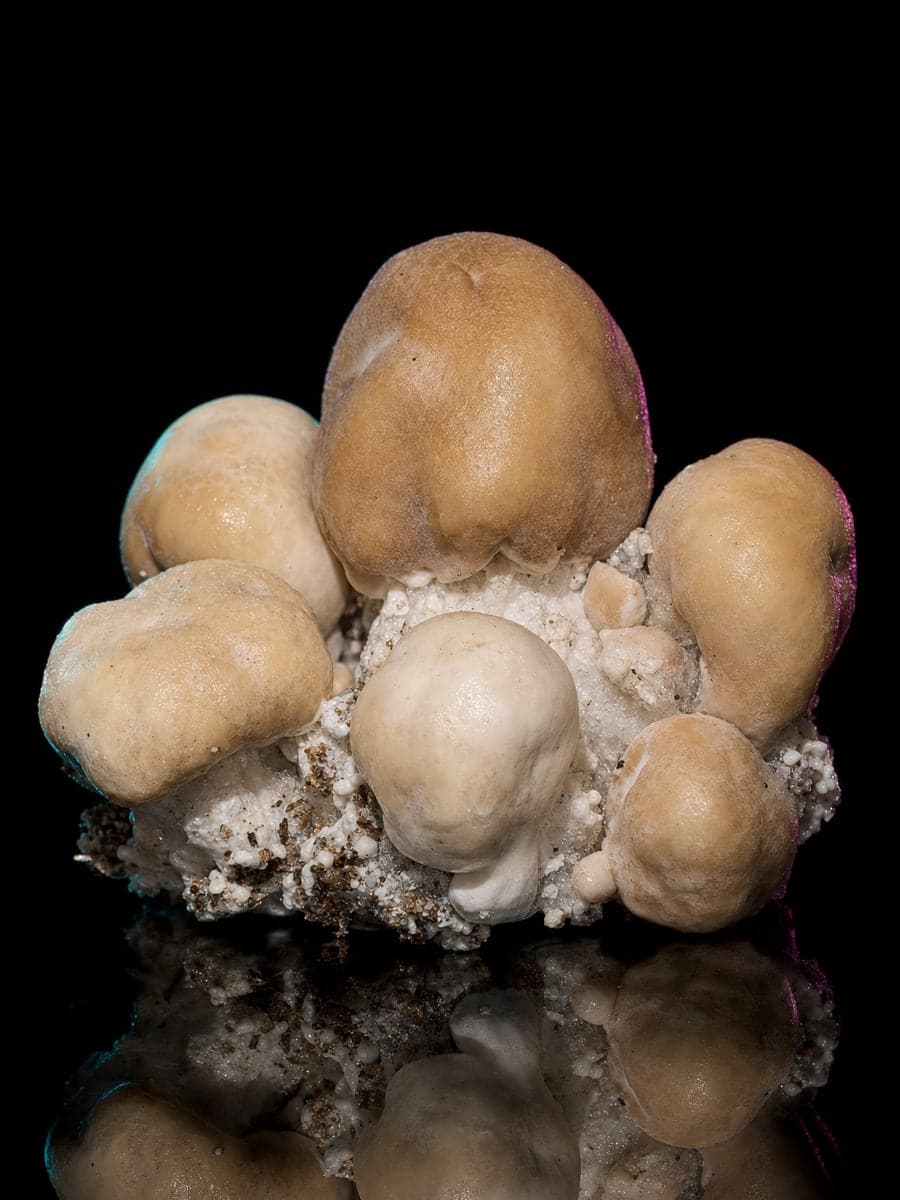
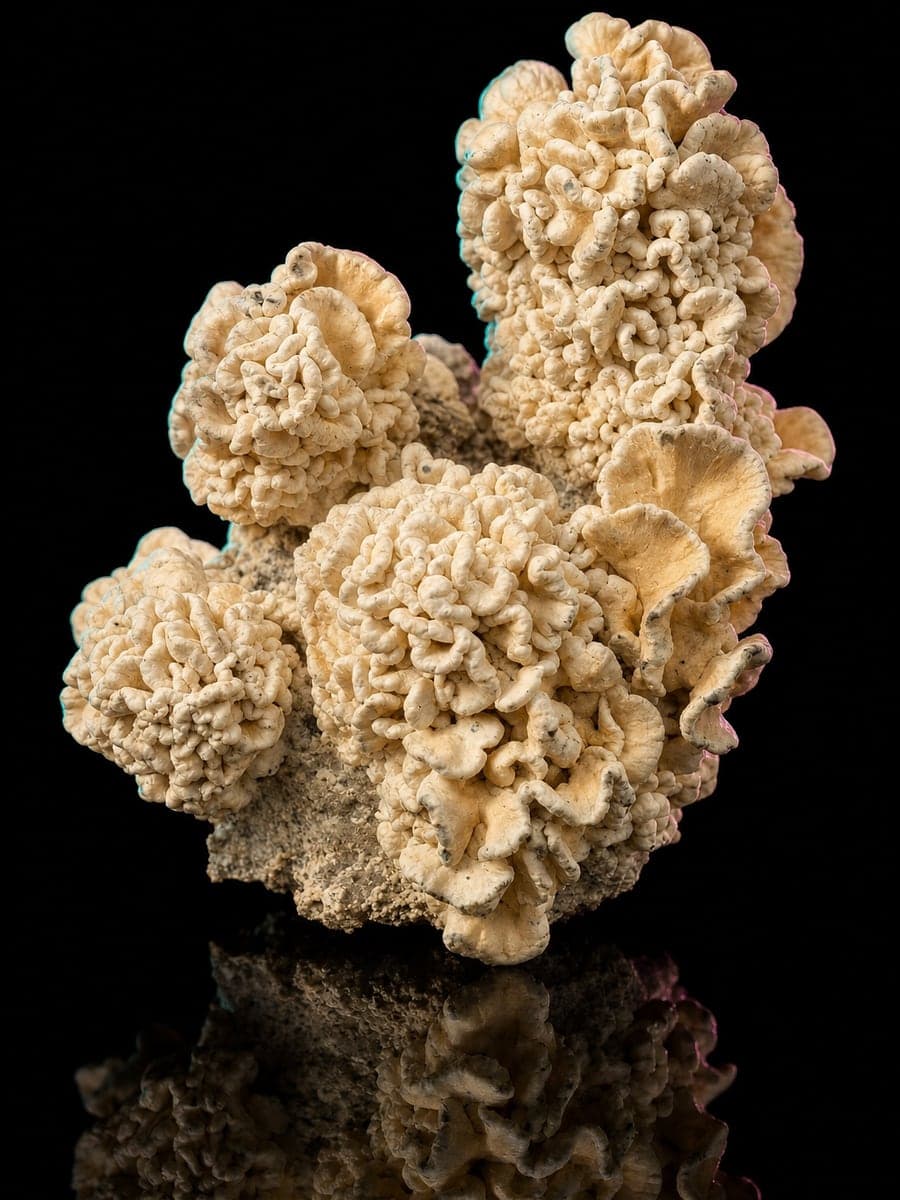
- No ordinary caps: dense, plush, rounded, crinkled mounds like a brain or a cloud, creamy ivory to pearl white with silvery or beige undertones.
- Stems
- Not distinct; it grows as masses rather than caps on stems.
- Notes
- The store's notes and growers both mention blue bruising; growers say the masses are dense right through.
- Growing
- Growers' posts describe slow colonisation and a long stay in fruiting conditions, with the masses picked by touch once they soften.
How it is described
The store describes Nimbus Cloud as balanced and calm, with soft, dream-like visuals, light euphoria and a clear, reflective headspace. Growers' posts about Nimbus are about growing it, not its effects, and there are no lab tests.
Based on: The Shroom Bros product page only; no trip reports, competition results or lab data found for this strain.
Nimbus Cloud, asked and answered
Where does the Nimbus Cloud strain come from?
Its origin is not recorded. A blob strain called Nimbus has been grown by home growers since 2025, and a Nimbus Omni is listed as an Omni blob isolate; the store's notes instead name a Mooncakes line as its parent.
What does Nimbus Cloud look like?
It grows as dense, rounded, crinkled masses in ivory to pearl white rather than separate caps and stems, and bruises blue where handled.
Is Nimbus Cloud strong?
The store describes it as balanced rather than overpowering. There are no published lab results for it, and strength varies between grows.
Is Nimbus Cloud related to Enigma?
No source says so. Like Enigma it is a blob form without normal caps, but the lines named for it, Mooncakes or Omni, are different.
The Shroomdex records history and reputation, not advice: how a strain is described is never a promise of how it will feel, and nothing here is medical advice. Strength varies from batch to batch. Start low and see our dose calculator. Never forage from a website: deadly look-alikes grow wild.