Brazilian
A long-sold cube named for Brazil, its history unwritten.
A long Shroomery strain list compiled by growers gives Brazilian only as a landrace from Brazil, with no collector or date. The same list has a separate entry, Brazil (Corumba), described as a landrace isolate from Brazil.
The usual story is that it was collected in the grasslands or cow pastures of tropical Brazil, but no collector, place or year is ever given.
Where Brazilian comes from
Brazilian is a Psilocybe cubensis strain sold for years by US spore vendors and listed by growers as a landrace from Brazil. No collector, place or date has ever been recorded for it, so its Brazilian origin rests on the name. It has a reputation as an easy, vigorous grower with fairly large fruits.
- Origin
- Brazil (reputed; no collection site recorded)
- Family
- Wild isolates · Americas · Uncommon
- Lineage
- A separate line sold as Corumba or 'Brazil (Corumba)' is listed by growers as another Brazilian landrace isolate; it is not the same named strain.
A long Shroomery strain list compiled by growers gives Brazilian only as a landrace from Brazil, with no collector or date. The same list has a separate entry, Brazil (Corumba), described as a landrace isolate from Brazil.
Shroomery forum: 'A Huge List of Psilocybe Cubensis Variety description' (LulzSwag, 2022–24)Its history is thinner than that of most place-named cubes. Two early Shroomery strain lists that cover Amazonian, Ecuador and other regional strains, from 2002 and 2004, do not include Brazilian at all.
Shroomery forum: 'Strain origins' (2002)Shroomery forum: 'Some strain info.' (2004, compiled vendor descriptions)Psilocybe cubensis does grow wild in Brazil, which is among the South American countries listed in its known range.
Wikipedia: Psilocybe cubensis, Distribution and habitatA strain guide lists Brazilian as easy to grow and potent, known for aggressive colonisation and large mushrooms, and names Ralphsters Spores and Spores 101 as its sellers.
Tripsitter: Magic Mushroom Strain Guide (100+ strains)A place name on a cubensis strain says little about its genes. A 2023 study in Current Biology found commercial cultivars highly inbred and closely related, and a summary notes that even strains named for places such as Amazon, Burma and Cambodia were very similar.
Phys.org: magic mushroom genomes study (2023)A Quickly Changing Kaleidoscope (Substack): 'Magic mushroom strains aren't that different from each other, says science' (2024)
The usual story is that it was collected in the grasslands or cow pastures of tropical Brazil, but no collector, place or year is ever given.
Some sellers link it to traditional mushroom use by peoples of the Amazon basin; nothing ties this cultivated strain to any such use.
Vendor copy often claims wild Brazilian cubensis grows far larger than the strain does in cultivation.
What it looks like
- Caps
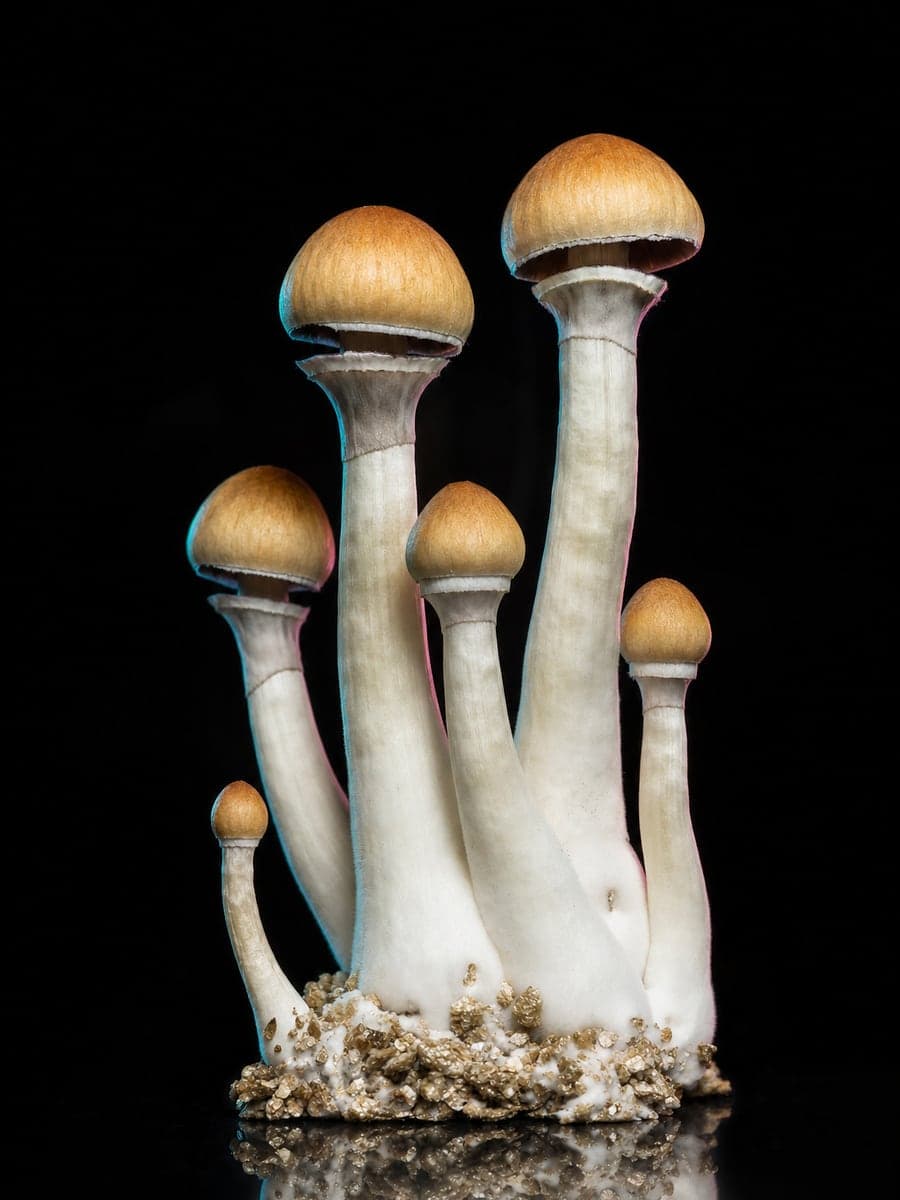
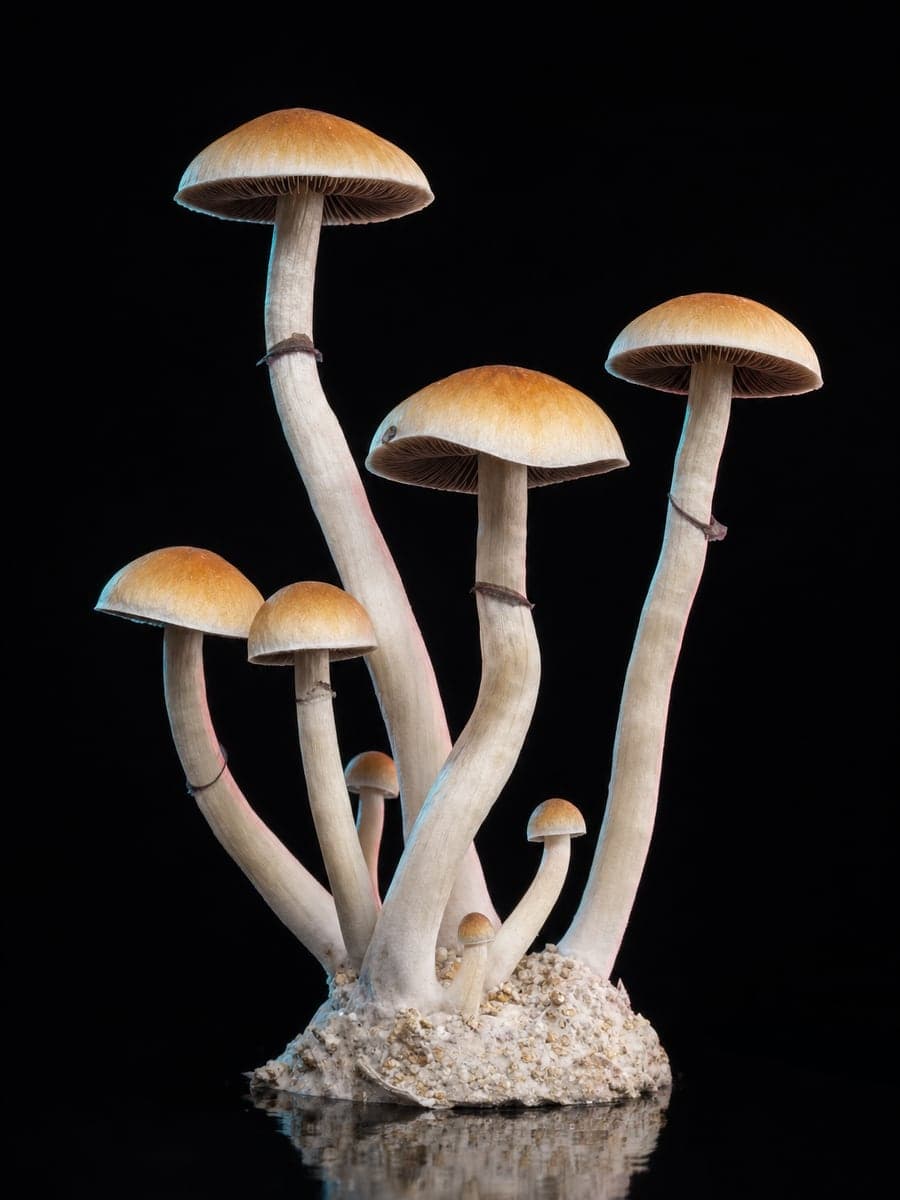
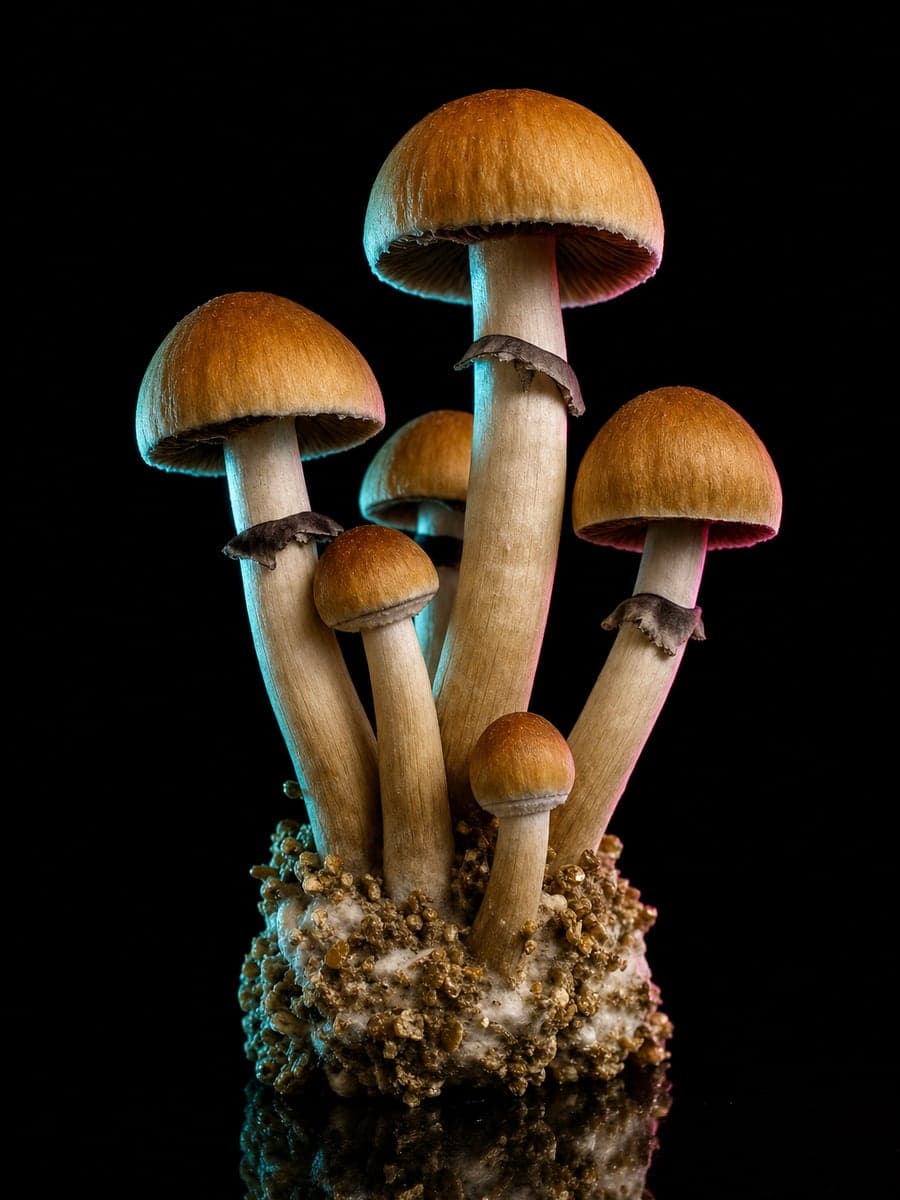
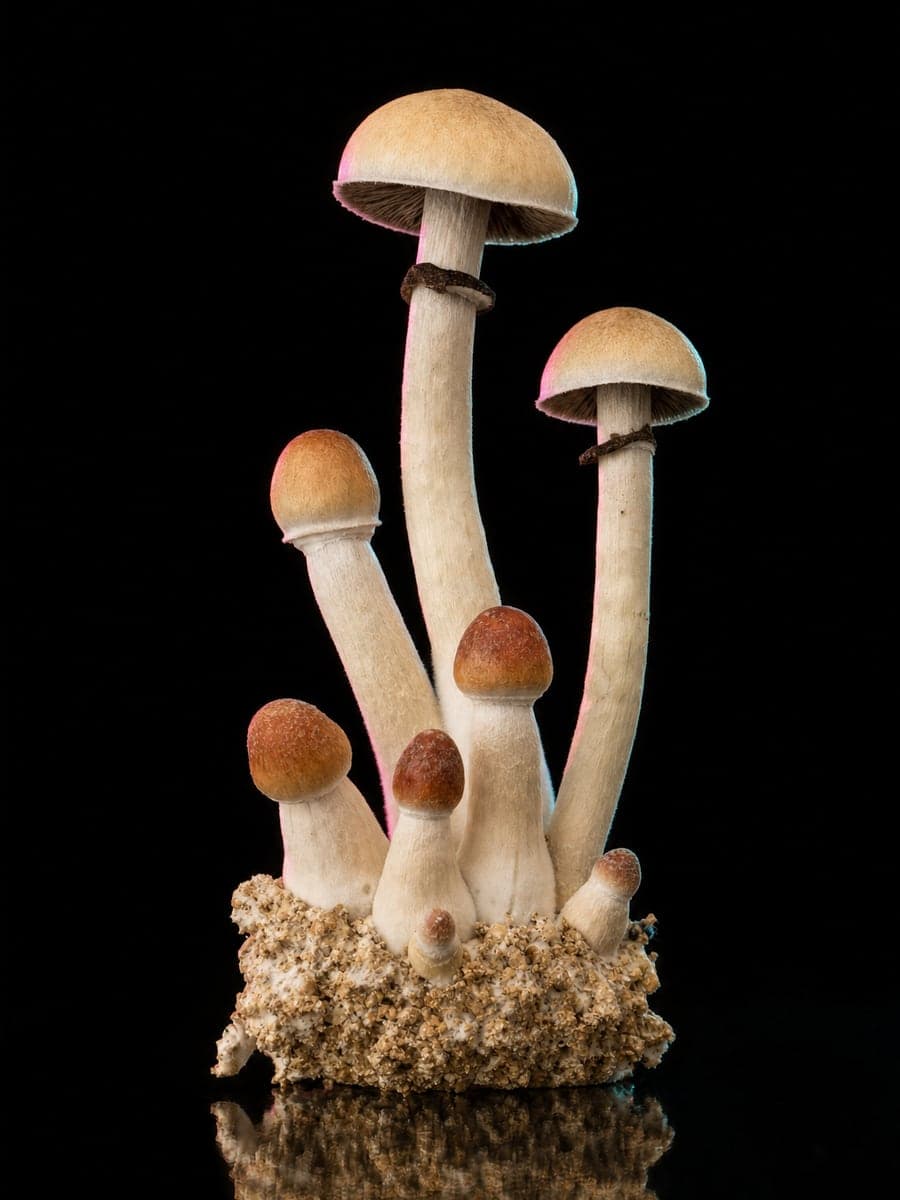
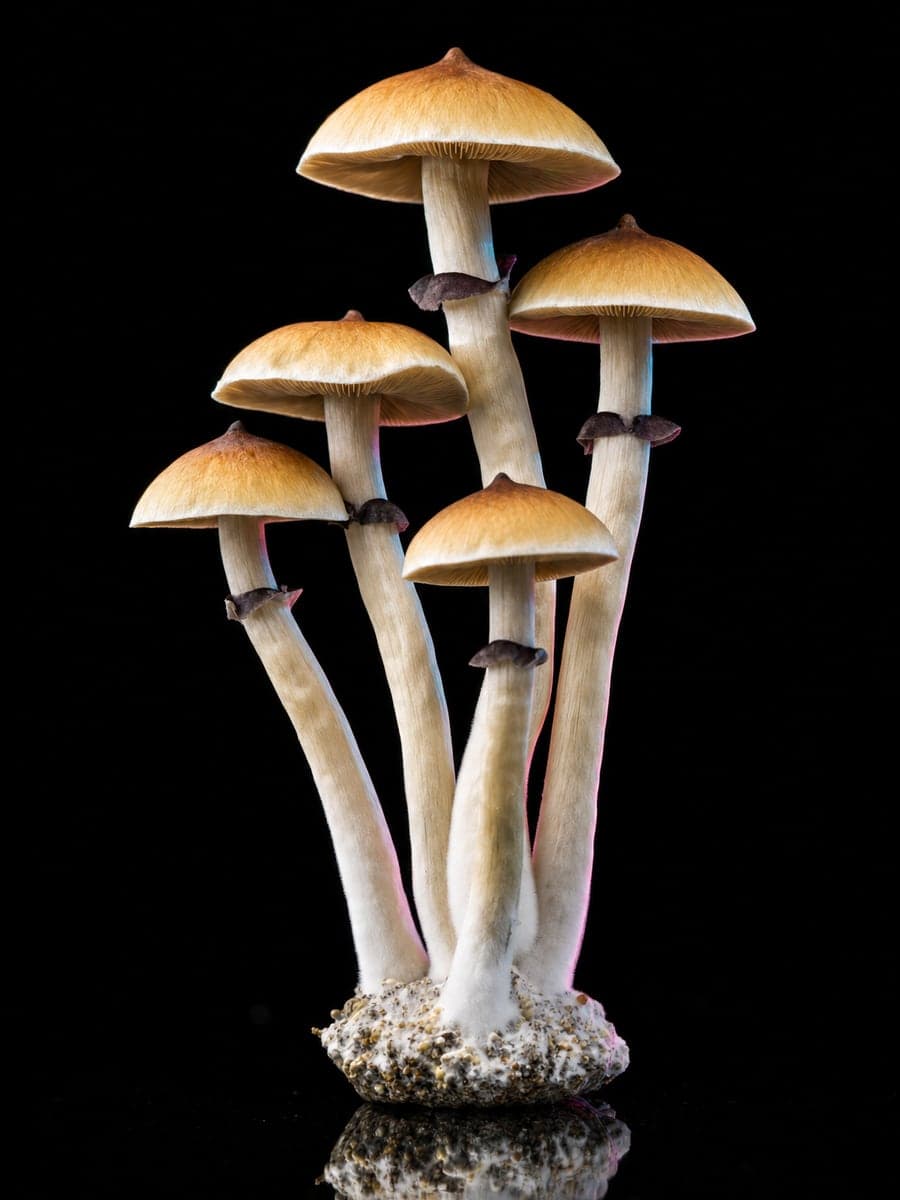
- Medium to large, convex caps in golden to caramel brown, paler as they open, as vendors describe them.
- Stems
- Thick, white stems that bruise blue when handled.
- Notes
- Strain guides describe large fruits and fast, aggressive colonisation. No photos clearly labelled as this strain were found, so the look is from vendor descriptions only.
- Growing
- Brazilian has a reputation as an easy, beginner-friendly strain that colonises fast and aggressively and gives fairly large fruits. These descriptions come from vendors and strain guides.
How it is described
Brazilian has a reputation among sellers as a visual strain with a joyful, energetic mood. Strain guides rate it from medium to potent. There are few independent trip reports, so it is best thought of as a typical cube with a visual reputation.
Based on: Seller and strain-guide descriptions only; no lab results and no clear trip-report consensus found.
Brazilian, asked and answered
Where does the Brazilian strain come from?
It is sold and listed as a landrace from Brazil, where Psilocybe cubensis does grow wild. But no collector, place or date has been recorded, so its exact origin is unknown.
What does Brazilian look like?
Vendors describe medium to large mushrooms with golden to caramel caps that pale as they open, on thick white stems that bruise blue.
Is Brazilian strong?
Strain guides rate it from medium to potent, and sellers describe it as strongly visual. No lab results for it were found, and strength varies between grows.
Is Brazilian the same as Corumba or Amazonian?
No. Corumba is a separate line also listed as a Brazilian landrace, and Amazonian is a different strain with its own murky history. Genetic work suggests place-named cubes are often closely related anyway.
The Shroomdex records history and reputation, not advice: how a strain is described is never a promise of how it will feel, and nothing here is medical advice. Strength varies from batch to batch. Start low and see our dose calculator. Never forage from a website: deadly look-alikes grow wild.