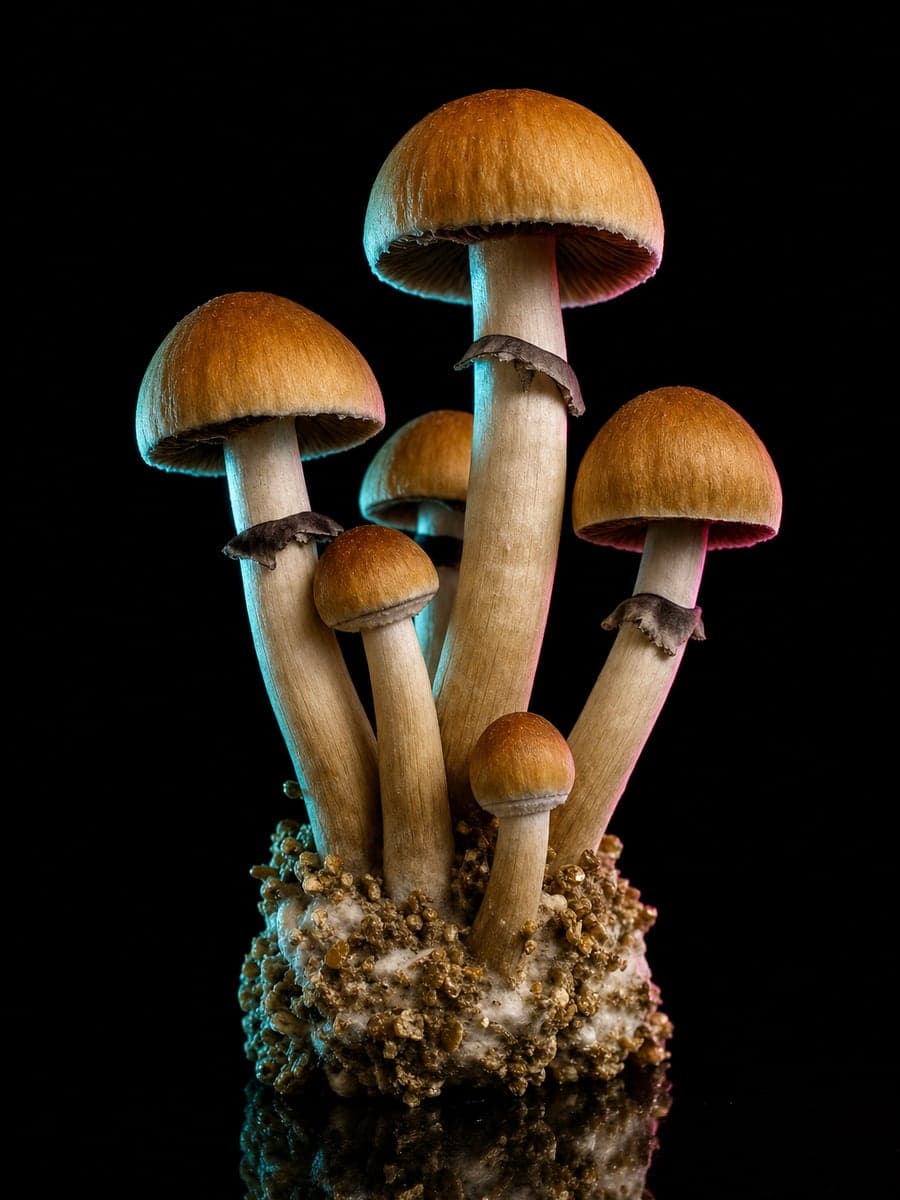
Cambodian
A temple-country cube, quick to run and quick to fruit.
Psilocybe cubensis has been reported from Cambodia since Heim and Wasson (1958), and again by Allen and Merlin (1992), as noted in a 2006 paper by Guzmán, Allen and Sihanonth.
The usual story is that John Allen found it growing near Angkor Wat in the early 1990s.
Where Cambodian comes from
Cambodian is a Psilocybe cubensis strain credited by growers to the ethnomycologist John W. Allen, who collected mushrooms around the temples of Angkor. P. cubensis has been reported from Cambodia in the scientific literature since 1958. In cultivation it has a reputation for fast colonisation and heavy fruiting.
- Origin
- Cambodia, reputedly around Angkor Wat, Siem Reap · Reputedly the 1990s; John Allen's documented Angkor collecting dates from 2002–2003
- Family
- Wild isolates · Asia · Common
Psilocybe cubensis has been reported from Cambodia since Heim and Wasson (1958), and again by Allen and Merlin (1992), as noted in a 2006 paper by Guzmán, Allen and Sihanonth.
Guzmán, Allen & Sihanonth (2006), International Journal of Medicinal Mushrooms 8: 85–89John W. Allen collected hallucinogenic mushrooms at Angkor temple sites, including Banteay Srei and the ruins of Angkor Wat, in August 2002 and August 2003. Those specimens, published in 2006, were identified as Psilocybe antioquensis, not cubensis.
Guzmán, Allen & Sihanonth (2006), International Journal of Medicinal Mushrooms 8: 85–89Growers credit the strain to John Allen. A 2002 Shroomery strain list names him as its collector, and a 2004 list says he picked it while in Cambodia. In the 2002 thread, a poster using the handle mjshroomer, which later forum users link to Allen, claimed the Thai, Malaysian, Koh Samui and Cambodian strains all came from him.
Shroomery forum: 'Strain origins' (2002)Shroomery forum: 'Some strain info.' (2004, compiled vendor descriptions)Shroomery forum: 'On the origins of penis envy' (2021)A 2025 review in the Journal of Fungi describes Cambodian as known for swift colonisation and prolific fruiting, based mainly on community sources.
Kurzbaum et al. (2025), Journal of Fungi 11(2): 99 (review)A 2023 genetic study in Current Biology found commercial cubensis strains highly inbred and closely related. As summarised, even strains named for places such as Cambodia, Burma and Amazon were very similar.
A Quickly Changing Kaleidoscope (Substack): 'Magic mushroom strains aren't that different from each other, says science' (2024)
The usual story is that John Allen found it growing near Angkor Wat in the early 1990s.
Vendors often call it ideal for beginners because it runs and fruits so quickly.
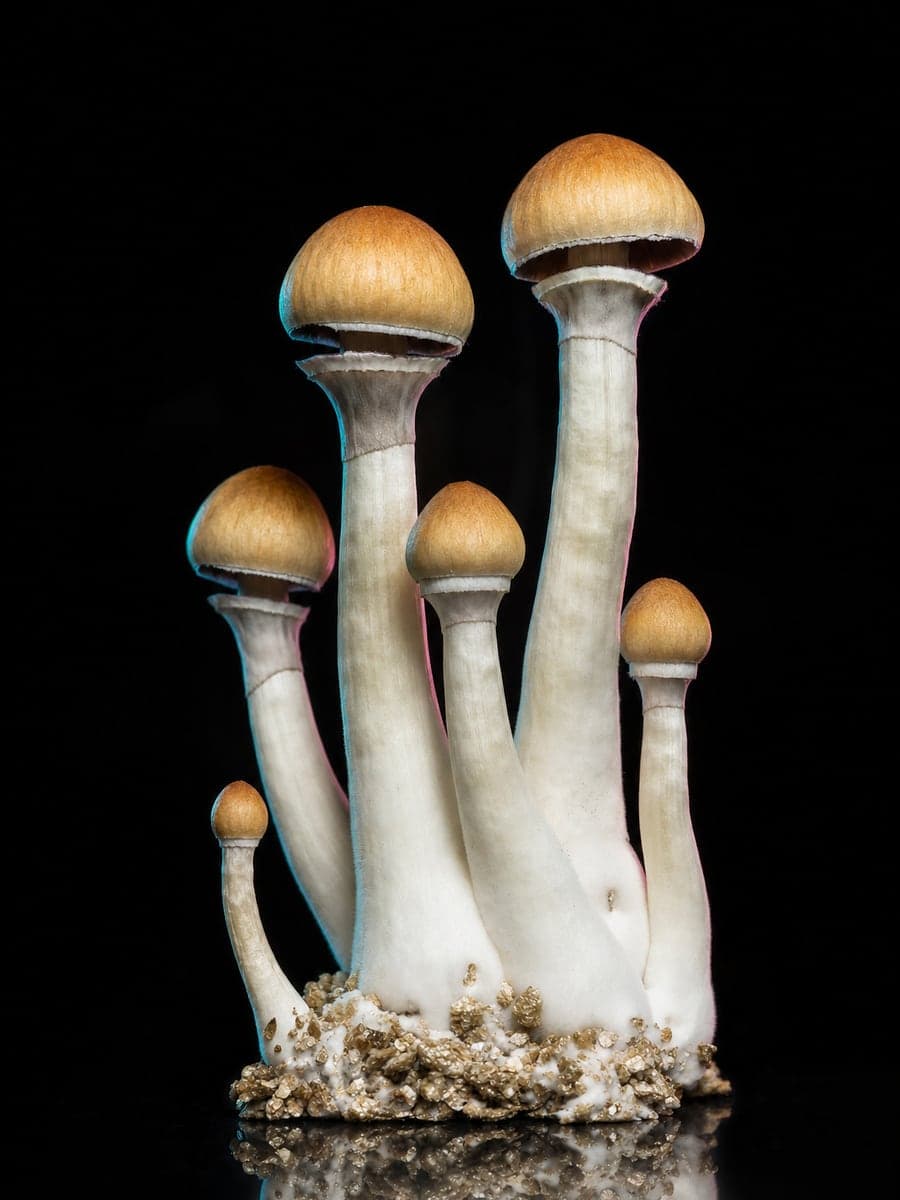
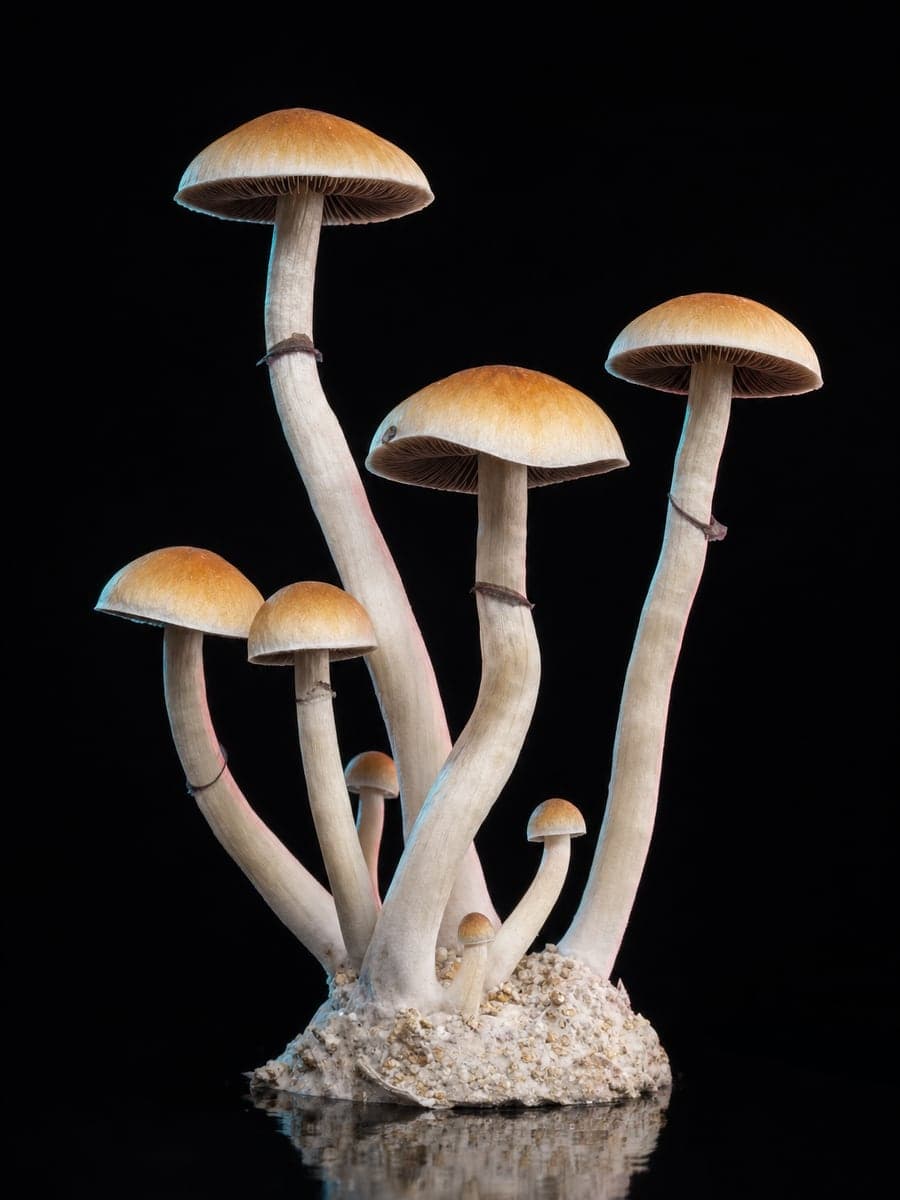
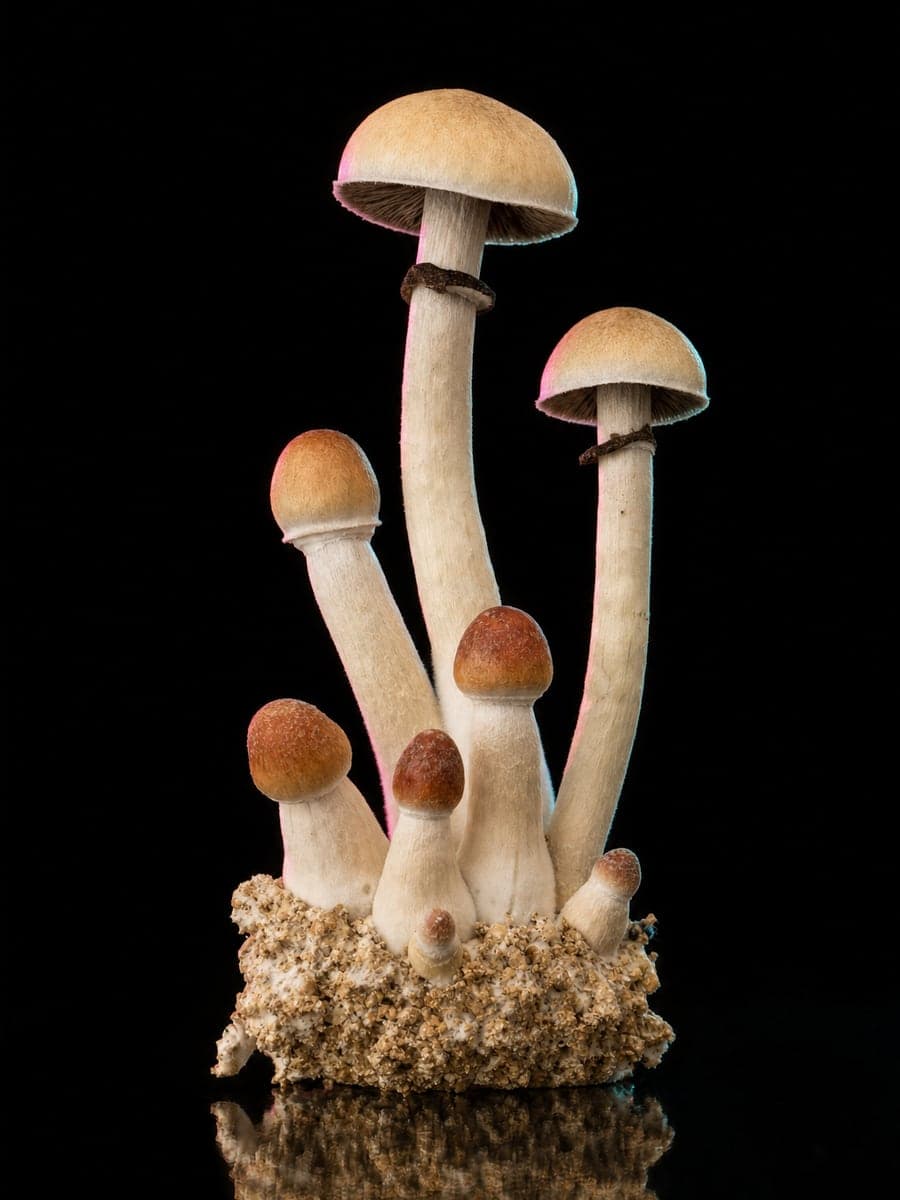
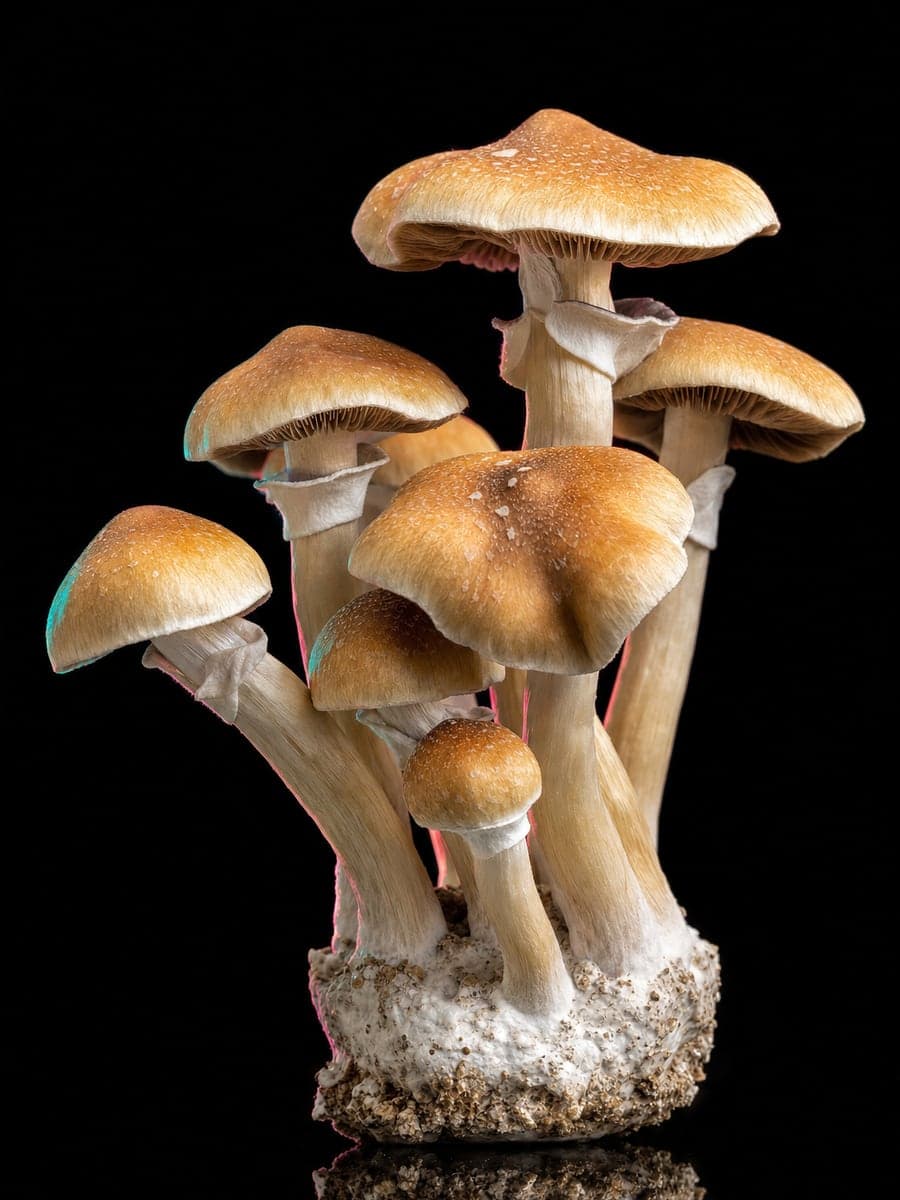
What it looks like
- Caps
- Medium, well-proportioned caps, light to golden brown.
- Stems
- Medium-thick, pale stems.
- Notes
- Usually described as a tidy, medium-sized cube rather than a giant. In Asia, wild P. cubensis grows on water-buffalo and cattle dung.
- Growing
- Cambodian has a reputation for colonising fast and fruiting heavily, which makes it a common beginner's pick.
How it is described
Cambodian has a reputation as a classic, middle-strength cube, valued more for how easily it grows than for unusual strength. Few trip reports single it out from other classic cubes. No lab results for it were found.
Based on: General reputation in strain write-ups; no lab data found and few specific trip reports.
Cambodian, asked and answered
Where does the Cambodian strain come from?
Growers credit it to ethnomycologist John W. Allen, who collected mushrooms around the temples of Angkor. P. cubensis has been reported from Cambodia since 1958, but the strain's exact collection is not documented.
What does Cambodian look like?
A tidy, medium-sized cube with light to golden-brown caps on pale, medium-thick stems.
Is Cambodian strong?
It has a reputation as middle-strength, typical for cubensis. No lab results for it were found.
Is Cambodian easy to grow?
It is known for fast colonisation and heavy fruiting, and is often recommended to beginners.
The Shroomdex records history and reputation, not advice: how a strain is described is never a promise of how it will feel, and nothing here is medical advice. Strength varies from batch to batch. Start low and see our dose calculator. Never forage from a website: deadly look-alikes grow wild.