Koh Samui (Thai)
Short, stout island cubes from Thailand's buffalo fields.
A 1992 ethnomycology study by John W. Allen and Mark D. Merlin, based on five trips in 1989–90, recorded psilocybin mushrooms on Koh Samui and Koh Pha-Ngan growing on water buffalo and cattle dung. It describes clandestine cultivation on Koh Samui and sales to tourists and resort restaurants, including in omelettes and soups.
Grower lore ties the strain to the island's backpacker scene and the full moon parties on neighbouring Koh Pha-Ngan.
Where Koh Samui (Thai) comes from
Koh Samui is a Thai Psilocybe cubensis strain named after the island in the Gulf of Thailand. Grower lists credit ethnomycologist John Allen with bringing it into cultivation from buffalo manure at Ban Hua Thanon. It is known for short, broad fruits and a domesticated offshoot, the Koh Samui Super Strain.
- Origin
- Ban Hua Thanon, Koh Samui, Thailand (as credited in grower lists) · Unknown; Allen's fieldwork on the island dates to 1989–90
- Family
- Wild isolates · Asia · Common
- Lineage
- KSSS is described as an isolate of the original Koh Samui, and is often called a more domesticated version of it.
A 1992 ethnomycology study by John W. Allen and Mark D. Merlin, based on five trips in 1989–90, recorded psilocybin mushrooms on Koh Samui and Koh Pha-Ngan growing on water buffalo and cattle dung. It describes clandestine cultivation on Koh Samui and sales to tourists and resort restaurants, including in omelettes and soups.
Allen & Merlin (1992), Journal of Ethnopharmacology 35(3): abstract via Europe PMCGrower strain lists credit John Allen as the collector of the cultivated Koh Samui strain, found on buffalo manure in the fields of Ban Hua Thanon on the island.
Shroomery forum: 'Some strain info.' (Mycomancer's origin list, 2004)Shroomery forum: 'A Huge List of Psilocybe Cubensis Variety description' (LulzSwag, 2022–24)Shroomery forum: 'KS and KSSS' (2023)The Koh Samui Super Strain (KSSS) is listed as an isolate of the original Koh Samui, with growers split on whether it is a real improvement or mainly a more domesticated, less varied version.
Shroomery forum: 'A Huge List of Psilocybe Cubensis Variety description' (LulzSwag, 2022–24)Shroomery forum: 'KS and KSSS' (2023)A different species, Psilocybe samuiensis, was described from the island in 1993 by Guzmán, Bandala and Allen. It is a small mushroom of rice-paddy soil that does not grow directly on manure, so it should not be confused with the Koh Samui cubensis strain.
Wikipedia: Psilocybe samuiensisA summary of competition and independent lab results places Koh Samui among strains averaging roughly 0.6–0.9% total tryptamines, which the author treats as typical for cubensis.
Tripsitter (Substack): 'How Strong is the Average Magic Mushroom?' (2023)
Grower lore ties the strain to the island's backpacker scene and the full moon parties on neighbouring Koh Pha-Ngan.
Older vendor copy called the Thai Koh Samui strains some of the most potent cubensis around; lab summaries since then put it closer to average.
The usual advice passed around forums is to choose the Super Strain for growing from spores and the original for agar work.
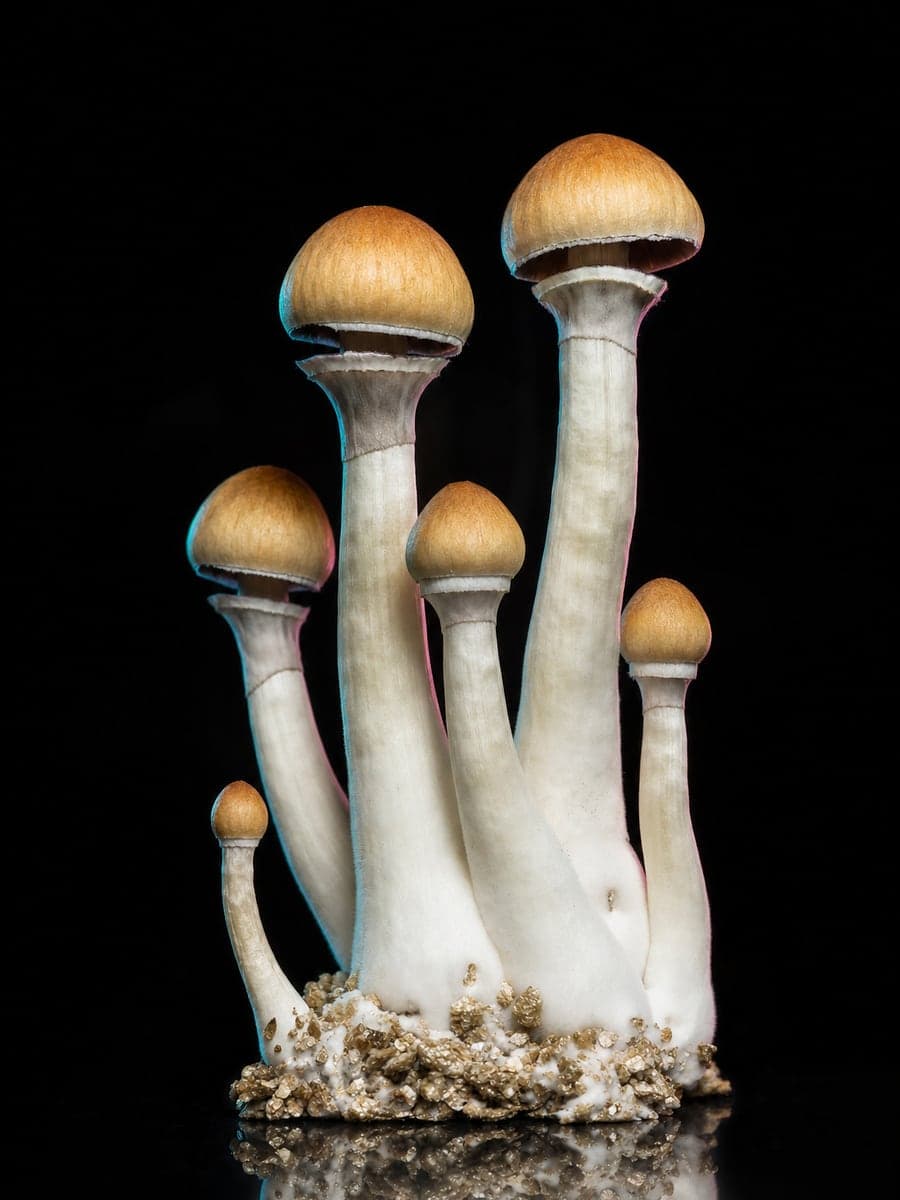
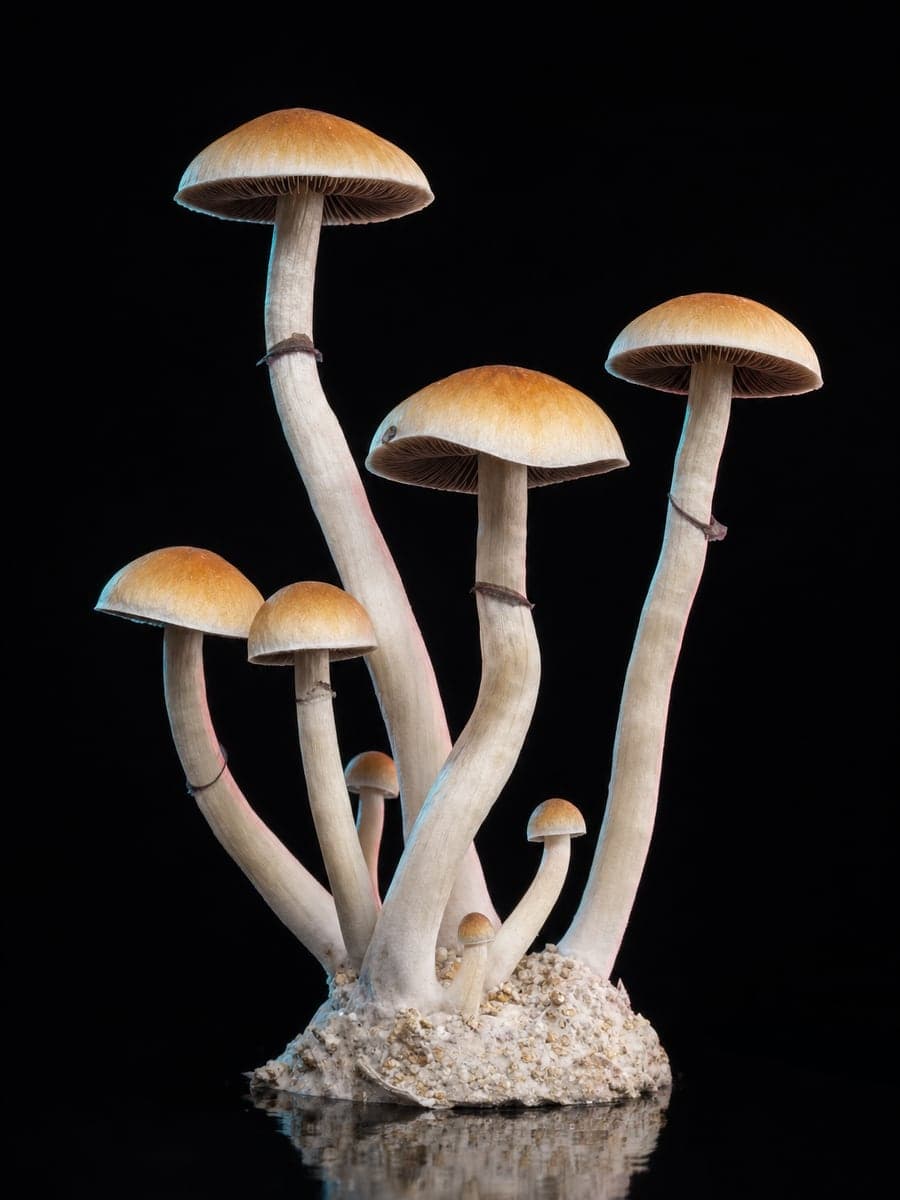
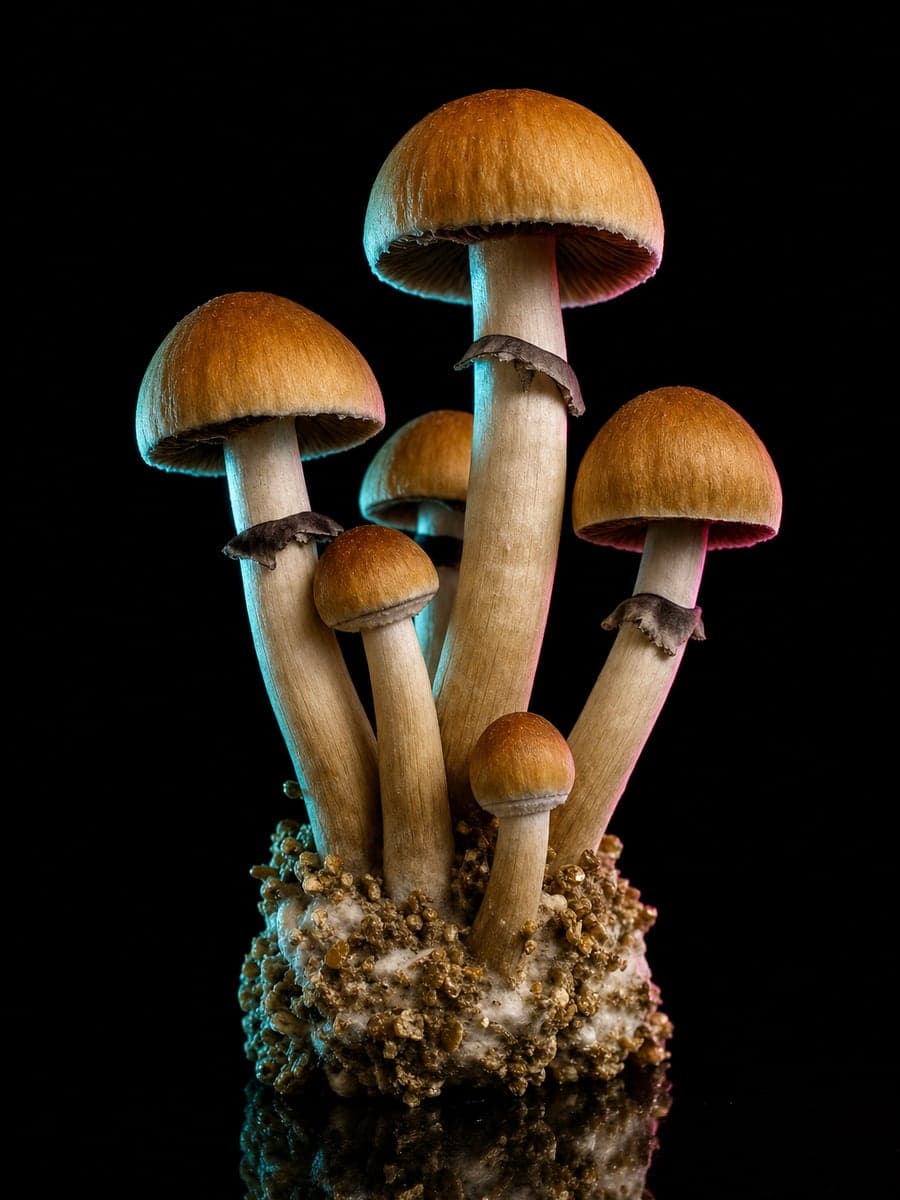
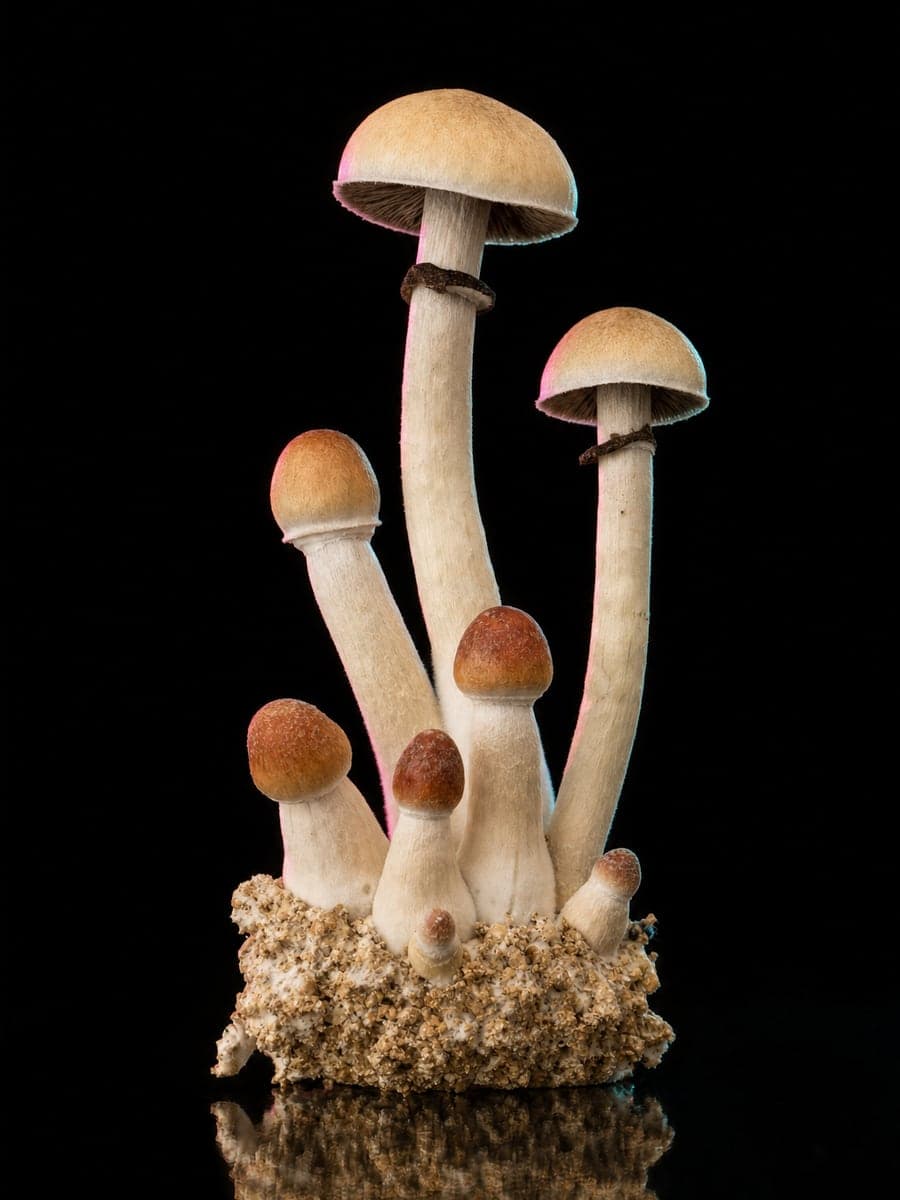
What it looks like
- Caps
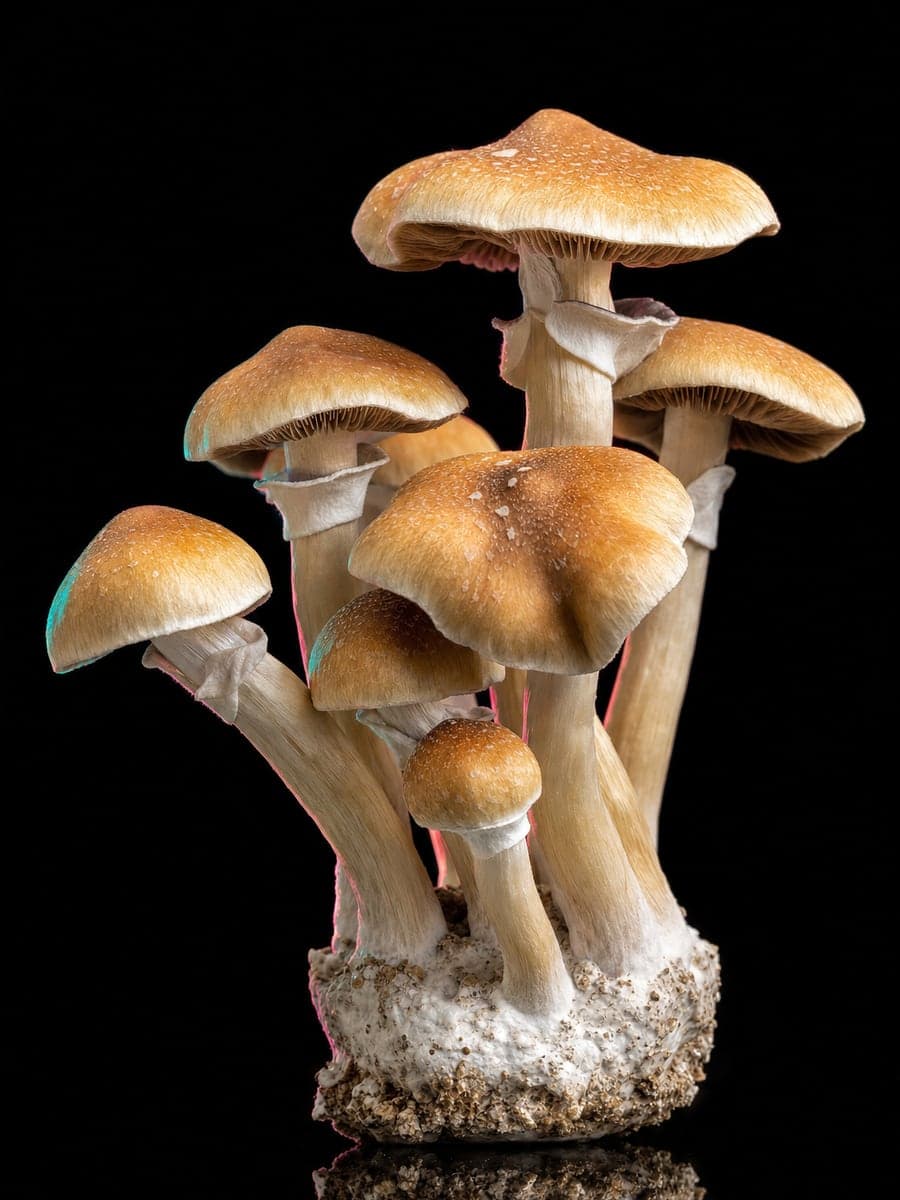
- Pins often red-topped with white flecks; caps turn red-brown as they open and can look large for the fruit's height.
- Stems
- Shorter than average and meaty, often noticeably wider at the base than at the top.
- Notes
- Older descriptions say the cultivated culture is a domesticated third-generation clone, and that the original wild collection was more varied, including tall, slim fruits with pointed caps.
- Growing
- Old descriptions call it a fast coloniser that resists contamination well; growers often report short, dense fruits rather than tall ones.
How it is described
Koh Samui has long had a reputation as a potent Thai cubensis in older vendor descriptions. Little detailed trip-report material was found, and the available lab summary suggests typical strength.
Based on: Older vendor descriptions reposted on Shroomery plus one secondary summary of Psilocybin Cup-style lab data; no strain-specific trip-report consensus found.
Koh Samui (Thai), asked and answered
Where does the Koh Samui strain come from?
It is named after Koh Samui, an island in Thailand. Grower lists credit John Allen with collecting it from buffalo manure in the fields of Ban Hua Thanon. Allen's published fieldwork on the island dates to 1989–90.
What does Koh Samui look like?
Growers describe short, stout fruits with meaty stems that widen at the base, red-topped pins with white flecks, and red-brown caps that can look large for the height.
Is Koh Samui strong?
Older vendor copy called it very potent, but a summary of lab results puts it in the typical range for cubensis. Strength varies from grow to grow.
Is Koh Samui the same as Psilocybe samuiensis?
No. Psilocybe samuiensis is a separate, much smaller species described from the island in 1993. The Koh Samui strain is Psilocybe cubensis.
What is the Koh Samui Super Strain?
KSSS is listed as an isolate of the original Koh Samui. Many growers see it as a more domesticated version rather than a separate strain.
The Shroomdex records history and reputation, not advice: how a strain is described is never a promise of how it will feel, and nothing here is medical advice. Strength varies from batch to batch. Start low and see our dose calculator. Never forage from a website: deadly look-alikes grow wild.