Cuban
Named for the island where cubensis was first described.
Psilocybe cubensis was first described in 1906 as Stropharia cubensis by the American mycologist Franklin Sumner Earle from Cuba; "cubensis" means "coming from Cuba". Rolf Singer moved it into Psilocybe in 1949.
The usual story makes it the "original" cubensis because of the species name, though no living culture is known to descend from Earle's collection.
Where Cuban comes from
Cuban is a Psilocybe cubensis line sold as a collection from Cuba, the island where the species was first described in 1906. Ralphster's Spores released a version said to come from Camagüey. It is sold widely and has a reputation as an easy, classic cubensis.
- Origin
- Cuba; one vendor line from Camagüey (per Ralphster's Spores) · Circulating among spore traders by the mid-1990s (reported)
- Family
- Wild isolates · Americas · Common
- Lineage
- Several sellers use the name; Ralphster's Camagüey line is the one with a stated place.
Psilocybe cubensis was first described in 1906 as Stropharia cubensis by the American mycologist Franklin Sumner Earle from Cuba; "cubensis" means "coming from Cuba". Rolf Singer moved it into Psilocybe in 1949.
Wikipedia: Psilocybe cubensis (pointer)An archived Shroomery strain profile quotes Ralphster's Spores on its Cuban release: six months of work, from Camagüey, Cuba.
Shroomery forum: 'Strain Questions HERE ONLY!' (archived strain profiles)Tripsitter says the Cuban strain sold today is not Earle's original sample, which is long gone, and that it began circulating in spore-trading circles in the mid-1990s; it names no collector.
Tripsitter: 'Cuban Strain: A True OG Mushroom'Tripsitter also notes that "Cuban" and "Cubes" are sometimes used loosely for other cubensis, so labels can be mixed up.
Tripsitter: 'Cuban Strain: A True OG Mushroom'
The usual story makes it the "original" cubensis because of the species name, though no living culture is known to descend from Earle's collection.
Vendor copy often links it to the 1970s grow-guide era; that link is about the species, not this line.
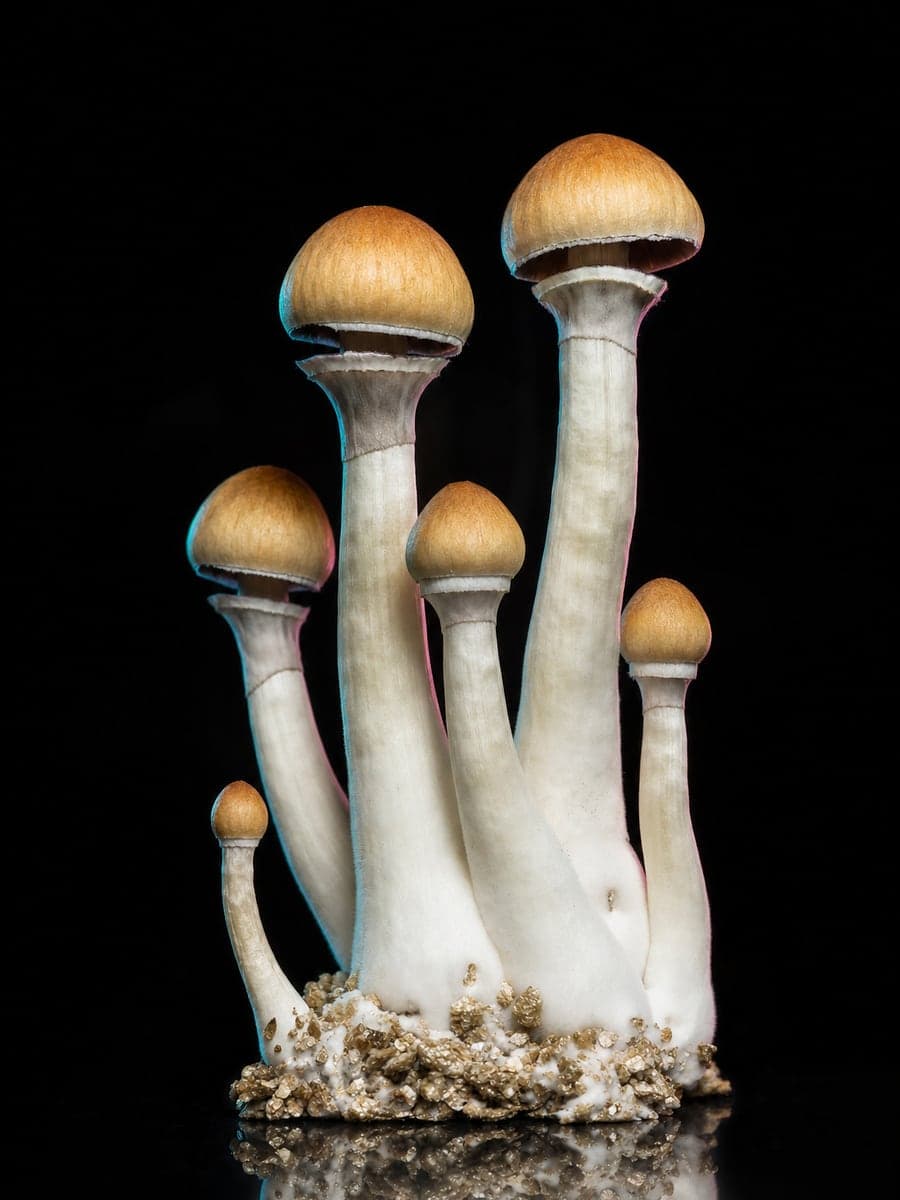
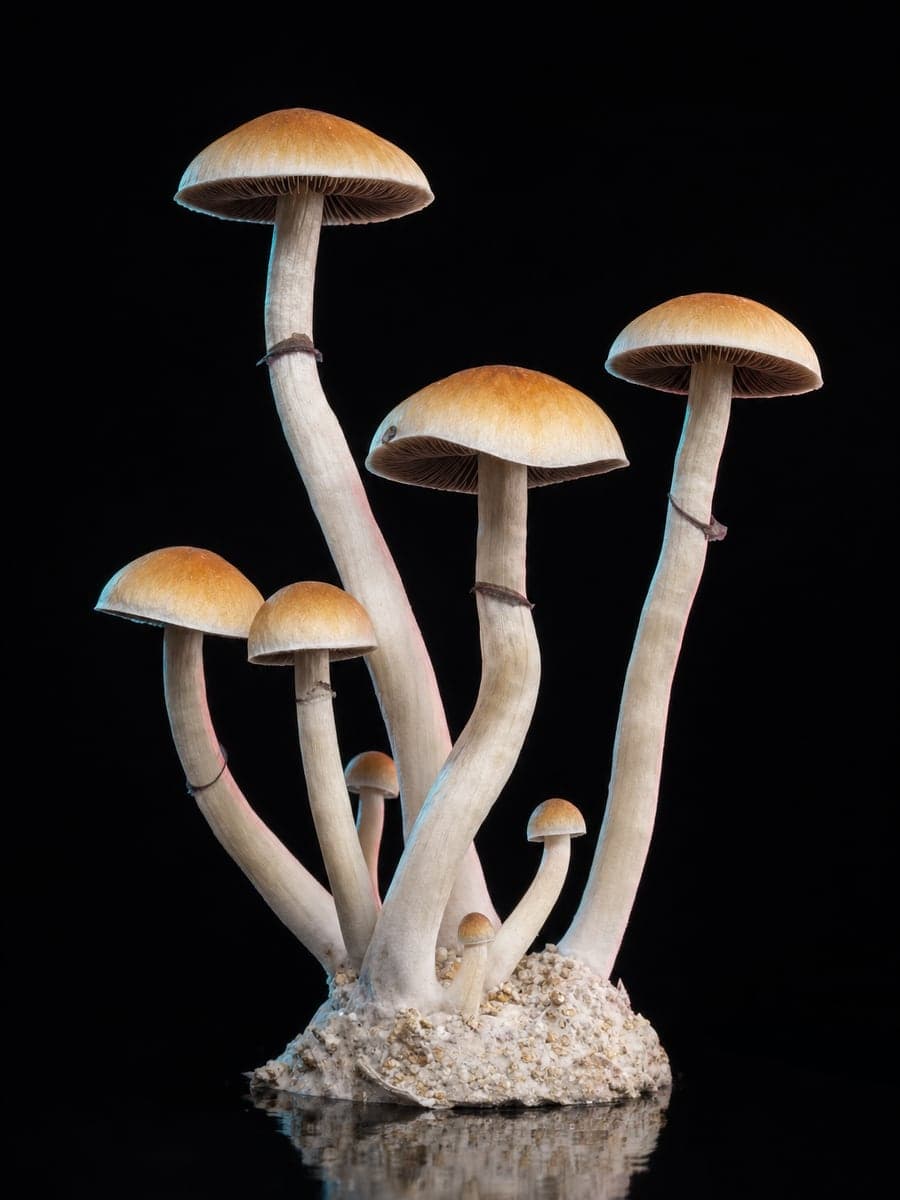
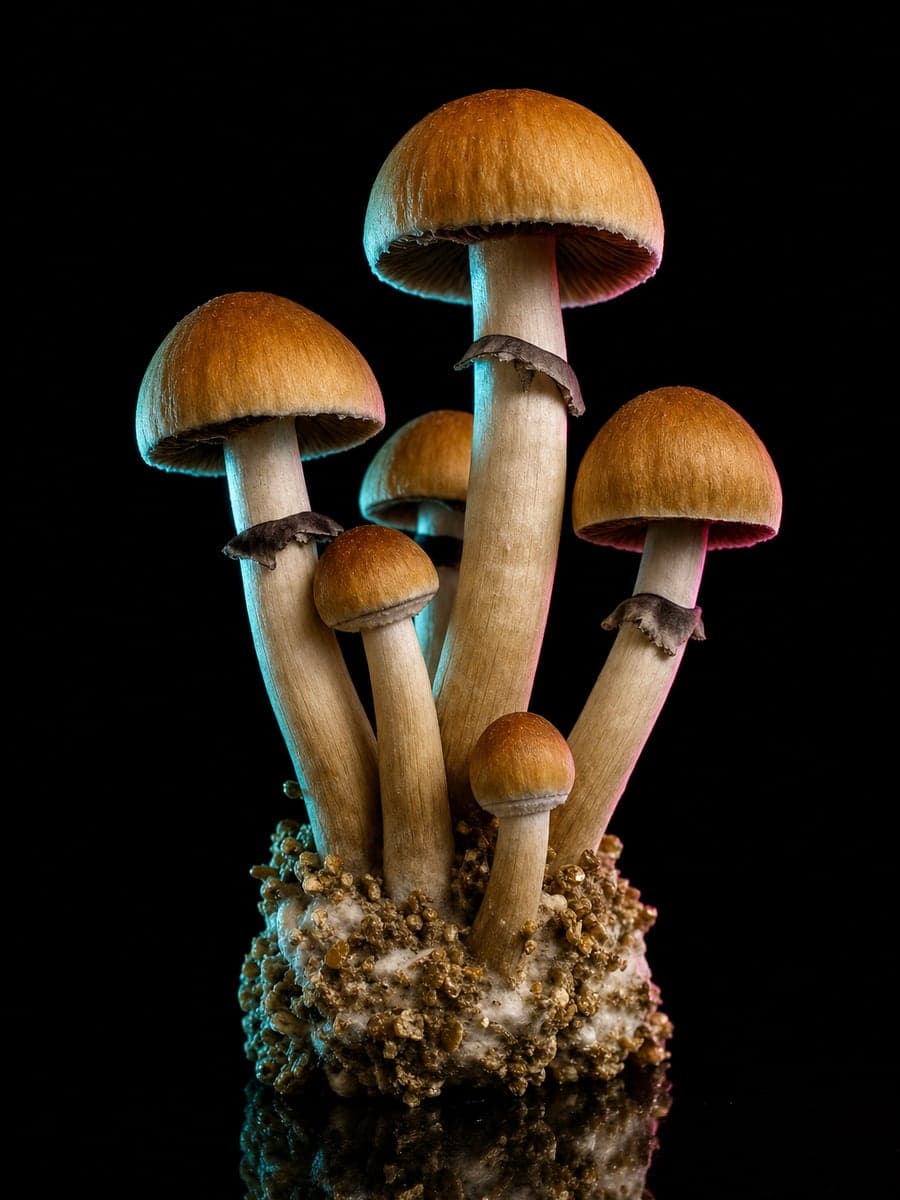
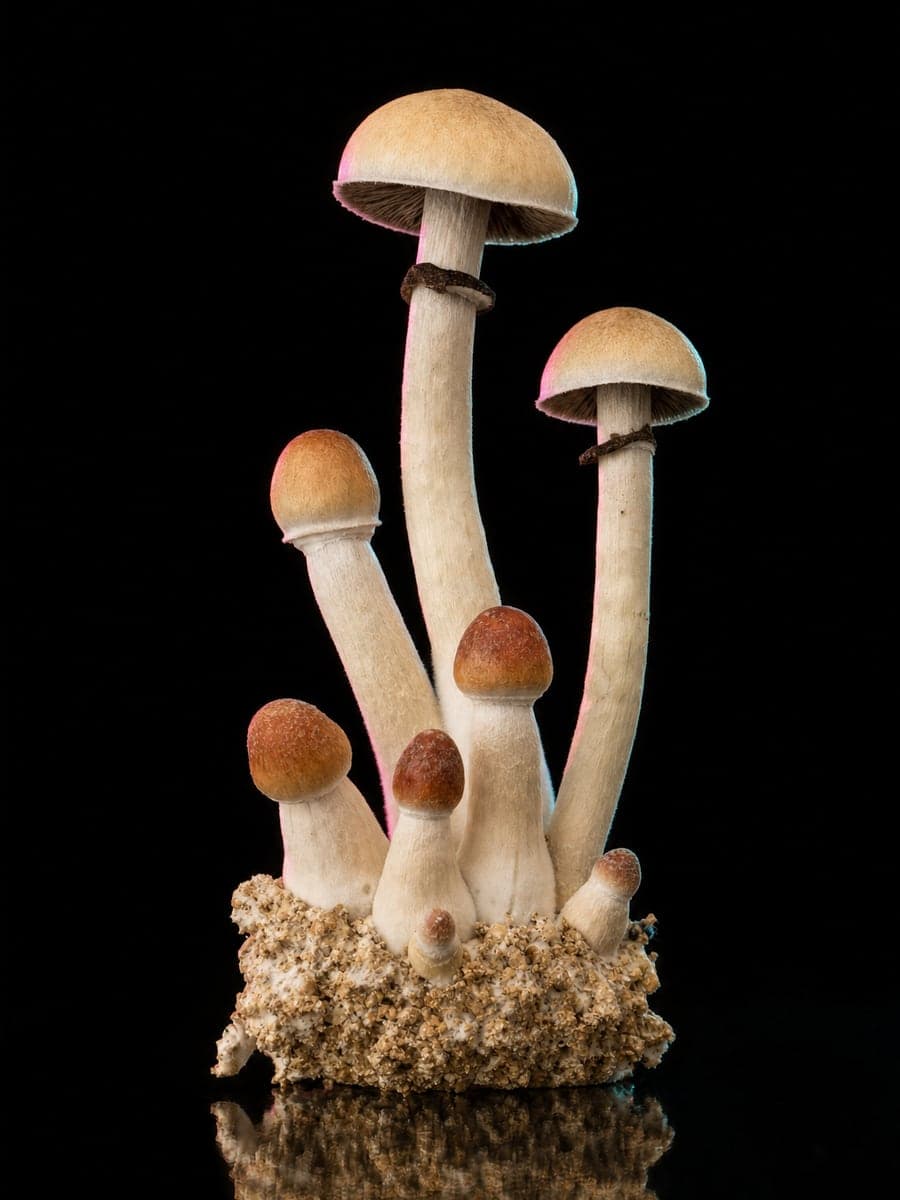
What it looks like
- Caps
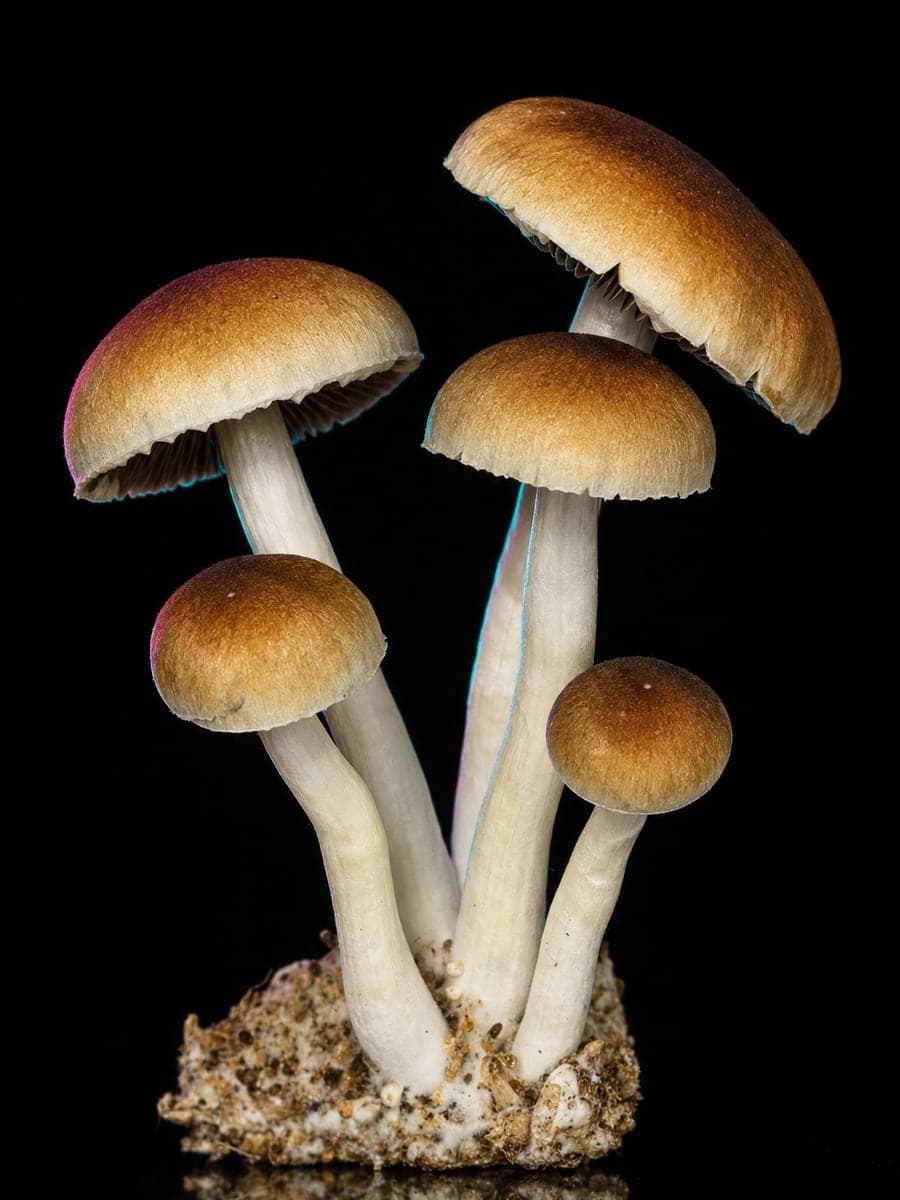
- Light golden-brown to orange-tinted brown, domed when young and flattening with age, sometimes wavy at the edge (vendor and guide descriptions).
- Stems
- Pale to white; described as long, with sources split on whether they are thin or thick.
- Notes
- Blue bruising when handled. Descriptions conflict on size: one guide calls it smaller than many cubensis, a vendor gives caps of 2 to 8 cm.
- Growing
- Guides rate it easy and beginner-friendly, colonising quickly and fruiting over several flushes.
How it is described
Cuban is usually described as a well-rounded, middle-of-the-road cubensis, often called clear and euphoric. Strain guides rate it average to above average; no strain-specific lab test was found.
Based on: Strain-guide and vendor descriptions; no lab data and little trip-report consensus.
Cuban, asked and answered
Where does the Cuban strain come from?
It is sold as a collection from Cuba, where the species was first described in 1906. Ralphster's Spores released a line it said came from Camagüey.
Is Cuban the original cubensis?
No. The species is named after Cuba, but strain guides note that the Cuban line sold today is a later collection, not Earle's original sample.
What does Cuban look like?
Golden-brown to orange-brown caps that flatten with age on pale stems, with blue bruising. Descriptions disagree on whether the stems run thin or thick.
Is Cuban strong?
It has a reputation as a balanced, typical cubensis. No lab test of this line was found.
The Shroomdex records history and reputation, not advice: how a strain is described is never a promise of how it will feel, and nothing here is medical advice. Strength varies from batch to batch. Start low and see our dose calculator. Never forage from a website: deadly look-alikes grow wild.