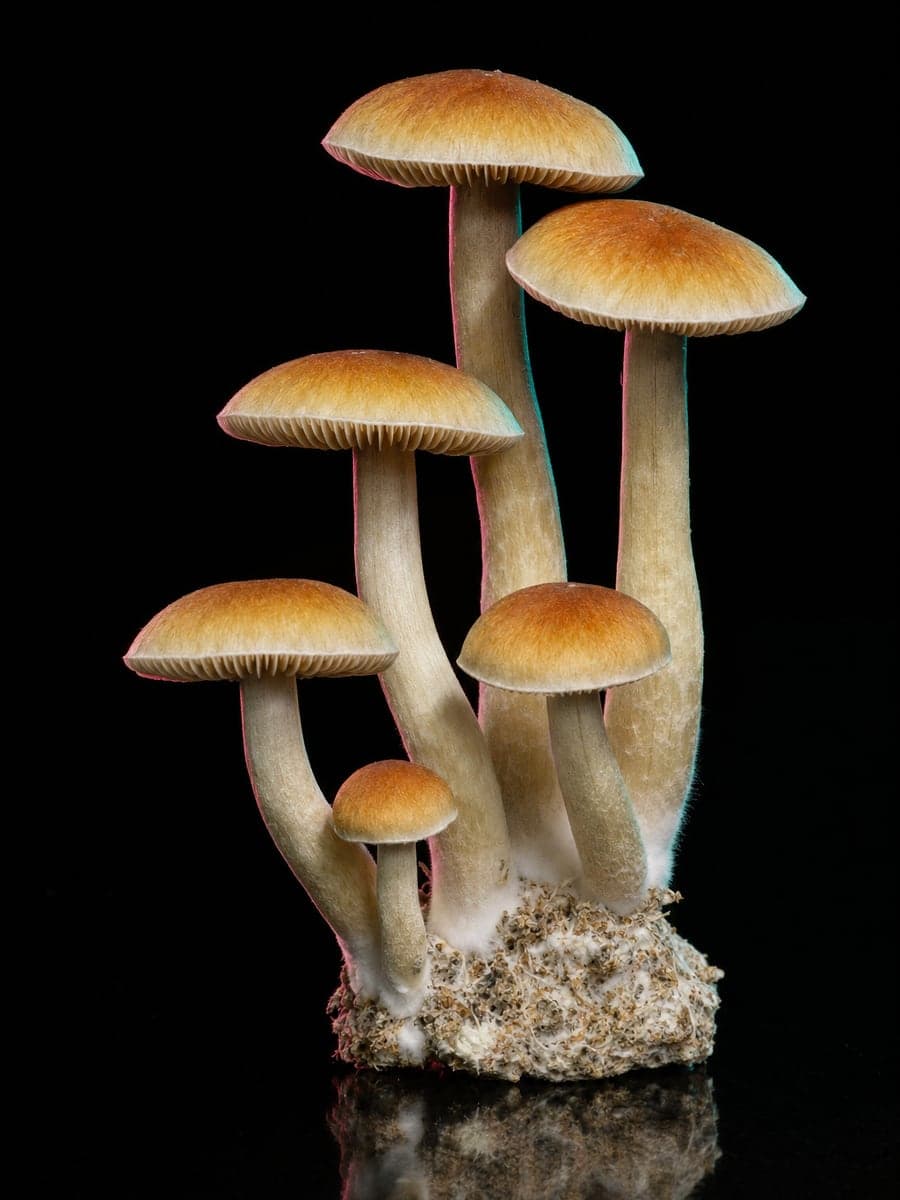
Malabar
Meaty stems from India's Malabar Coast.
The strain was announced on Shroomery's sponsors forum in September 2001 by 3Mshroom, who said family research led to a relative on the Malabar Coast, that a cousin made five spore prints of wild mushrooms there, and that only one gave clean mycelium. He named it after the place and his family name.
Grower lore says the original mushrooms were found on elephant dung, though the releaser's own 2001 posts do not say so.
Where Malabar comes from
Malabar is a Psilocybe cubensis strain released in 2001 by a Shroomery spore vendor, 3Mshroom, who said a relative collected it on India's Malabar Coast. Growers know it for thick, fleshy stems with small caps and a veil that can stay on late.
- Origin
- Malabar Coast, south-west India (per the releaser's account) · Released 2001
- Family
- Wild isolates · Asia · Uncommon
The strain was announced on Shroomery's sponsors forum in September 2001 by 3Mshroom, who said family research led to a relative on the Malabar Coast, that a cousin made five spore prints of wild mushrooms there, and that only one gave clean mycelium. He named it after the place and his family name.
Shroomery Sponsors Forum: 'the new Malabar strain' by 3Mshroom (2001)In the same thread the releaser called it vigorous on horse-dung trays, comparable in potency to other cubensis, and, a few posts later, simply another cubensis strain.
Shroomery Sponsors Forum: 'the new Malabar strain' by 3Mshroom (2001)Shroomery's compiled strain profiles credit the discovery to 3M and its domestication to the members Phrozendata, Roadkill and Thor.
Shroomery forum: 'Strain Questions HERE ONLY!' (compiled strain profiles)Older strain write-ups circulated on Shroomery say it fruits well in warm conditions, up to about 32 °C (90 °F), and keeps a persistent veil.
Shroomery forum: 'THE STRAIN THREAD!' (Magash's compiled write-ups, 2003)
Grower lore says the original mushrooms were found on elephant dung, though the releaser's own 2001 posts do not say so.
Strain lists often call it a landrace of the Malabar Coast; the only account of the collection is the releaser's family story.
What it looks like
- Caps
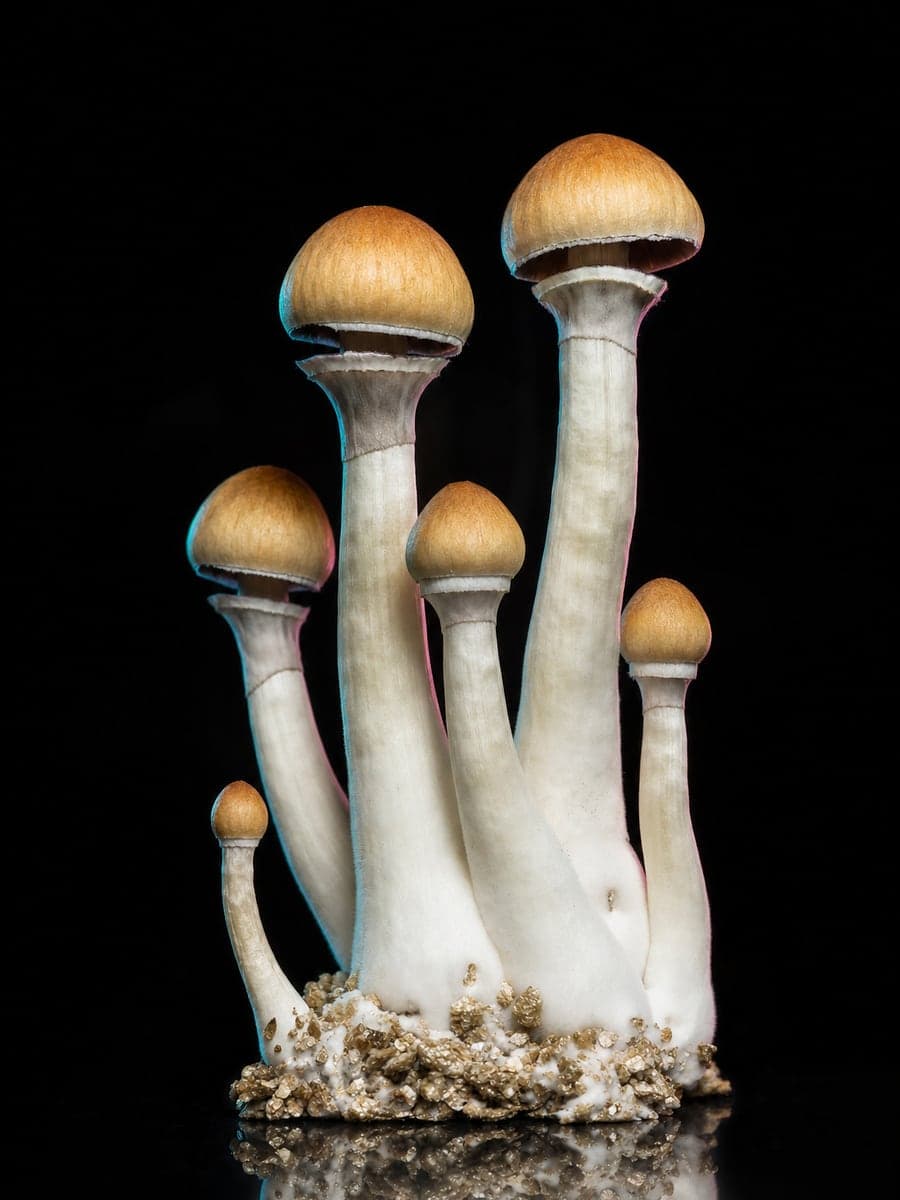
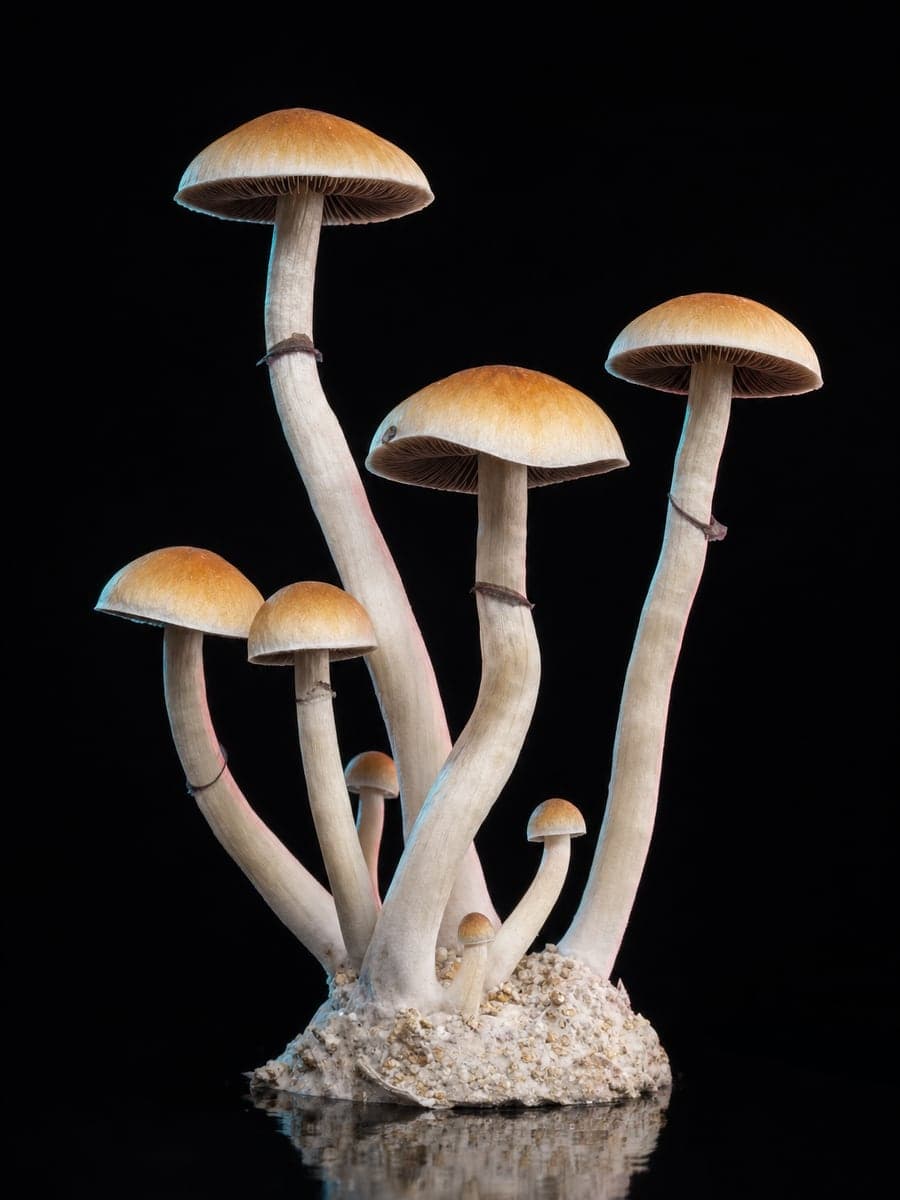
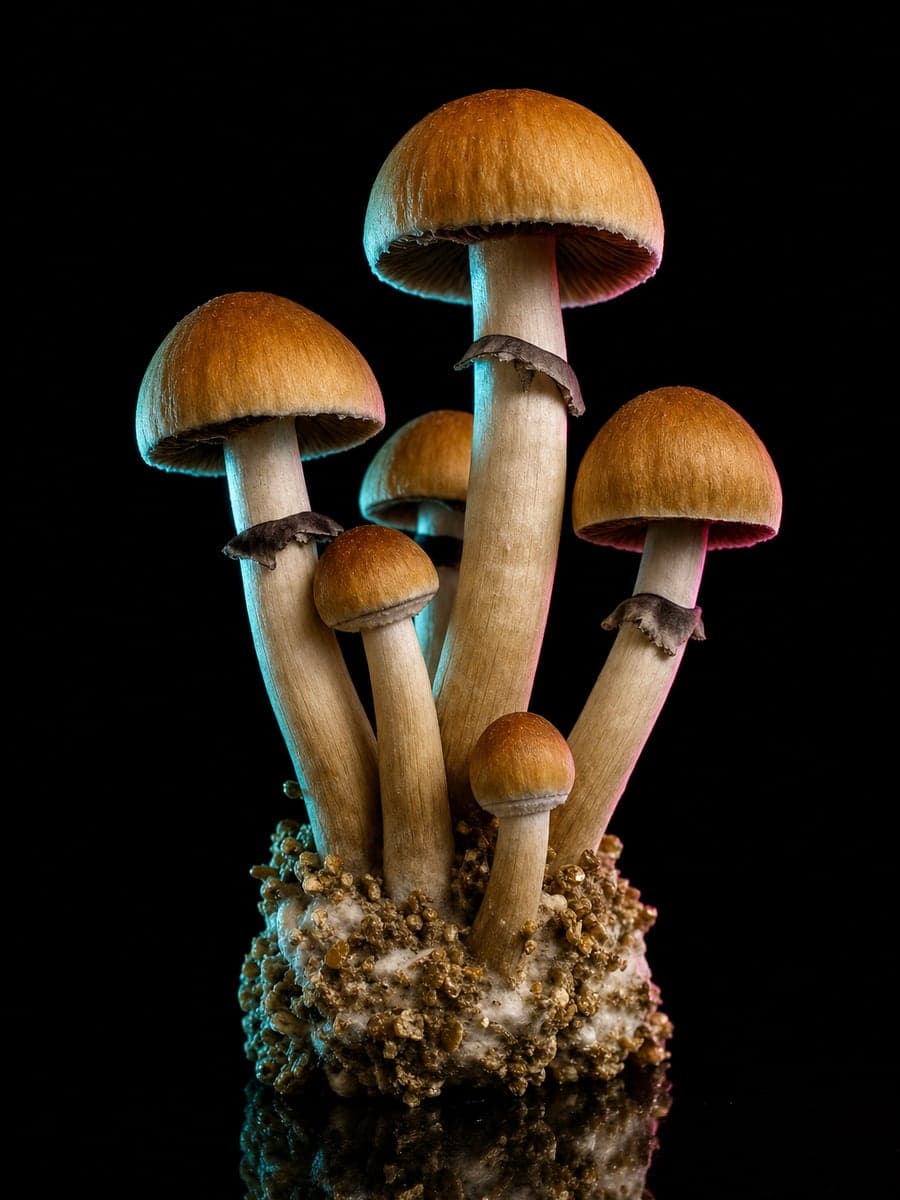
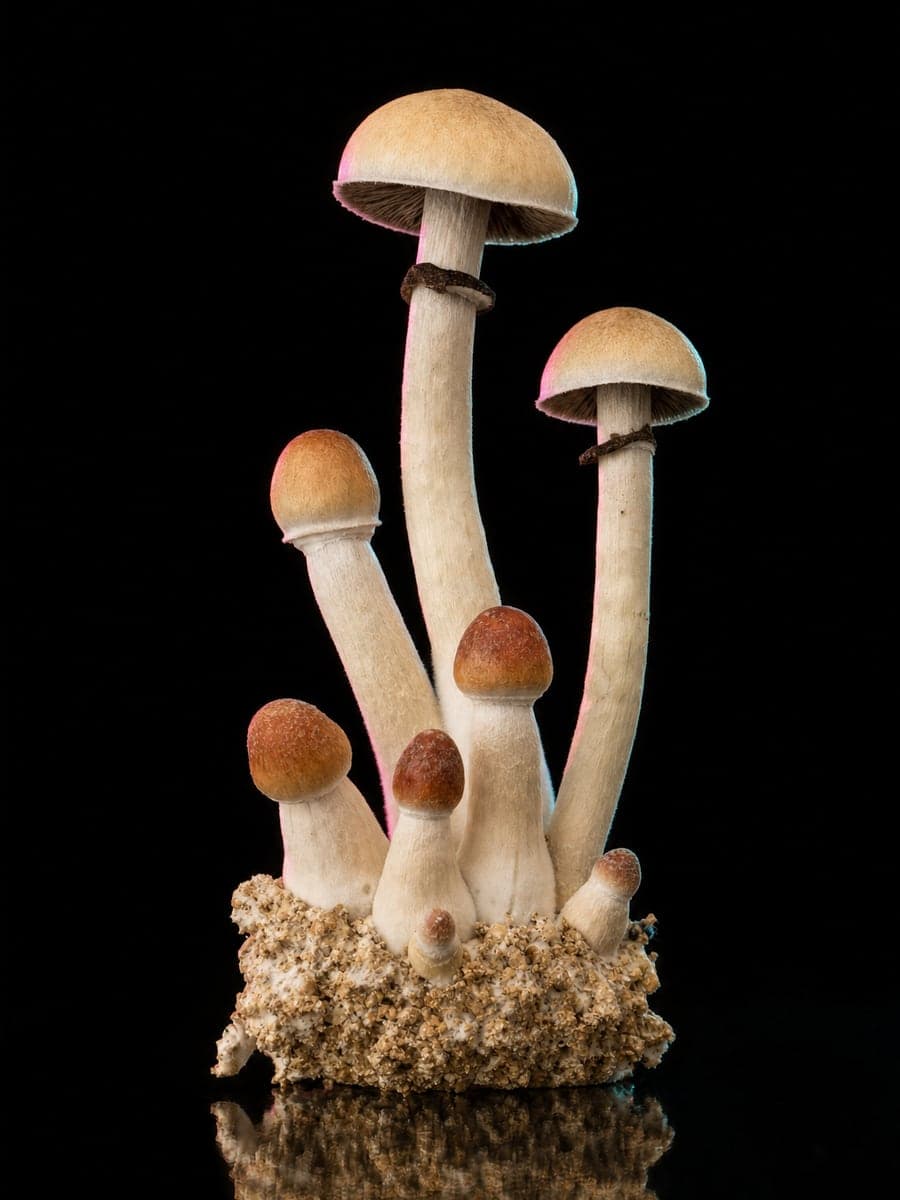
- Small for the stem length; dark in the centre, fading to light yellow at the edge.
- Stems
- Very thick, fleshy and meaty.
- Notes
- The partial veil often stays attached until maturity, and spore production is described as poor. Some growers say their Malabar did not have especially meaty stems.
- Growing
- Described as easy and vigorous, and tolerant of warmer fruiting temperatures than many cubes; poor spore production means prints can be sparse.
How it is described
Malabar has a reputation as a moderate to fairly potent, otherwise typical cube; its releaser compared it with other cubensis. Detailed trip reports are scarce.
Based on: Releaser's 2001 description and the 'moderate to potent' rating in old Shroomery strain profiles; no lab data.
Malabar, asked and answered
Where does the Malabar strain come from?
Its releaser, the Shroomery vendor 3Mshroom, said in 2001 that a relative collected it on the Malabar Coast of south-west India. That family account is the only record of the collection.
What does Malabar look like?
Thick, fleshy stems with fairly small caps that are dark in the middle and fade to yellow at the edge. The veil often hangs on late.
Is Malabar strong?
Its reputation is moderate to fairly potent, roughly in line with other cubes. There is no published lab test for it.
The Shroomdex records history and reputation, not advice: how a strain is described is never a promise of how it will feel, and nothing here is medical advice. Strength varies from batch to batch. Start low and see our dose calculator. Never forage from a website: deadly look-alikes grow wild.