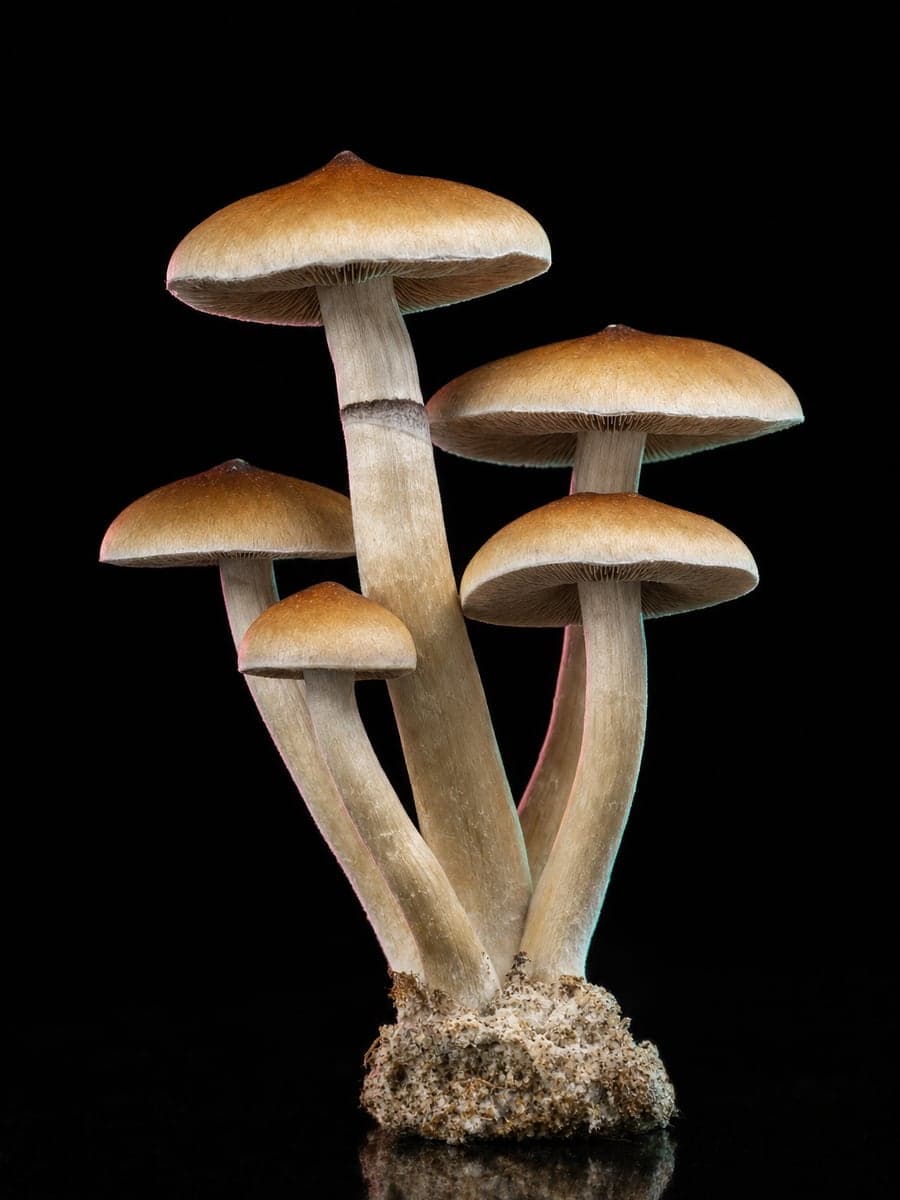
Orissa
An Indian dung-lover famed for very large fruits.
A 2004 Shroomery strain list gives Orissa India as coming from Orissa, India, via John Allen, and says it was originally found on elephant dung and produces some extremely large fruits.
The usual story says wild Orissa caps grow as big as an open hand, and that cultivated ones stay smaller but still bulkier than most strains.
Where Orissa comes from
Orissa, often listed as Orissa India, is a Psilocybe cubensis strain from the state of Orissa (now Odisha) in eastern India, credited to the ethnomycologist John Allen. Strain lists since at least 2004 describe it as found on elephant dung and known for very large fruits. Little else about its history is recorded.
- Origin
- Orissa (now Odisha), India; credited to John Allen · Unknown; listed on Shroomery by 2004
- Family
- Wild isolates · Asia · Uncommon
- Lineage
- Mycopedia lists Albino Orissa and Albino Odisha Squats as lines from Orissa India.
A 2004 Shroomery strain list gives Orissa India as coming from Orissa, India, via John Allen, and says it was originally found on elephant dung and produces some extremely large fruits.
Shroomery forum: 'Some strain info.' (Mycomancer, 2004)A 2022–24 Shroomery variety list repeats the basics: from India, credited to John Allen.
Shroomery forum: 'A Huge List of Psilocybe Cubensis Variety description' (LulzSwag, 2022–24)The Mycopedia index tells the find differently, on the dung of wild bulls, agrees that it is known for large fruits, and lists two albino lines bred from it.
Mycopedia: Orissa India (secondary index)A seller describes broad caramel to dark brown caps that flatten with age, thick dense stems and fruits taller than most cubensis.
Zombie Mushrooms: Orissa India (vendor page)
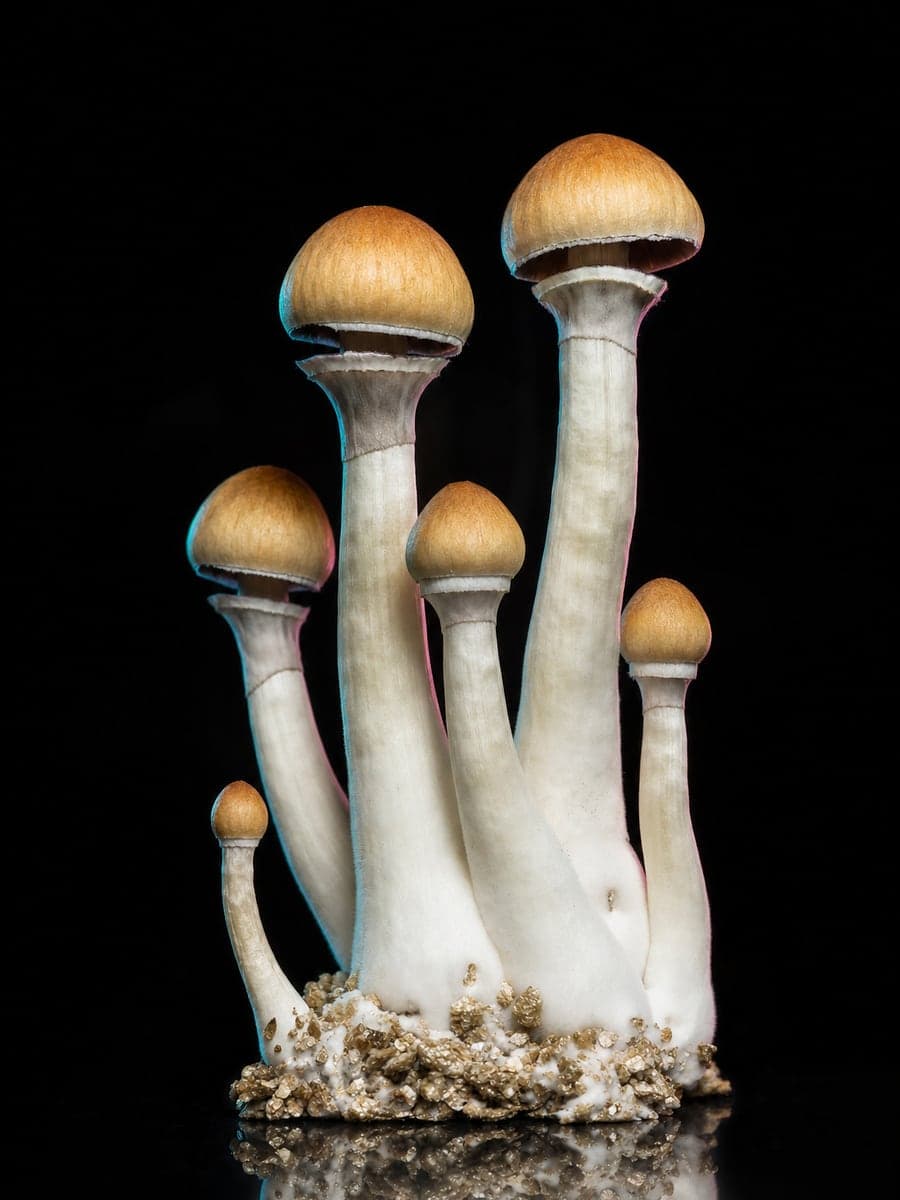
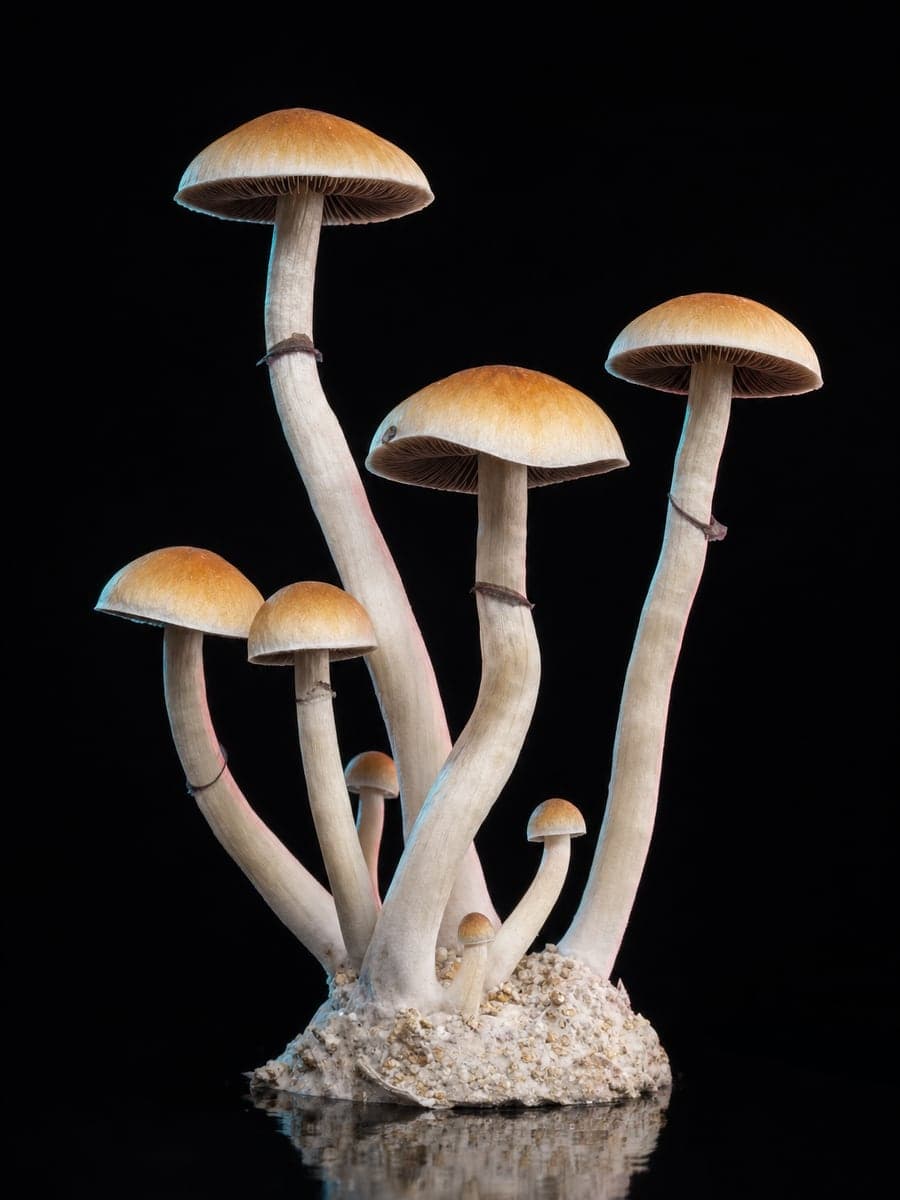
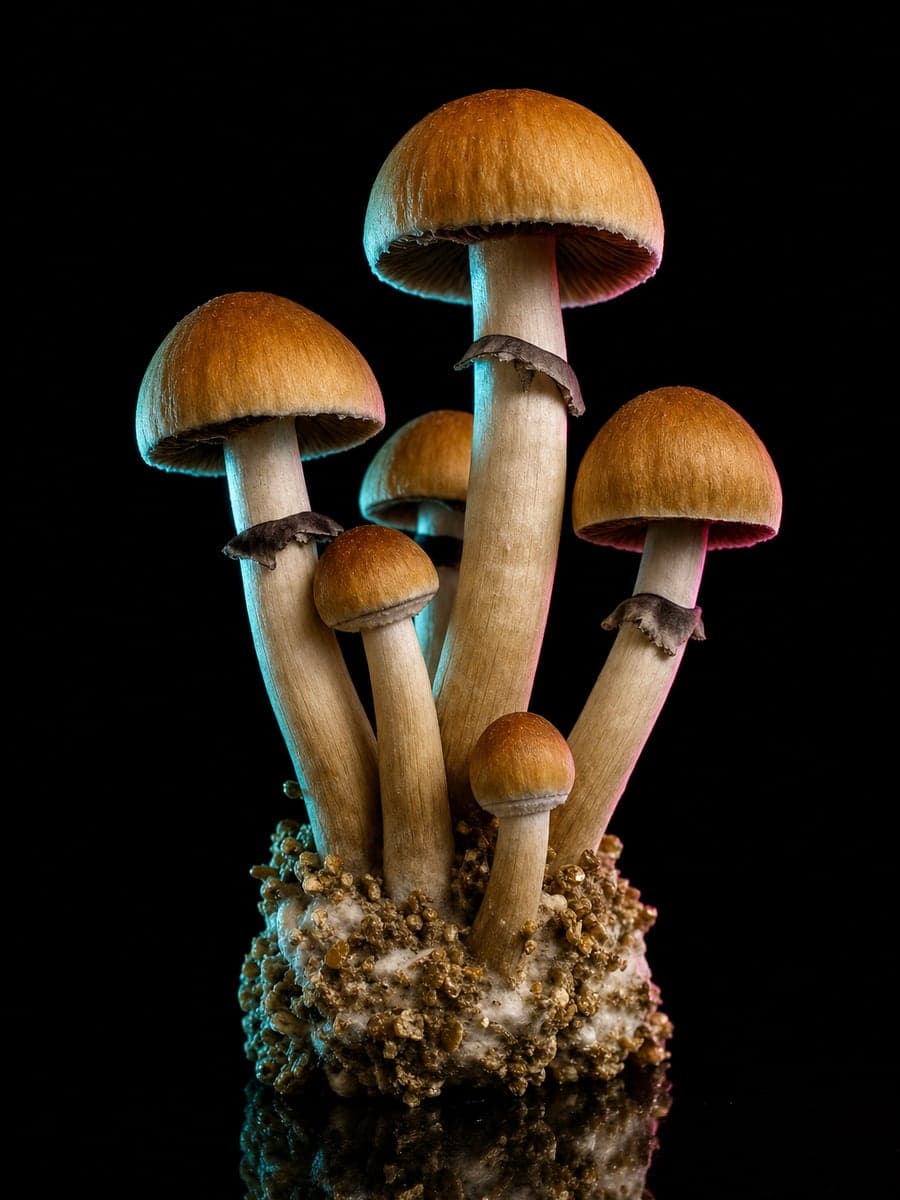
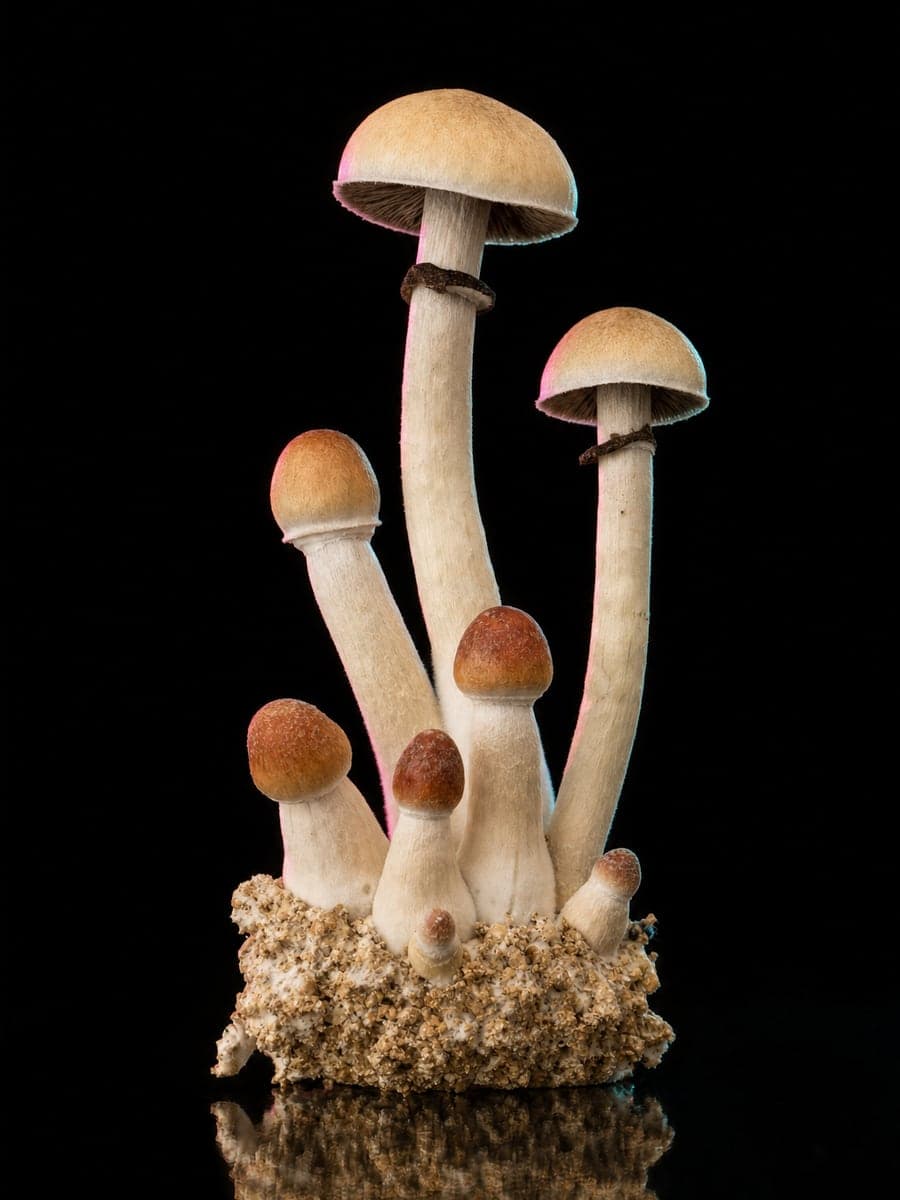
The usual story says wild Orissa caps grow as big as an open hand, and that cultivated ones stay smaller but still bulkier than most strains.
Accounts disagree on the dung it was found on: elephant in older lists, wild bull or buffalo in newer ones.
What it looks like
- Caps
- Broad, caramel to dark brown, flattening as they mature; large.
- Stems
- Thick and dense, often taller than average.
- Notes
- Known above all for size: older lists call the fruits extremely large.
- Growing
- Valued for big, bulky fruits; older lists say the wild ones grew extremely large.
How it is described
Orissa is known for its size rather than any particular feel, and is generally treated as a typical cubensis in strength. No lab data or trip-report consensus was found.
Based on: Strain lists that describe its size and origin only; no lab data or trip-report consensus.
Orissa, asked and answered
Where does the Orissa strain come from?
From the state of Orissa, now Odisha, in eastern India. Strain lists credit the ethnomycologist John Allen and say it was found on elephant dung.
What does Orissa look like?
Large, tall fruits with thick, dense stems and broad caramel to dark brown caps that flatten as they open.
Is Orissa strong?
It is known for its size, not its strength, and is usually treated as a typical cubensis. No lab results were found.
Is Orissa the same as Orissa India or Odisha?
Yes. Orissa India is its usual strain-list name, and Odisha is the state's current name.
The Shroomdex records history and reputation, not advice: how a strain is described is never a promise of how it will feel, and nothing here is medical advice. Strength varies from batch to batch. Start low and see our dose calculator. Never forage from a website: deadly look-alikes grow wild.