Pearl Harbor
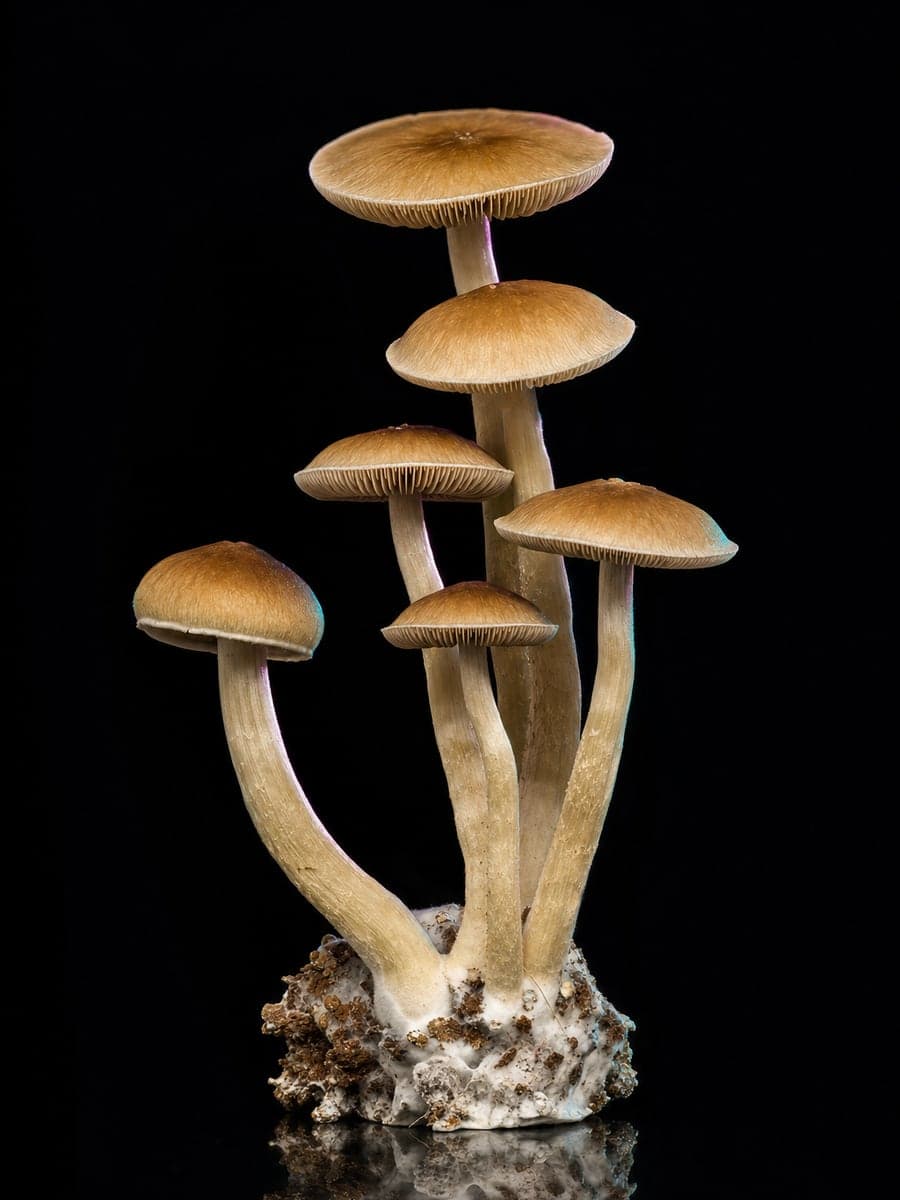
Blue Caterpillar's saucer-capped cube, kept in his memory.
Basidium Equilibrium says Pearl Harbor was originally collected and isolated by the late Blue Caterpillar (Blue Cat), a grower known in the underground mycology community, and that it keeps the variety to honour his work.
The usual assumption is that it was found at or near Pearl Harbor on Oahu, as the name suggests; no source opened says so.
Where Pearl Harbor comes from
Pearl Harbor is a Psilocybe cubensis variety collected, named and isolated by the late grower known as Blue Caterpillar. Two spore companies keep it in their collections and describe dense fruits with white stems and large, saucer-shaped caps. Where it was found is not documented, though the name points to Hawaii.
- Origin
- Not documented; the name points to Pearl Harbor, Oahu, Hawaii
- Family
- Wild isolates · Unknown · Rare
Basidium Equilibrium says Pearl Harbor was originally collected and isolated by the late Blue Caterpillar (Blue Cat), a grower known in the underground mycology community, and that it keeps the variety to honour his work.
Basidium Equilibrium: Pearl Harbor spore print (the maintainer's page)Inoculate The World likewise credits the late Blue Caterpillar with discovering, naming and isolating the strain, and describes dense fruits with white stems and large saucer-shaped caps that drop only a light sprinkling of dark purple spores.
Inoculate The World: Pearl Harbor spore print (vendor page)Hawaiian cubensis lines have long carried a caveat: a 2004 compilation of vendor strain notes says Psilocybe cubensis is not native to the Hawaiian Islands.
Shroomery forum: 'Some strain info.' (2004, compiled vendor descriptions)
The usual assumption is that it was found at or near Pearl Harbor on Oahu, as the name suggests; no source opened says so.
What it looks like
- Caps
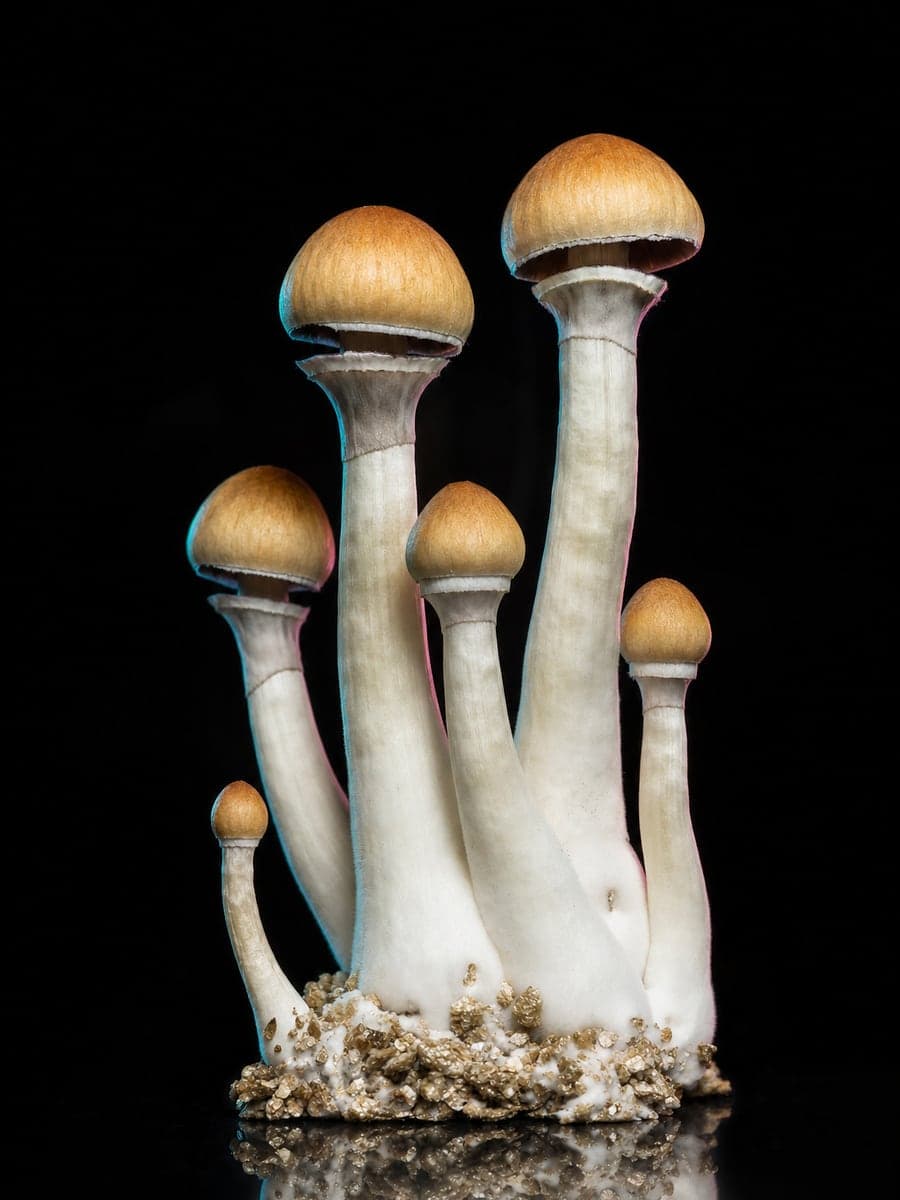
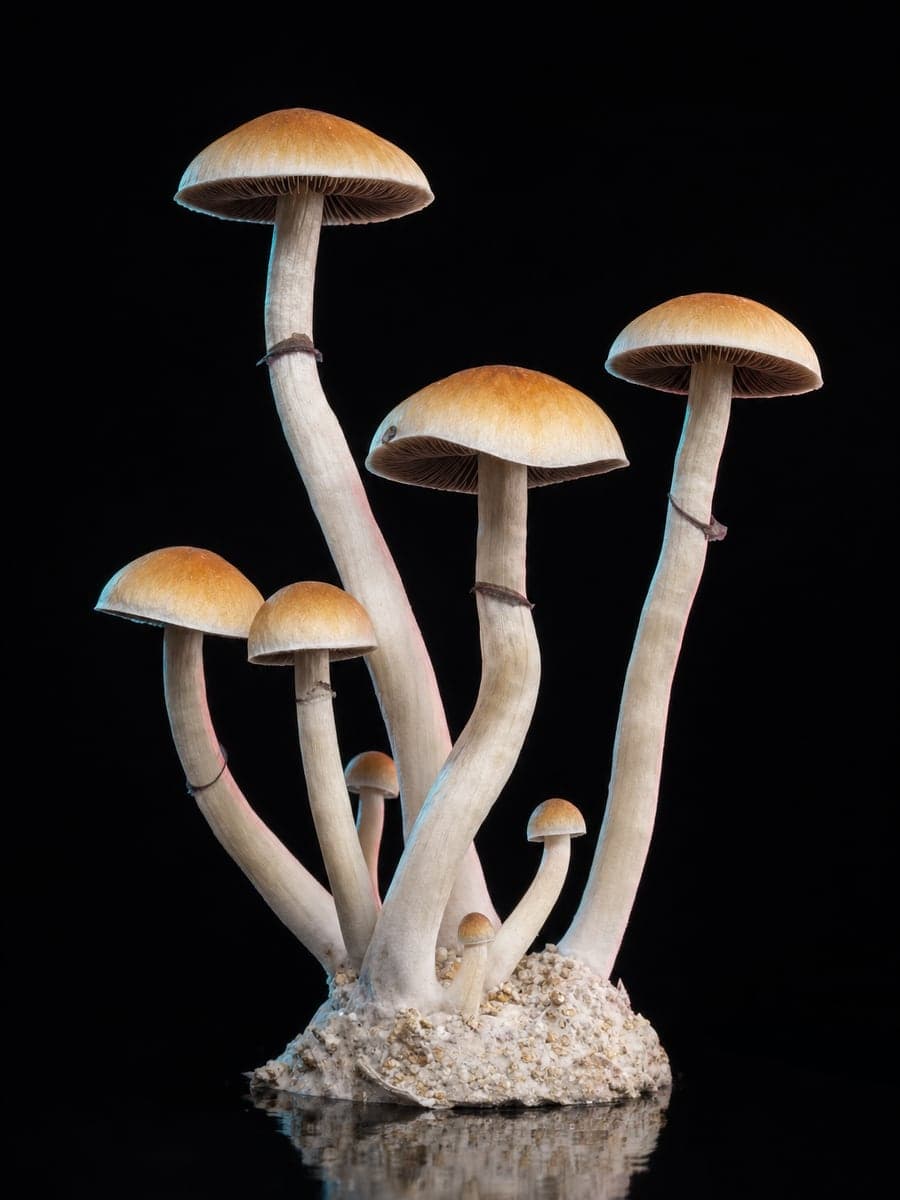
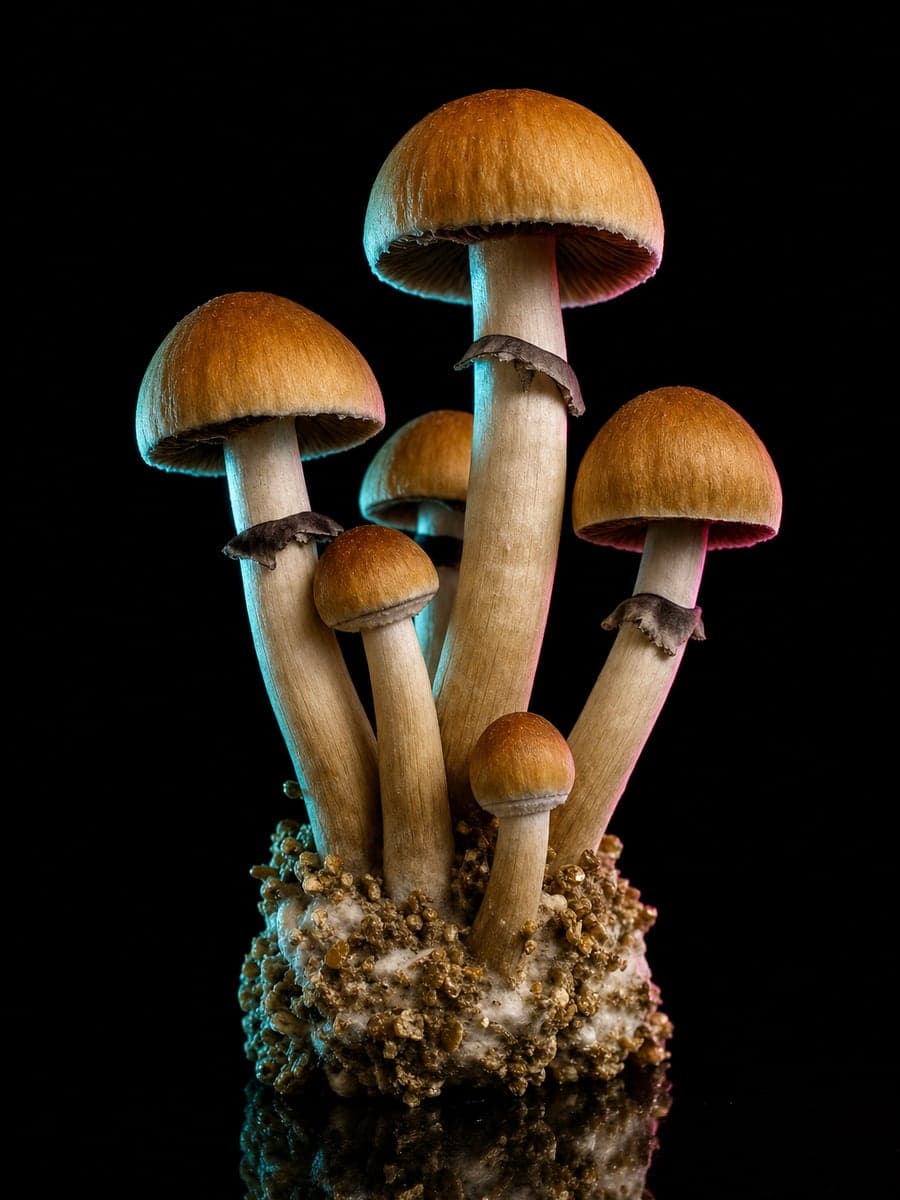
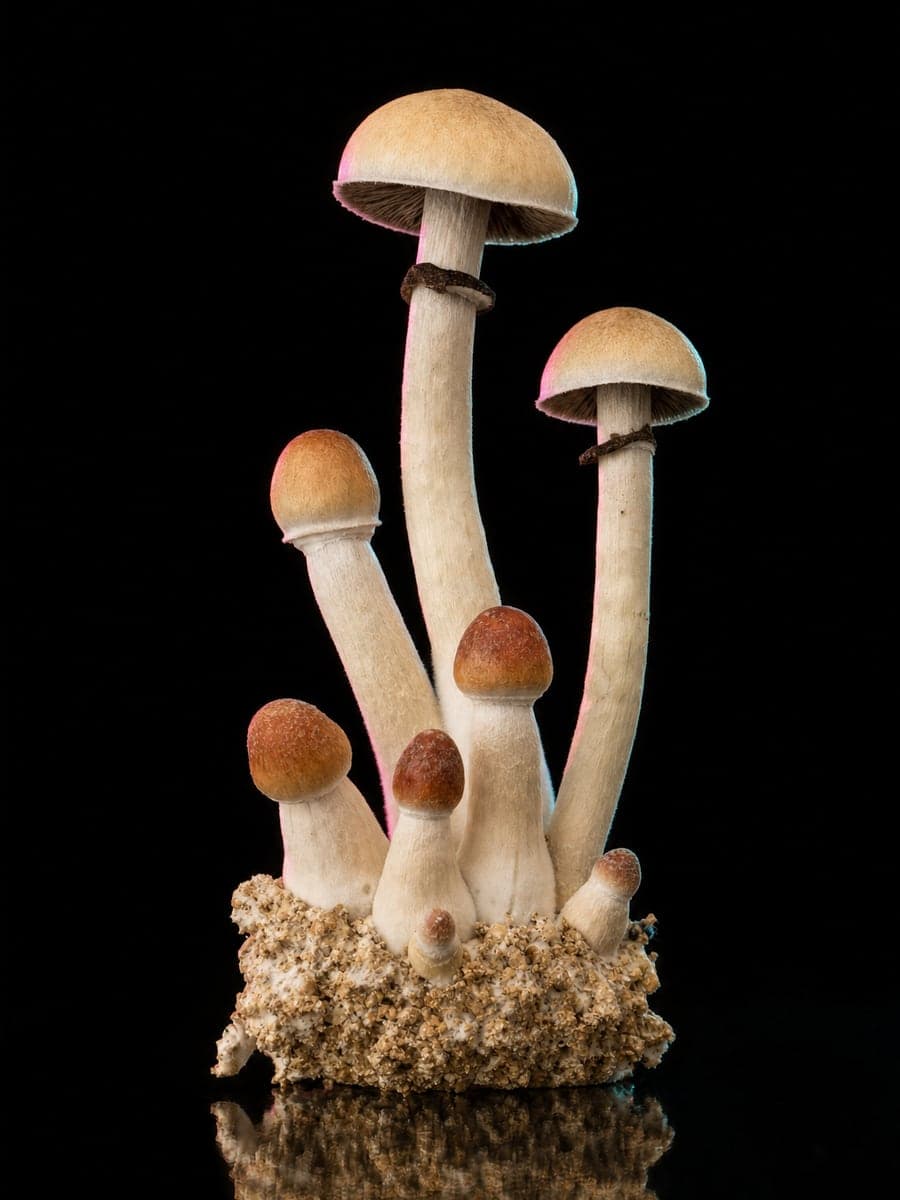
- Large, flat, saucer-shaped caps, tan to caramel with paler rims.
- Stems
- White, fairly tall stems; dense fruits.
- Notes
- Inoculate The World says it drops only a light sprinkling of dark purple spores; Basidium Equilibrium gives the print as purple to purplish-brown.
- Growing
- Inoculate The World labels it a beginner strain and notes its light spore drop; the vendor's photos show dense, even flushes.
How it is described
Pearl Harbor has no clear reputation for strength or feel in the sources found. It is kept mainly as a collector's line from a respected grower.
Based on: No lab data and no trip-report consensus found. The profile is a neutral default.
Pearl Harbor, asked and answered
Where does the Pearl Harbor strain come from?
It was collected and isolated by the late grower Blue Caterpillar. The exact place is not documented, though the name suggests Pearl Harbor in Hawaii.
What does Pearl Harbor look like?
Dense flushes of mushrooms with white stems and large, flat, saucer-shaped tan to caramel caps.
Is Pearl Harbor strong?
There is no lab data or clear reputation for its strength. Like any cubensis, it varies between grows.
Who was Blue Caterpillar?
A grower known in the underground mycology community for collecting and preserving strains. Basidium Equilibrium keeps Pearl Harbor in his memory.
The Shroomdex records history and reputation, not advice: how a strain is described is never a promise of how it will feel, and nothing here is medical advice. Strength varies from batch to batch. Start low and see our dose calculator. Never forage from a website: deadly look-alikes grow wild.