Shakti
Malabar's pale isolate, and a favourite breeding parent.
Growers list Shakti as an albino isolate of Malabar made by MycoMama Angela and her husband.
The name is usually taken from Shakti, the Hindu goddess of divine feminine energy, a nod to its Indian Malabar ancestry.
Where Shakti comes from
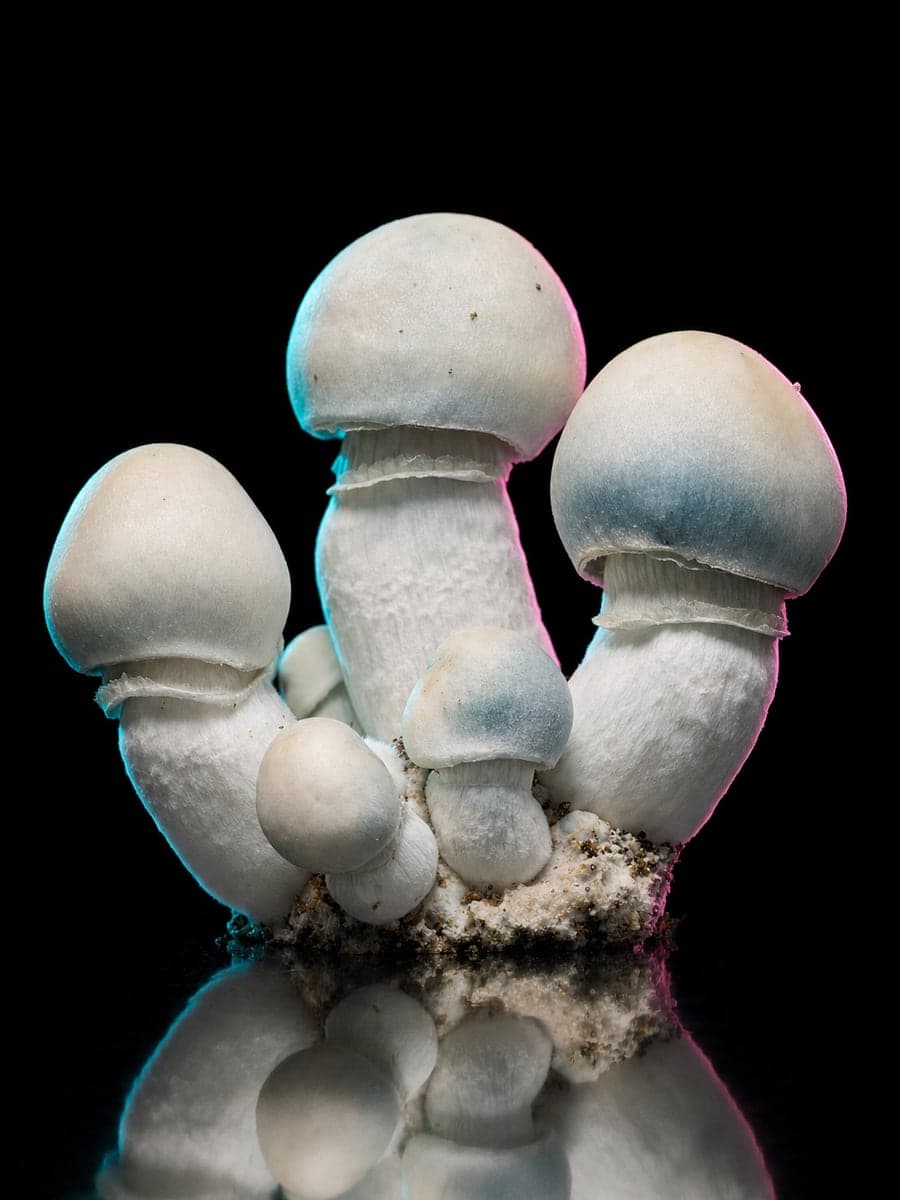
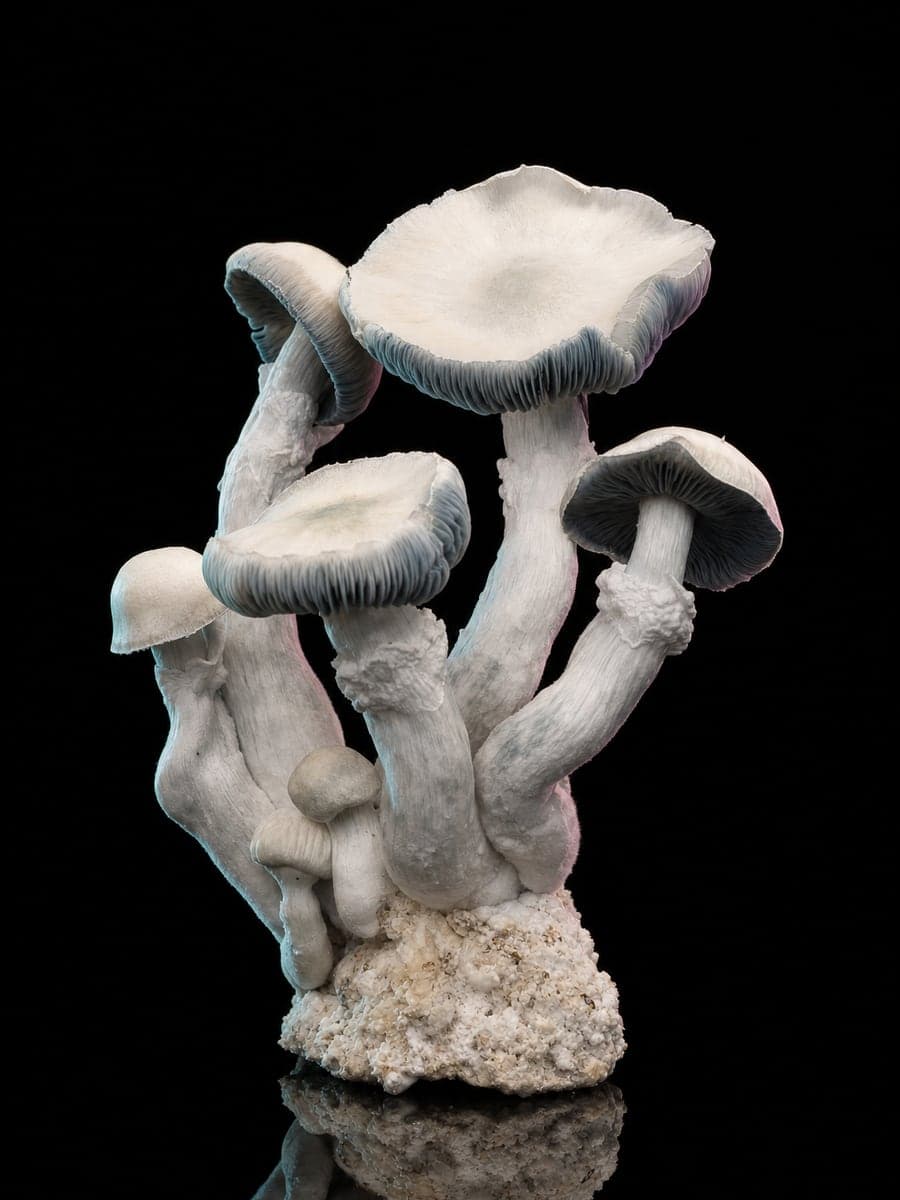
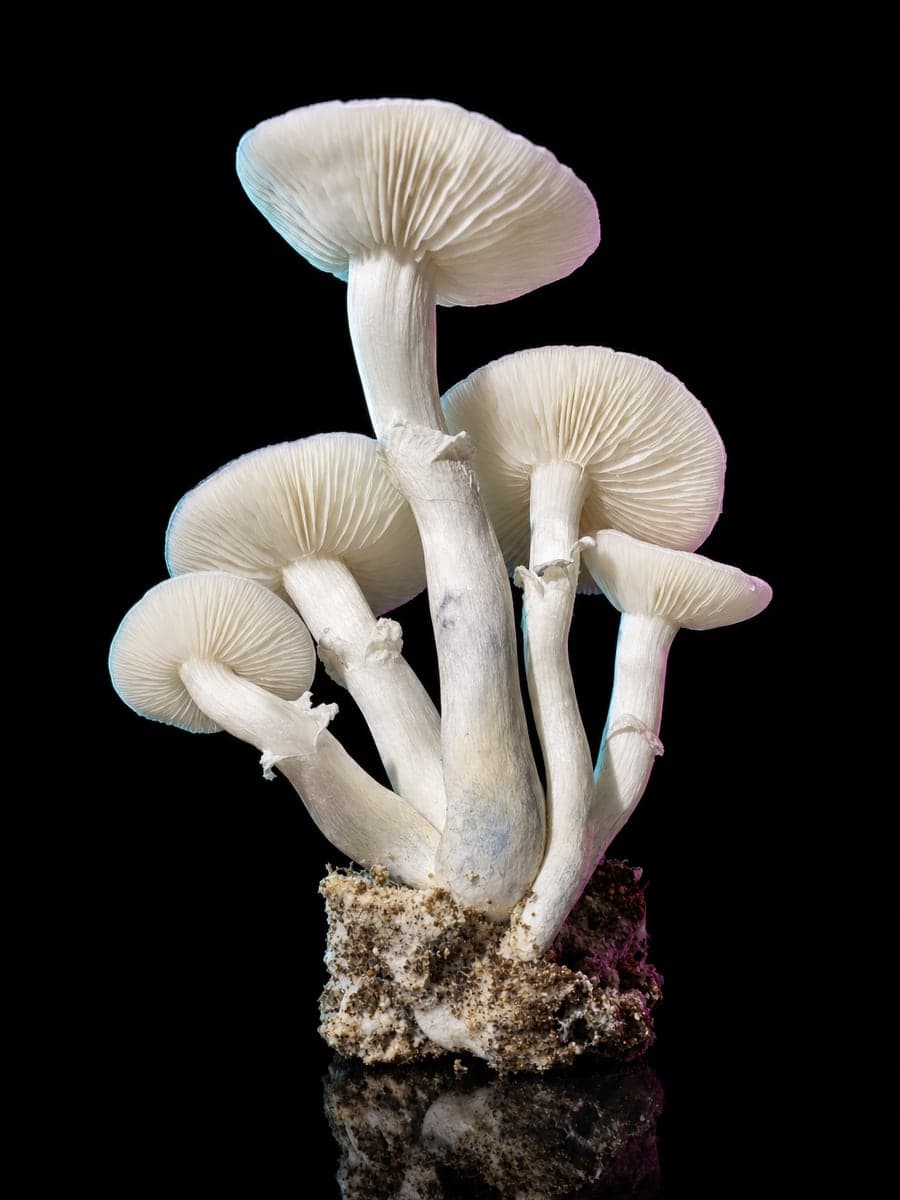
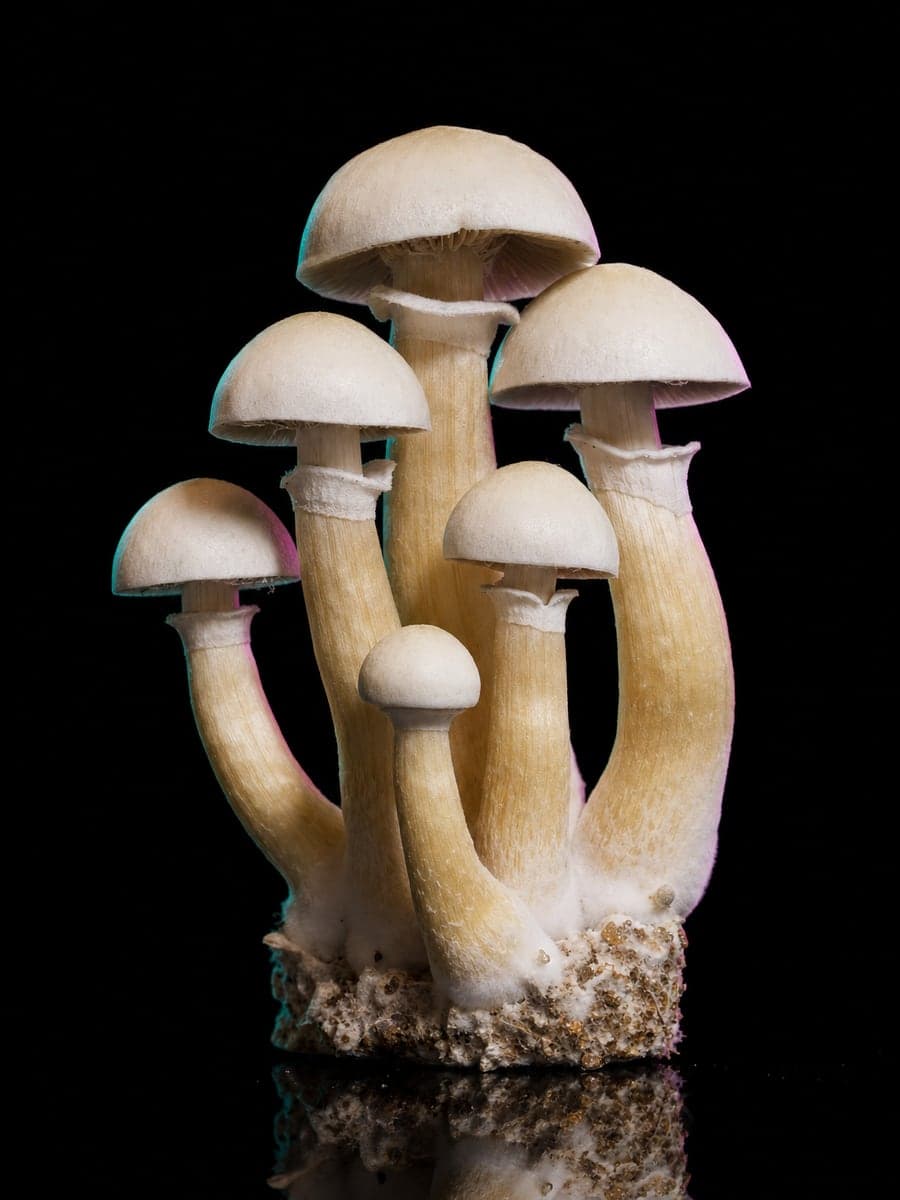
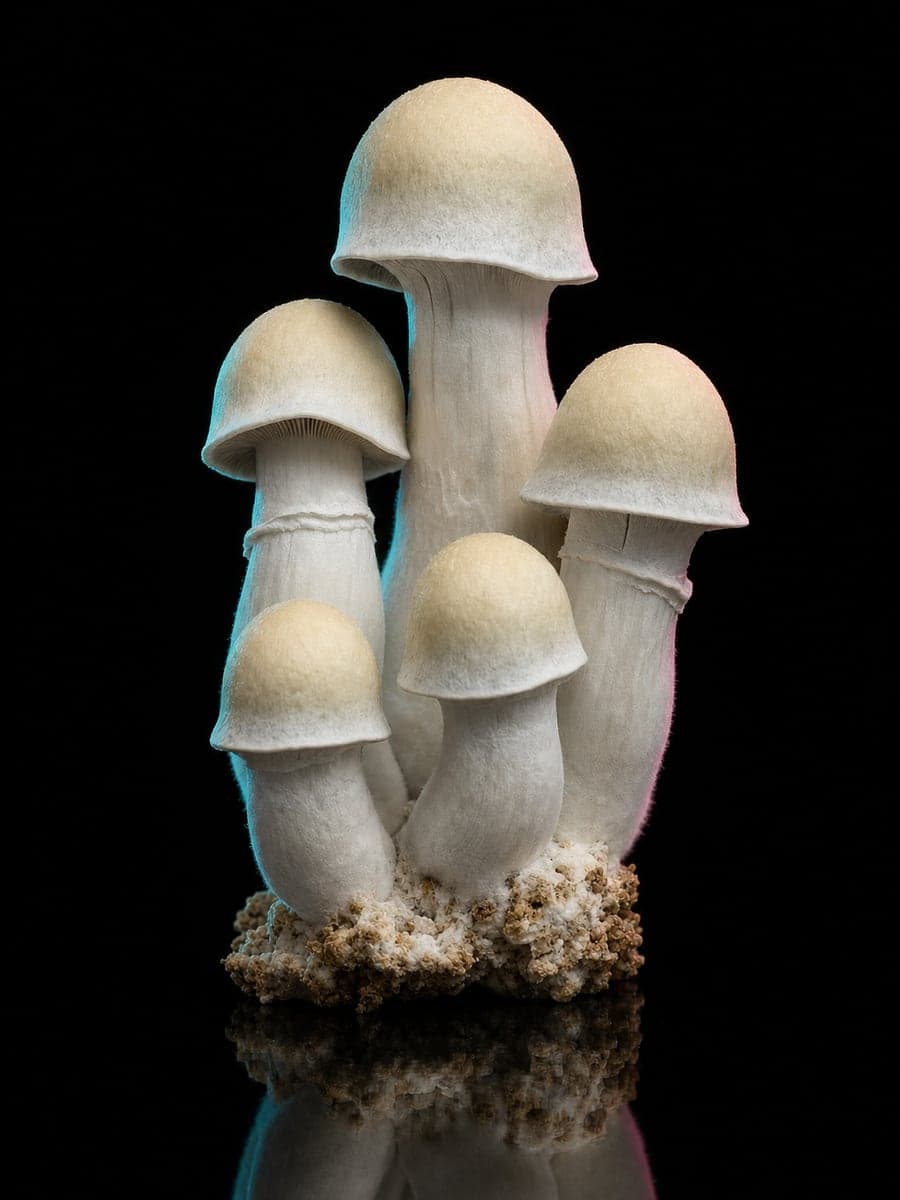
Shakti is an albino or leucistic isolate of the Malabar strain, credited by growers to MycoMama Angela and her husband. It grows creamy-white caps on thick white stems and has become one of the most used parents in modern cubensis breeding, including a Jack Frost cross that has been lab-tested.
- Origin
- Isolated in cultivation from Malabar, a line said to come from India's Malabar Coast
- Family
- Albinos · Asia · Common
- Lineage
- Mycopedia lists more than twenty lines bred from Shakti; only those sourced in the Shroomdex are named here.
Growers list Shakti as an albino isolate of Malabar made by MycoMama Angela and her husband.
Shroomery forum: 'A Huge List of Psilocybe Cubensis Variety description' (LulzSwag, 2022–24)Mycopedia: Shakti (secondary index)A strain index describes it as an albino or leucistic Malabar phenotype kept for its pale, creamy caps and thick white stems, and lists over twenty strains bred from it, among them Blue Shakti Mutant, Brain Muff and Shakti Uncut.
Mycopedia: Shakti (secondary index)A Jack Frost × Shakti breeding line was one of 14 cubensis cultures grown under identical lab conditions in a 2026 study, measuring 7.29 mg/g total tryptamines (about 0.7% of dry weight). Shakti itself was not tested.
Sharchaton et al. (2026), Journal of Fungi 12: 486, Table 1
The name is usually taken from Shakti, the Hindu goddess of divine feminine energy, a nod to its Indian Malabar ancestry.
Some sellers call it Shataki, which appears to be a misspelling.
What it looks like
- Caps
- Pale, creamy white, thick and rounded.
- Stems
- Thick and white.
- Notes
- Selected for its pale colour within the Malabar line. The store's short notes add that its spores are clear rather than purple-brown.
- Growing
- Widely grown and widely used for breeding; nothing specific to its cultivation is documented beyond the usual cubensis methods.
How it is described
Shakti has a reputation as somewhat above average in strength but smooth, commonly described as a balance of laughter and deep introspection that suits being alone or in company.
Based on: The Shroom Bros product notes and general reputation; one lab figure exists for a Jack Frost × Shakti cross, none for Shakti itself.
Shakti, asked and answered
Where does the Shakti strain come from?
It is an albino isolate of Malabar, a cubensis line said to come from India's Malabar Coast. Growers credit the isolation to MycoMama Angela and her husband.
What does Shakti look like?
Pale, creamy-white caps, thick and rounded, on thick white stems.
Is Shakti strong?
It has a reputation as slightly above average. Shakti itself has no published lab result; a Jack Frost × Shakti cross measured about 0.7% total tryptamines in a 2026 study. Strength varies between grows.
Is Shakti the same as Albino Malabar?
Yes, Shakti is the usual name for the albino Malabar isolate.
Why is Shakti used so much in breeding?
Strain indexes list more than twenty lines bred from it, such as Blue Shakti Mutant and Brain Muff. Breeders evidently value its pale, thick build, though nobody has written down why it became so popular.
The Shroomdex records history and reputation, not advice: how a strain is described is never a promise of how it will feel, and nothing here is medical advice. Strength varies from batch to batch. Start low and see our dose calculator. Never forage from a website: deadly look-alikes grow wild.