




If you’ve ever stared at a chocolate bar wrapper and thought, “So… how much is one square?”—you’re not overthinking it. You’re doing the right kind of thinking.
Psilocybin edibles are convenient, but the math behind them is surprisingly easy to get wrong—because the label is rarely the whole story. This guide explains the framework for edible dosing math: what brands often mean by grams, how that relates to psilocybin content in theory, why homogeneity matters, and why your body doesn’t behave like a calculator.
Important: This is general education, not dosing advice. Psilocybin is regulated in many places; only follow applicable laws. Never drive impaired. If you have health questions, ask a qualified clinician.
1. The First Rule: “Grams on the Label” Usually Means Mushroom Material, Not Pure Psilocybin
Many mushroom edibles advertise a total like “3.5 g” or “1 g per piece.” In most cases, that number is best read as grams of mushroom material (or extract equivalent) used in the recipe—not grams of the chemical psilocybin.
Why that distinction matters:
- Pure psilocybin is measured in milligrams (mg).
- Dried mushrooms are mostly fiber, water (when fresh), chitin, and other compounds—only a small fraction is psilocybin.
So if your brain automatically converts “3.5 g” into “3.5 g of drug,” you’ll be off by orders of magnitude.
2. The “Mushroom Gram → Psilocybin mg” Step Is the Leaky Part of the Math
People sometimes try to estimate psilocybin milligrams from dried weight using a rough potency assumption. In the real world, potency swings with species/variety, growing conditions, storage, dehydration method (freeze-dried vs air-dried), and age.
That means any “mg per gram of dried mushroom” figure should be treated as a wide uncertainty band, not a constant.
Practical takeaway: edible math is less like precision engineering and more like budgeting with a volatile exchange rate. The label gives you a reference point; it does not guarantee what your liver will see.
For a deeper look at why chocolate-based products can feel different from dried fruiting bodies at similar labeled amounts, read: The Science: Why Mushroom Chocolate Hits Different.
3. How to Read a Bar: Total Content ÷ Number of Pieces
If a product states a total mushroom weight for the entire package, the simplest structure is:
Per piece (labeled mushroom basis) ≈ Total stated grams ÷ Number of pieces
Example structure (illustrative only): If a bar is marketed as containing 3.5 g total mushroom material and has 10 squares, then each square represents about 0.35 g of that labeled mushroom basis—if the infusion is even.
That “if” is doing a lot of work. Which brings us to homogeneity.
4. Homogeneity: The Hidden Variable That Breaks Neat Math
Even perfect division on paper fails if the active ingredient isn’t evenly distributed. In kitchens and small-batch production, uneven mixing is a common failure mode.
What unevenness feels like in practice: two pieces from the same bar, same “math,” different intensity.
Harm-reduction implication: treat early samples cautiously, especially with a new batch or a new supplier—even if you “did the math.”
5. Gummies vs Chocolate: Same Label, Different Delivery Story

Chocolate (often contains fat)
- Fats can influence how quickly your body processes what you ate—alongside stomach contents and individual metabolism.
- People often report differences in onset and “curve shape” compared with eating dried mushrooms.
Related reads:
- Shroom Chocolate Bars: How Long Do They Take to Kick In?
- Magic Mushroom Chocolates: Everything You Need To Know
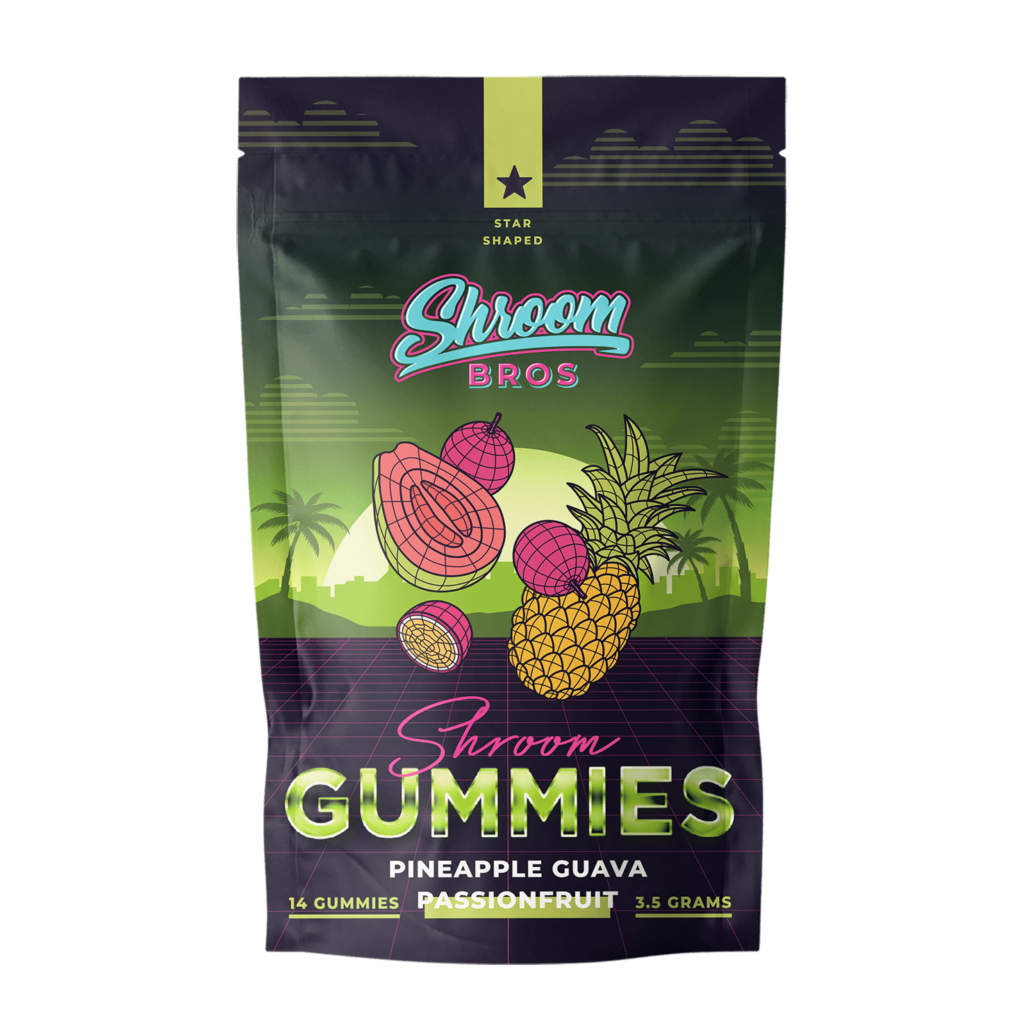
Gummies (often lower fat, different matrix)
- The matrix changes chewing, swallowing, and digestion timing.
- Onset windows can differ from chocolate even when the label uses similar “grams per package” language.
See: Sweet Trips: Exploring the Benefits of Magic Mushroom Gummies.
6. “Extract Equivalents” vs Whole Mushroom: Labels Can Mean Different Things
Some products are built from concentrates or extracts. A label might still speak in “dried gram equivalent” language—or it might not translate cleanly to what you’re picturing.
What to look for on packaging (when available):
- Whether the number refers to input material, equivalent, or something else
- Whether the product claims homogeneity or batch testing (not all markets require this)
- Whether pieces are scored consistently
If the label is ambiguous, the only safe assumption is: variance is higher than you want it to be.
7. Onset Math Isn’t the Same as Peak Math
Even if you had perfect milligram knowledge (you usually don’t), onset depends on:
- What else you ate
- GI transit time
- Sleep, hydration, stress
- Individual enzyme and metabolism differences
So the common mistake is: re-dosing too early because “the math says it should have worked by now.” With edibles, patience isn’t just a virtue—it’s a safety tool.
8. A Sensible “Spreadsheet Mindset” Without Pretending Precision
If you like structured thinking, use three columns—not to claim precision, but to track uncertainty:
- Label basis: total stated mushroom basis per package
- Geometry basis: pieces per package → per-piece basis
- Reality basis: homogeneity + batch variability + route/set-setting
Most bad outcomes come from trusting column 2 while ignoring column 3.
9. Why “Tolerance” and “Set/Setting” Change the Experience Even If the Math Stays Constant
Two days with the same calculated intake can feel different because your nervous system isn’t a fixed instrument. Tolerance, sleep debt, anxiety, environment, and co-used substances (including alcohol and cannabis) can change subjective intensity and side effects.
Useful companion guides:
10. Storage Math: Potency Changes Over Time (Slowly, but Real)
Heat, oxygen, and moisture are not friends to stable storage. Poor storage doesn’t just “ruin the vibe”—it can change how reliable your expectations are from piece to piece over weeks.
Read: How to Store Magic Mushrooms Properly (many principles apply to keeping edibles cool, dry, and consistent).
Frequently Asked Questions
Can I convert chocolate bar “grams” into milligrams of psilocybin accurately?
Usually, no—not from packaging alone. Without verified testing for that batch, you’re estimating inside a wide band.
Why did half a bar hit harder than a full bar last month?
Different batch, different storage, different stomach contents, different tolerance—or uneven distribution within the product.
Is “start low, go slow” still the answer if I’m good at math?
Yes—because the limiting factor is rarely arithmetic; it’s biological and manufacturing variability.
Does lemon tekking logic apply to edibles?
Not cleanly. Edibles are a different route and matrix. For lemon tek concepts with mushrooms, see: Lemon Tek: The Ultimate Guide.
The Bottom Line
Edible dosing “math” is really two problems stacked together: (1) what the label means, and (2) how evenly and predictably that meaning shows up in real life. Get the definitions right, divide carefully, assume variance, and treat onset as a window—not a countdown.
For more, browse our Magic Mushroom Blog and our edible categories in the shop—always in compliance with the law in your jurisdiction.
Buy The Best Magic Mushrooms Online in Canada (19+)
Disclaimer: Educational content only. Not medical advice. Laws vary. Never use impaired judgment for safety-sensitive tasks like driving.