PESA
An early spore-shop classic from Pacific Exotica Spora.
A 2002 Shroomery strain list already listed PES Amazon separately from Amazonian, with its origin unknown.
The usual story is that Pacific Exotica Spora sold spores by mail through magazine advertisements before online spore shops existed.
Where PESA comes from
PESA is the Amazon line sold by Pacific Exotica Spora (PES), one of the early spore suppliers. Growers already called it very potent in 2004, and it was first marketed with a doubtful claim of azurescens ancestry. Its true origin is unknown: the Amazon is assumed from the name, and one strain list suggests Colombia.
- Origin
- Said to be from the Amazon region of South America; one strain list suggests Colombia · Sold by Pacific Exotica Spora before 2002; exact date unknown
- Family
- Classics · Americas · Uncommon
- Lineage
- The children are listed by the Mycopedia strain index only. Mycopedia files PESA under the Amazonian strain.
A 2002 Shroomery strain list already listed PES Amazon separately from Amazonian, with its origin unknown.
Shroomery forum: 'Strain origins' (2002)A 2004 compilation of strain descriptions lists PES Amazonian as PES (Pacific Exotica Spora) stock of unknown origin, possibly the Amazon as the name suggests. A second post in the same thread calls PESA very potent, with small to medium fruits, and says it was first sold by Pacific Exotica Spora as an azurescens hybrid.
Shroomery forum: 'Some strain info.' (2004, compiled vendor descriptions)A 2022–24 Shroomery variety list says PESA came from Pacific Exotica Spora, likely originated in Colombia, and was originally marketed as a cubensis–azurescens hybrid; it adds that some say the A does not stand for Amazonian.
Shroomery forum: 'A Huge List of Psilocybe Cubensis Variety description' (LulzSwag, 2022–24)A strain index files PESA under the Amazonian strain and lists two later lines bred from it, Amex and Rudolph.
Mycopedia: PESA (secondary index)
The usual story is that Pacific Exotica Spora sold spores by mail through magazine advertisements before online spore shops existed.
Some say PES brought the original spores back from a trip to the Amazon; others think it is an isolate of another Amazon line.
One vendor account ties the PES Amazonian stock to a collection by Steven Pollock in Mexico rather than South America.
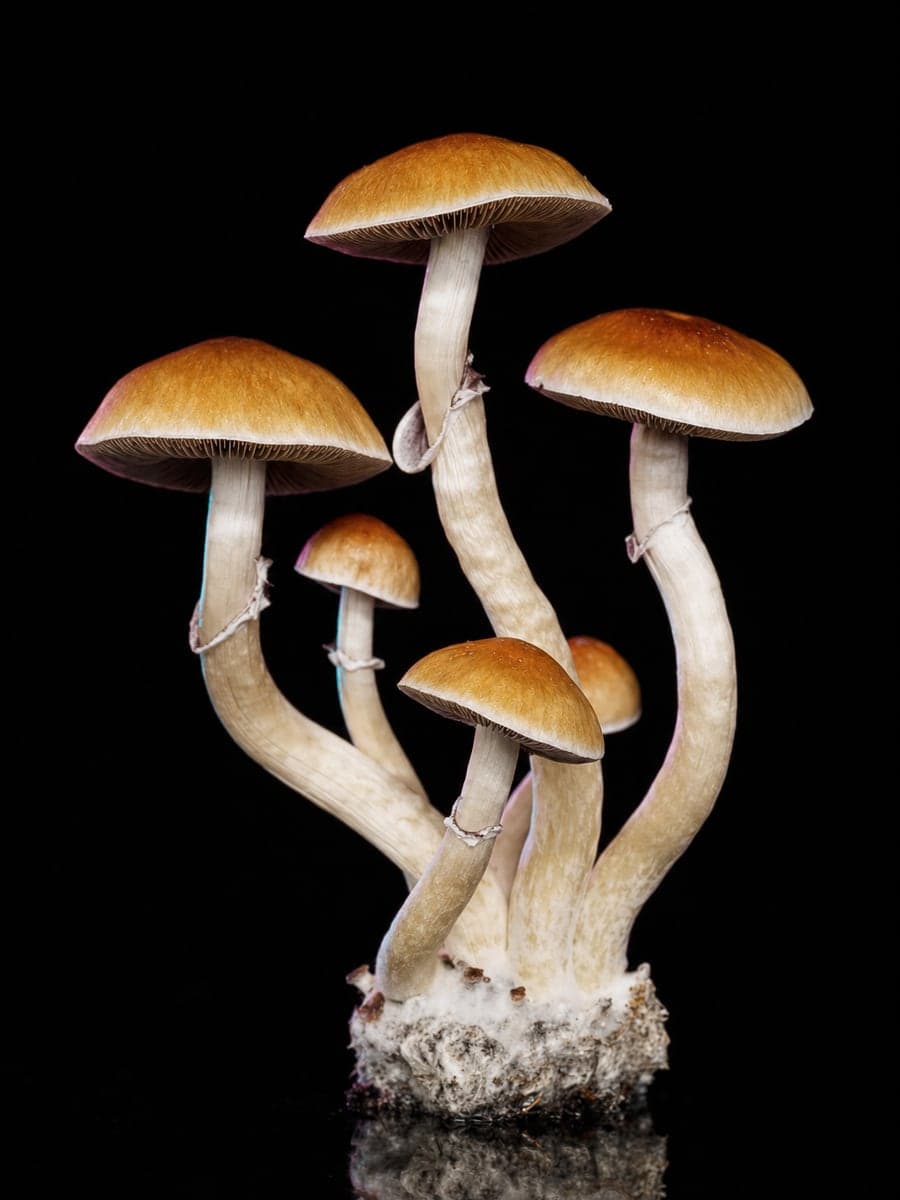
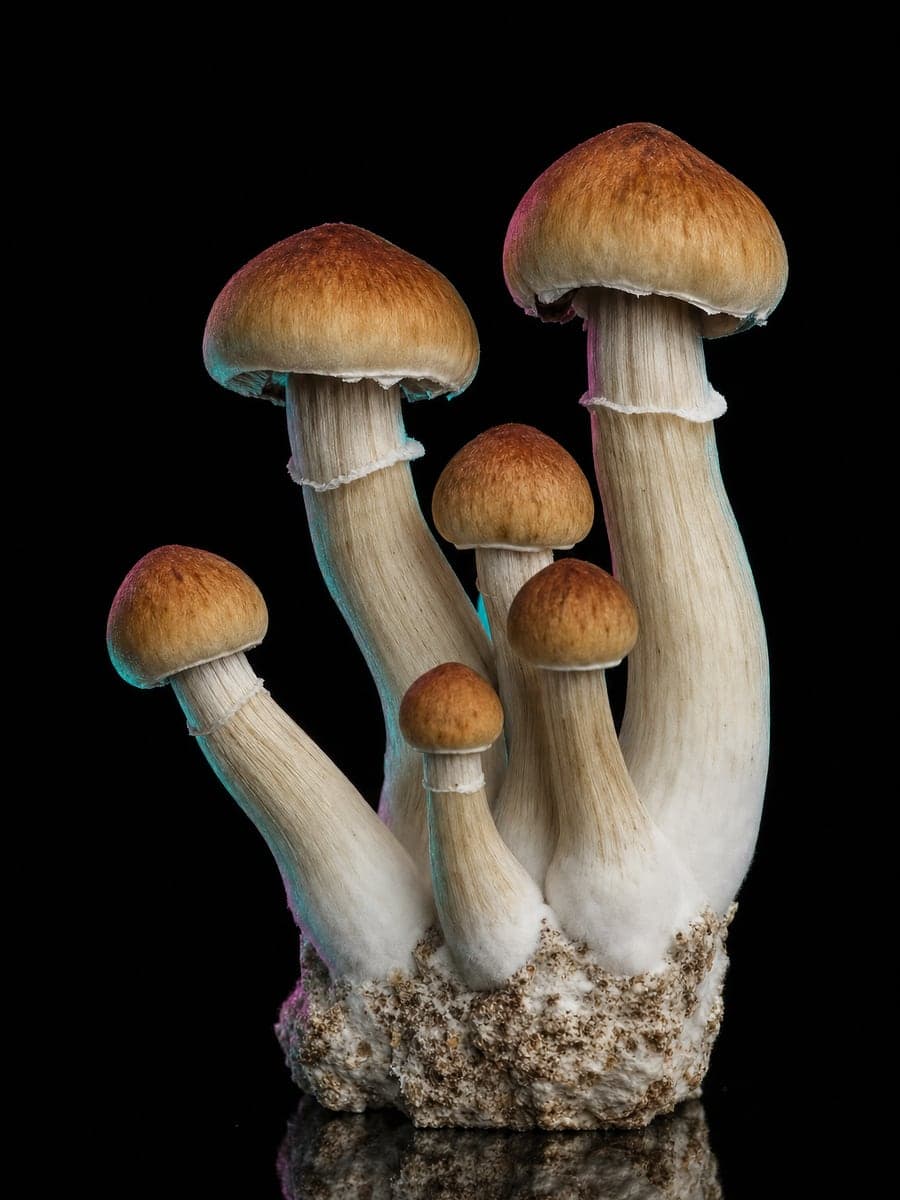
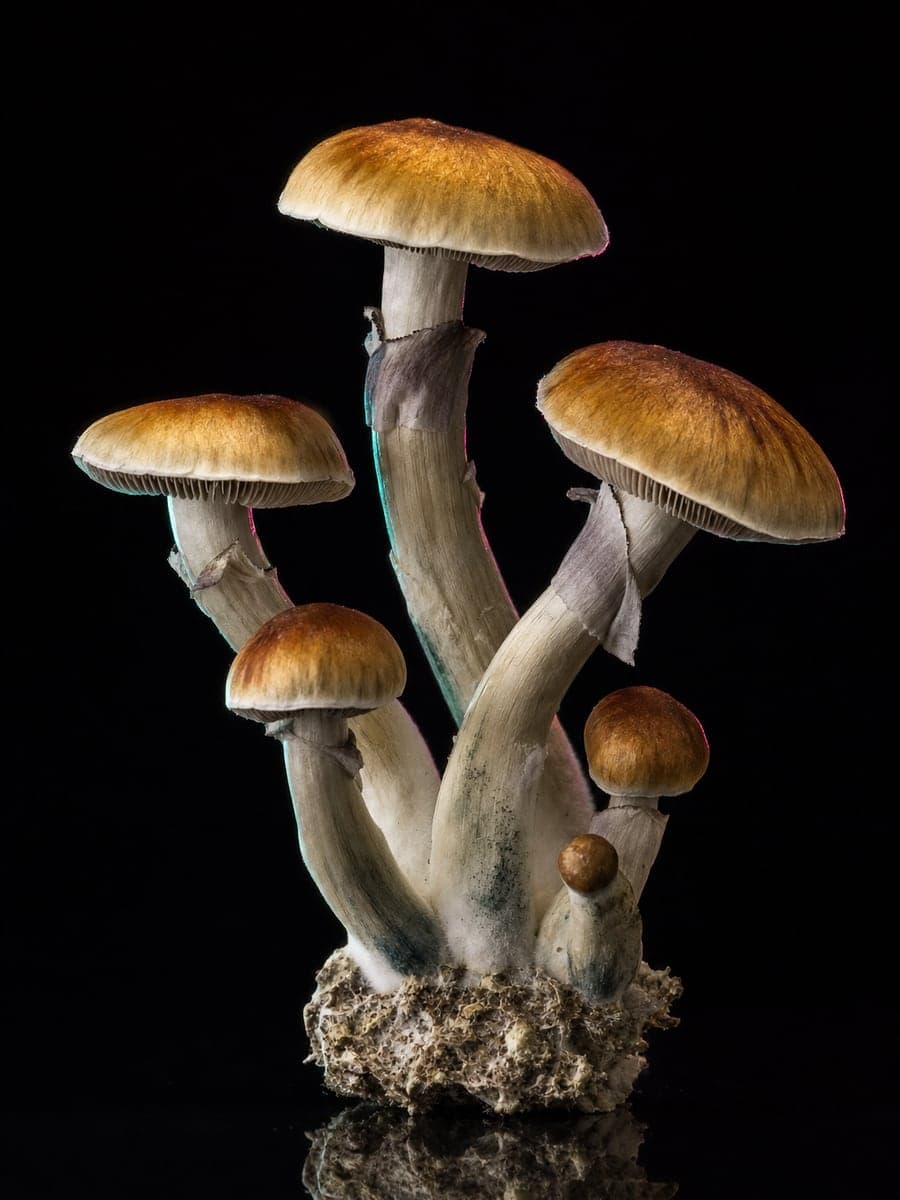
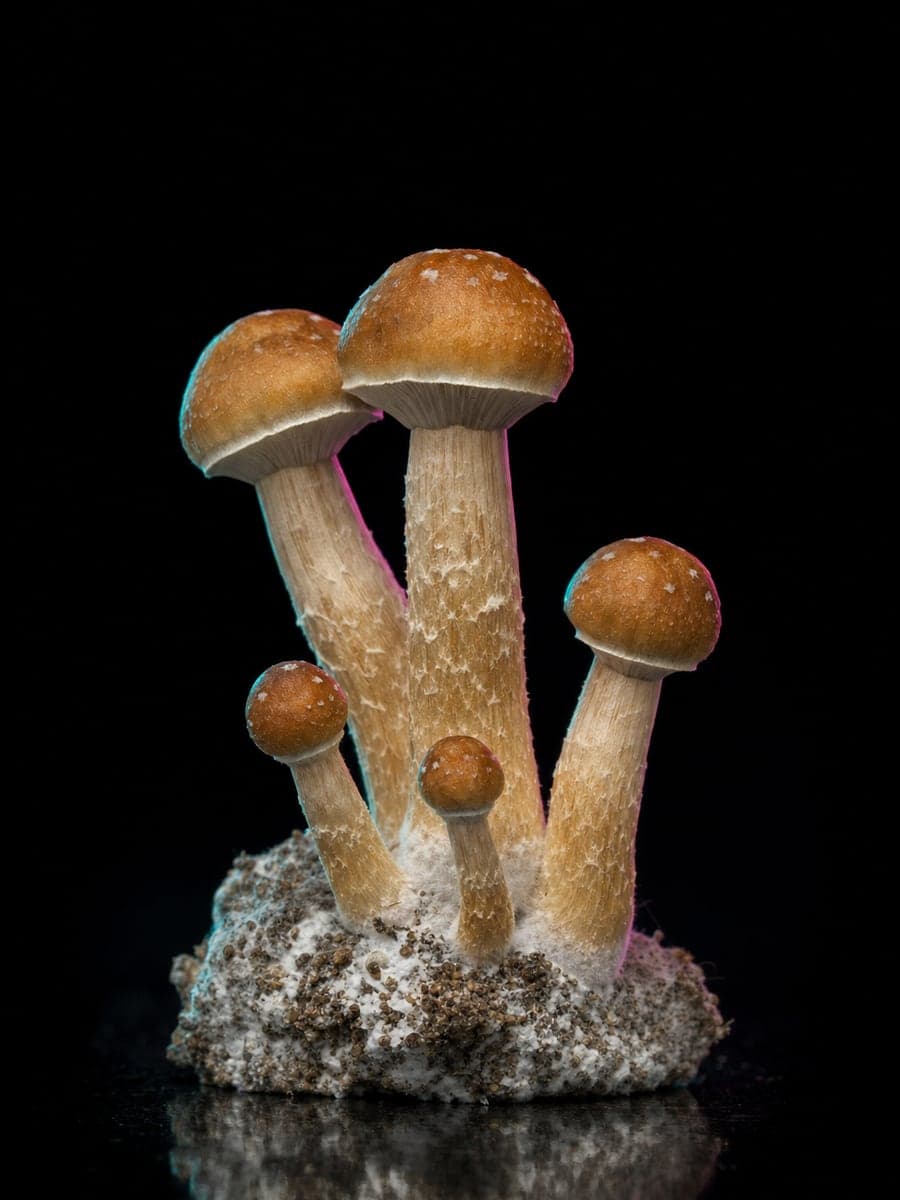
What it looks like
- Caps
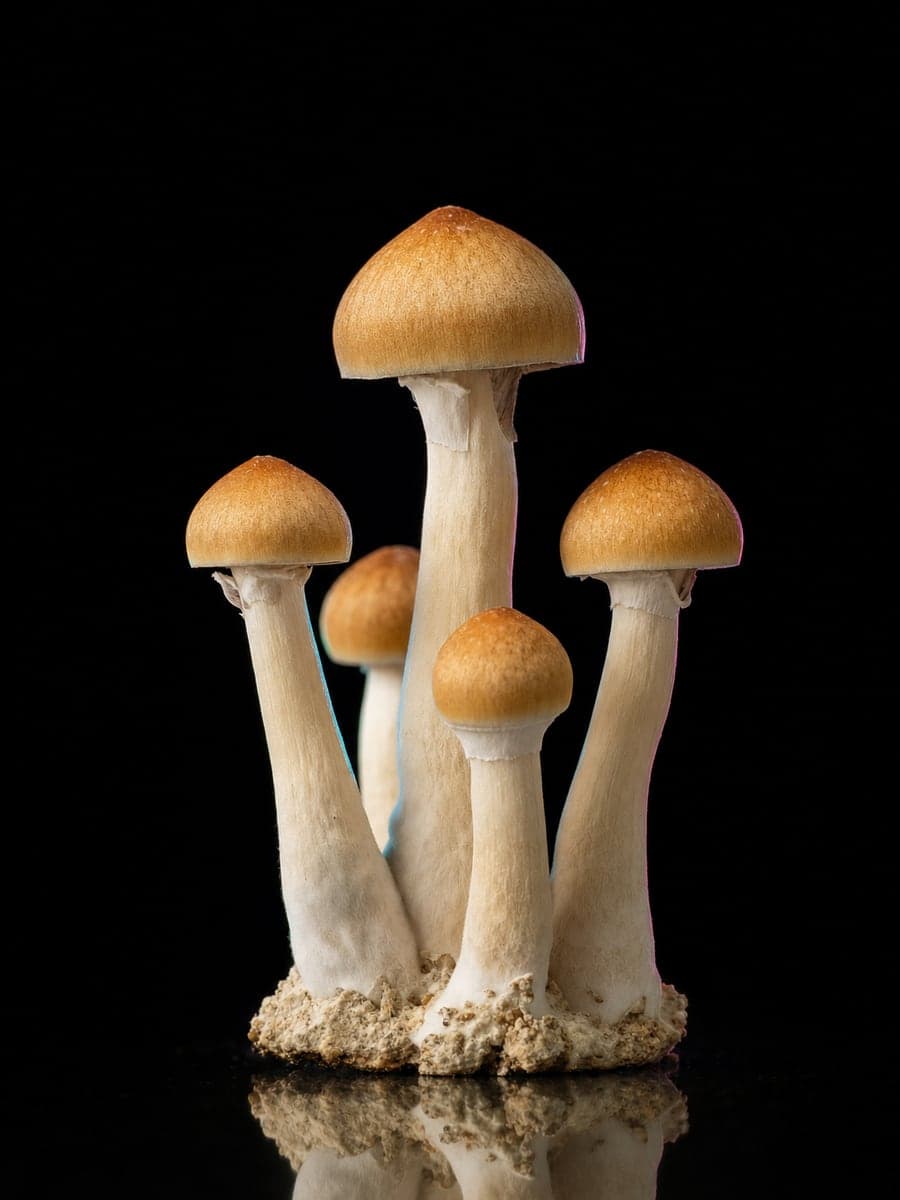
- Caramel, with a small central bump rather than fully flat.
- Stems
- Pale, of ordinary cubensis build.
- Notes
- Small to medium fruits that grow in clusters.
- Growing
- An old, widely grown line with a reputation as robust; nothing specific to its cultivation is documented.
How it is described
PESA has a long-standing reputation as a strong, inward-looking strain; growers called it very potent as early as 2004. It is commonly described as deeply reflective, with euphoria and strong visuals.
Based on: Grower descriptions from 2004 onward on Shroomery and the Shroom Bros product notes; no lab data found.
PESA, asked and answered
What does PESA stand for?
PES is Pacific Exotica Spora, an early spore supplier, and the A is usually read as Amazon or Amazonian. One strain list notes that some dispute the A.
Where does the PESA strain come from?
It was sold by Pacific Exotica Spora before 2002. Its wild source is unknown: the Amazon is assumed from the name, and one strain list suggests Colombia.
What does PESA look like?
Small to medium mushrooms that grow in clusters, with caramel caps that keep a small central bump.
Is PESA strong?
It has had a strong reputation since at least 2004, when growers called it very potent. No lab results have been published for it, and strength varies between grows.
Is PESA part azurescens?
It was first marketed as an azurescens hybrid, but no evidence was ever offered, and growers treat it as an ordinary cubensis line.
The Shroomdex records history and reputation, not advice: how a strain is described is never a promise of how it will feel, and nothing here is medical advice. Strength varies from batch to batch. Start low and see our dose calculator. Never forage from a website: deadly look-alikes grow wild.