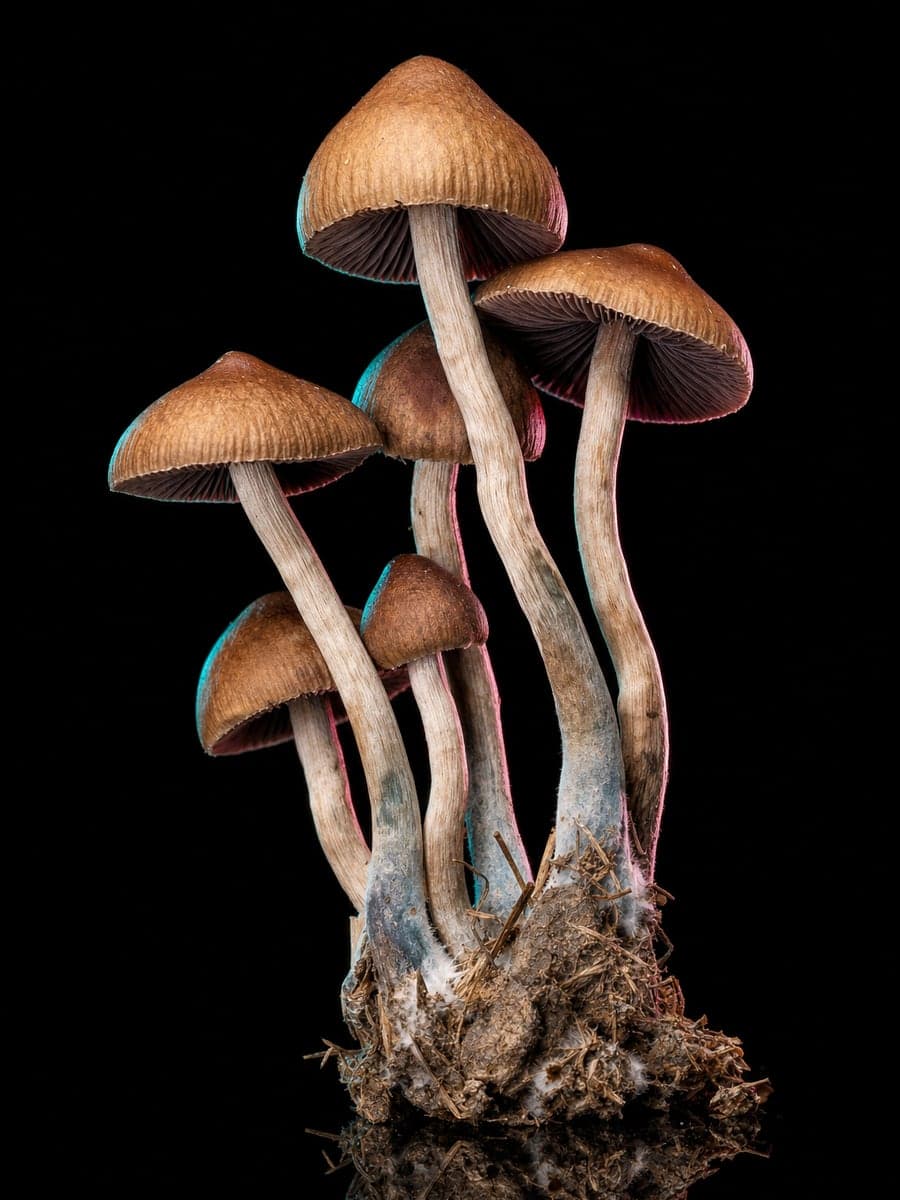
Hispanica
A tiny Pyrenean dung Psilocybe, not a cubensis.
Gastón Guzmán described Psilocybe hispanica in 2000 from specimens collected by Ignacio Seral Bozal in autumn 1995, in an alpine meadow of the Aragonese Pyrenees north of Huesca at about 2,300 m, growing on horse dung. The holotype’s herbarium labels record these details.
Wikipedia notes a suggestion that a roughly 6,000-year-old rock painting at Selva Pascuala in Spain may show this mushroom, which would make it among the oldest evidence of mushroom use in Europe; that reading is debated.
Where Hispanica comes from
Hispanica appears in a 2004 list of cultivated cubensis strains, but its collector, place and dung all match Psilocybe hispanica, a small separate species described by Gastón Guzmán in 2000 from horse dung in the Spanish Pyrenees. This entry describes that species. It is a wild mushroom with small brown look-alikes, some of them deadly, and is never to be picked from a picture.
- Origin
- Alpine meadows of the Pyrenees, northern Spain and south-western France; type collection near Huesca, Aragon, at about 2,300 m · Collected 1995; described 2000
- Family
- Other species · Europe · Rare
- Lineage
- A separate species, not a cubensis strain; the 2004 cubensis list entry most likely refers to it.
Gastón Guzmán described Psilocybe hispanica in 2000 from specimens collected by Ignacio Seral Bozal in autumn 1995, in an alpine meadow of the Aragonese Pyrenees north of Huesca at about 2,300 m, growing on horse dung. The holotype’s herbarium labels record these details.
Wikipedia: Psilocybe hispanica (pointer; cites Guzmán 2000, Documents Mycologiques 29(116))iNaturalist 4749270: holotype of Psilocybe hispanica and its herbarium labels (photos by Alan Rockefeller, 2009)Mushroom Observer 241329: Psilocybe hispanica, holotype collection (Alan Rockefeller)The original description gives a small mushroom: a conical to convex brown to brownish-yellow cap 5 to 10 mm across, a stem 16 to 25 mm long and under 1 mm thick, and flesh that stains blue when injured.
Wikipedia: Psilocybe hispanica (pointer; cites Guzmán 2000, Documents Mycologiques 29(116))It is known from the Pyrenees of northern Spain and south-western France, at roughly 1,700 to 2,300 m, on horse dung in grassy fields. Recent field records from Sallent de Gállego (Huesca) and the French Pyrenees describe it in alpine pasture alongside Psilocybe semilanceata.
Wikipedia: Psilocybe hispanica (pointer; cites Guzmán 2000, Documents Mycologiques 29(116))iNaturalist 324295919: P. hispanica candidate, Sallent de Gállego, Huesca (Fabio Mao Valletta, 2025; not yet confirmed)A 2004 Shroomery list of cubensis strain origins includes “Hispanica”, found on horse dung high in the hills of Spain by Ignacio Seral in 1998. The collector, country and dung match the P. hispanica type collection, though the year differs.
Shroomery forum: 'Some strain info.' (Mycomancer's origin list, 2004)iNaturalist 4749270: holotype of Psilocybe hispanica and its herbarium labels (photos by Alan Rockefeller, 2009)Spores of it circulated among enthusiasts: a 2019 Mushroom Observer record from Bogotá shows a spore print labelled P. hispanica, sent by the ethnomycologist John W. Allen and marked as coming from the person who discovered the species.
Mushroom Observer 533009: P. hispanica spore print sent by John W. Allen (Instituto Colombiano de Etnomicología, 2019)A handwritten note kept with the holotype says the collector first took it for Psilocybe coprophila, that it blues but not always, and that it is much weaker than Psilocybe semilanceata.
iNaturalist 4749270: holotype of Psilocybe hispanica and its herbarium labels (photos by Alan Rockefeller, 2009)
Wikipedia notes a suggestion that a roughly 6,000-year-old rock painting at Selva Pascuala in Spain may show this mushroom, which would make it among the oldest evidence of mushroom use in Europe; that reading is debated.
What it looks like
- Caps
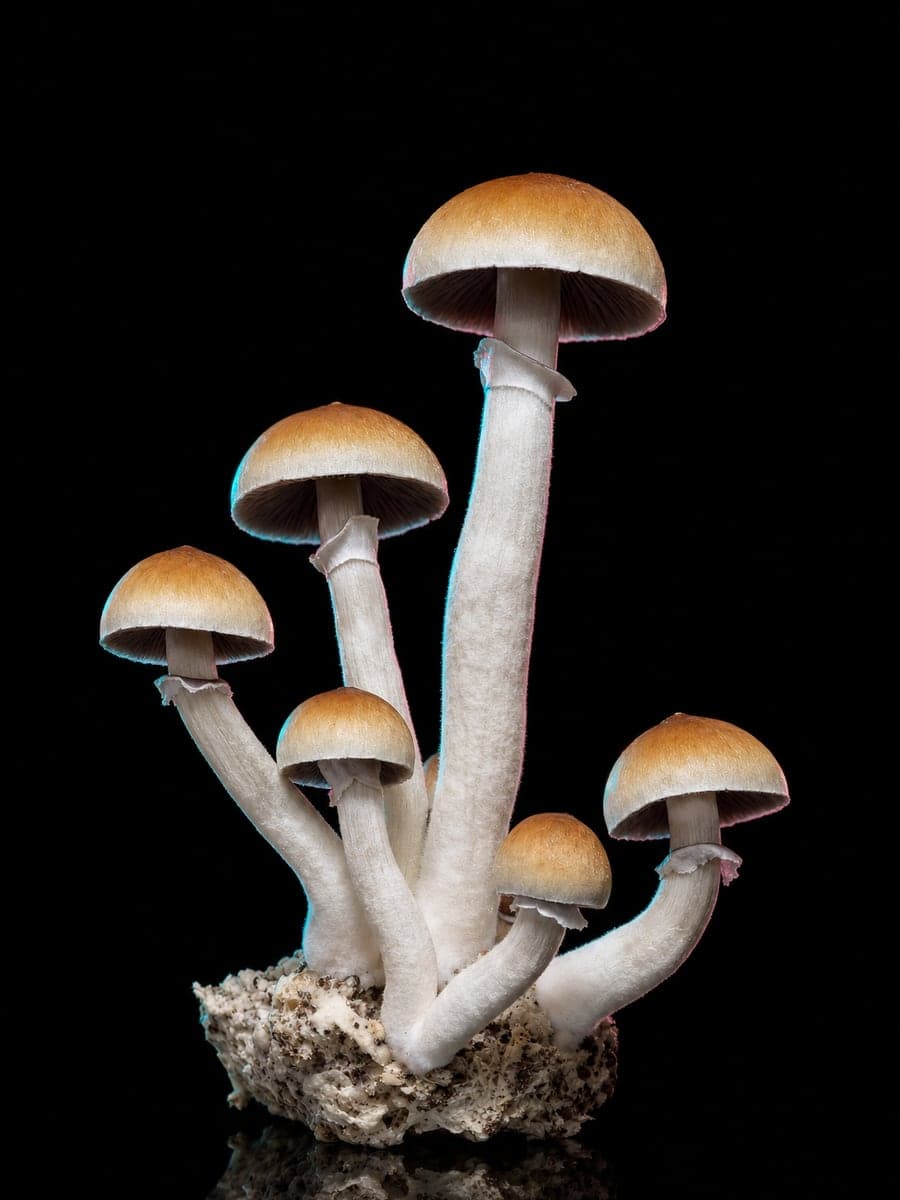
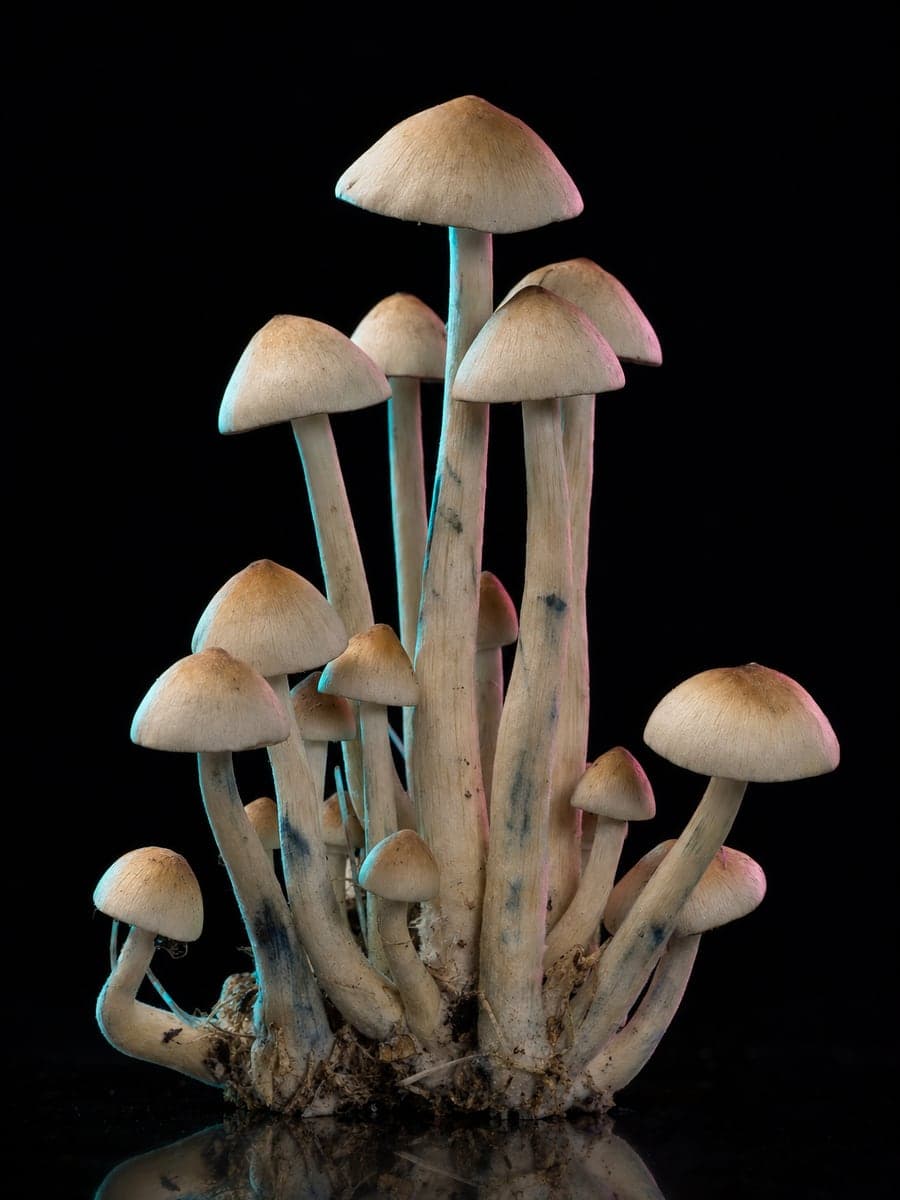
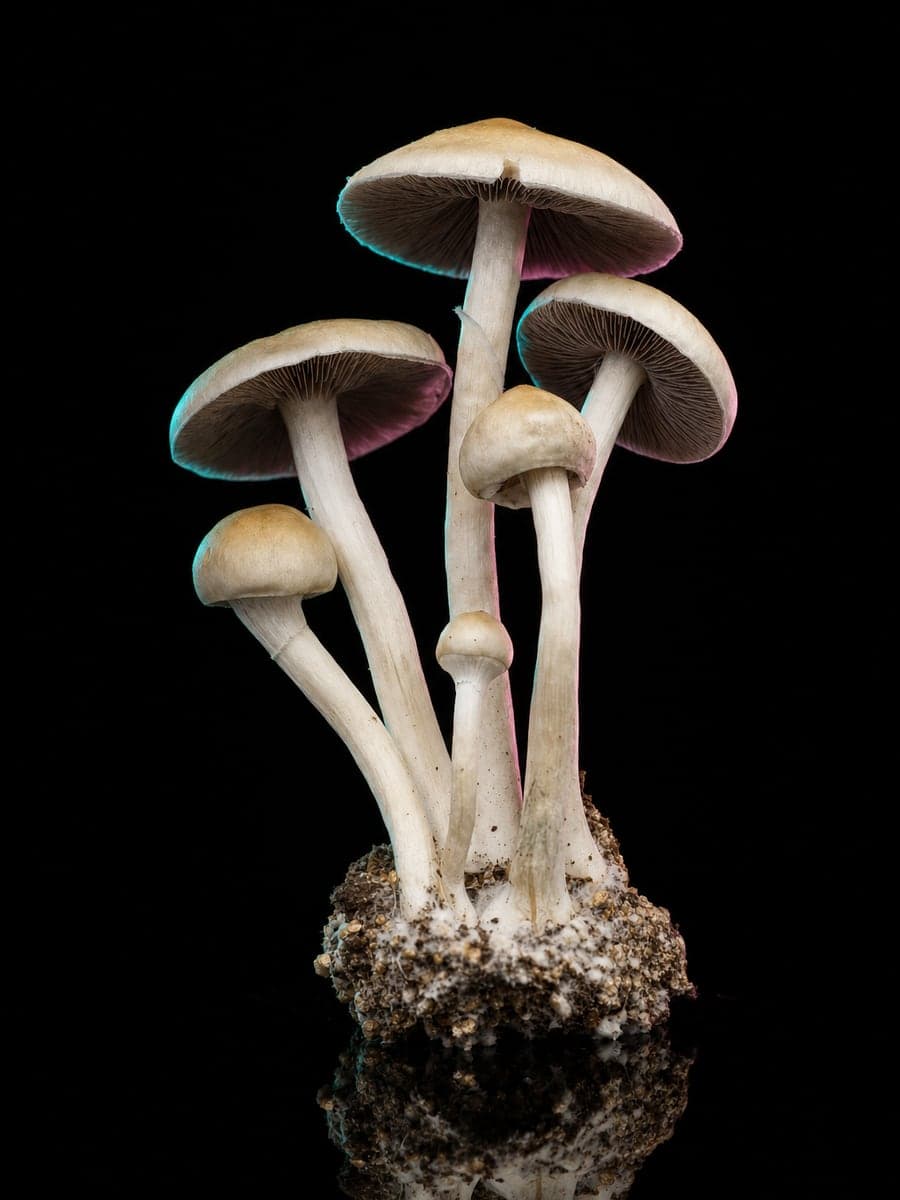
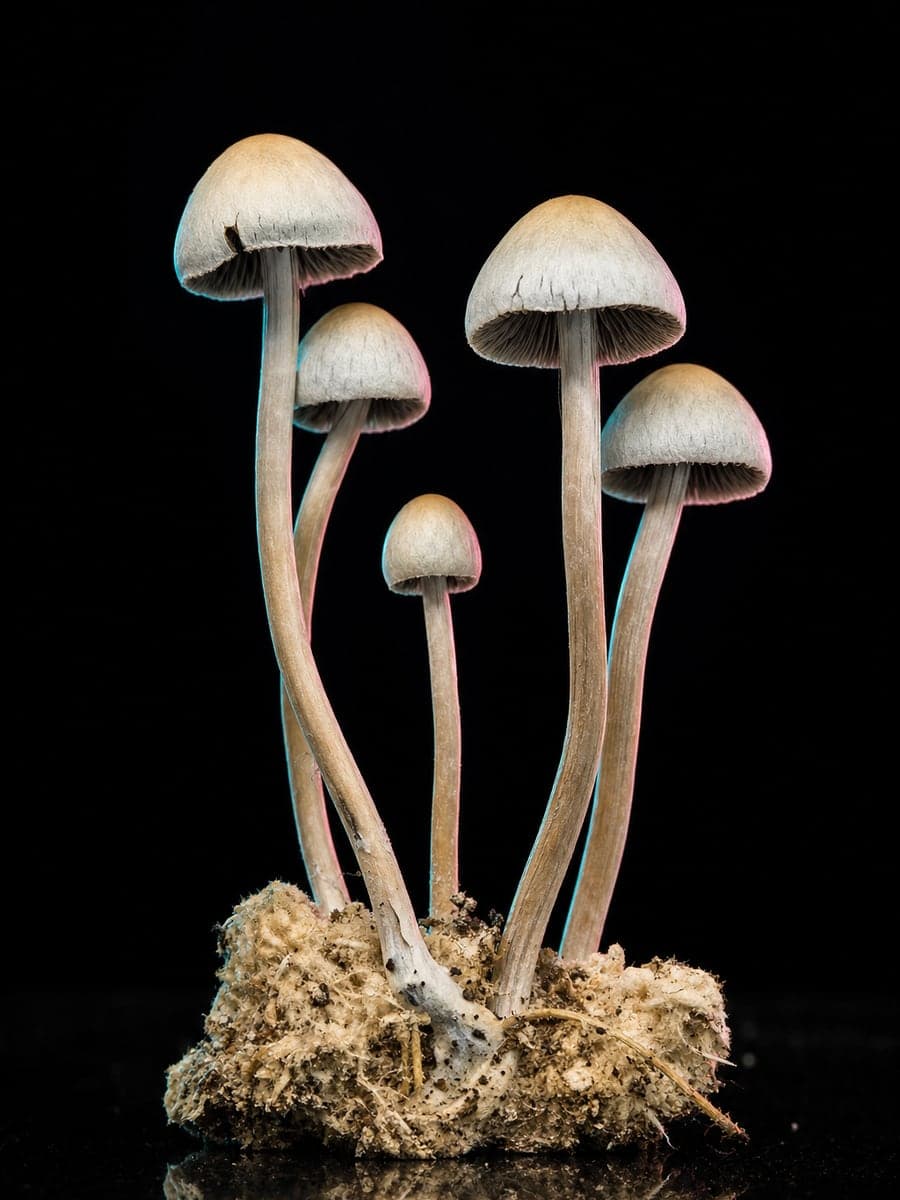
- Small, about 5 to 10 mm across in the original description, conical to convex, brown to brownish-yellow, paling as they dry.
- Stems
- Thin and short, about 16 to 25 mm long and 0.5 to 1 mm thick, whitish, slightly swollen at the base.
- Notes
- The flesh stains blue when damaged, though the collector noted not always. Grows on horse dung in short alpine grass.
How it is described
Very little is recorded about its effects. Wikipedia says young people in Spain use it recreationally, and the collector’s note on the holotype calls it much weaker than Psilocybe semilanceata.
Based on: One handwritten collector’s note and an encyclopedia mention; no lab data and no trip-report consensus.
Hispanica, asked and answered
Where does Hispanica come from?
It is Psilocybe hispanica, a wild species of the Pyrenees in northern Spain and south-western France. The type specimens were collected on horse dung in an alpine meadow north of Huesca in 1995.
Is Hispanica a cubensis strain?
No. It turns up in an old list of cubensis strains, but the collector, place and dung match Psilocybe hispanica, a separate and much smaller species.
What does Psilocybe hispanica look like?
A small brown to brownish-yellow cap 5 to 10 mm across on a thin whitish stem a couple of centimetres long, staining blue when damaged. Small brown look-alikes, some of them deadly, grow in the same kind of grass, so it is never to be picked from a picture.
Is Psilocybe hispanica strong?
Little is recorded. The collector’s note on the type specimen calls it much weaker than Psilocybe semilanceata.
The Shroomdex records history and reputation, not advice: how a strain is described is never a promise of how it will feel, and nothing here is medical advice. Strength varies from batch to batch. Start low and see our dose calculator. Never forage from a website: deadly look-alikes grow wild.