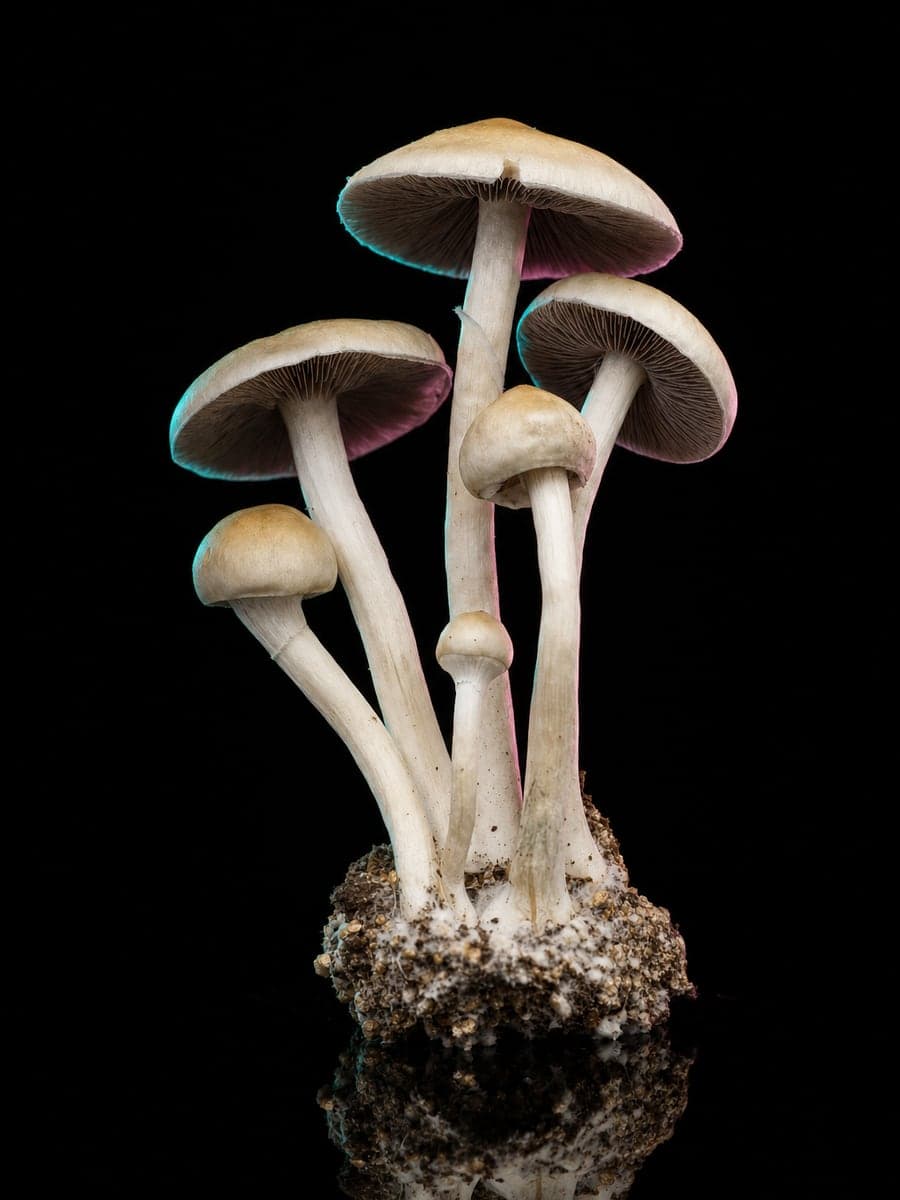
Natalensis
South Africa's own bluing Psilocybe, not a cubensis.
Psilocybe natalensis was described in 1995 by Gartz, Reid, Smith and Eicker as the first native bluing agaric of South Africa. The name refers to its type locality in Natal.
Growers long rated natalensis as stronger than cubensis; some of that reputation may belong to cultures now thought to be P. ochraceocentrata.
Where Natalensis comes from
Natalensis is Psilocybe natalensis, a separate species described in 1995 from grassland in KwaZulu-Natal, South Africa, and named after Natal. It looks much like P. cubensis and is closely related to it. Recent genetic work suggests that much of what has been grown under the name is a different African species. It is a wild mushroom with deadly look-alikes and must never be picked from a picture.
- Origin
- KwaZulu-Natal (formerly Natal), South Africa: the type locality; wild records come from South African grassland · Formally described in 1995
- Family
- Other species · Africa · Rare
- Lineage
- Crosses with P. cubensis are claimed by hobby breeders but have not been confirmed; many cultures sold as natalensis may be another species.
Psilocybe natalensis was described in 1995 by Gartz, Reid, Smith and Eicker as the first native bluing agaric of South Africa. The name refers to its type locality in Natal.
Wikipedia: Psilocybe natalensis (citing Gartz et al. 1995, Integration 6: 29–32)It is closely related to P. cubensis, but differs in habitat preference, a less persistent ring and its genetic sequence.
Wikipedia: Psilocybe natalensisThe type collection came from high-elevation grassland in KwaZulu-Natal. Genetic checks found that cultures circulated as P. natalensis or Natal Super Strength matched P. ochraceocentrata instead, and that true P. natalensis has only recently begun to circulate among growers.
DoubleBlind (Sam Gandy): 'Update on the African Psilocybin Mushroom Rivaling Cubensis' (May 2026)The same report says true P. natalensis reportedly grows much more slowly than P. cubensis, and that early analyses suggest it is low in potency; the source of that claim is not named.
DoubleBlind (Sam Gandy): 'Update on the African Psilocybin Mushroom Rivaling Cubensis' (May 2026)Research-grade wild observations on iNaturalist come from South African grassland, including KwaZulu-Natal, the Free State and the Eastern Cape. They show pale cream caps, white stems and grey gills.
iNaturalist: research-grade observation, KwaZulu-Natal (lukecoza)iNaturalist: research-grade observation, Thabo Mofutsanyana, Free State (greenmystery)Hobby breeders have tried crossing it with P. cubensis. In 2022 a Shroomery member reported fruiting an Albino Penis Envy × natalensis hybrid made by pairing single-spore cultures; no DNA or lab proof was posted.
Shroomery forum: 'Psilocybe volanspateria (Ps. cubensis var. APE/Ps. natalensis hybrid)' (Judge Doom, 2022)
Growers long rated natalensis as stronger than cubensis; some of that reputation may belong to cultures now thought to be P. ochraceocentrata.
Seller pages often say it was used in traditional ceremonies in South Africa; no source for that was found.
What it looks like
- Caps
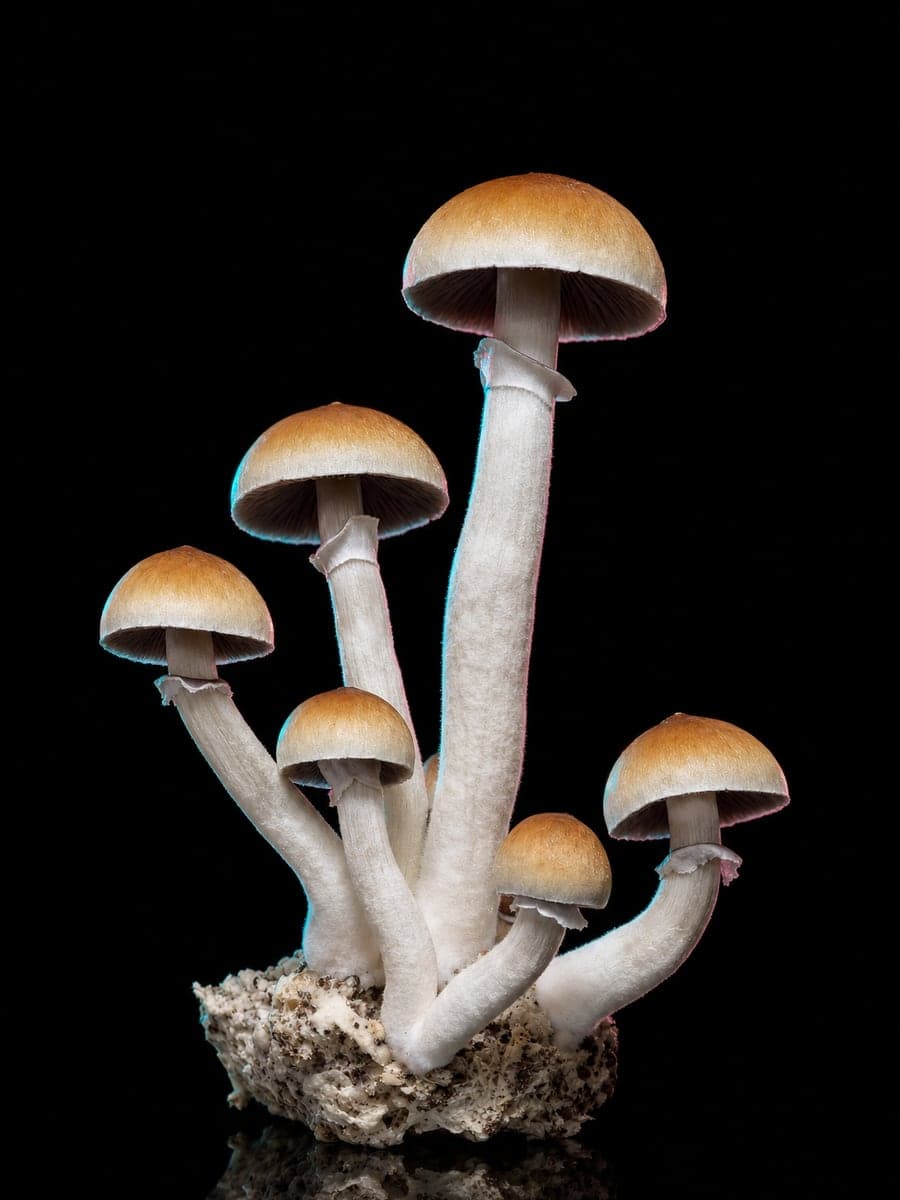
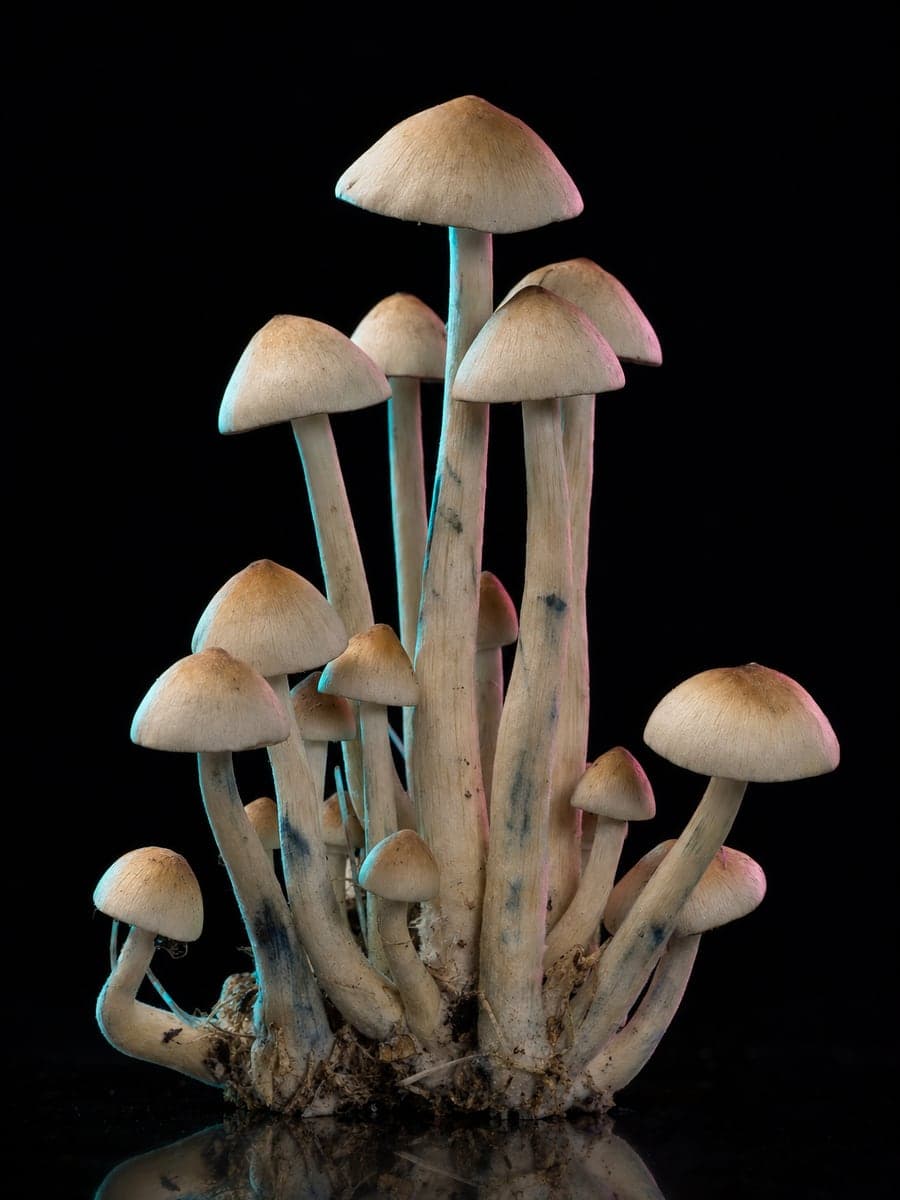
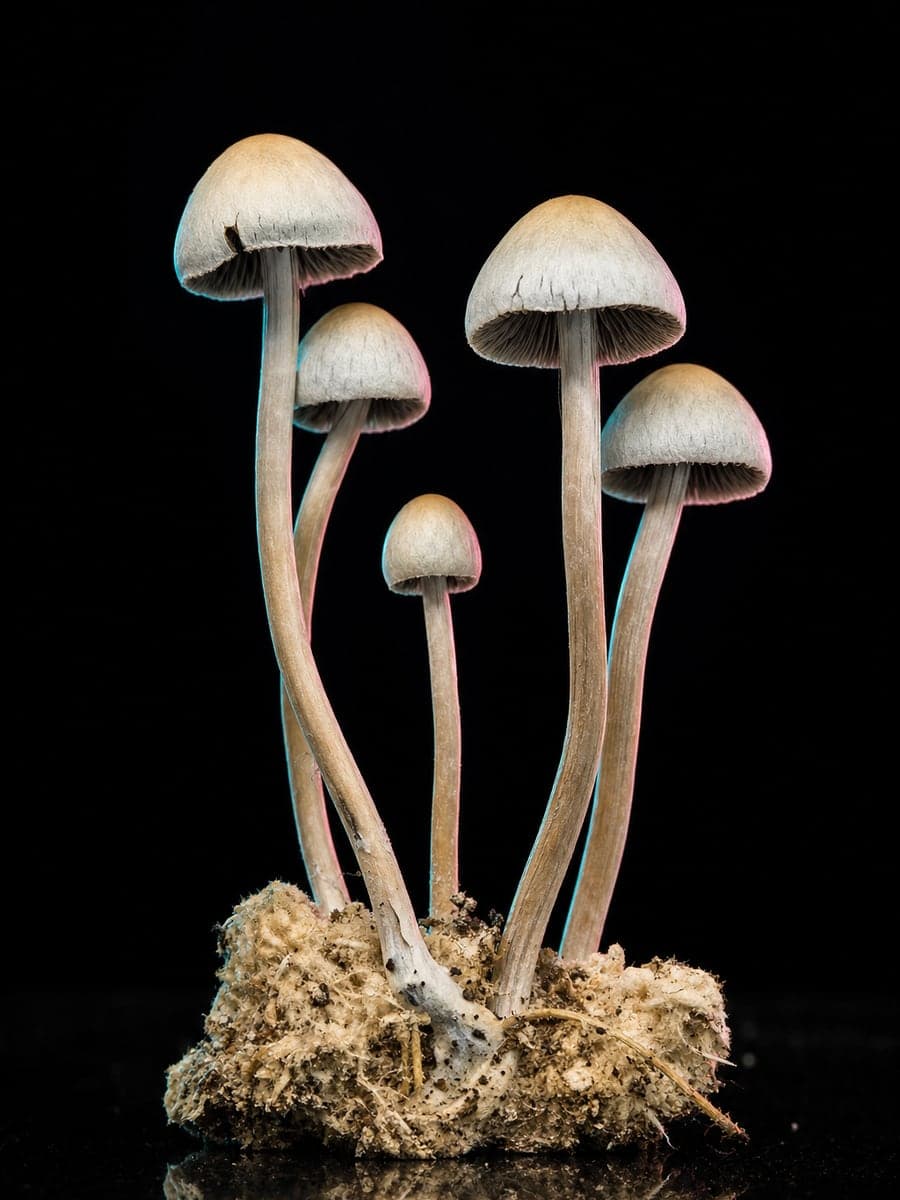
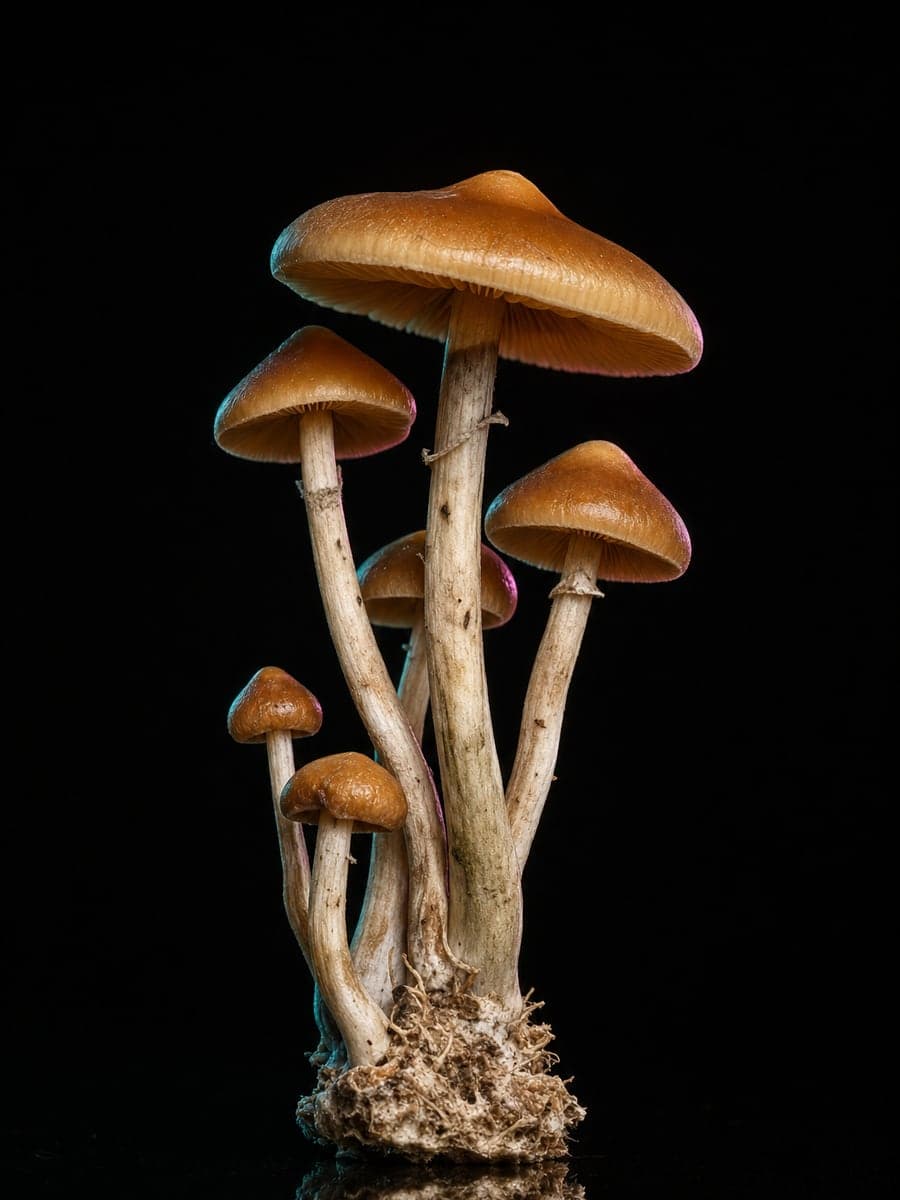
- Pale cream to straw or light olive-tan, rounded then opening flat, sometimes with a slightly wrinkled surface.
- Stems
- White, slender to medium, bruising blue at the base.
- Notes
- Gills grey to purplish-grey with age. The ring (annulus) is less persistent than in P. cubensis. Wild fruits grow in grassland, often singly.
- Growing
- Reported to grow much more slowly than cubensis. Many cultures sold under the name may not be true natalensis, which matters more than any growing tip.
How it is described
Grower culture has long described natalensis as stronger and more introspective than cubensis. A 2026 report says true P. natalensis may in fact be low in potency, and that the strong reputation may belong to look-alike cultures of another species. The profile is left at the cubensis middle until lab data on true natalensis exists.
Based on: Journalism summarising recent genetic work (DoubleBlind 2026) set against long-standing grower reputation; no published lab figures for true P. natalensis were found.
Natalensis, asked and answered
Where does Natalensis come from?
It is a wild South African species, Psilocybe natalensis, described in 1995 from grassland in KwaZulu-Natal (formerly Natal), which gave it its name.
Is Natalensis a cubensis strain?
No. It is its own species, closely related to P. cubensis but different in habitat, ring and genetics.
What does Natalensis look like?
Pale cream to straw caps that open flat, white stems that bruise blue at the base, and grey to purplish-grey gills. It looks a lot like cubensis.
Is Natalensis strong?
It has a reputation among growers for being strong, but a 2026 report says true P. natalensis may be low in potency, and that much of what was grown under the name was another species. No lab figures for true natalensis were found.
Can I pick Natalensis in the wild?
Never pick wild mushrooms from a picture. Wild natalensis grows alongside look-alikes, some of them deadly, and only an expert examining the mushroom in hand can tell them apart.
The Shroomdex records history and reputation, not advice: how a strain is described is never a promise of how it will feel, and nothing here is medical advice. Strength varies from batch to batch. Start low and see our dose calculator. Never forage from a website: deadly look-alikes grow wild.