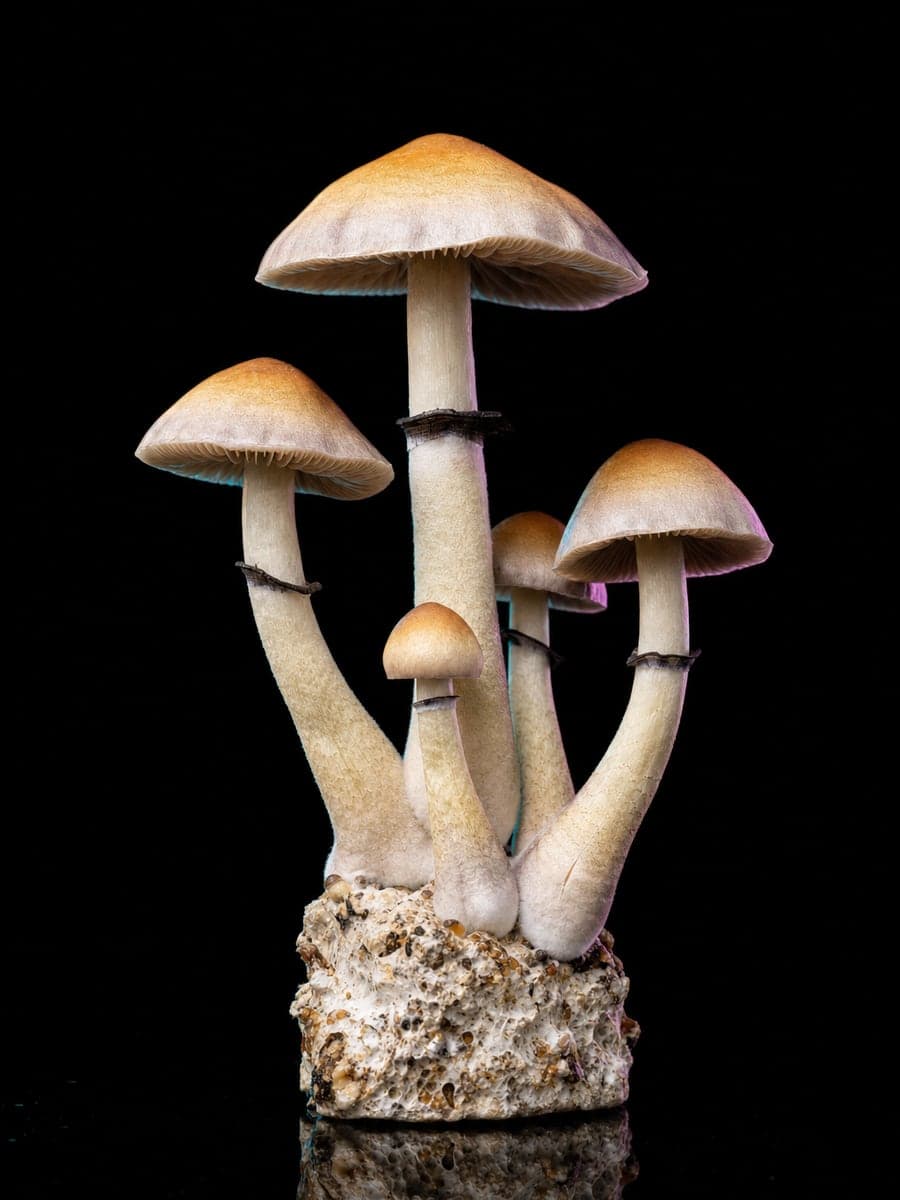
Natal Super Strain
Sold as a cube for years, now its own species.
A 2026 study in Proceedings of the Royal Society B described Psilocybe ochraceocentrata as the closest known free-living relative of P. cubensis, the two having split about 1.5 million years ago. The release notes it had been cultivated for years under the names NSS (Natal Super Strength) and Transkei without being recognised as a separate species.
The "Super Strength" name is usually taken as a grower's boast rather than a measured claim.
Where Natal Super Strain comes from
Natal Super Strain, or Natal Super Strength, is a South African culture long sold as a Psilocybe cubensis or P. natalensis. DNA work published in 2026 places it in a newly described species, Psilocybe ochraceocentrata, the closest known wild relative of P. cubensis. It is a different mushroom from the true P. natalensis.
- Origin
- KwaZulu-Natal, South Africa (the cultivated line); the species also grows wild in Zimbabwe · Cultivated line collected 1994 (vendor account); species described 2026
- Family
- Other species · Africa · Uncommon
- Lineage
- Not the dex's Natalensis: genetic tests found that cultures sold under that name and as NSS did not match the true P. natalensis.
A 2026 study in Proceedings of the Royal Society B described Psilocybe ochraceocentrata as the closest known free-living relative of P. cubensis, the two having split about 1.5 million years ago. The release notes it had been cultivated for years under the names NSS (Natal Super Strength) and Transkei without being recognised as a separate species.
EurekAlert (Stellenbosch University release, 10 Mar 2026): closest free-living relative of P. cubensis found in Africa (Proc R Soc B, doi 10.1098/rspb.2025.2270)DoubleBlind, The Drop In: 'Update on the African Psilocybin Mushroom Rivaling Cubensis' (Sam Gandy, 13 May 2026)The species name refers to the ochre-yellow centre of the cap. In the wild it grows on dung in grasslands and pasture in South Africa and Zimbabwe, and the first specimens recognised as this species were collected in Zimbabwe in 2013 by Cathy Sharp.
EurekAlert (Stellenbosch University release, 10 Mar 2026): closest free-living relative of P. cubensis found in Africa (Proc R Soc B, doi 10.1098/rspb.2025.2270)Cultures sold as P. natalensis or Natal Super Strength did not match the P. natalensis type specimen when sequenced; they grouped with the material earlier called P. aff. natalensis, now P. ochraceocentrata.
DoubleBlind, The Drop In: 'Update on the African Psilocybin Mushroom Rivaling Cubensis' (Sam Gandy, 13 May 2026)Sporeworks: Psilocybe ochraceocentrata, Natal Super Strain isolate (vendor page)Sporeworks says its Natal Super Strain line was first collected in 1994 in a fertilised cattle pasture in KwaZulu-Natal, with a second collection in 1998 from an irrigated lawn in Royal Natal National Park. It renamed its stock after the sequencing results.
Sporeworks: Psilocybe ochraceocentrata, Natal Super Strain isolate (vendor page)A 2026 DoubleBlind guide reports tested alkaloid levels of 0.6% to 1.81%, and describes it as grown much like P. cubensis, with fast, thick rhizomorphic mycelium and some tolerance of cooler temperatures.
DoubleBlind, The Drop In: 'Update on the African Psilocybin Mushroom Rivaling Cubensis' (Sam Gandy, 13 May 2026)
The "Super Strength" name is usually taken as a grower's boast rather than a measured claim.
Growers long assumed it was simply an African cubensis, and some vendors still list it that way.
What it looks like
- Caps
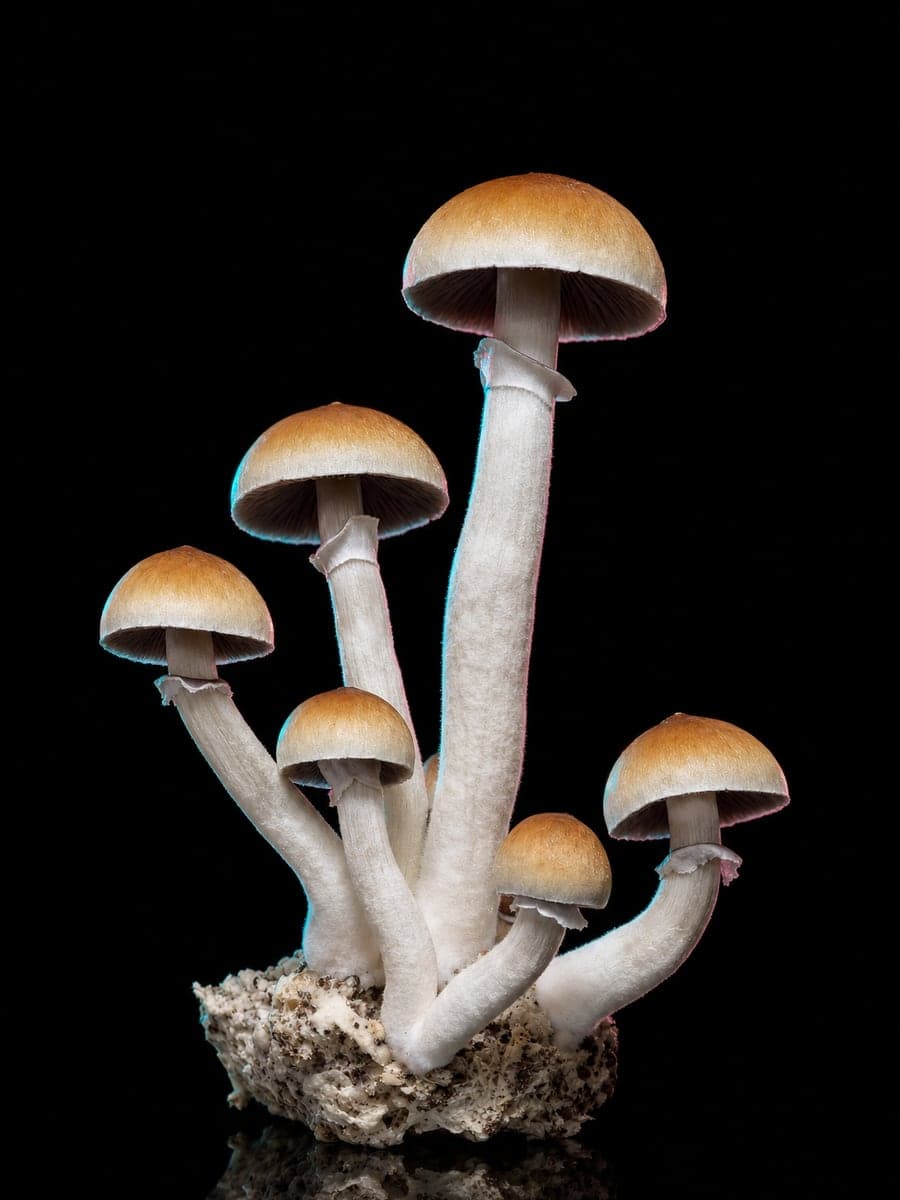
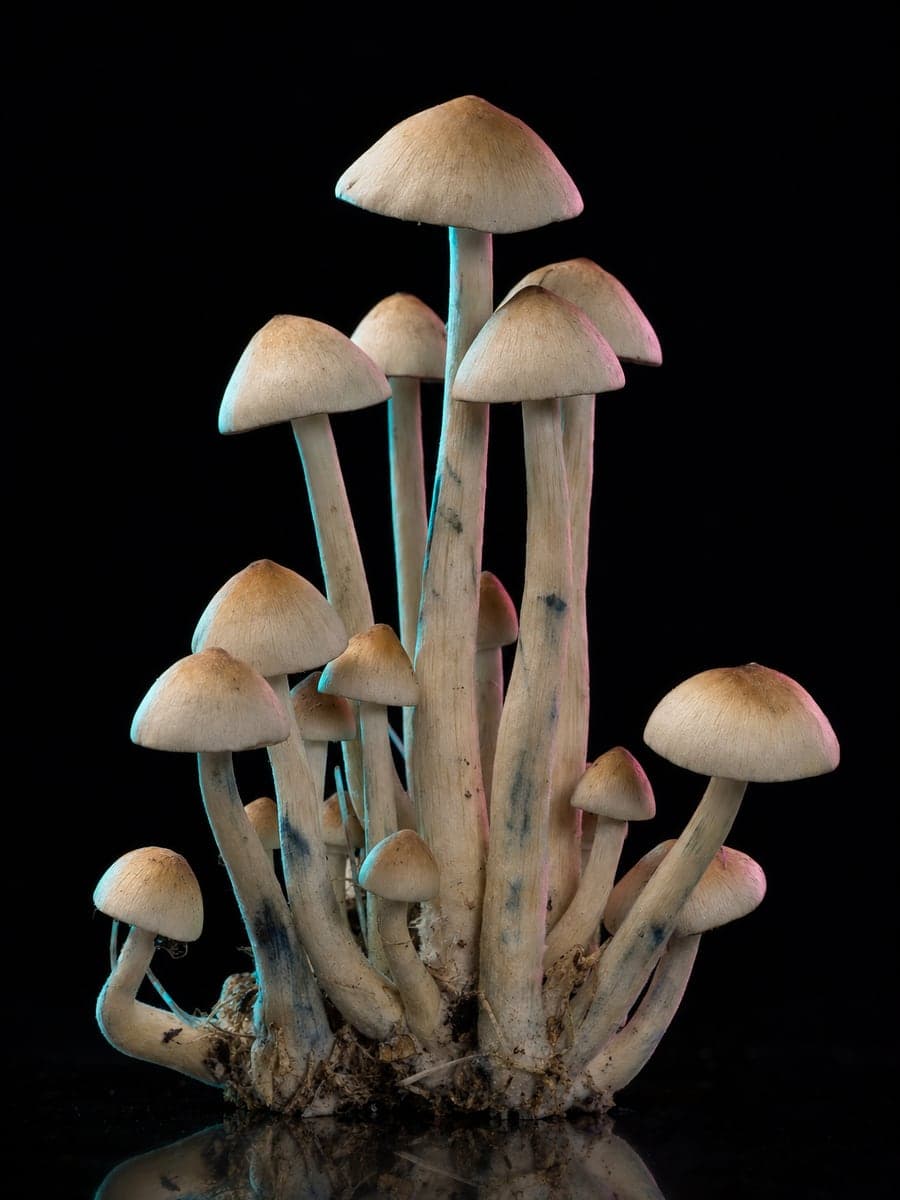
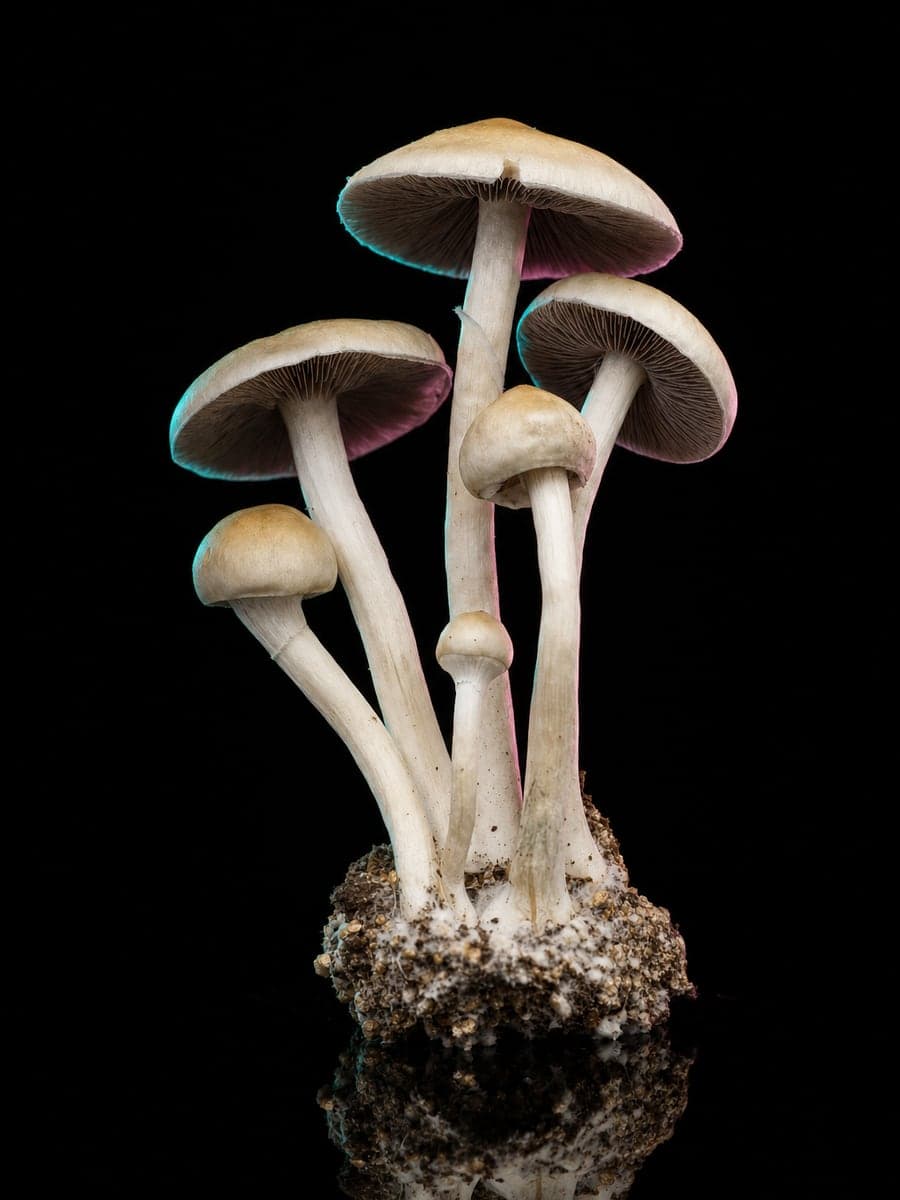
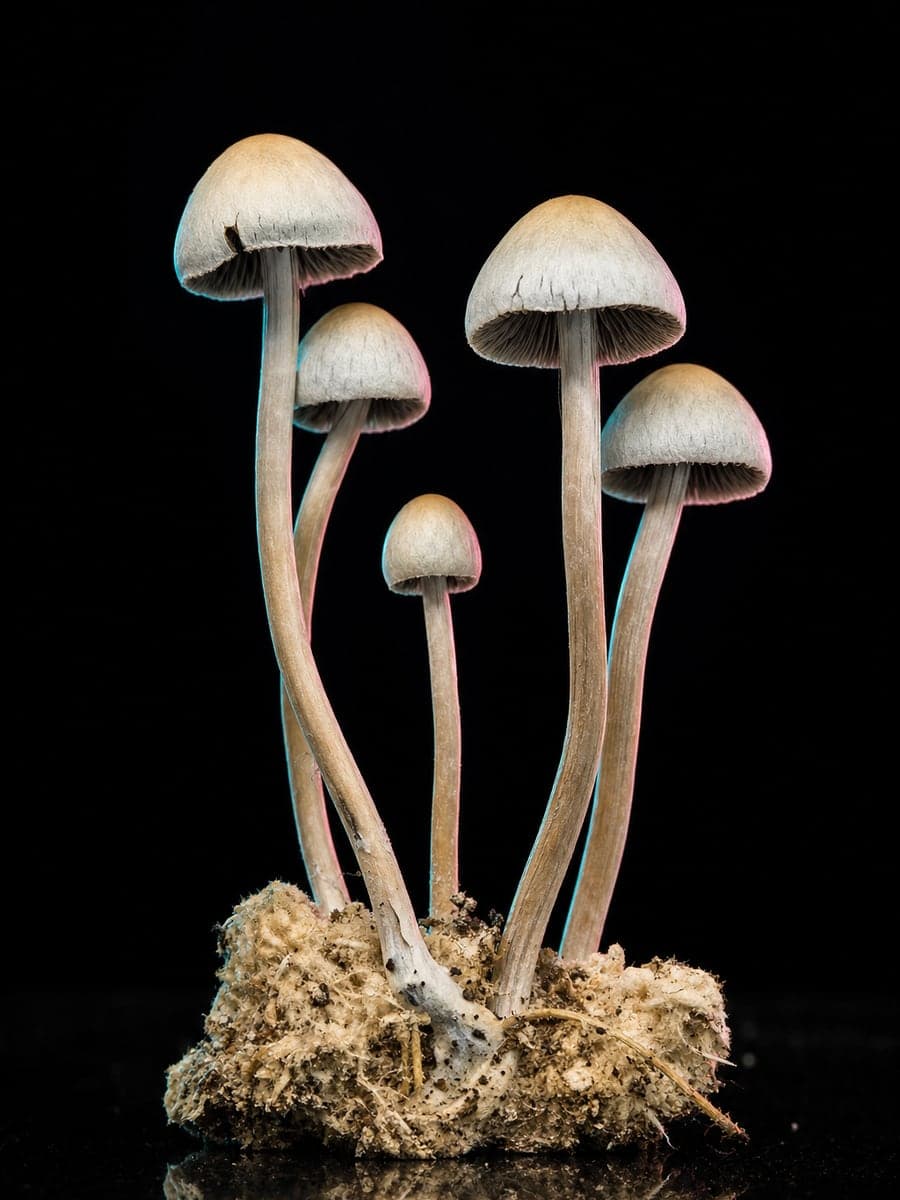
- Cream when young, turning greyish with a lilac tint, with an ochre-yellow centre that gives the species its name; broad caps reported up to about 7 cm.
- Stems
- Pale off-white, up to about 9–10 cm, often twisted; the ring is less persistent than in P. cubensis.
- Notes
- Bruises blue-green. Very hard to tell from P. cubensis by eye, and spores alone cannot identify it. Spore print dark purplish-grey.
- Growing
- Grown like P. cubensis and often called beginner-friendly, with fast colonisation and fewer contamination problems reported. In the wild it is a grassland dung mushroom with deadly look-alikes and is never to be picked from a picture.
How it is described
Natal Super Strain has a reputation as a strong mushroom; many growers consider it as potent as, or more potent than, the stronger cubensis strains. Published test figures span a wide range.
Based on: Reported alkaloid tests and grower consensus as summarised by DoubleBlind (2026); no strain-specific trip-report study.
Natal Super Strain, asked and answered
Where does the Natal Super Strain come from?
From South Africa. The cultivated line is said to come from a 1994 collection in a KwaZulu-Natal cattle pasture, and the species also grows wild in Zimbabwe.
Is Natal Super Strain a cubensis?
No. It was sold as a cubensis or as P. natalensis for years, but a 2026 study placed it in its own species, Psilocybe ochraceocentrata, the closest known relative of P. cubensis.
What does Natal Super Strain look like?
Much like a cubensis: pale, often twisted stems and caps that go from cream to a lilac-grey with an ochre-yellow centre. By eye it is very hard to tell apart.
Is Natal Super Strain strong?
It has a reputation for strength, and reported tests range from about 0.6% to 1.8% alkaloids. Strength varies a lot between grows.
Is it the same as Natalensis?
No. Genetic testing showed that cultures sold under that name did not match the true Psilocybe natalensis, which is a separate species.
The Shroomdex records history and reputation, not advice: how a strain is described is never a promise of how it will feel, and nothing here is medical advice. Strength varies from batch to batch. Start low and see our dose calculator. Never forage from a website: deadly look-alikes grow wild.