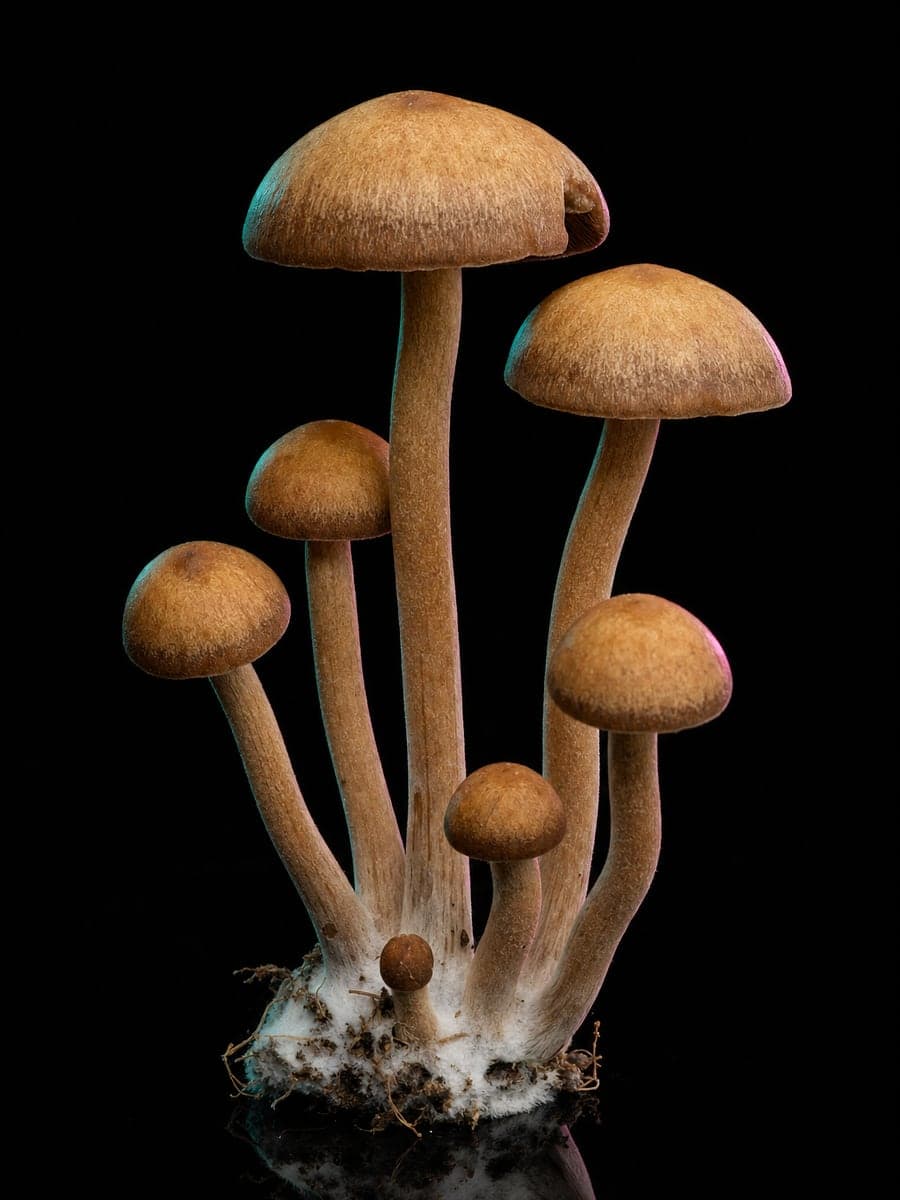
Panaeolus cinctulus
The banded mottlegill of lawns, gardens and compost.
James Bolton described it as Agaricus cinctulus in 1791, and Saccardo moved it to Panaeolus in 1887. Agaricus subbalteatus (Berkeley and Broome, 1861) is a later synonym, and much older literature calls it Panaeolus subbalteatus.
Where Panaeolus cinctulus comes from
Panaeolus cinctulus, the banded mottlegill, is a common, mildly psychoactive mushroom of compost heaps, manured gardens and lawns, found on every inhabited continent. Its brown cap dries paler but keeps a darker band at the edge, and its gills turn mottled black. It is a wild mushroom with deadly look-alikes.
- Origin
- Cosmopolitan: Europe, Africa, Asia, the Americas and Oceania; recorded in every US state · Described by James Bolton in 1791
- Family
- Other species · Unknown · Common
- Lineage
- A species, not a cultivated strain. Long known as Panaeolus subbalteatus.
James Bolton described it as Agaricus cinctulus in 1791, and Saccardo moved it to Panaeolus in 1887. Agaricus subbalteatus (Berkeley and Broome, 1861) is a later synonym, and much older literature calls it Panaeolus subbalteatus.
Wikipedia: Panaeolus cinctulus (pointer)Gotvaldová et al. (2022), Int. J. Mol. Sci. 23: 14068Its common names, belted panaeolus and banded mottlegill, and the old epithet subbalteatus ('somewhat girdled') all refer to the darker band at the cap's edge.
Wikipedia: Panaeolus cinctulus (pointer)It grows on compost piles and well-manured lawns and gardens, only rarely on dung itself, from spring to autumn, especially after rain. David Arora calls it the most common psilocybin mushroom in California.
Wikipedia: Panaeolus cinctulus (pointer to Arora)Early-1900s mushroom farmers knew it as the 'weed Panaeolus', because it came up in button mushroom beds and had to be weeded out.
Wikipedia: Panaeolus cinctulus (pointer)A 2022 lab study of three collections measured 0.11–1.58 mg/g psilocybin and 0.01–0.26 mg/g psilocin, and repeats Stamets' observation that reported levels in this species vary widely.
Gotvaldová et al. (2022), Int. J. Mol. Sci. 23: 14068
What it looks like
- Caps
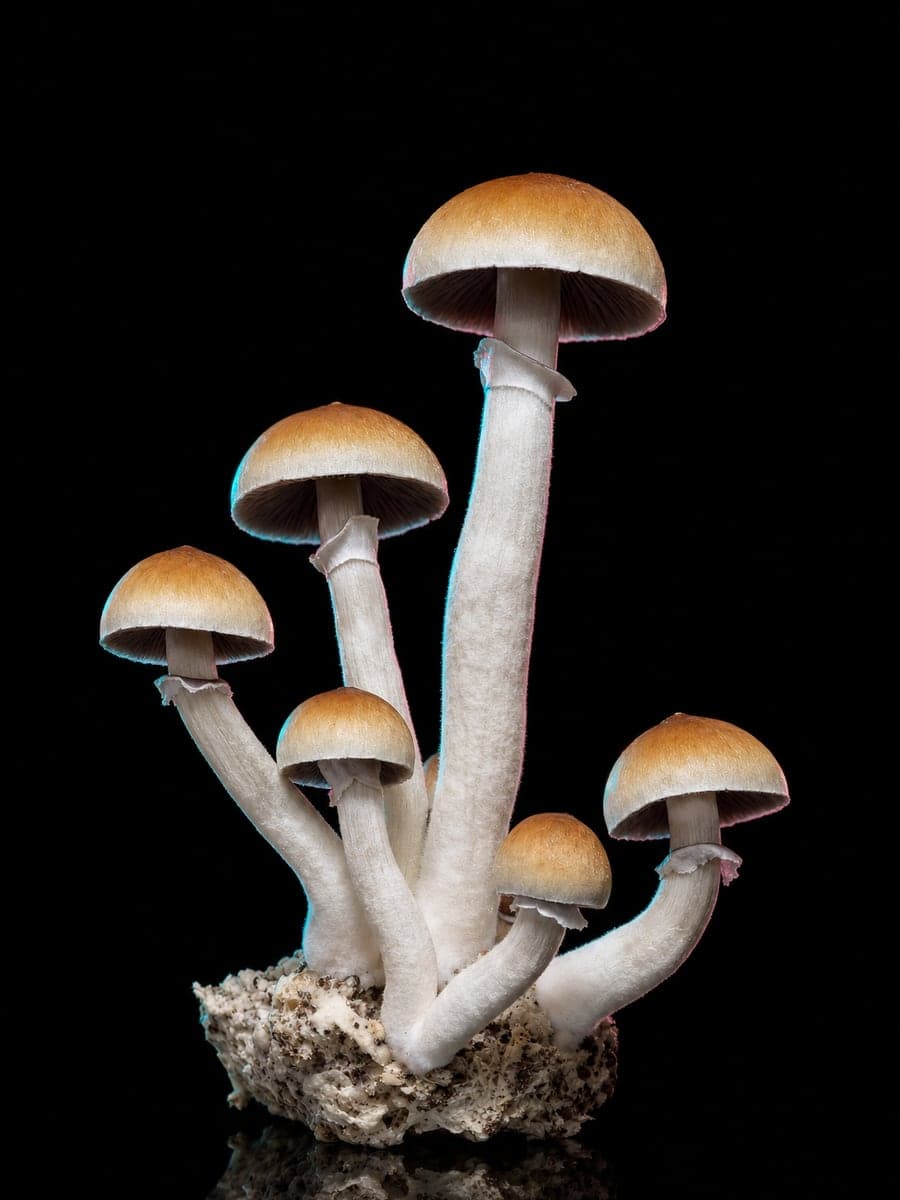
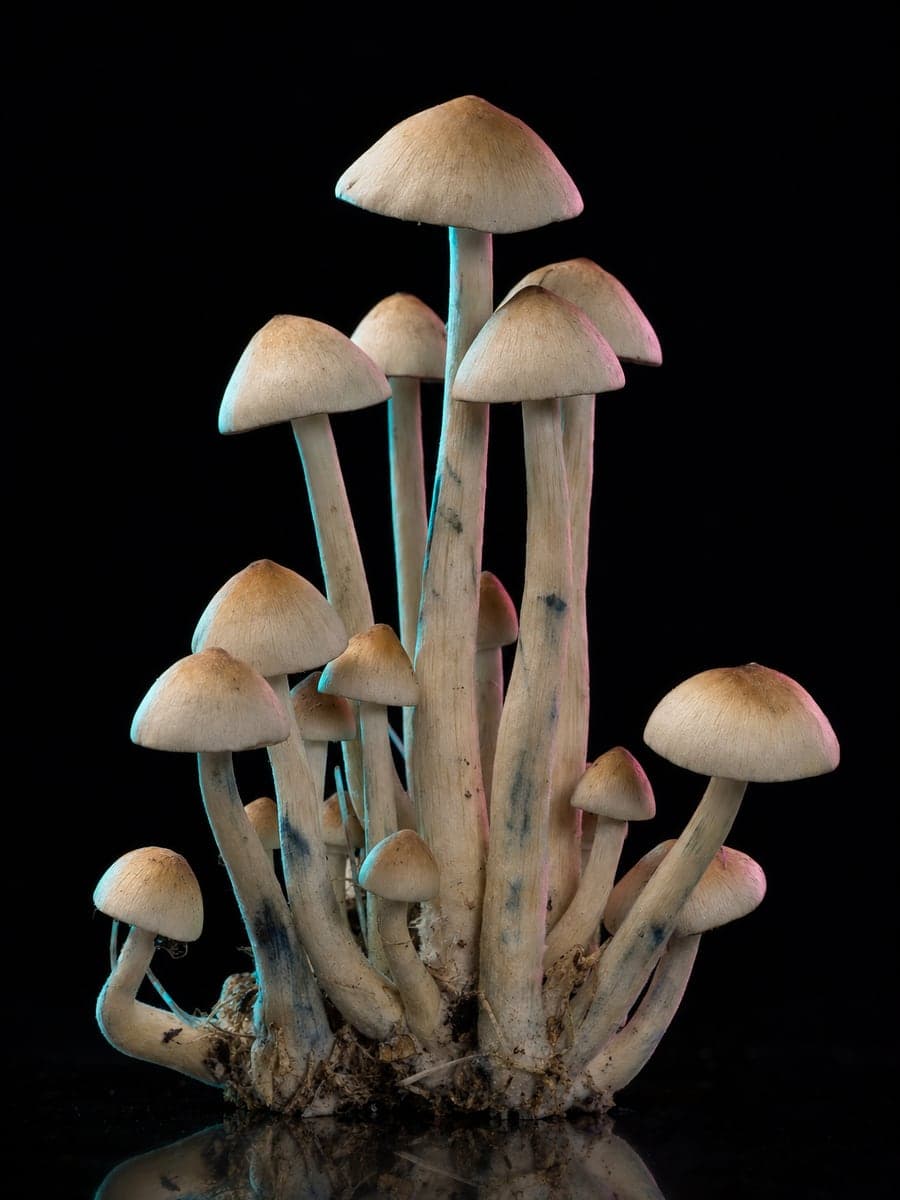
- 1.5–6 cm across, hemispherical to convex, then broadly humped or flat; smooth, cinnamon-brown when wet, drying paler from the centre while a darker band stays at the margin.
- Stems
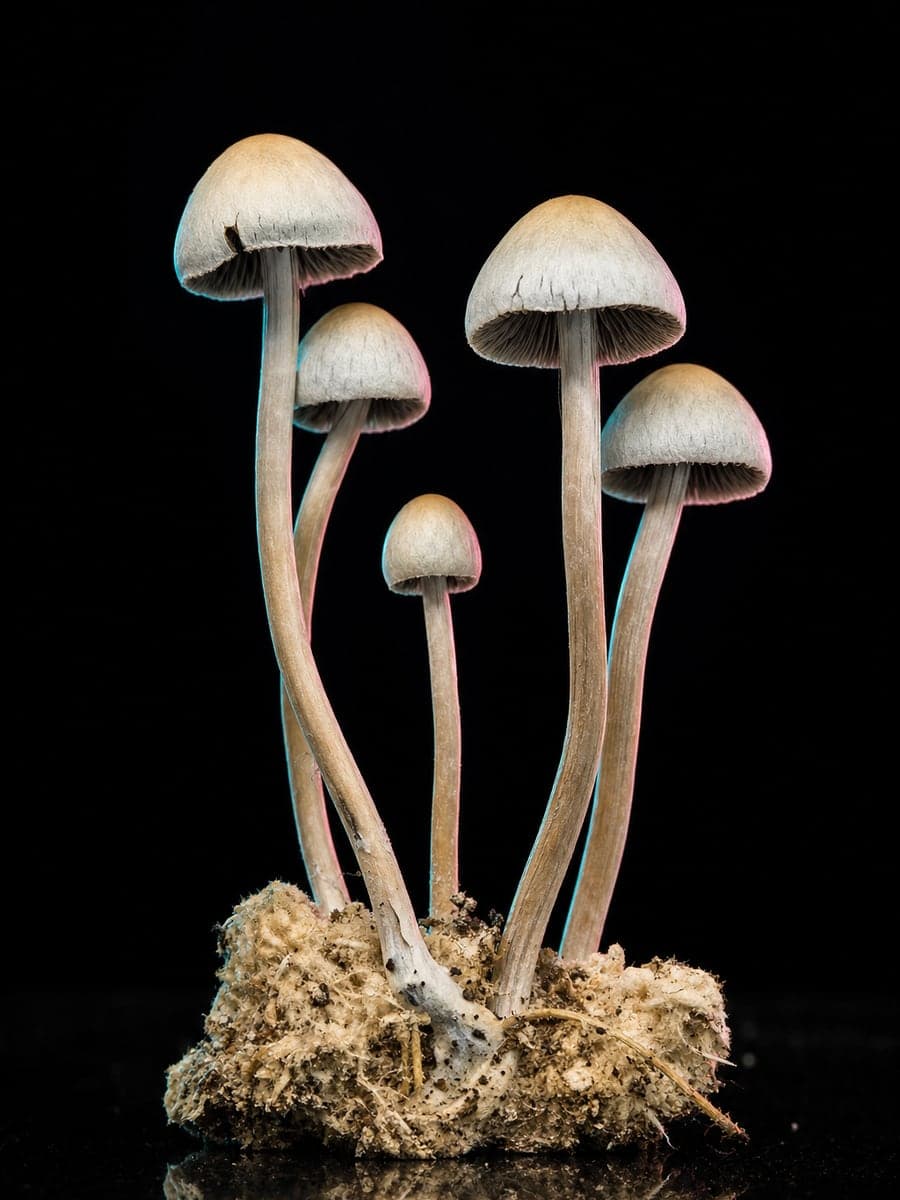
- 4–10 cm long and up to 1 cm thick, hollow, without a veil ring; the base occasionally stains blue.
- Notes
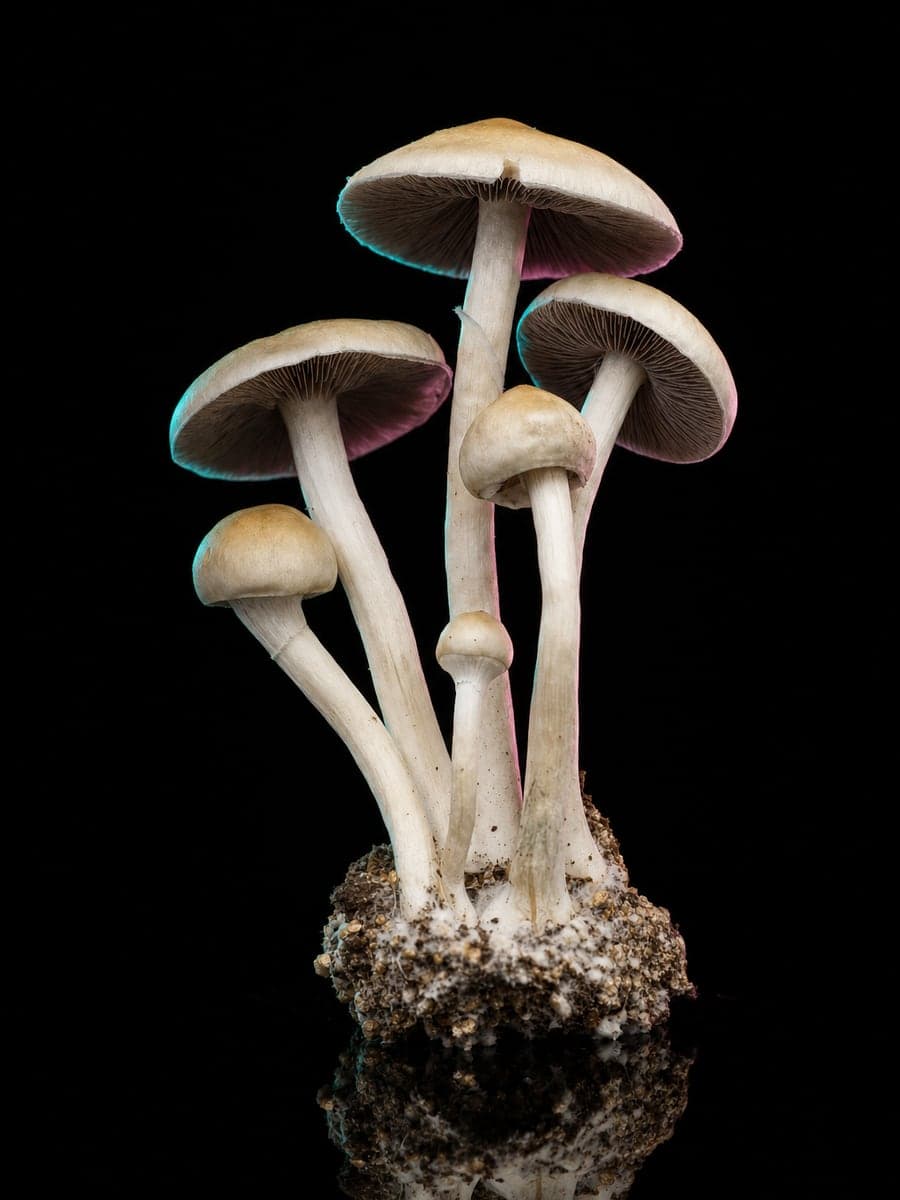
- Gills cream at first, then mottled brown and finally sooty black with white edges; spore print black. Smells of flour when fresh.
- Growing
- It came up uninvited in commercial mushroom beds in the early 1900s, which says it fruits readily on rich compost.
How it is described
The banded mottlegill is described as only mildly psychoactive, and lab figures put it well below typical cubensis, with large differences between collections.
Based on: Lab analysis (Gotvaldová et al. 2022) and Wikipedia's description; no trip-report consensus.
Panaeolus cinctulus, asked and answered
Is Panaeolus cinctulus a cubensis strain?
No. It is a different species in a different genus, Panaeolus, with a black spore print and mottled gills.
Where does Panaeolus cinctulus come from?
Almost everywhere: it grows on compost, manured lawns and gardens across Europe, Africa, Asia, the Americas and Oceania. It was first described in 1791.
What does Panaeolus cinctulus look like?
A cinnamon-brown cap a few centimetres wide that dries paler but keeps a dark band round the edge, mottled gills that turn black, and a slender hollow stem.
Is Panaeolus cinctulus strong?
No. It is described as mildly psychoactive, and lab results are low and very variable.
Can I pick Panaeolus cinctulus in the wild?
It is a wild mushroom with deadly look-alikes: small brown lawn and compost mushrooms are hard to tell apart. Never pick a wild mushroom to eat from a picture; only an expert identification can tell them apart.
The Shroomdex records history and reputation, not advice: how a strain is described is never a promise of how it will feel, and nothing here is medical advice. Strength varies from batch to batch. Start low and see our dose calculator. Never forage from a website: deadly look-alikes grow wild.