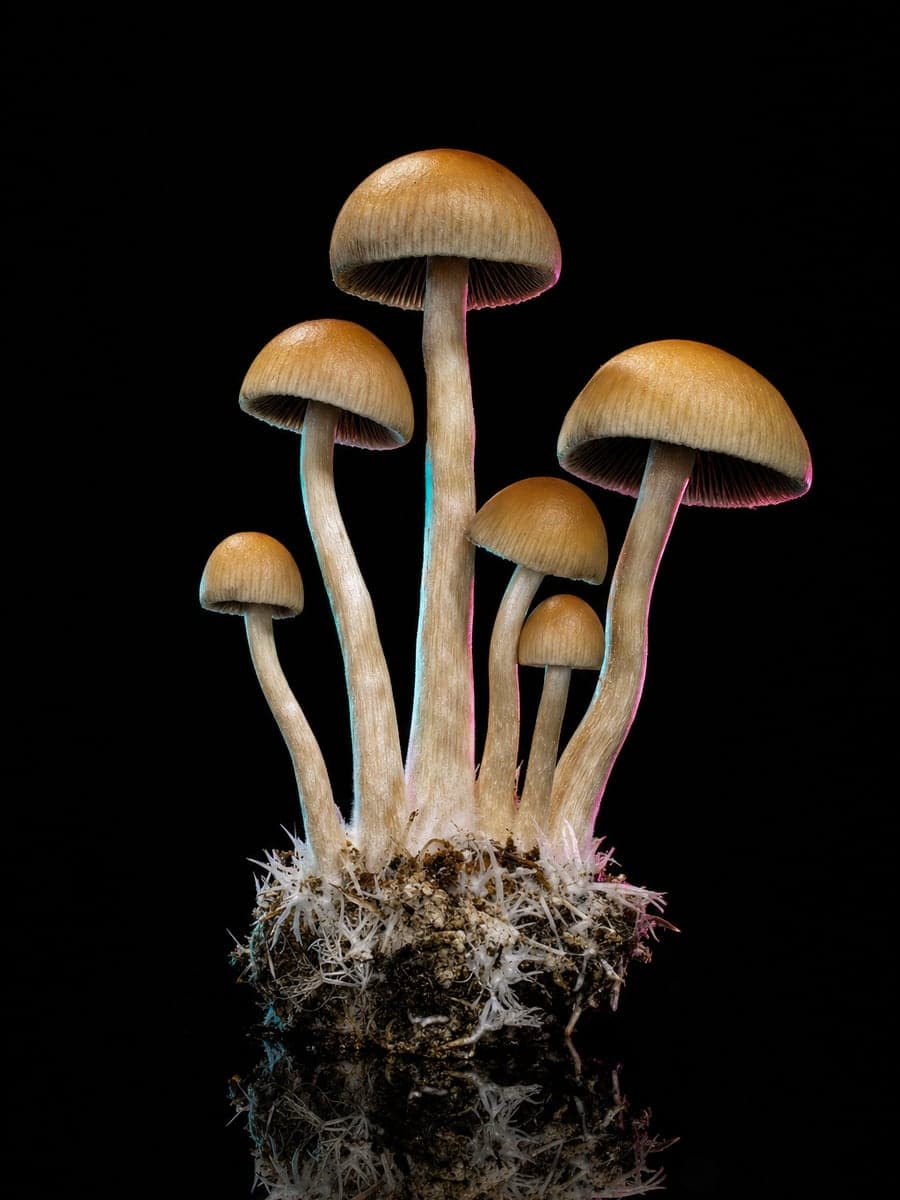
Psilocybe aztecorum
A high-mountain woodlover named for the Aztecs.
Roger Heim first treated it in 1956 as a variety of P. mexicana, from dried material Wasson collected at Paso de Cortés on Popocatépetl, and raised it to a species in 1957. Gastón Guzmán emended the description in 1978.
Wasson read the round motifs on the Xochipilli statue, found on the slopes of Popocatépetl, as stylised caps of this mushroom.
Where Psilocybe aztecorum comes from
Psilocybe aztecorum is a small psilocybin mushroom of the high pine forests of central Mexico, growing on buried wood at roughly 2,000 to 4,000 metres. Roger Heim named it in 1957 from R. Gordon Wasson's collections on Popocatépetl, in honour of the Aztecs who used such mushrooms in ceremony. It is a wild mushroom with deadly look-alikes.
- Origin
- High mountains of central Mexico (Popocatépetl, Nevado de Toluca, La Malinche) under Hartweg's pine; genetic work places Quebec's P. quebecensis in the same species, with records reported across North America · Described 1956–57 (Heim); emended by Guzmán in 1978
- Family
- Other species · Americas · Rare
- Lineage
- A species, not a cultivated strain. Guzmán recognises var. aztecorum and var. bonetii, which has smaller spores and grows on humus under fir and Montezuma pine.
Roger Heim first treated it in 1956 as a variety of P. mexicana, from dried material Wasson collected at Paso de Cortés on Popocatépetl, and raised it to a species in 1957. Gastón Guzmán emended the description in 1978.
Wikipedia: Psilocybe aztecorum (pointer to Heim 1956, 1957 and Guzmán 1978)It decays buried wood, twigs and very rotten logs in alpine pine forest dominated by Hartweg's pine, fruiting in groups from August to October, at around 3,200–4,000 m in its typical habitat.
Wikipedia: Psilocybe aztecorum (pointer to Guzmán 1983)Mushroom Observer / Wikimedia Commons: P. aztecorum habitat photos, Popocatépetl and Nevado de Toluca (Alan Rockefeller)The epithet honours the Aztecs, who used psilocybin mushrooms in ceremony before the Spanish conquest. It is thought to be among the sacred mushrooms (teonanácatl) described by the 16th-century chronicler Bernardino de Sahagún, and Nahua people around Popocatépetl still use it, though the practice is declining.
Wikipedia: Psilocybe aztecorum (pointer to Wasson, Guzmán 2008)Sporeworks: Psilocybe aztecorum isolate vial (vendor page, history note)Albert Hofmann reported 0.02% psilocybin in 1958, but from specimens two years old; Paul Stamets rates the species moderately to highly active.
Wikipedia: Psilocybe aztecorum (pointer to Hofmann 1971 and Stamets 1996)Genetic analysis found that P. quebecensis, named from Quebec, is the same species. A spore vendor lists records from Arizona, California, Oregon, Colorado, Michigan, Quebec, Nova Scotia and Costa Rica.
Sporeworks: Psilocybe aztecorum isolate vial (vendor page)Wikipedia: Psilocybe aztecorum (synonymy)
Wasson read the round motifs on the Xochipilli statue, found on the slopes of Popocatépetl, as stylised caps of this mushroom.
Its Nahuatl name apipiltzin is usually translated as 'children of the water'.
What it looks like
- Caps
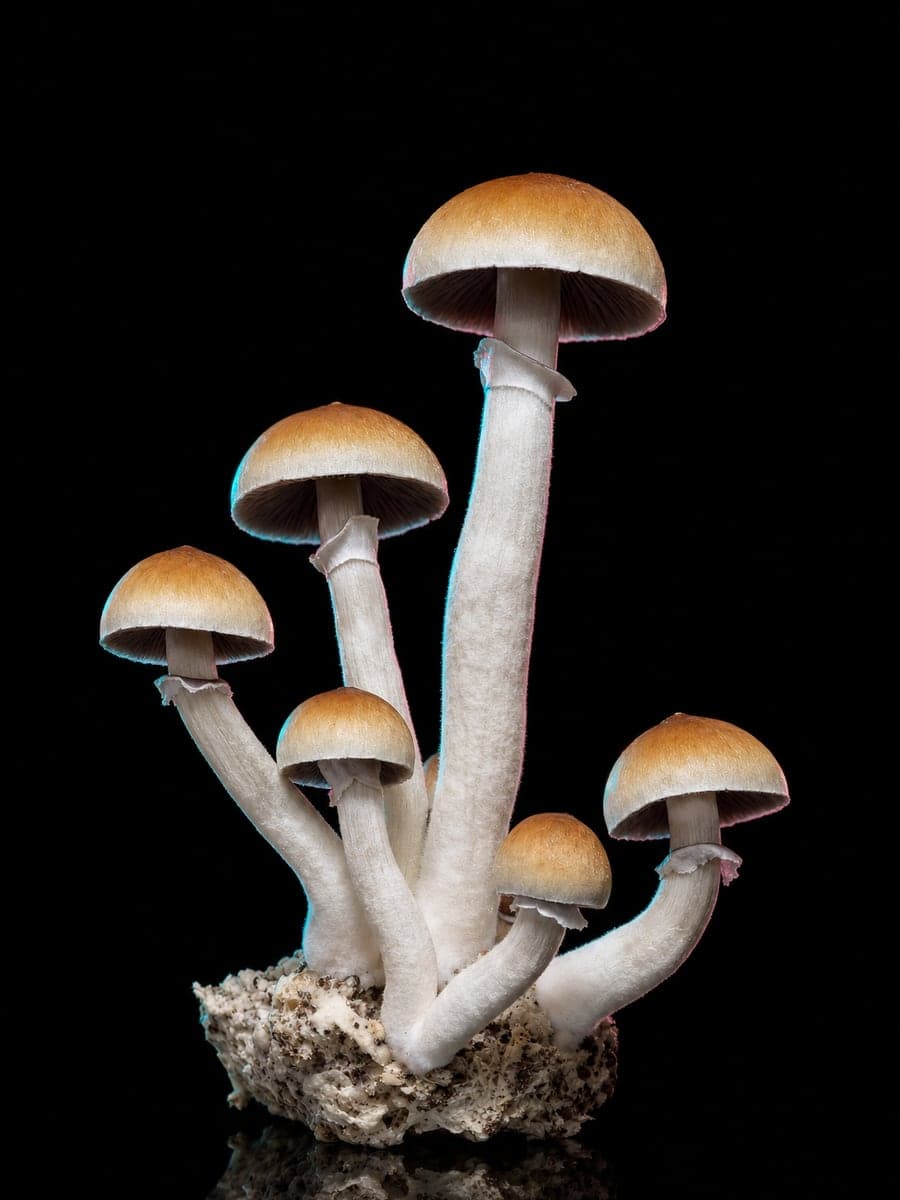
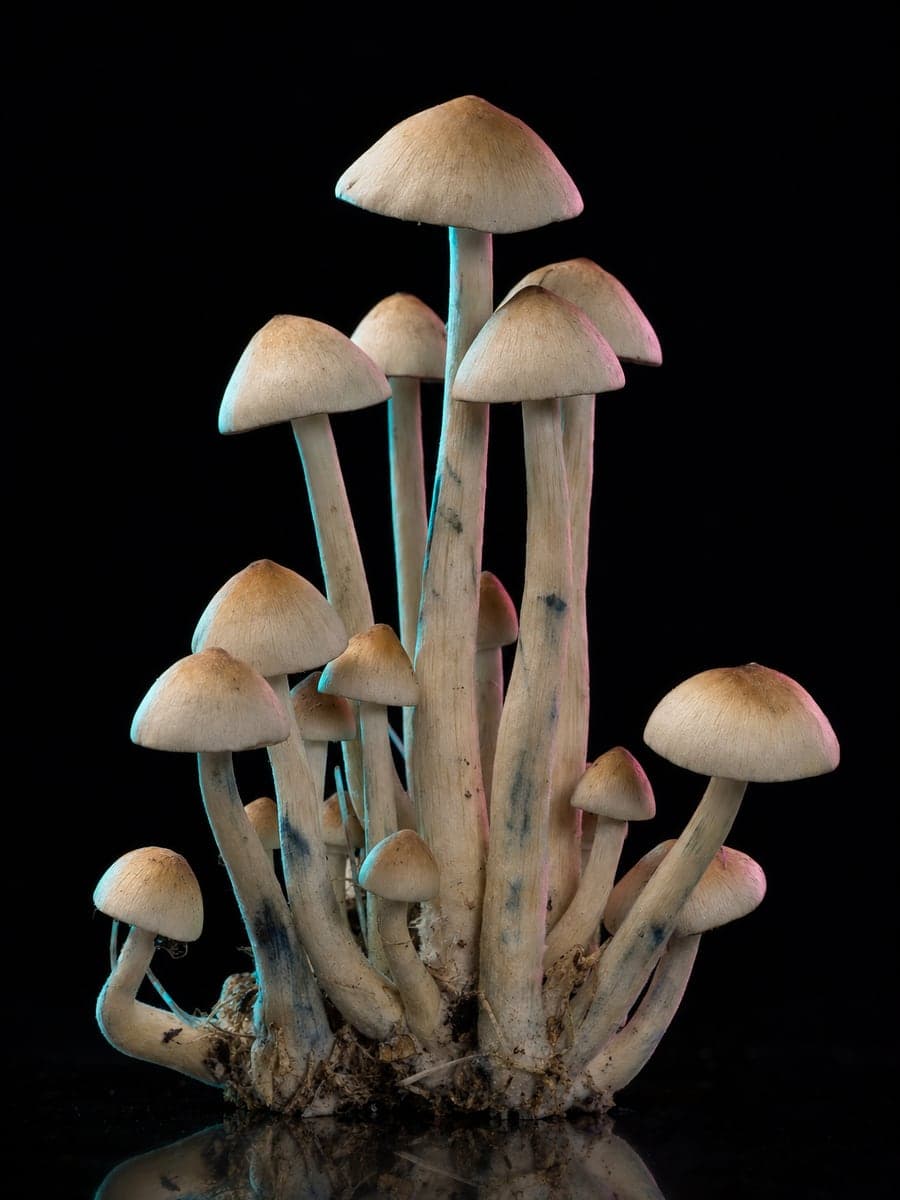
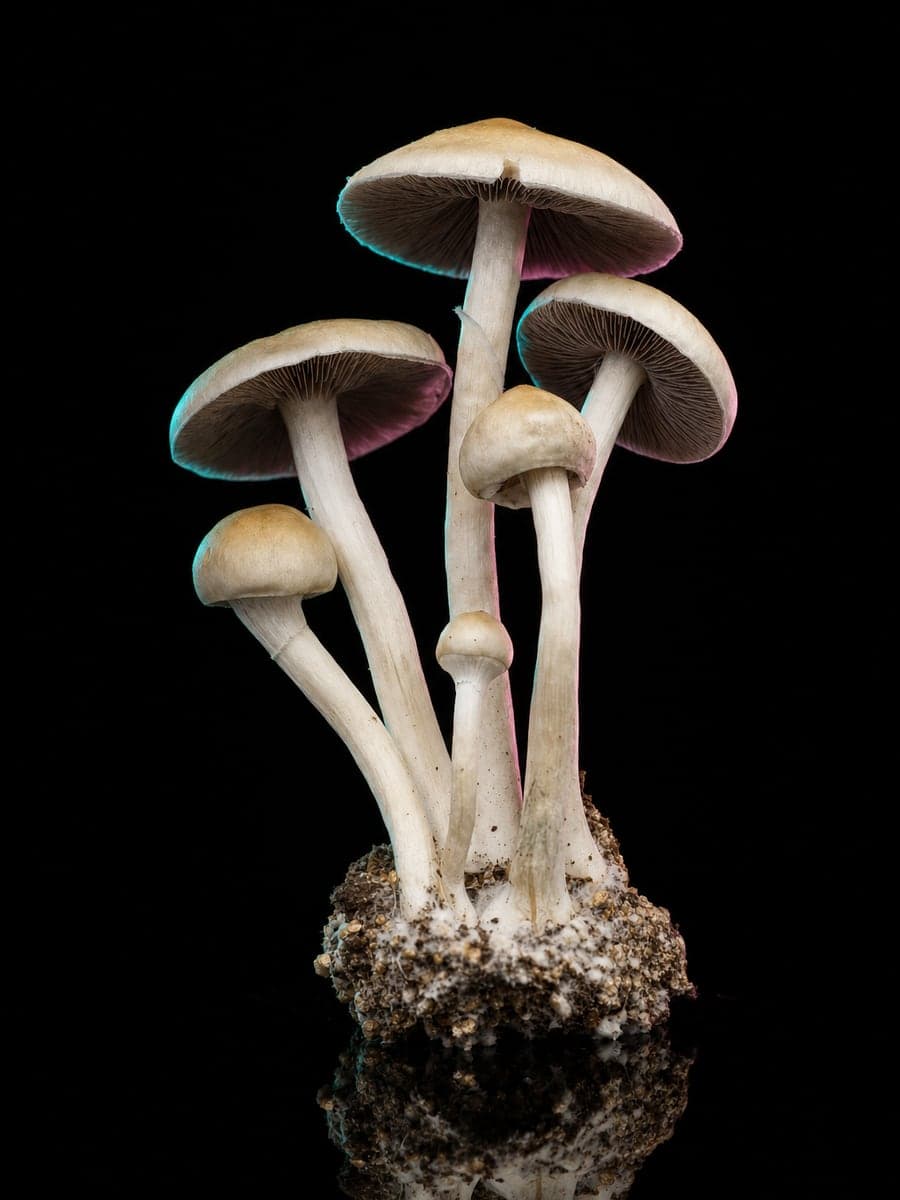
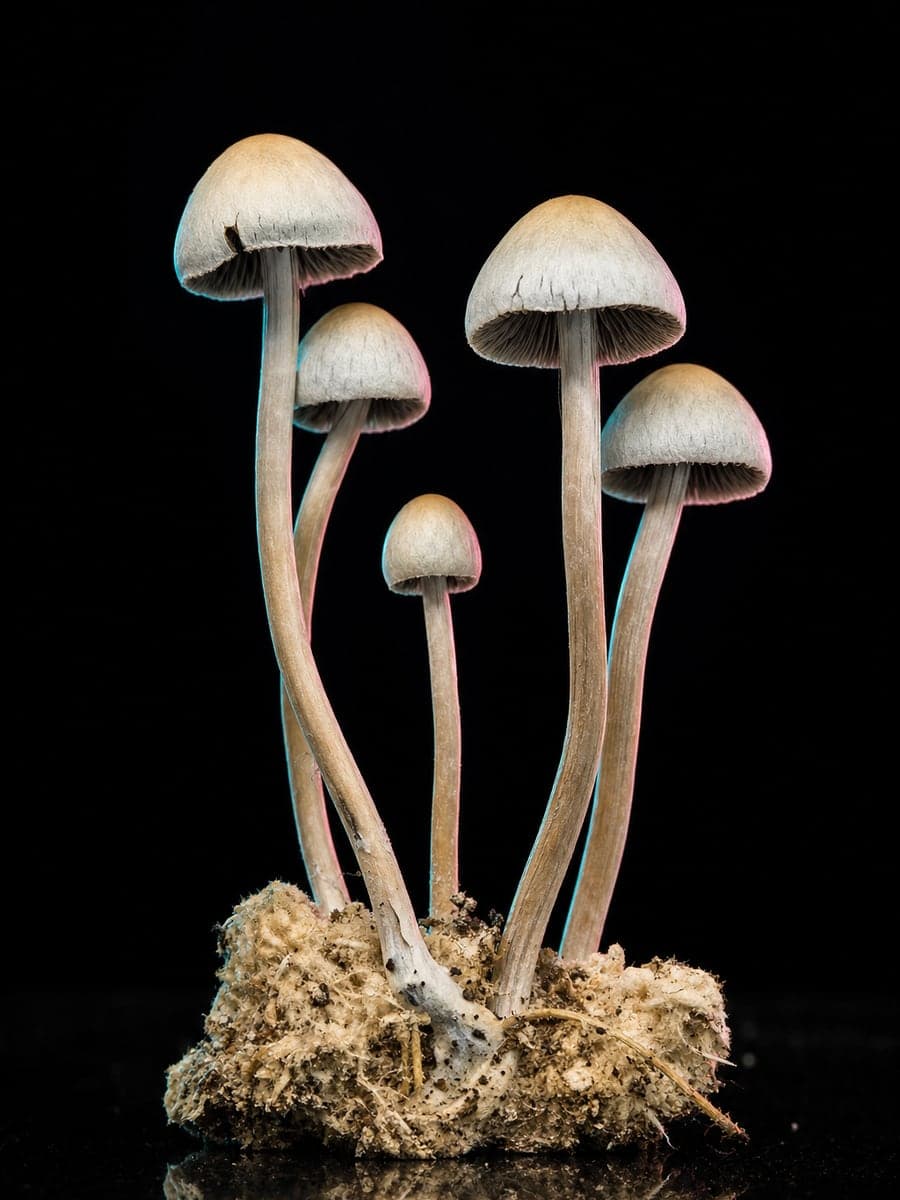
- Small, 1.5–2 cm, convex to bell-shaped then flattening; slimy when wet, golden yellow to yellowish brown when young, greying with age and drying straw-coloured to almost white.
- Stems
- Slender, 5.5–7.5 cm by 3–4 mm, hollow, whitish to greyish, with a dense mass of white rhizomorphs at the base.
- Notes
- Bruises only weakly blue, mostly at the cap edge. A cobwebby veil may leave a fleeting ring zone. Spore print blackish violet. The white root-like strands at the base are unusual in Psilocybe.
How it is described
Psilocybe aztecorum is known mainly as a ceremonial mushroom of central Mexico rather than through modern trip reports. Paul Stamets describes it as moderately to highly active.
Based on: Stamets' rating and Hofmann's old analysis, both via Wikipedia; no modern lab data or trip-report consensus.
Psilocybe aztecorum, asked and answered
Where does Psilocybe aztecorum come from?
The high mountains of central Mexico, such as Popocatépetl and Nevado de Toluca, where it grows on buried wood under pine at roughly 3,000 to 4,000 metres. Genetic work also places Quebec's P. quebecensis in the same species.
What does Psilocybe aztecorum look like?
A small golden-brown cap that dries pale, on a slender whitish stem with a tuft of white root-like strands at the base. It bruises only weakly blue.
Is Psilocybe aztecorum strong?
Paul Stamets calls it moderately to highly active. The only analysis found is an old one on two-year-old specimens, so there is no reliable modern figure.
Can I pick Psilocybe aztecorum in the wild?
It is a wild mushroom, and many small brown mushrooms, some of them deadly, look alike. Never pick a wild mushroom to eat from a picture; only an expert identification can tell them apart.
The Shroomdex records history and reputation, not advice: how a strain is described is never a promise of how it will feel, and nothing here is medical advice. Strength varies from batch to batch. Start low and see our dose calculator. Never forage from a website: deadly look-alikes grow wild.