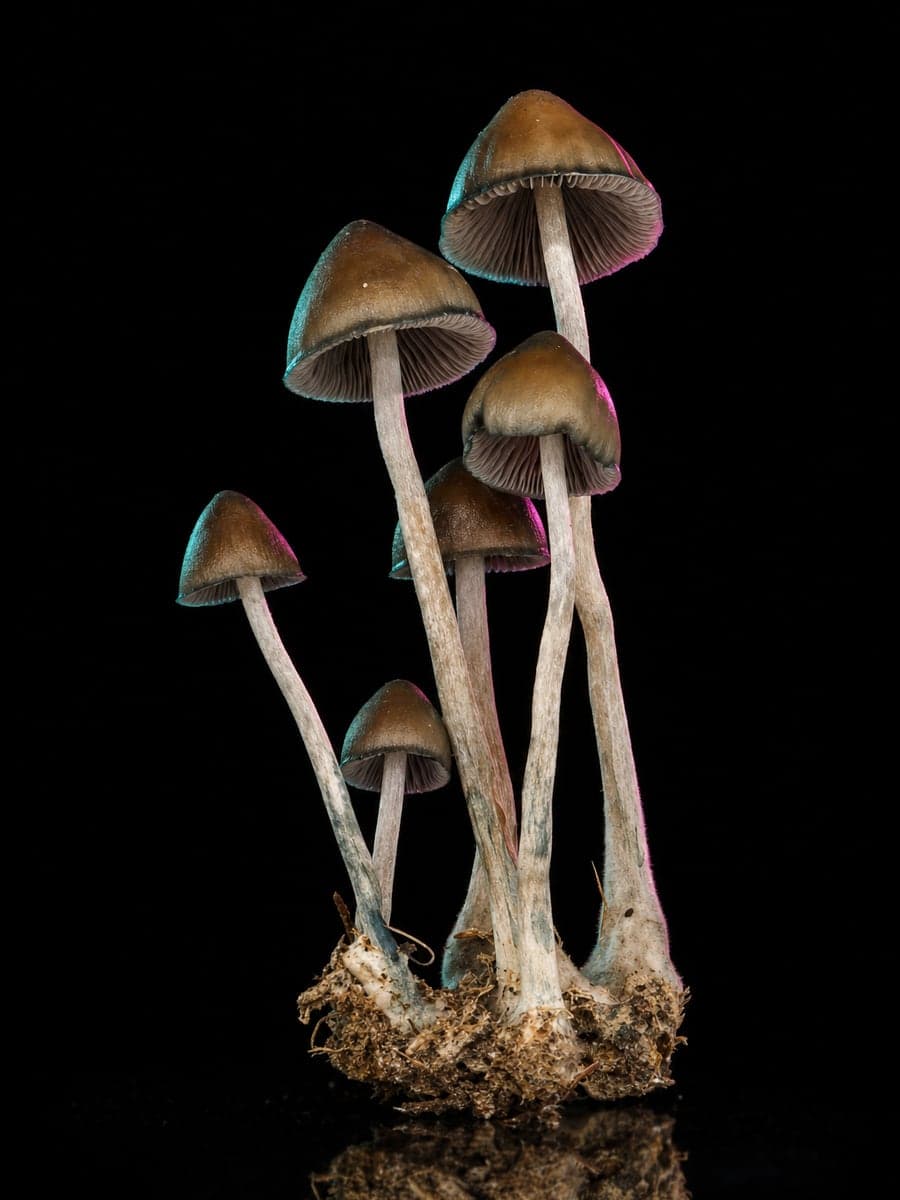
Psilocybe baeocystis
The little Northwest mulch mushroom that named baeocystin.
Rolf Singer and Alexander H. Smith described the species in Mycologia in 1958, from material first collected in Eugene, Oregon, in 1945.
The name comes from Greek for 'little bladder'.
Where Psilocybe baeocystis comes from
Psilocybe baeocystis is a small, wild psilocybin mushroom of the Pacific Northwest, first collected in Eugene, Oregon, in 1945 and described in 1958. It grows on wood chips, bark mulch and sometimes lawns, and gave its name to baeocystin, a compound first isolated from it. It is a wild mushroom with deadly look-alikes and must never be picked from a picture.
- Origin
- Pacific Northwest of North America; first collected in Eugene, Oregon · First collected 1945; described 1958
- Family
- Other species · Americas · Uncommon
- Lineage
- A species, not a cultivated strain. Guzmán placed it in section Aztecorum with P. aztecorum and P. quebecensis, which also bleach pale as they dry.
Rolf Singer and Alexander H. Smith described the species in Mycologia in 1958, from material first collected in Eugene, Oregon, in 1945.
Wikipedia: Psilocybe baeocystis (pointer to Singer & Smith 1958, Mycologia 50: 141–142)Baeocystin, a close chemical relative of psilocybin, was isolated from cultures of this species and named after it by Leung and Paul in 1967; they described norbaeocystin from it the following year.
Wikipedia: Psilocybe baeocystis (pointer to Leung & Paul 1967, 1968, J Pharm Sci)Figures reported in Paul Stamets' Psilocybin Mushrooms of the World put its psilocybin at 0.15–0.85%, psilocin at up to 0.59% and baeocystin at up to 0.10%.
Wikipedia: Psilocybe baeocystis (pointer to Stamets 1996)It grows alone or in clusters on bark, wood chips, peat moss and conifer mulch, sometimes on lawns, from late summer to December, and is common across the Pacific Northwest, sometimes alongside P. stuntzii and P. cyanescens.
Wikipedia: Psilocybe baeocystis (pointer to Stamets 1996)It is recorded in British Columbia: iNaturalist holds research-grade observations of it from the province.
iNaturalist: research-grade observations of Psilocybe baeocystis in British ColumbiaSpore sellers offer wild prints of it from the Oregon coast.
Inoculate The World: Psilocybe baeocystis spore print (vendor page)Sporeworks: Psilocybe baeocystis 'Bottle Cap' spore print (vendor page)
The name comes from Greek for 'little bladder'.
Northwest foragers know it best from rhododendron and rose beds mulched with bark.
What it looks like
- Caps
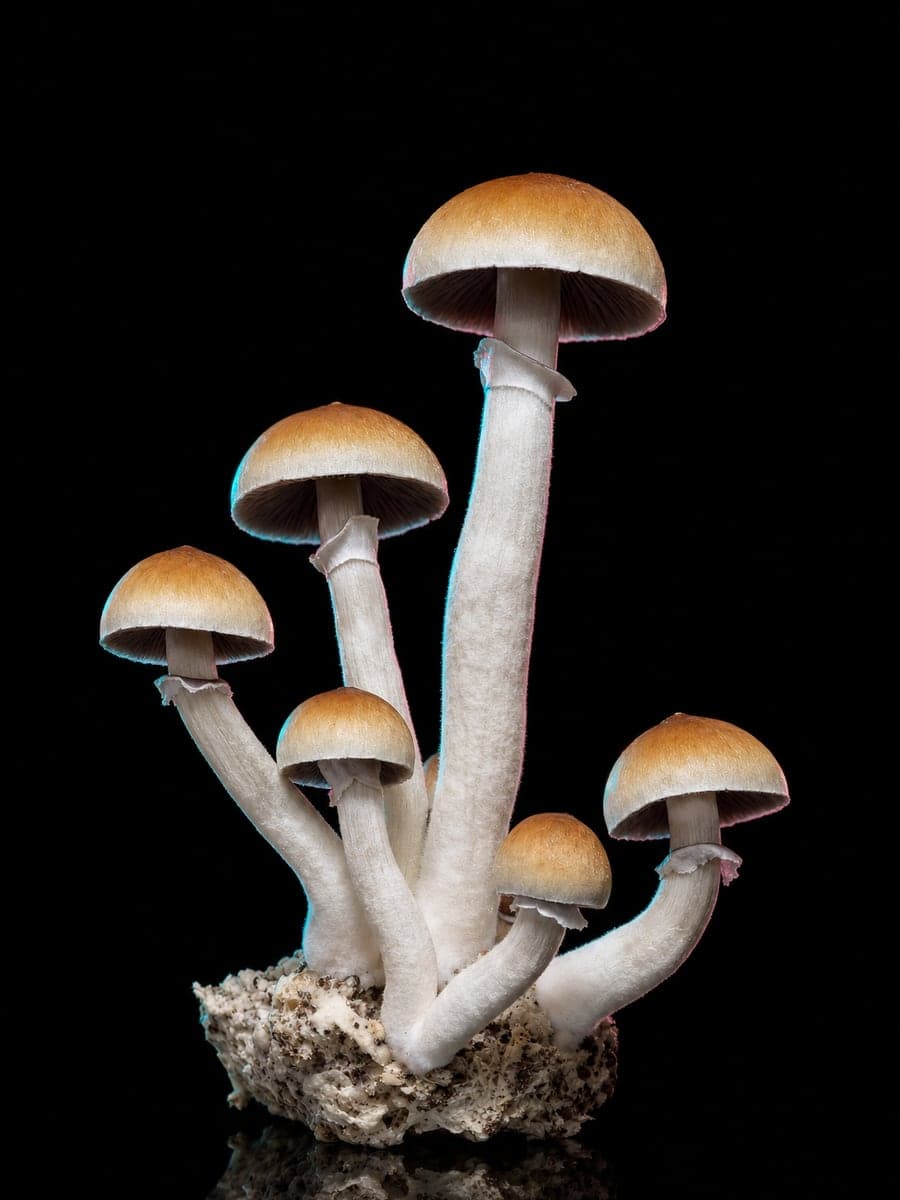
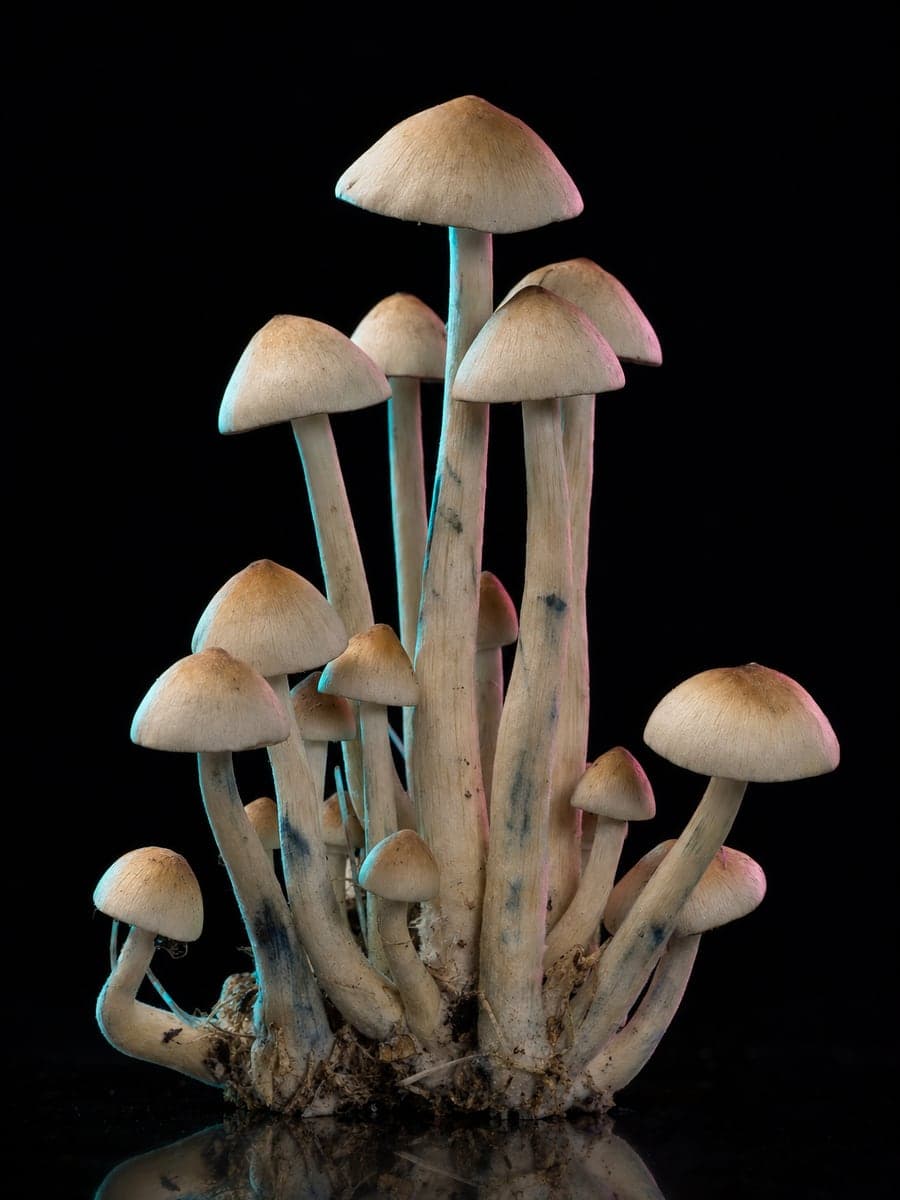
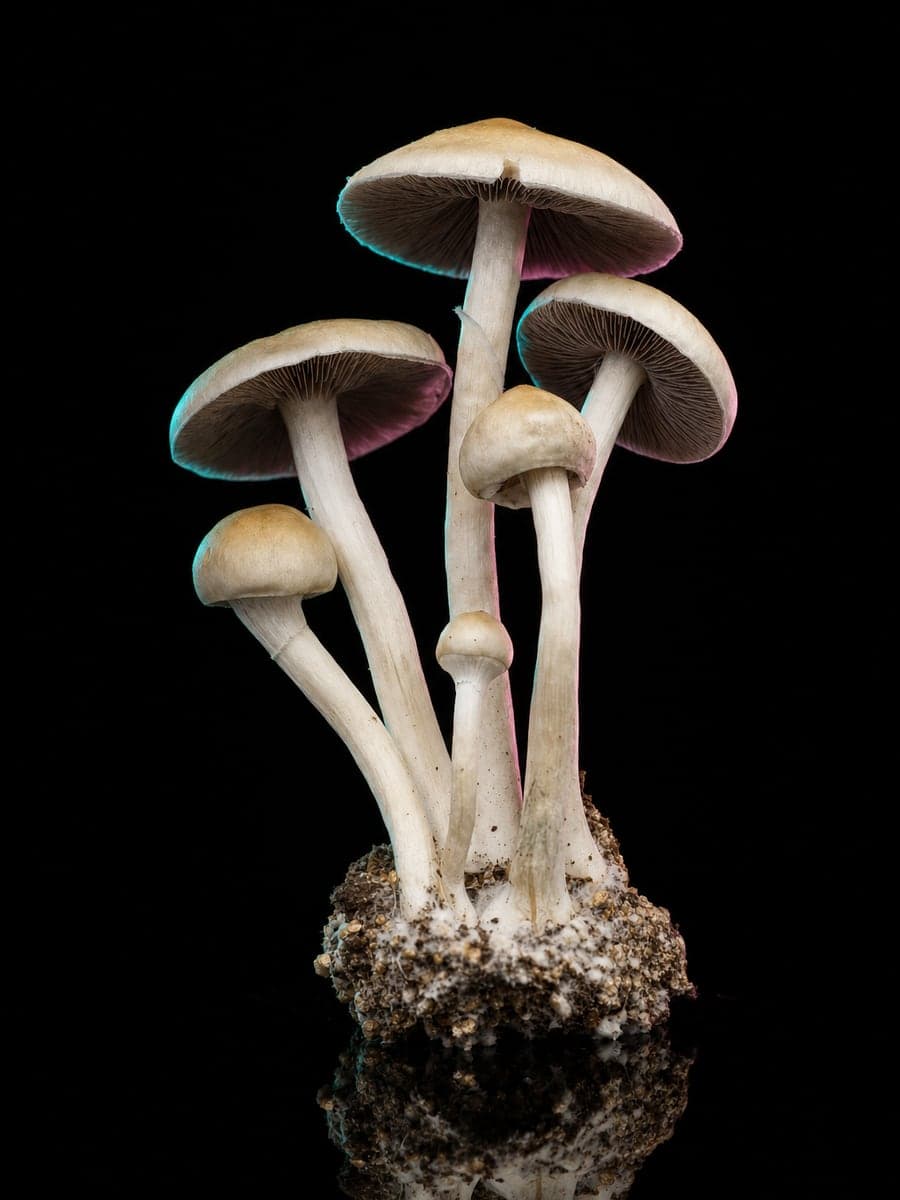
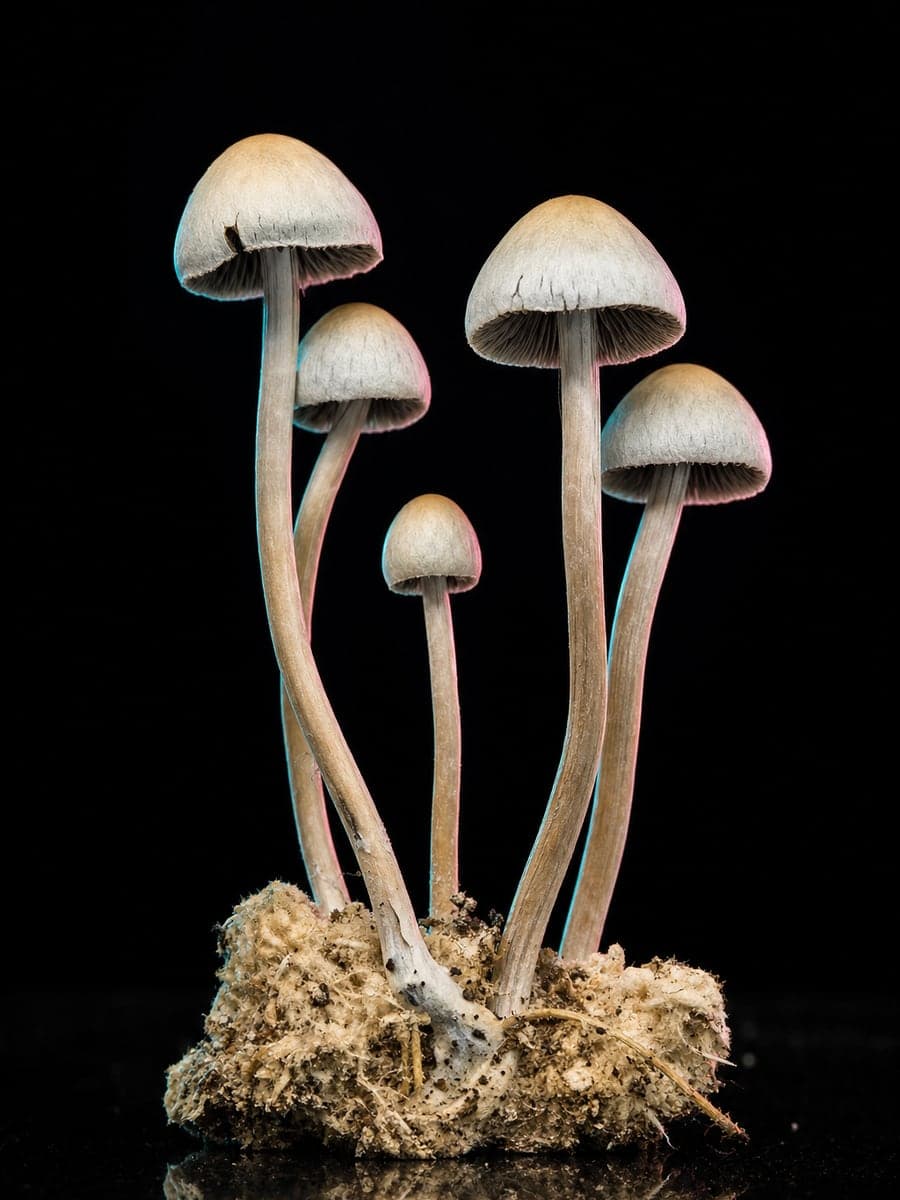
- 1.5–5.5 cm, conic to convex, dark olive-brown to buff-brown when wet, fading to whitish as it dries; sticky when moist, the margin bruising greenish-blue.
- Stems
- 5–7 cm long and only 2–3 mm thick, pale to brownish, more yellowish near the top, with root-like strands at the base.
- Notes
- Gills grey to cinnamon-brown with pale edges; spore print dark purplish-brown. The partial veil disappears early. Flesh bruises blue easily; smell and taste mealy.
- Growing
- A wood-loving wild species rather than a grain-and-tub strain; spores are sold for microscopy, and no cultivation reports were checked.
How it is described
Psilocybe baeocystis is described as active, with reported psilocybin and psilocin levels in the same broad range as cultivated cubensis. Small size and variation between collections make its strength uneven.
Based on: Stamets' reported concentration ranges (via Wikipedia); no trip-report consensus gathered. No controlled data on effects.
Psilocybe baeocystis, asked and answered
Where does Psilocybe baeocystis grow?
In the Pacific Northwest of North America, on wood chips, bark mulch and sometimes lawns, from late summer to December. It has been recorded in British Columbia. It is a wild mushroom with deadly look-alikes and should never be picked from a picture.
What does Psilocybe baeocystis look like?
A small, slender mushroom with a conic to bell-shaped cap, dark olive-brown when wet and fading pale as it dries, on a thin whitish to brownish stem that bruises blue.
Is Psilocybe baeocystis strong?
Reported psilocybin levels range from 0.15% to 0.85%, broadly similar to cultivated cubensis, but strength varies a lot between collections.
Is baeocystin named after this mushroom?
Yes. Baeocystin was first isolated from this species in 1967 and takes its name from it.
Can it be confused with poisonous mushrooms?
Yes. Small brown mushrooms on wood chips include deadly species, and only an expert with the mushroom in hand can tell them apart. Never pick a wild mushroom from a photo.
The Shroomdex records history and reputation, not advice: how a strain is described is never a promise of how it will feel, and nothing here is medical advice. Strength varies from batch to batch. Start low and see our dose calculator. Never forage from a website: deadly look-alikes grow wild.