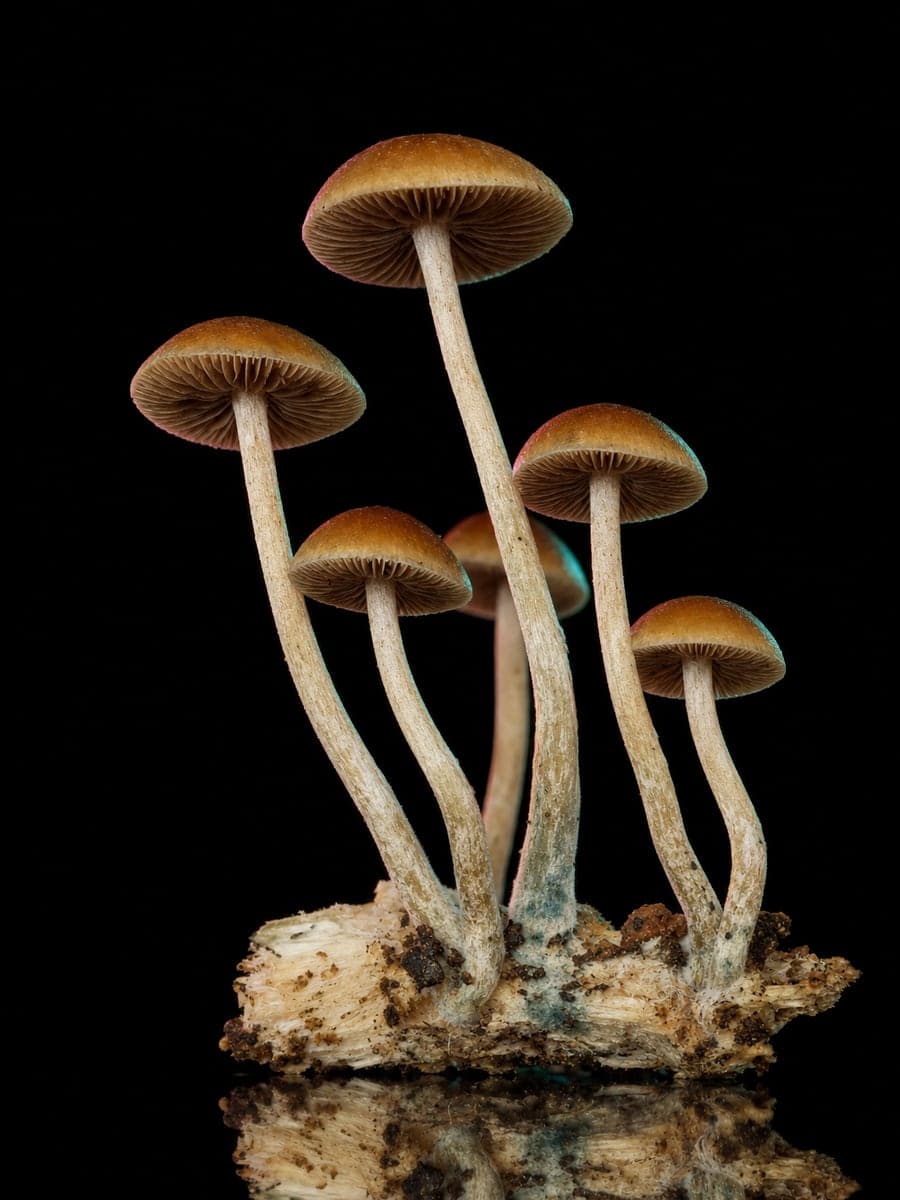
Psilocybe caerulipes
A little brown woodlover with a blue-stained foot.
Charles Horton Peck described it in 1881 as Agaricus caerulipes. The name joins the Latin for blue and foot.
Where Psilocybe caerulipes comes from
Psilocybe caerulipes, the blue-foot, is a small psilocybin mushroom of eastern North American hardwood forests, growing on rotting birch, beech and maple. Charles Horton Peck described it in 1881 as Agaricus caerulipes. It is widespread but seldom found, and it is a wild mushroom with deadly look-alikes.
- Origin
- Eastern North America from Nova Scotia to North Carolina and west to Michigan, including Ontario; also beech cloud forests of Hidalgo and Veracruz, Mexico · Described 1881 (Peck)
- Family
- Other species · Americas · Rare
- Lineage
- A species, not a cultivated strain.
Charles Horton Peck described it in 1881 as Agaricus caerulipes. The name joins the Latin for blue and foot.
Sporeworks: Psilocybe caerulipes isolate vial (vendor page)Wikipedia: Psilocybe caerulipesIt grows alone or in small tufts on hardwood slash and on or near rotting logs of birch, beech and maple in deciduous forest, from late May to December. It is widely distributed but not often found, being easy to pass over as a little brown mushroom.
Wikipedia: Psilocybe caerulipesIts range runs from Nova Scotia to North Carolina and west to Michigan, with outlying populations on beech in the cloud forests of Hidalgo and Veracruz, Mexico. Mushroom Observer holds records from Ontario, New York, Pennsylvania, Ohio and Maine.
Wikipedia: Psilocybe caerulipes (pointer to Guzmán 1973)Mushroom Observer: observation 74451 (Pembroke, Ontario, 2011)Mushroom Observer: observation 257318 (Veracruz, Mexico, Alan Rockefeller, 2016)Its main active compounds are psilocybin and psilocin; no measured concentrations were found.
Wikipedia: Psilocybe caerulipes
What it looks like
- Caps
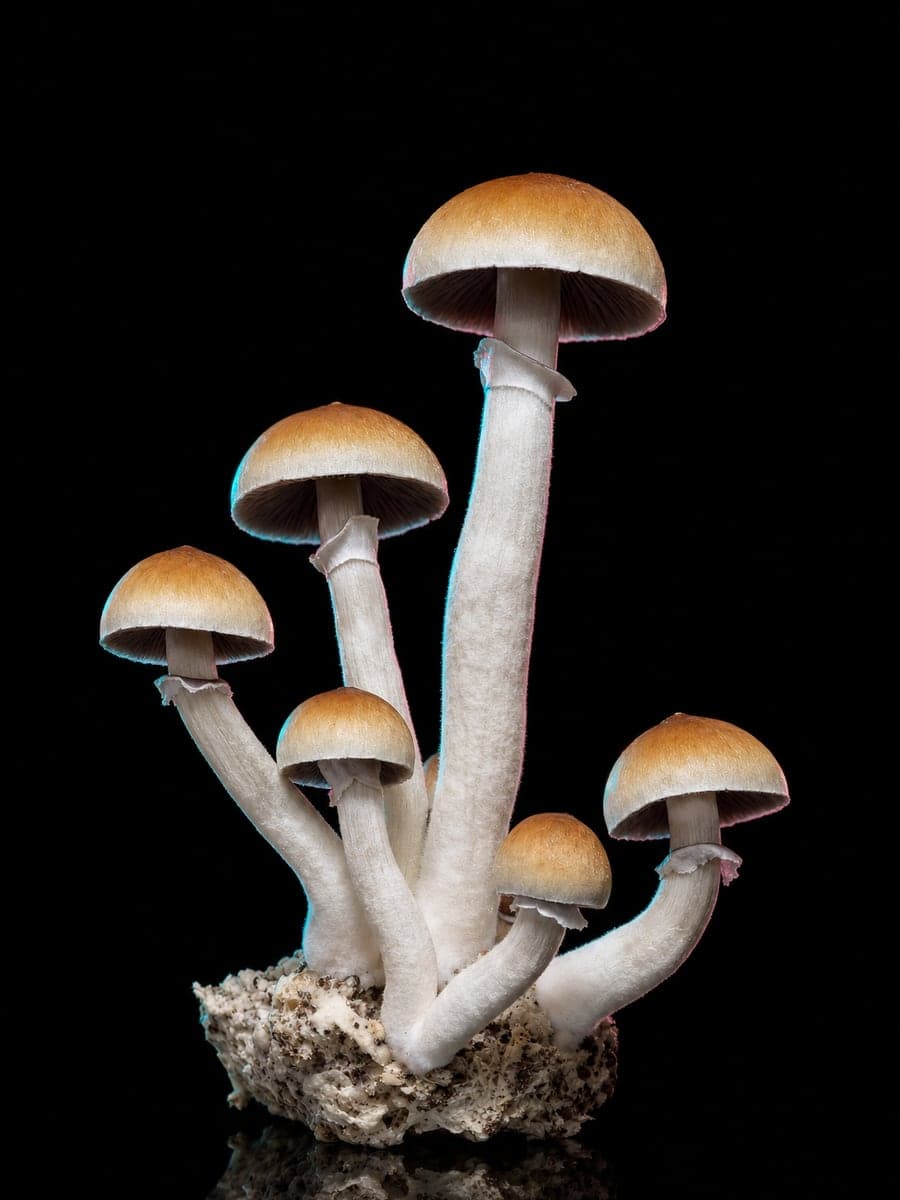
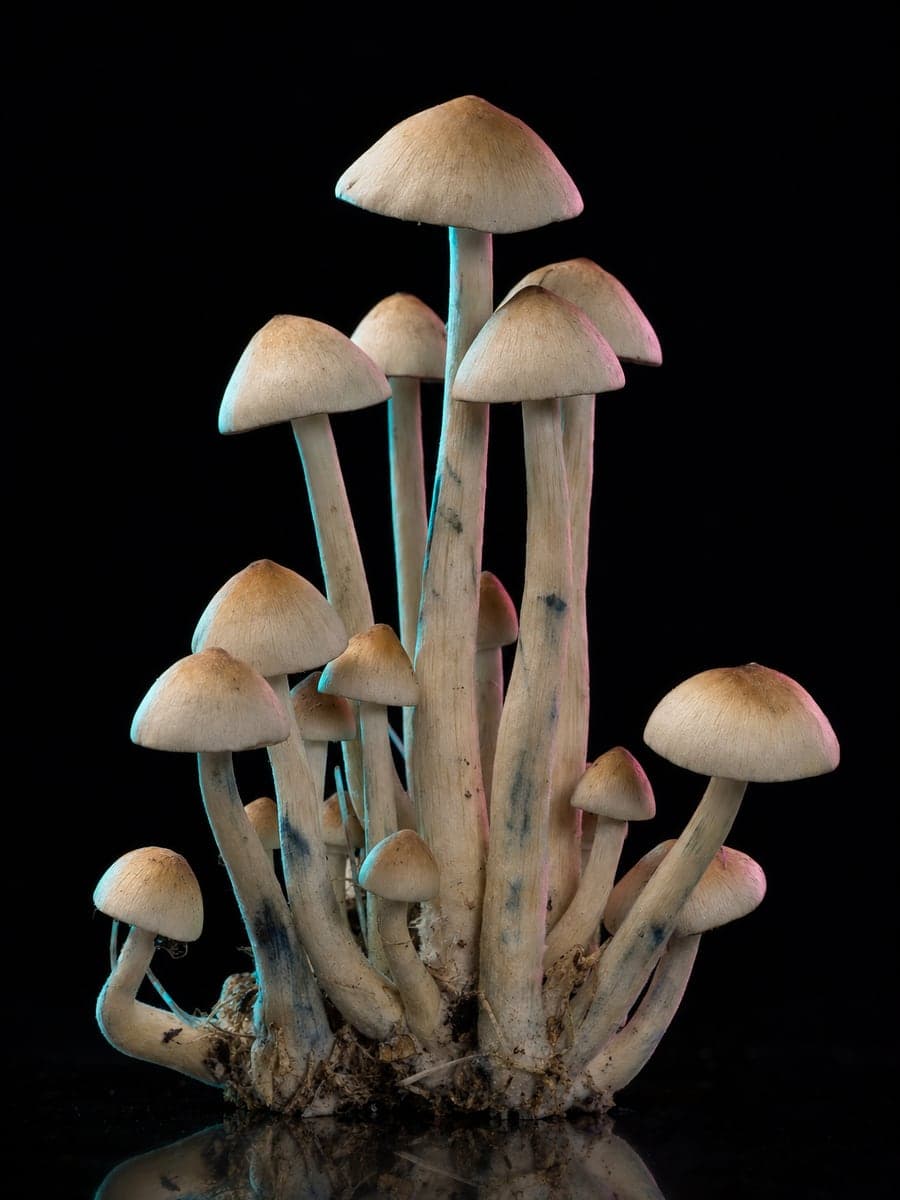
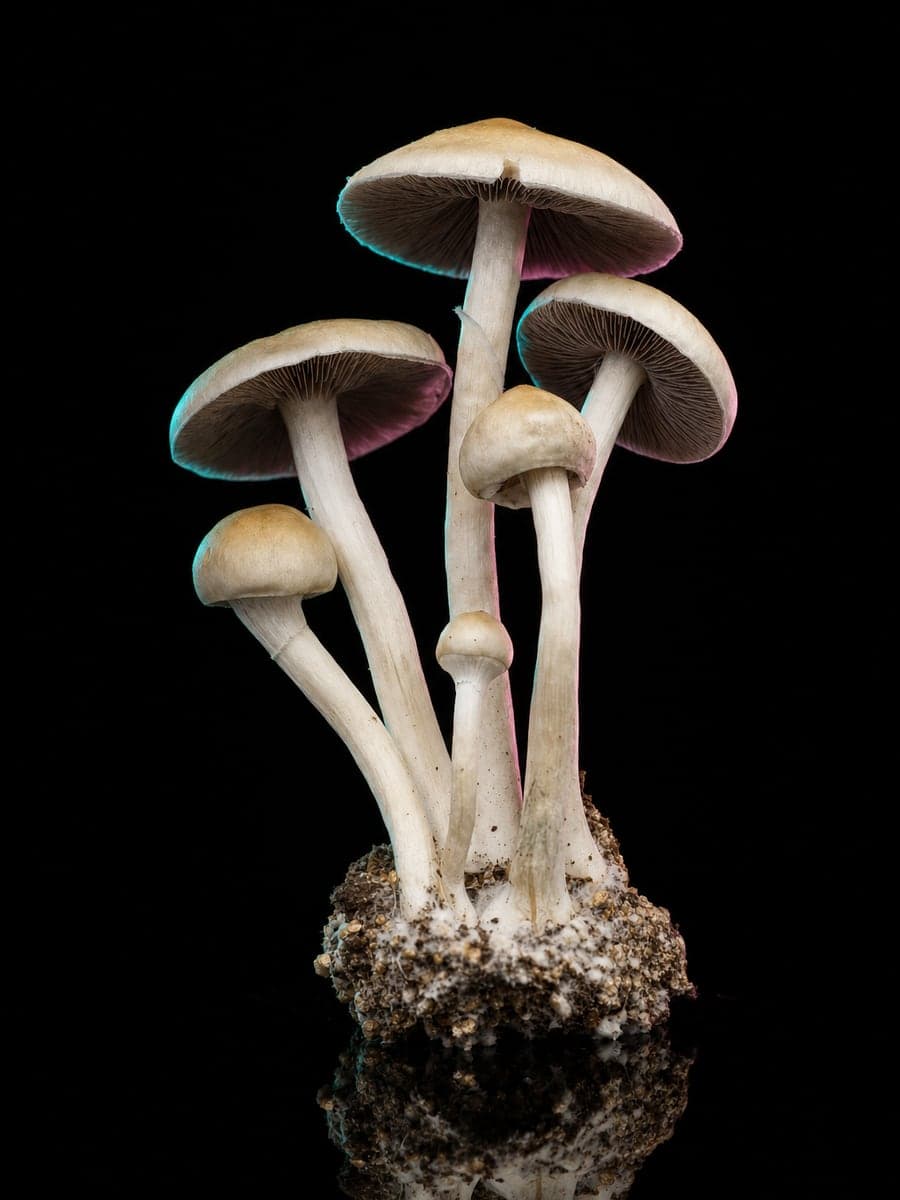
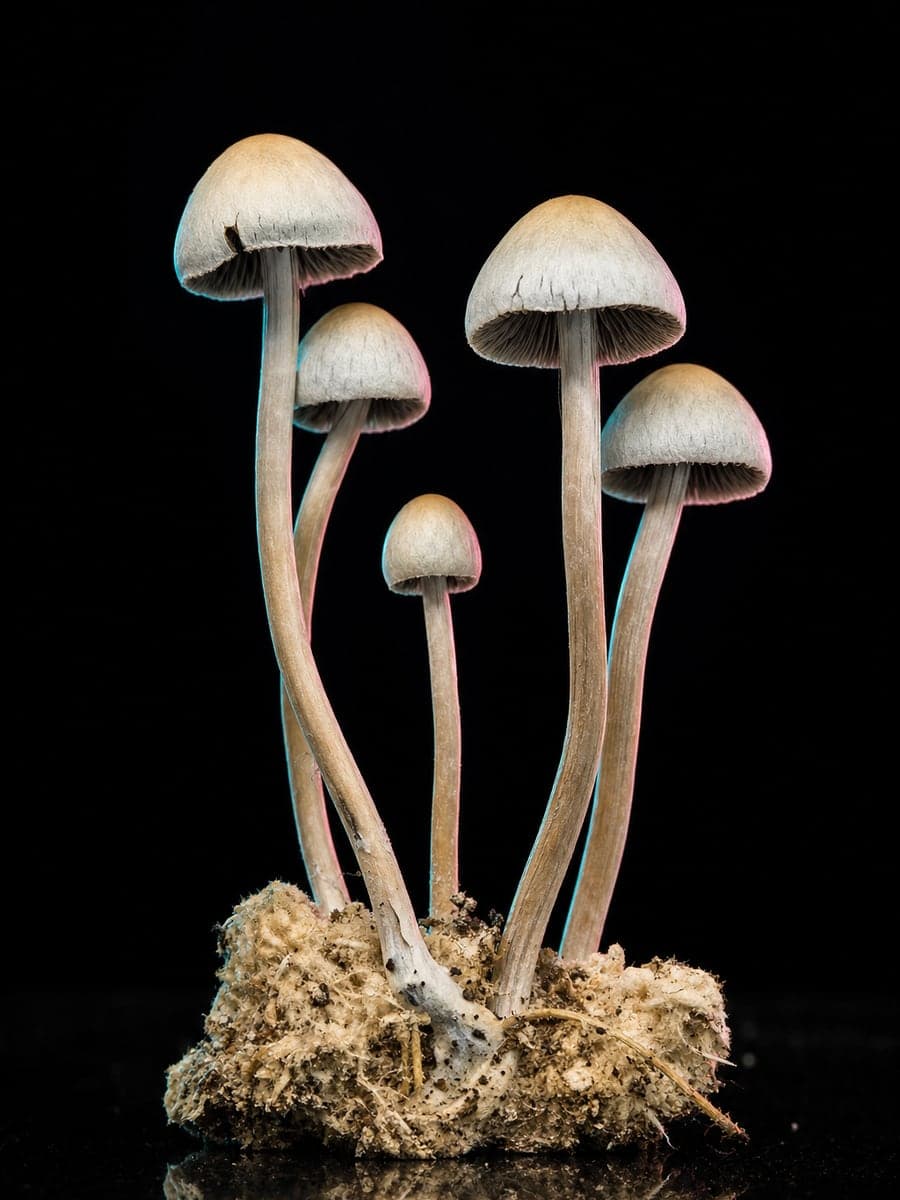
- Small, 1–3.5 cm, bluntly conical to convex; slimy when wet, cinnamon to caramel brown when fresh, fading to dingy buff as it dries, sometimes with greenish stains.
- Stems
- Thin and tough, 3–6 cm by 1.5–3 mm, whitish to brown, powdery at the top and fibrillose below, turning bluish towards the base.
- Notes
- Flesh and stem bruise blue, sometimes slowly, which gives the name. No ring, only a fleeting fibrous zone. Gills nearly white at first, then dark brown. Mealy taste. Often confused with the larger P. ovoideocystidiata.
How it is described
Psilocybe caerulipes is too seldom found to have a real reputation. It contains psilocybin and psilocin, but no measured strength or trip-report consensus was found.
Based on: Presence of psilocybin and psilocin only (Wikipedia); no lab figures or trip reports.
Psilocybe caerulipes, asked and answered
Where does Psilocybe caerulipes come from?
Eastern North America, from Nova Scotia and Ontario south to North Carolina and west to Michigan, with outlying populations in Mexican cloud forests. It grows on rotting hardwood such as birch, beech and maple.
What does Psilocybe caerulipes look like?
A small cinnamon to caramel cap that dries pale, on a thin, tough stem that turns bluish towards the base. It bruises blue.
Is Psilocybe caerulipes strong?
It contains psilocybin and psilocin, but no measured figures were found, so its strength is not known.
Can I pick Psilocybe caerulipes in the wild?
It is a wild mushroom, and many little brown mushrooms, some of them deadly, look alike. Never pick a wild mushroom to eat from a picture; only an expert identification can tell them apart.
The Shroomdex records history and reputation, not advice: how a strain is described is never a promise of how it will feel, and nothing here is medical advice. Strength varies from batch to batch. Start low and see our dose calculator. Never forage from a website: deadly look-alikes grow wild.