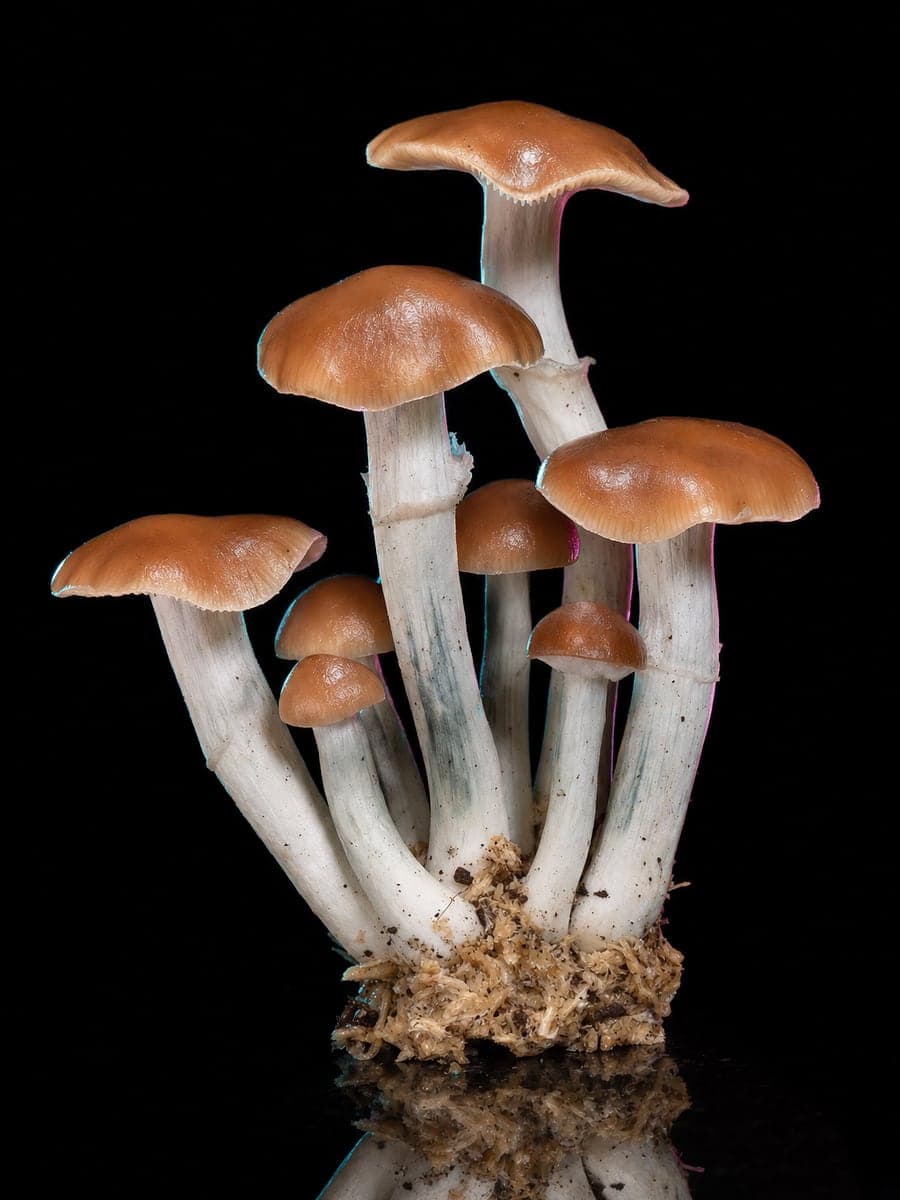
Psilocybe cyanescens
The wavy cap that spread with garden wood chips.
Elsie Wakefield described the species in 1946 in the Transactions of the British Mycological Society, from material she collected at Kew Gardens; an epitype from Hamburg was designated in 2012.
Bay Area lore has crowds of hunters combing Golden Gate Park's wood-chip beds for it, and for P. allenii, every December.
Where Psilocybe cyanescens comes from
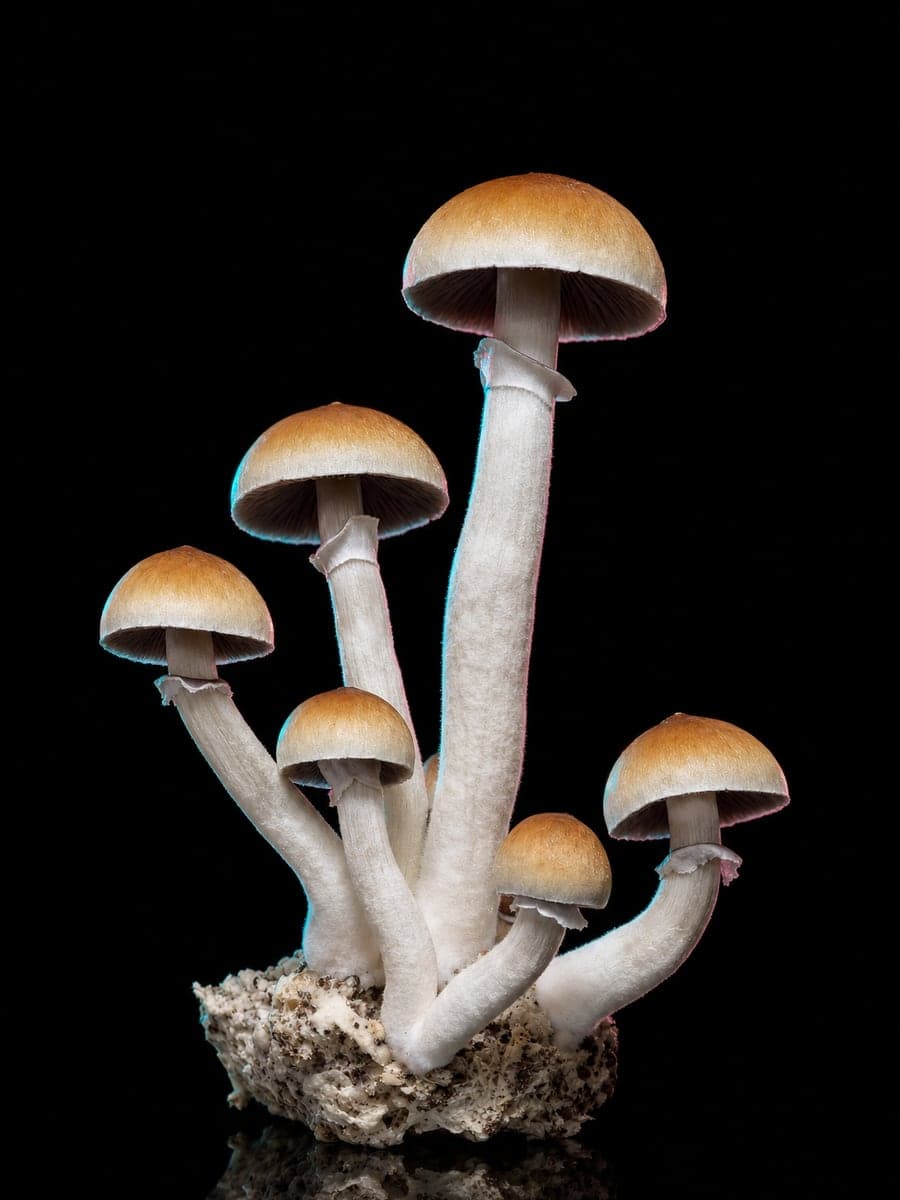
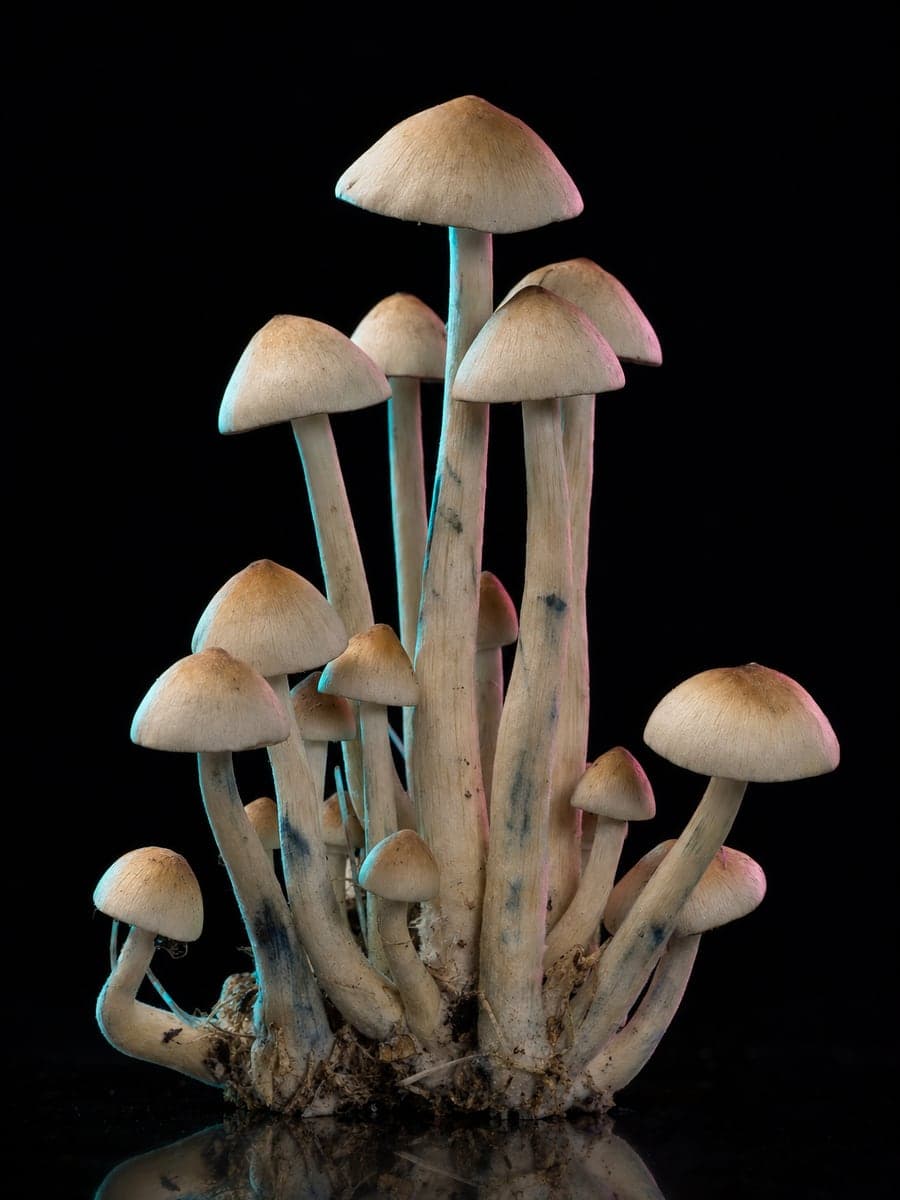
Psilocybe cyanescens, the wavy cap, is a wood-loving psilocybin mushroom named for the rippled edge of its mature caramel cap. Described in 1946 from Kew Gardens in England, it is best known from wood-chip mulch in the Pacific Northwest and has spread widely with landscaping. It is a wild mushroom with deadly look-alikes.
- Origin
- Described from Kew Gardens, England; best known from the Pacific Northwest and now spread through Europe, New Zealand and elsewhere on wood chips. Its true native range is unknown. · Described 1946
- Family
- Other species · Unknown · Common
- Lineage
- A species, not a cultivated strain. Closely related to P. azurescens, P. allenii and the Australasian P. subaeruginosa complex.
Elsie Wakefield described the species in 1946 in the Transactions of the British Mycological Society, from material she collected at Kew Gardens; an epitype from Hamburg was designated in 2012.
Wikipedia: Psilocybe cyanescens (pointer to Wakefield 1946)In 2001 the Guardian reported an estimated 100,000 wavy caps fruiting on a racetrack in southern England, which mycologist Peter Shaw saw as part of a spread of exotic fungi through Britain on garden wood chips.
The Guardian: 'Magic mushrooms thrive as weeds wane' (3 Jan 2001)A 2022 lab study of four European collections found it among the most potent species tested, at 2.3–13.8 mg/g psilocybin and 0.4–10.0 mg/g psilocin, and says it is not native to Europe but arrived in the 20th century.
Gotvaldová et al. (2022), 'Extensive Collection of Psychotropic Mushrooms…', Int. J. Mol. Sci. 23: 14068An older comparison compiled from Paul Stamets' Psilocybin Mushrooms of the World lists 0.85% psilocybin, 0.36% psilocin and 0.03% baeocystin.
Erowid: comparative potency chart (Stijve & Kuyper 1985; Repke et al. 1977)A 2024 study of 89 genomes places northern-hemisphere woodlovers, including P. cyanescens, among Australian populations of P. subaeruginosa, and concludes they most likely spread with woodchips, mulch or plants from an Australasian origin.
McTaggart et al. (2024), Fungal Systematics and Evolution 14It has been confused with the deadly Galerina marginata, which can grow alongside it on wood; the two differ in spore print colour (purple-brown versus rusty brown).
Wikipedia: Psilocybe cyanescens (pointer)Basidium Equilibrium: Psilocybe cyanescens bio (vendor page)
Bay Area lore has crowds of hunters combing Golden Gate Park's wood-chip beds for it, and for P. allenii, every December.
The usual story is that it reached many cities on bags of commercial mulch.
What it looks like
- Caps
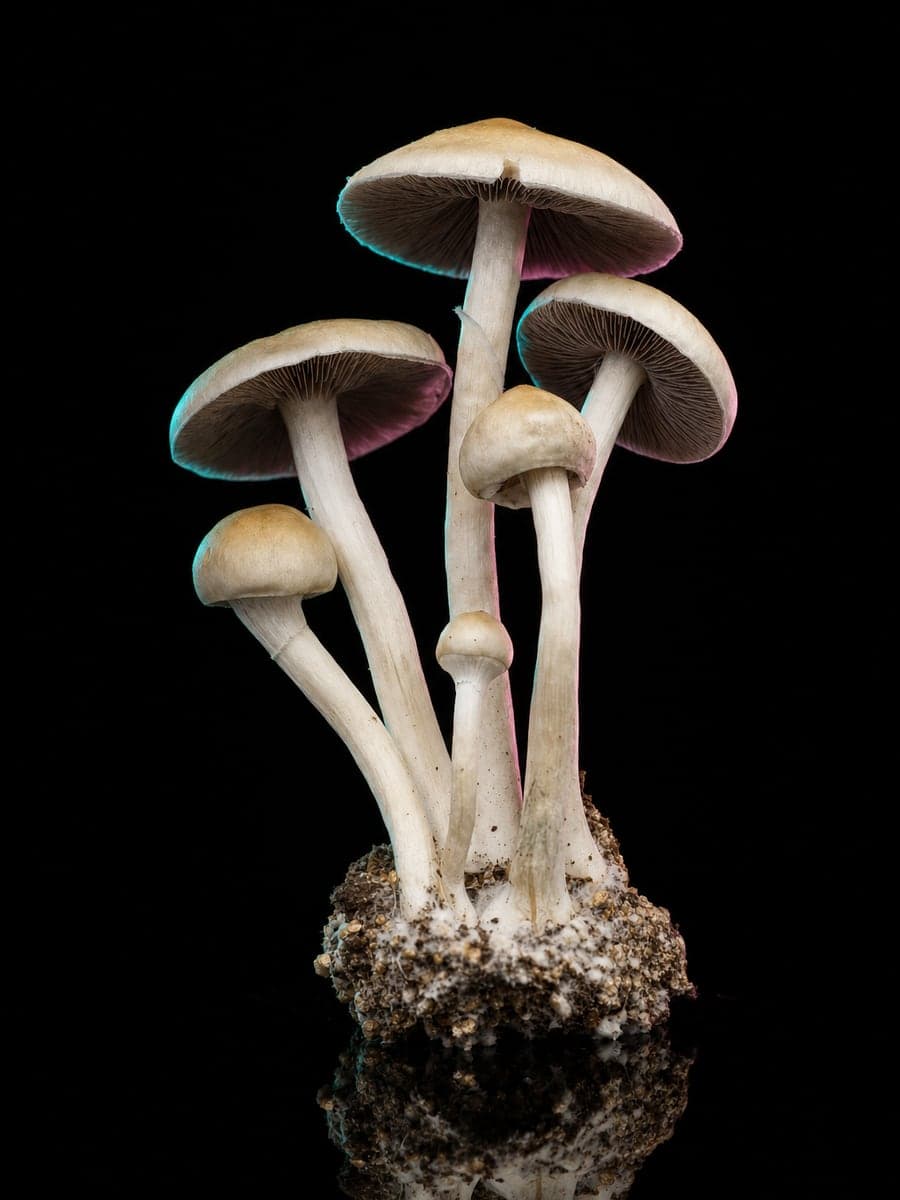
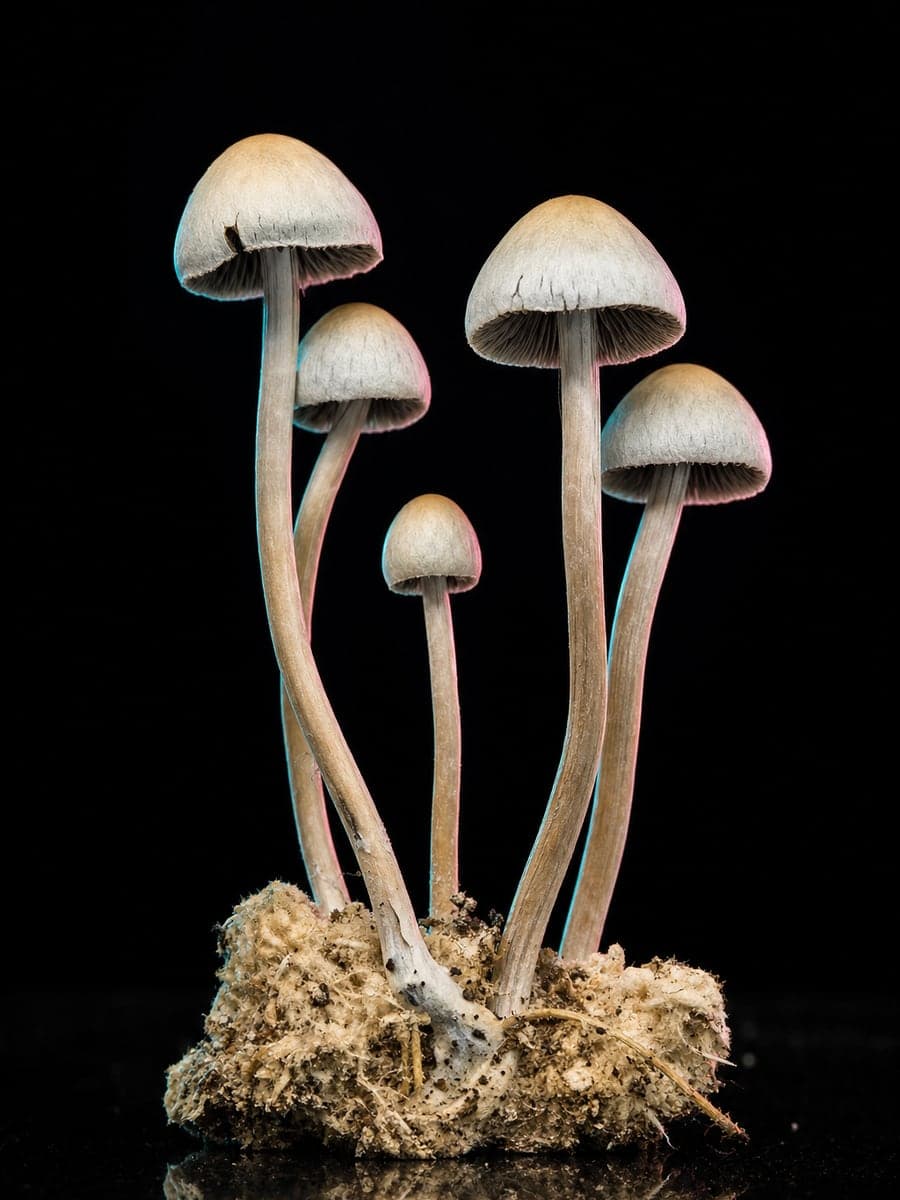
- 1.5–5 cm, caramel to chestnut brown when wet, fading to buff or yellowish when dry; convex at first, then flat with a distinctly wavy margin.
- Stems
- White, fairly slender, bruising blue-green where handled.
- Notes
- No true ring; young fruits have a cobwebby veil that may leave a faint zone. Gills brown to dark purple-brown with paler edges; spore print dark purple-brown. Grows in groups and clusters on wood chips and other woody debris in cool, wet autumn weather.
- Growing
- Easy to establish outdoors on hardwood chips in a cool climate, hard to fruit indoors; yields are low compared with cubensis.
How it is described
The wavy cap has a long reputation in the Pacific Northwest as a strong mushroom, and lab results bear that out, though they vary a great deal between collections. Wood lover's paralysis is often mentioned in write-ups about it and its relatives.
Based on: Lab analyses (Gotvaldová et al. 2022; Stamets' compilation via Erowid) for potency; general reputation otherwise. No controlled data on effects.
Psilocybe cyanescens, asked and answered
Where does Psilocybe cyanescens come from?
It was described from Kew Gardens, England, in 1946 and is best known from wood-chip beds in the Pacific Northwest. Its true native home is unknown, and recent genome work points to an Australasian origin for the whole group.
What does Psilocybe cyanescens look like?
Caramel-brown caps that dry to buff and open flat with a wavy, rippled edge, on white stems that bruise blue. It grows in groups on wood chips.
Is Psilocybe cyanescens strong?
Lab tests put it among the more potent species, but results vary widely: one 2022 study measured 2.3 to 13.8 mg/g psilocybin across four collections.
Can I pick Psilocybe cyanescens in the wild?
It is a wild mushroom, and it grows beside look-alikes such as the deadly Galerina marginata. Never pick a wild mushroom to eat from a picture; only an expert identification, with a spore print, can tell them apart.
The Shroomdex records history and reputation, not advice: how a strain is described is never a promise of how it will feel, and nothing here is medical advice. Strength varies from batch to batch. Start low and see our dose calculator. Never forage from a website: deadly look-alikes grow wild.