Psilocybe hoogshagenii
A slender Mexican cap with a needle-sharp tip.
Roger Heim described it in 1958. Gastón Guzmán's checklist treats Singer's P. caerulipes var. gastonii and Singer's concept of 'P. zapotecorum' as the same species, and P. semperviva of Heim and Cailleux as its variety convexa.
Local accounts from San Agustín Loxicha say it tends to fruit all at once in big flushes.
Where Psilocybe hoogshagenii comes from
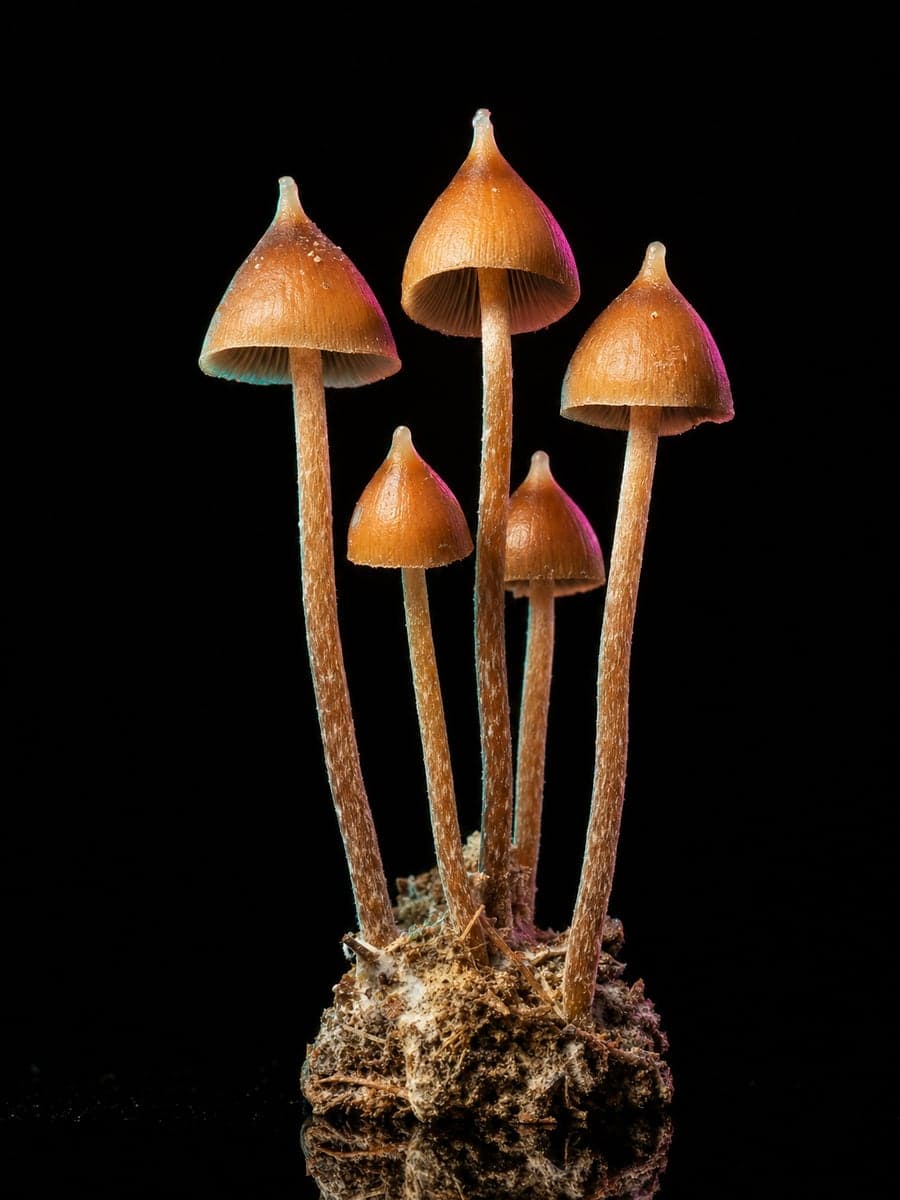
Psilocybe hoogshagenii is a small, slender psilocybin mushroom of southern Mexico, Colombia and Brazil, recognised by the long, sharp point on its conical cap. Roger Heim described it in 1958 and named it after anthropologist Searle Hoogshagen, who helped the Heim and Wasson expeditions. It is a wild mushroom with deadly look-alikes.
- Origin
- Southern Mexico (Puebla, Oaxaca, Chiapas), with reports from Colombia and Brazil; clay soils in subtropical coffee plantations, about 1,000–1,800 m · Described 1958
- Family
- Other species · Americas · Rare
- Lineage
- A species, not a cultivated strain. Guzmán recognises two varieties: var. hoogshagenii, with the sharp point, and var. convexa.
Roger Heim described it in 1958. Gastón Guzmán's checklist treats Singer's P. caerulipes var. gastonii and Singer's concept of 'P. zapotecorum' as the same species, and P. semperviva of Heim and Cailleux as its variety convexa.
Guzmán, Allen & Gartz (1998/2000), Ann. Mus. civ. Rovereto 14: 189–280Wikipedia: Psilocybe hoogshagenii (pointer)It was among the mushrooms pictured in R. Gordon Wasson's 1957 Life magazine article 'Seeking the Magic Mushroom', where it was mislabelled as P. zapotecorum. The name honours Searle Hoogshagen, an American anthropologist who helped Heim and Wasson.
Wikipedia: Psilocybe hoogshagenii (pointer)Heim and Albert Hofmann's 1958 analysis, as compiled by Paul Stamets, gave about 0.60% psilocybin and 0.10% psilocin, which Stamets rates as moderately active.
Erowid: comparative potency chart (Heim & Hofmann 1958, via Stamets)It is used ceremonially in Oaxaca: Chinantec-speaking healers use it mainly to diagnose illness, and Guzmán reports use by Mixe and Zapotec people. Local names include los niños and, in Mixe, 'judge'.
Wikipedia: Psilocybe hoogshagenii (pointer to Guzmán and ethnographic sources)Recent collections come from the Sierra Mixe of Oaxaca, where Alan Rockefeller recorded it growing in a landslide under pine near P. zapotecorum.
Mushroom Observer: observation 284430 (Alan Rockefeller, El Porvenir, Sierra Mixe, 2017)
Local accounts from San Agustín Loxicha say it tends to fruit all at once in big flushes.
Its Nahuatl name is usually translated as 'divine mushroom that describes or paints'.
What it looks like
- Caps
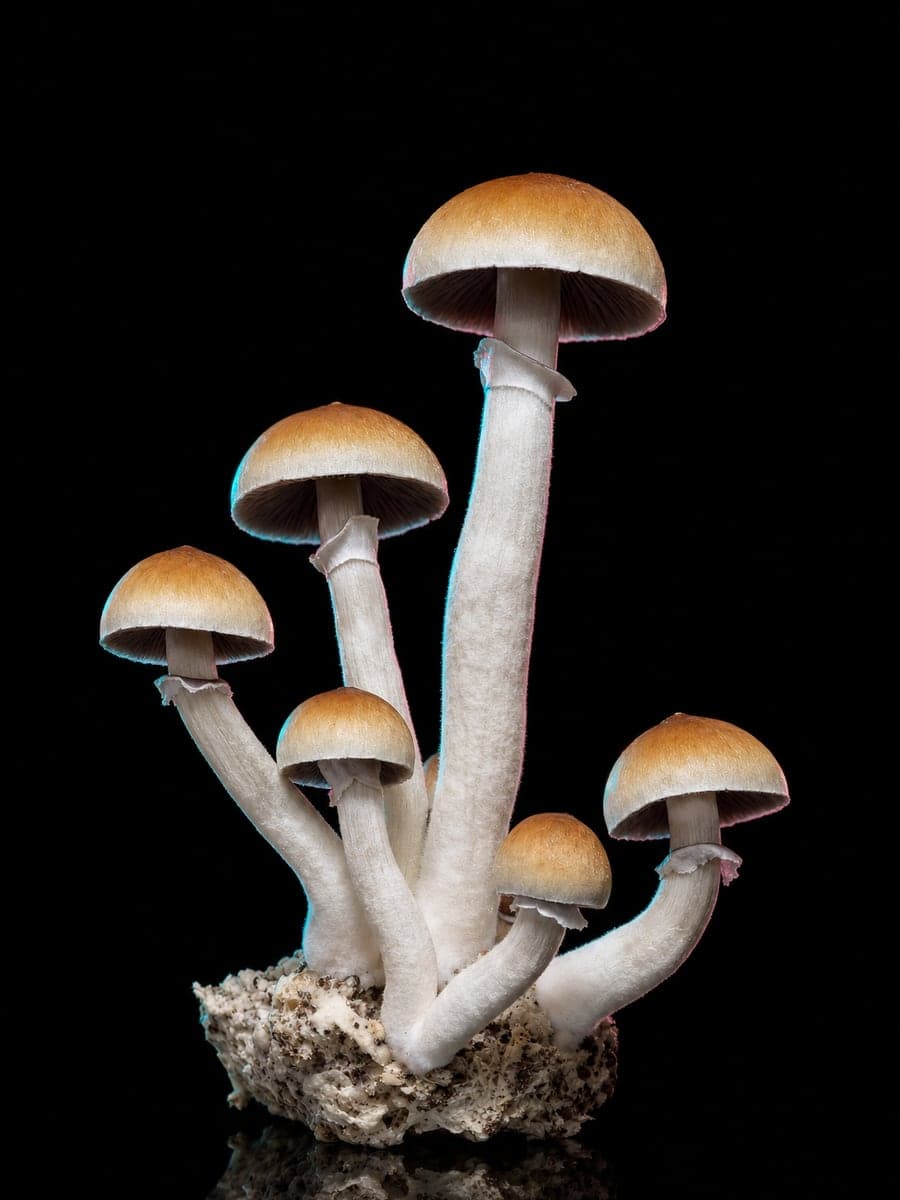
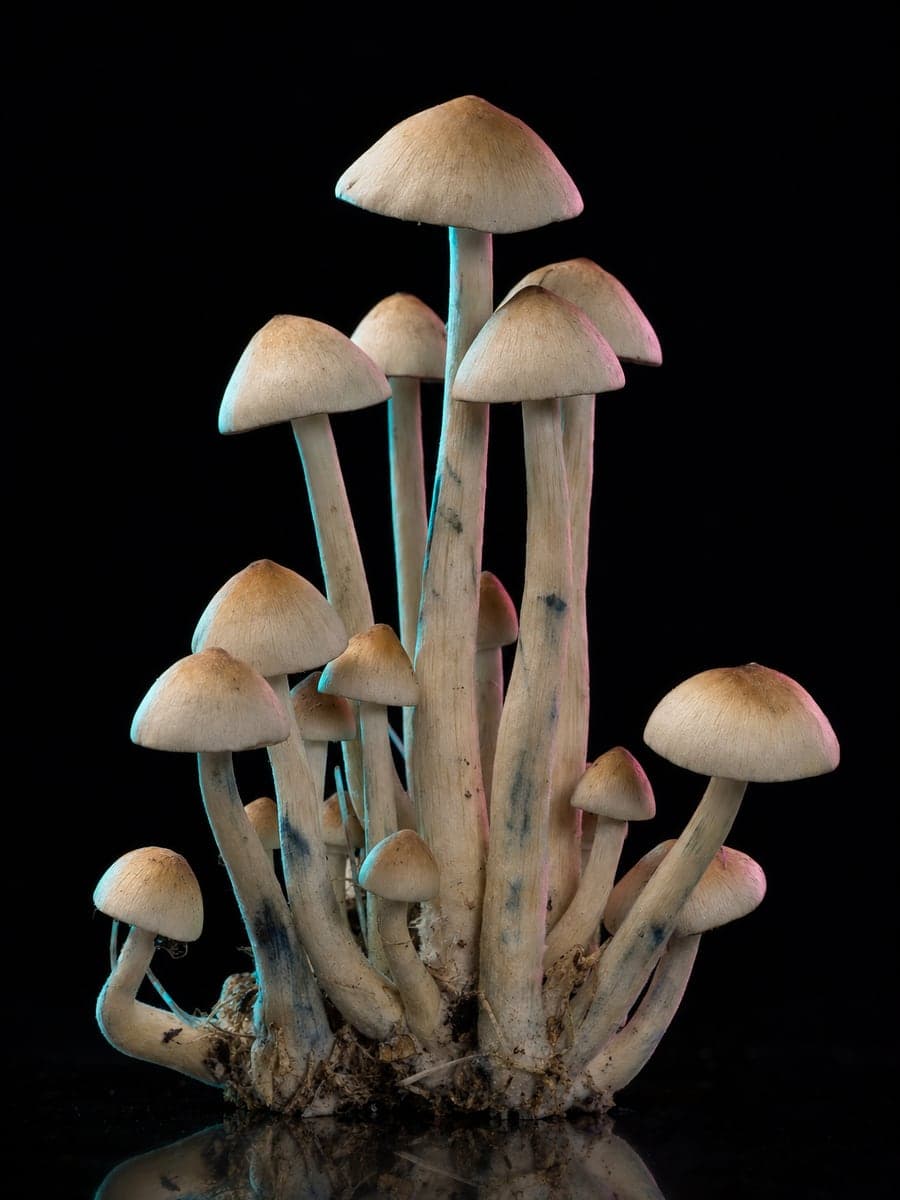
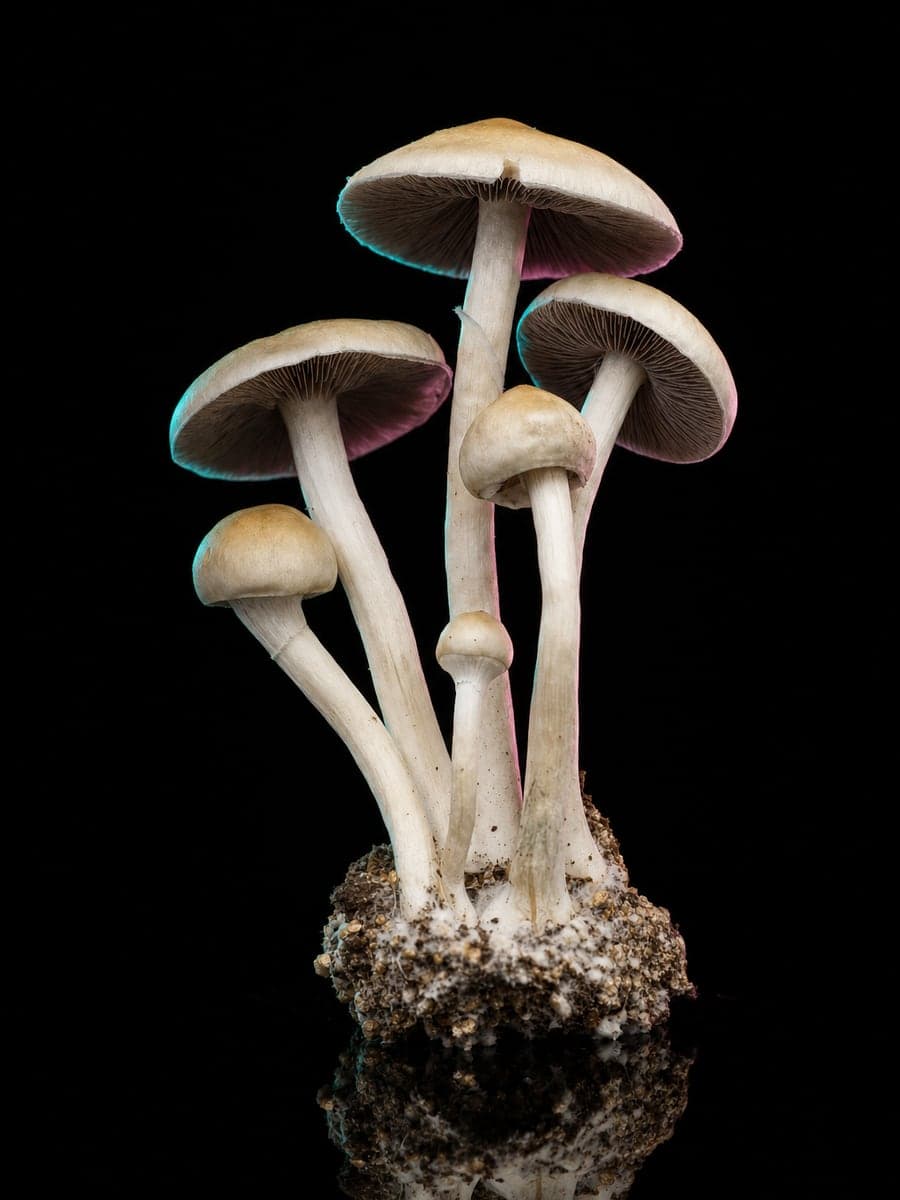
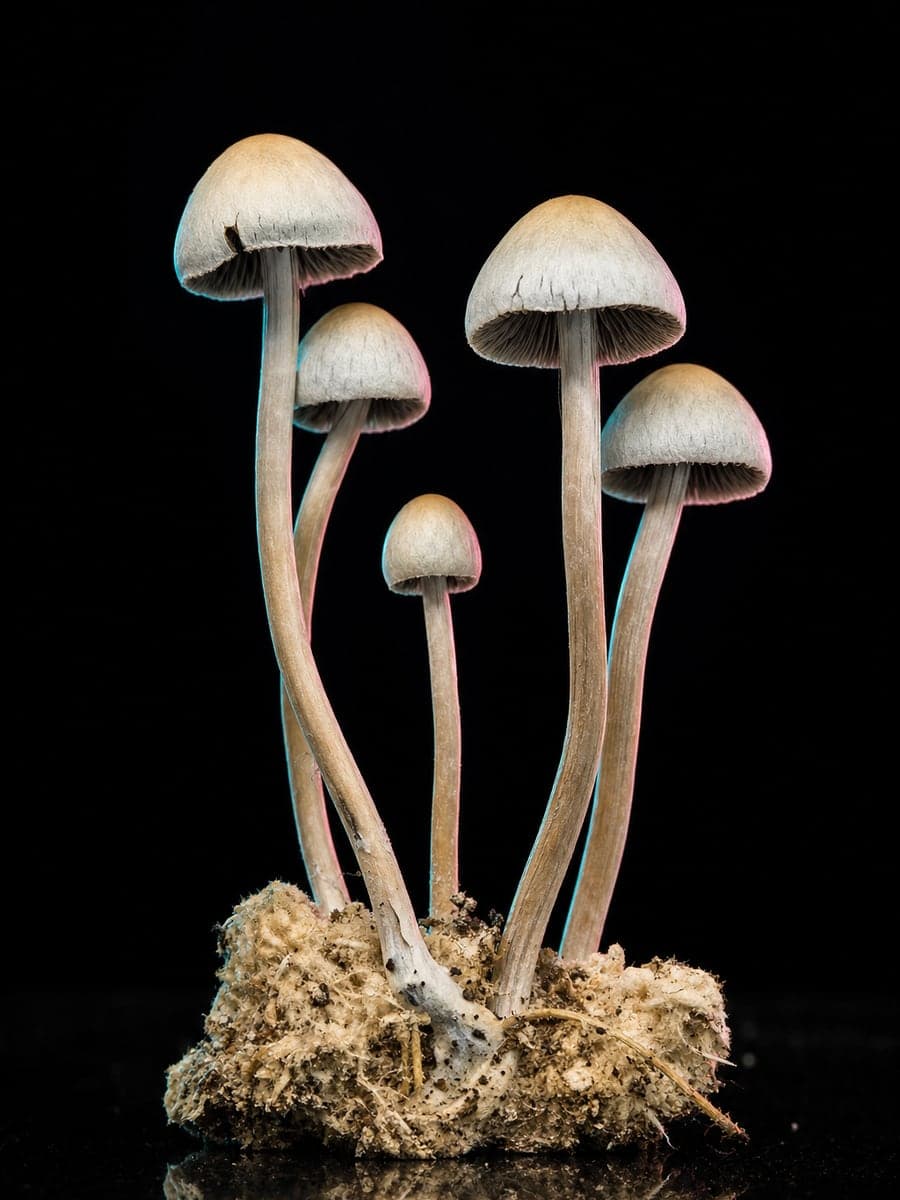
- Small, 1–2.5 cm, conical to bell-shaped with a long, sharp papilla up to 4 mm; reddish to orange-brown or yellowish, often ridged, fading to straw when dry.
- Stems
- Long and thin, 5–9 cm by 1–3 mm, hollow, brownish to yellowish, sometimes twisted.
- Notes
- All parts bruise blue to bluish-black. A thin, cobwebby veil soon vanishes. Spore print dark purple-brown. The variety convexa lacks the sharp point.
How it is described
Psilocybe hoogshagenii is described by Paul Stamets as moderately active, and the old lab figures put it near the cubensis middle. It is valued in Oaxaca as a ceremonial and diagnostic mushroom rather than known through modern trip reports.
Based on: Heim & Hofmann's 1958 analysis via Stamets (Erowid chart) and ethnographic accounts; no modern trip-report consensus.
Psilocybe hoogshagenii, asked and answered
Where does Psilocybe hoogshagenii come from?
Southern Mexico, in Puebla, Oaxaca and Chiapas, with reports from Colombia and Brazil. It grows in clay soils, often in coffee plantations, at about 1,000 to 1,800 metres.
What does Psilocybe hoogshagenii look like?
A small, slender mushroom with a conical orange-brown cap ending in a long, sharp point, on a thin brownish stem. It bruises blue.
Is Psilocybe hoogshagenii strong?
The only analyses found are old: about 0.6% psilocybin and 0.1% psilocin in 1958, which Paul Stamets calls moderately active.
Can I pick Psilocybe hoogshagenii in the wild?
It is a wild mushroom, and many small brown mushrooms, some of them deadly, look alike. Never pick a wild mushroom to eat from a picture; only an expert identification can tell them apart.
The Shroomdex records history and reputation, not advice: how a strain is described is never a promise of how it will feel, and nothing here is medical advice. Strength varies from batch to batch. Start low and see our dose calculator. Never forage from a website: deadly look-alikes grow wild.