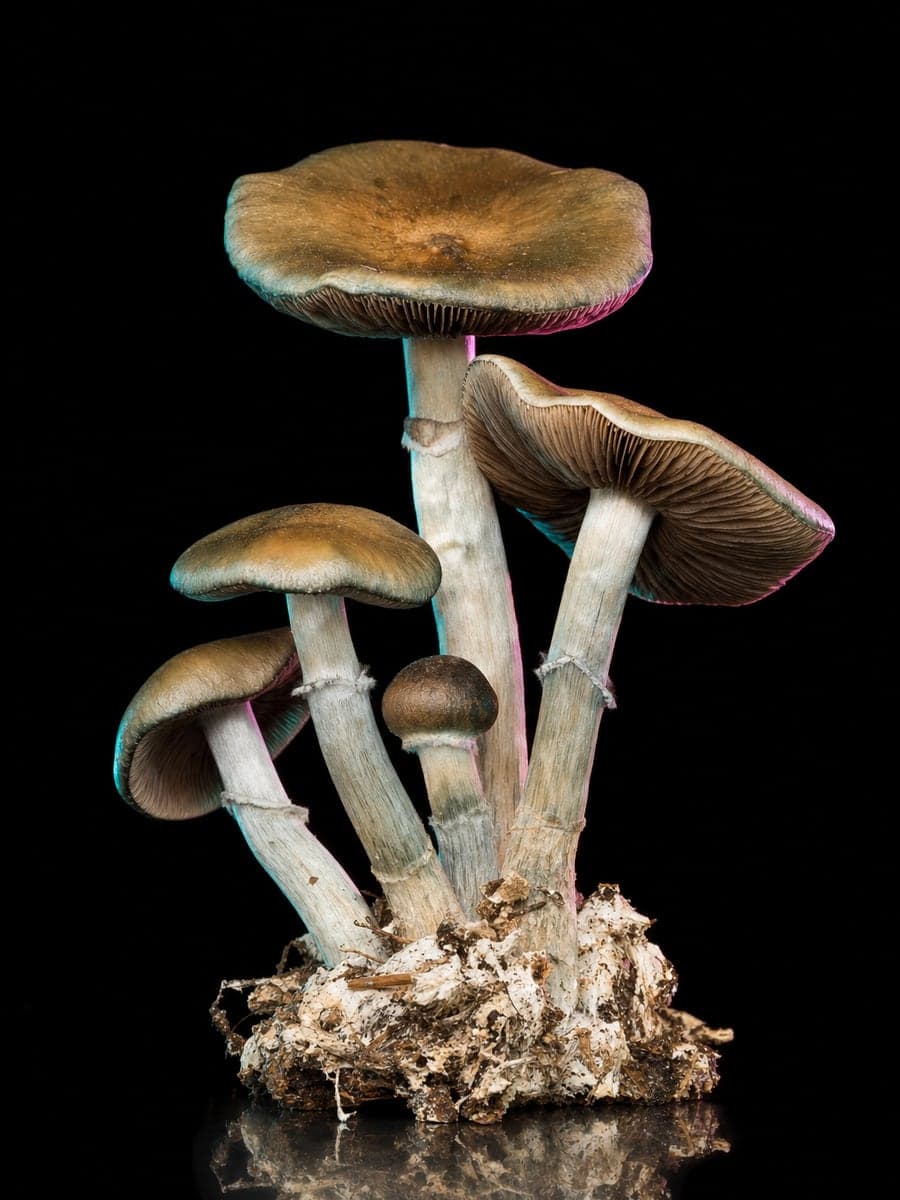
Psilocybe ovoideocystidiata
A spring woodlover of riverbanks and wood chips.
Guzmán and Gaines described it in 2007, with Ramírez-Guillén, after Richard V. Gaines first documented it in Montgomery County, Pennsylvania, in June 2003. The name refers to its abundant egg-shaped cystidia.
Vendor text links a 2,000-year-old copper effigy from the Hopewell site in Ohio to this species; that identification is not established.
Where Psilocybe ovoideocystidiata comes from
Psilocybe ovoideocystidiata is a wood-loving psilocybin mushroom first documented in Pennsylvania in 2003 and described in 2007. It fruits in spring along rivers and in wood-chip mulch, and is especially common in the Ohio River valley. It is a wild mushroom with deadly look-alikes.
- Origin
- Eastern United States from Missouri to Rhode Island and Georgia to Michigan, common in the Ohio River valley; also the West Coast from southern California to British Columbia · First documented 2003; described 2007
- Family
- Other species · Americas · Uncommon
- Lineage
- A species, not a cultivated strain. Vendors sell isolates from particular collections, such as the Hopewell strain from Ohio.
Guzmán and Gaines described it in 2007, with Ramírez-Guillén, after Richard V. Gaines first documented it in Montgomery County, Pennsylvania, in June 2003. The name refers to its abundant egg-shaped cystidia.
Wikipedia: Psilocybe ovoideocystidiata (pointer to Int. J. Med. Mushrooms 9: 75–77, 2007)It grows on woody debris, often along rivers and streams in flood zones, and in wood chips and mulch in towns and suburbs, sometimes with Japanese knotweed. In the north-eastern US it fruits mainly from mid-April to late June, peaking in late May.
Wikipedia: Psilocybe ovoideocystidiataSporeworks: P. ovoideocystidiata Hopewell strain (vendor page)Its range covers the eastern US from Missouri to Rhode Island and Georgia to Michigan, and the West Coast from southern California to British Columbia. It turns up in new areas often enough that some suspect it is spreading.
Wikipedia: Psilocybe ovoideocystidiata (pointer to iNaturalist and National Geographic 2024)Wikimedia Commons: P. ovoideocystidiata, Issaquah, Washington (Alan Rockefeller; Mushroom Observer 436828)It is often confused with P. caerulipes, but is larger, fruits earlier, has rhomboid spores and can carry a membranous ring.
Wikipedia: Psilocybe ovoideocystidiataA Pacific Northwest spore vendor says it fruits in wood-chipped landscaping around parks and schools there, from about April through to December.
InoculateTheWorld: P. ovoideocystidiata isolated syringe (vendor page)
Vendor text links a 2,000-year-old copper effigy from the Hopewell site in Ohio to this species; that identification is not established.
Foragers call it the 'river teacher' for its habit of fruiting along flood-prone riverbanks.
What it looks like
- Caps
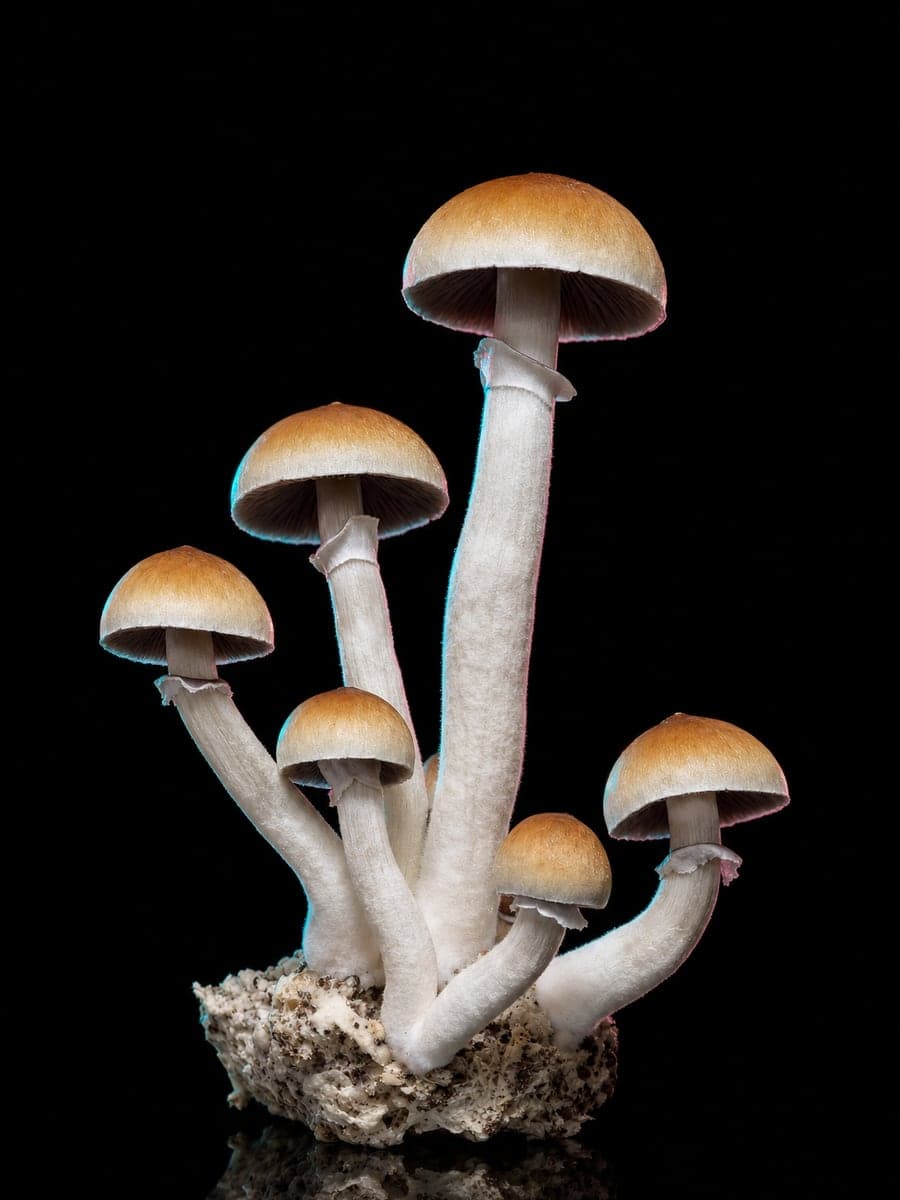
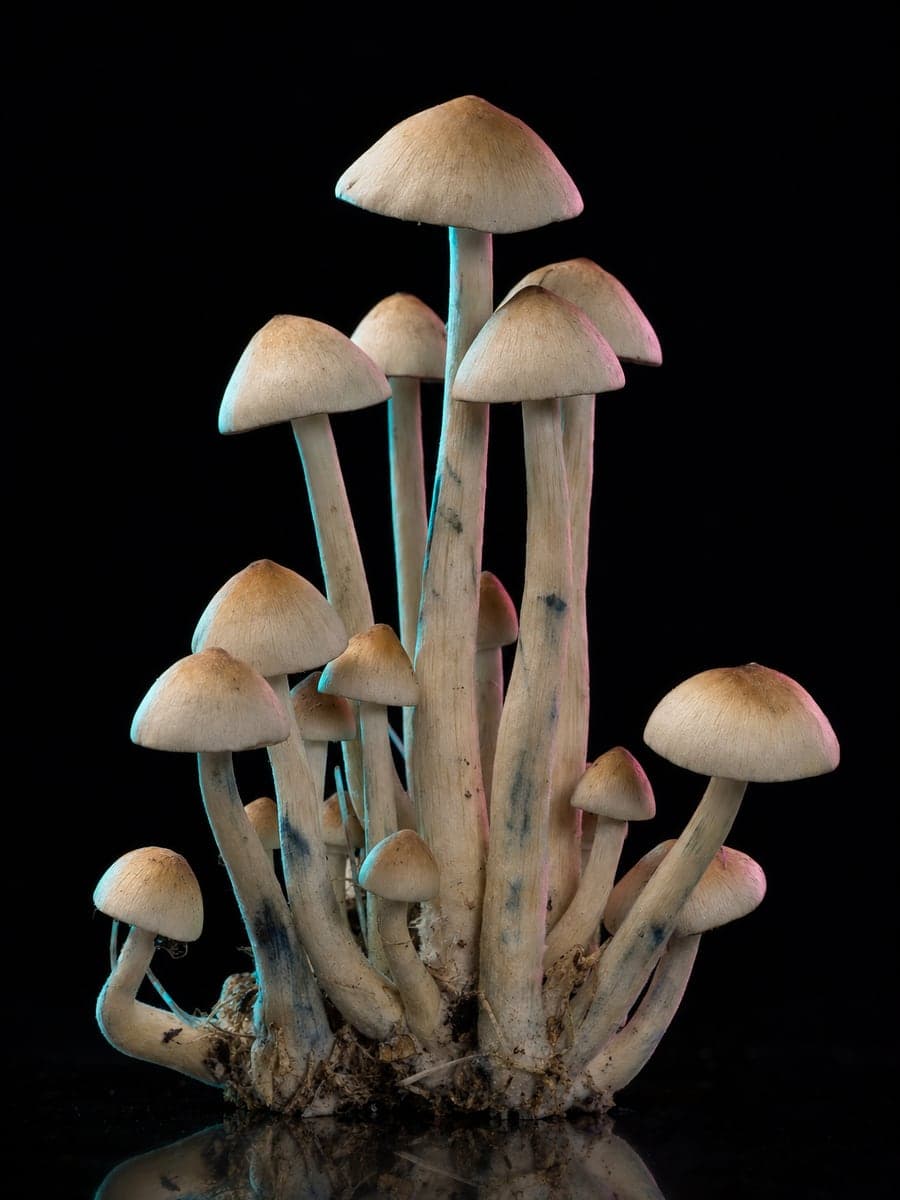
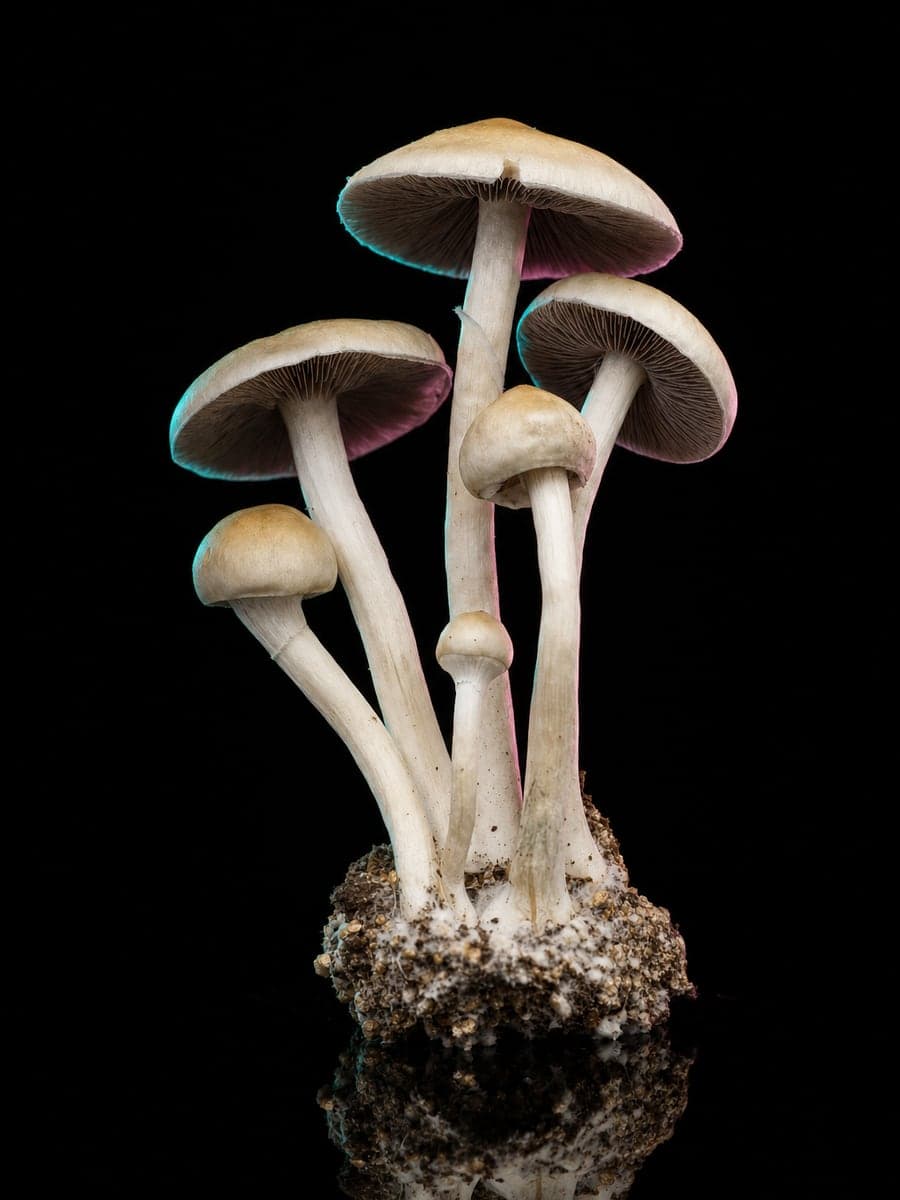
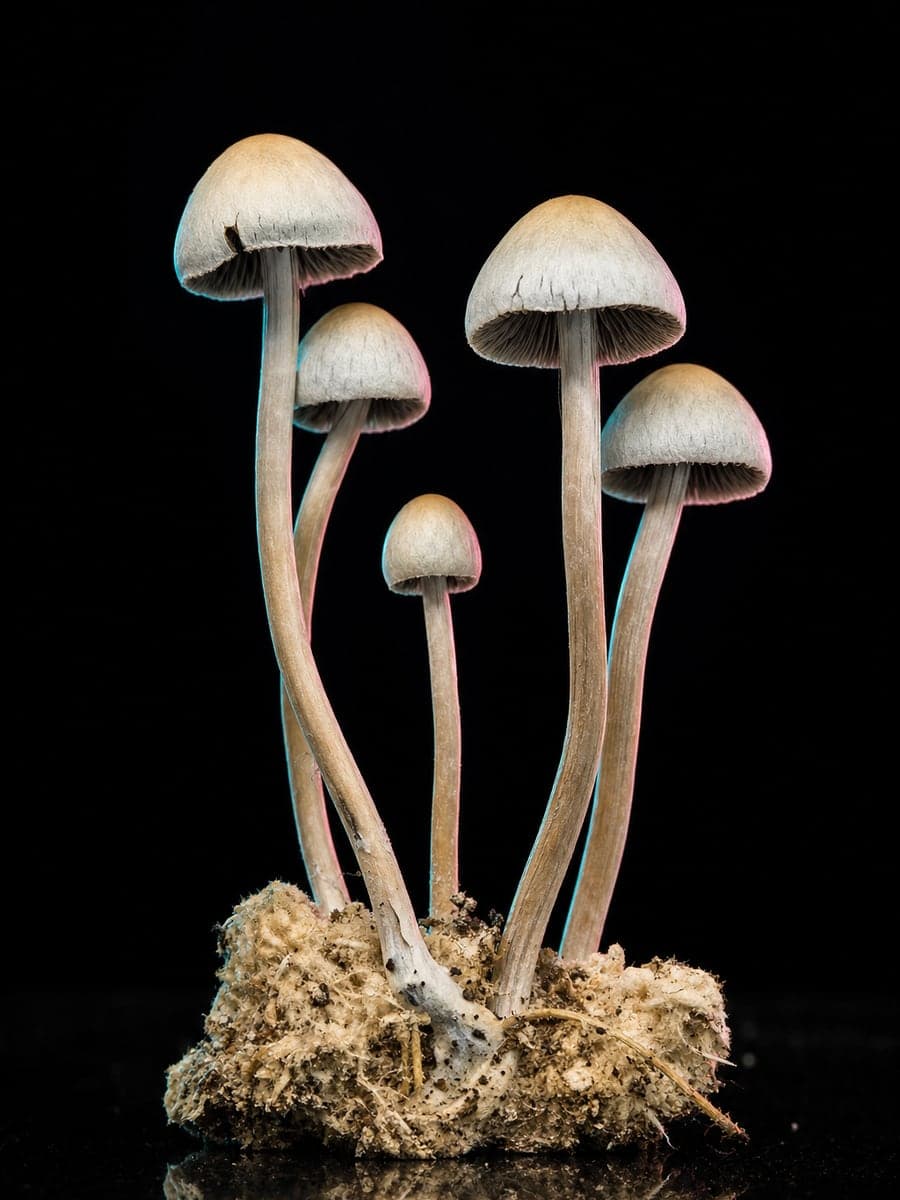
- 1.5–5 cm, sometimes 8; convex to slightly umbonate, often wavy; dark brown to nearly black when young, fading to light brown or beige as it dries; slightly sticky.
- Stems
- 3–9 cm, sometimes 13, by 3–15 mm, hollow and slightly bulbous, whitish with yellowish, brownish or bluish tones.
- Notes
- Bruises blue and green. The veil varies from a faint cobwebby zone to a membranous, persistent ring, usually mid-stem. Spore print dark purple-brown. Mealy smell, sometimes spicy.
How it is described
Psilocybe ovoideocystidiata has no published potency figures in the sources found. It is known to foragers in the Ohio valley and the Pacific Northwest, but no trip-report consensus was found.
Based on: No lab figures or trip-report consensus found.
Psilocybe ovoideocystidiata, asked and answered
Where does Psilocybe ovoideocystidiata come from?
North America: the eastern US, especially the Ohio River valley, and the West Coast from southern California to British Columbia. It was first documented in Pennsylvania in 2003.
What does Psilocybe ovoideocystidiata look like?
A dark brown cap that fades to beige as it dries, on a pale, hollow, slightly bulbous stem that may carry a ring. It bruises blue and green.
Is Psilocybe ovoideocystidiata strong?
No published measurements were found, so its strength is not known.
Can I pick Psilocybe ovoideocystidiata in the wild?
It is a wild mushroom, and many brown mushrooms that grow in wood chips, some of them deadly, look alike. Never pick a wild mushroom to eat from a picture; only an expert identification can tell them apart.
The Shroomdex records history and reputation, not advice: how a strain is described is never a promise of how it will feel, and nothing here is medical advice. Strength varies from batch to batch. Start low and see our dose calculator. Never forage from a website: deadly look-alikes grow wild.