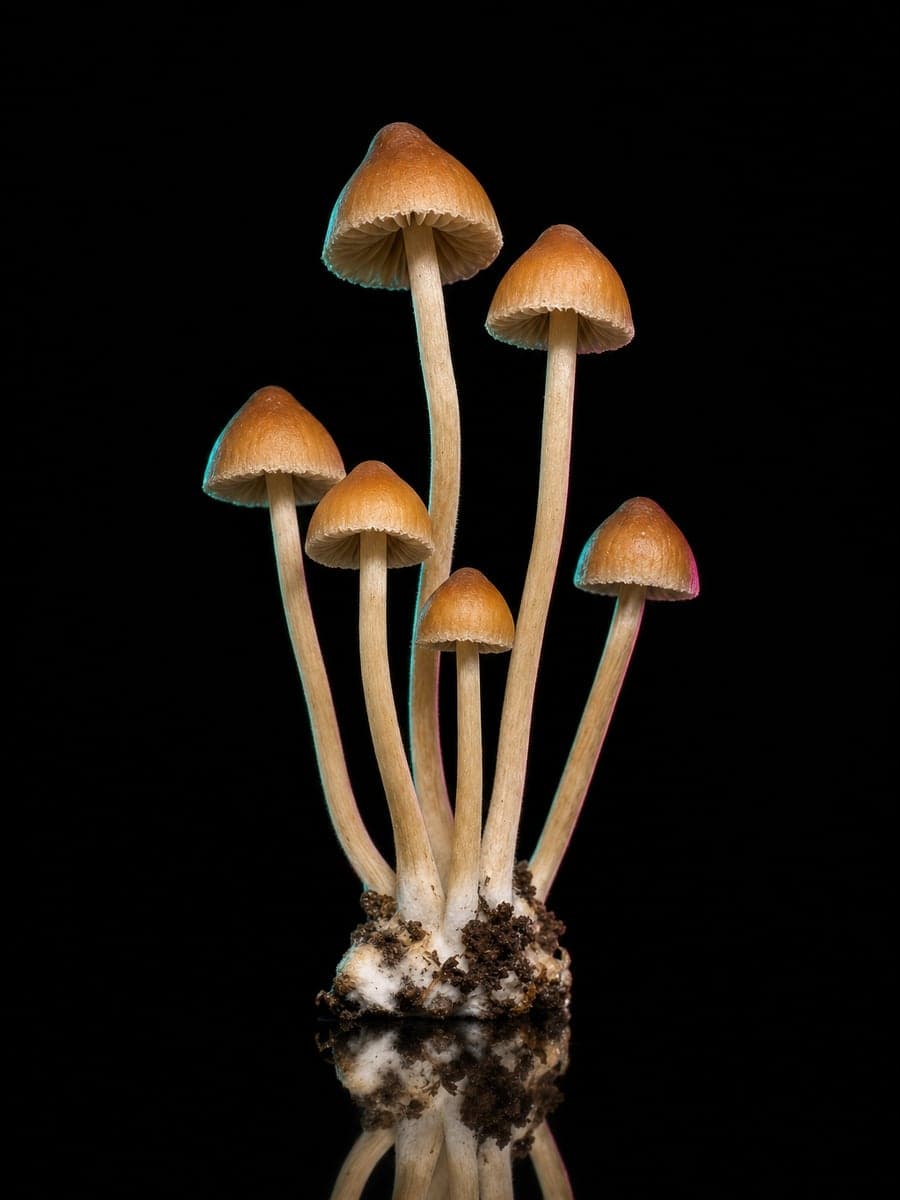
Psilocybe samuiensis
A tiny rice-paddy Psilocybe from Koh Samui.
Guzmán, Bandala and Allen described it as a new species in 1993 in the journal Mycotaxon. The type was collected by John W. Allen on 8 August 1991, 2 km west of Ban Hua Thanon on Koh Samui, growing scattered or in groups in rice paddies.
Where Psilocybe samuiensis comes from
Psilocybe samuiensis is a small wild psilocybin mushroom first collected in 1991 in rice paddies on Koh Samui, Thailand, and described in 1993 by Gastón Guzmán, Victor Bandala and John W. Allen. It was the first species of its group, section Mexicanae, found outside the Americas. It is a wild mushroom with deadly look-alikes and must never be picked from a picture.
- Origin
- Koh Samui, Thailand (type locality, 2 km west of Ban Hua Thanon); also reported from Ranong Province, Thailand, and Angkor Wat, Cambodia · Collected 1991; described 1993
- Family
- Other species · Asia · Rare
- Lineage
- A species, not a cultivated strain. Not to be confused with Koh Samui cubensis lines, which are Psilocybe cubensis collected on the same island.
Guzmán, Bandala and Allen described it as a new species in 1993 in the journal Mycotaxon. The type was collected by John W. Allen on 8 August 1991, 2 km west of Ban Hua Thanon on Koh Samui, growing scattered or in groups in rice paddies.
Wikipedia: Psilocybe samuiensis (pointer to Guzmán, Bandala & Allen 1993, Mycotaxon 46)iNaturalist: Alan Rockefeller's record of the holotype collection, with its herbarium labels (obs. 4746359)Sporeworks: Psilocybe samuiensis spore print (vendor page)Guzmán placed it in section Mexicanae because of its rhomboid spores. A spore vendor notes it was the first species of that section recorded outside the Americas, and points to P. mexicana and P. tampanensis as relatives.
Wikipedia: Psilocybe samuiensis (pointer to Guzmán, Bandala & Allen 1993, Mycotaxon 46)Sporeworks: Psilocybe samuiensis spore print (vendor page)It grows in sandy, clay soil in rice paddies and grassy fields, fruiting from early July to late August. Wikipedia's account says it grows near dung but never directly on it; one vendor page says it grows on buffalo dung.
Wikipedia: Psilocybe samuiensis (pointer to Guzmán, Bandala & Allen 1993, Mycotaxon 46)Sporeworks: Psilocybe samuiensis MycoTrue isolate vial (vendor page)A 1994 study by Gartz, Allen and Merlin measured psilocybin in the fruit bodies at up to about 0.9% of dry weight and psilocin up to about 0.8%, with small amounts of baeocystin.
Wikipedia: Psilocybe samuiensis (pointer to Guzmán, Bandala & Allen 1993, Mycotaxon 46)It has since been reported from Ranong Province in Thailand and from Angkor Wat in Cambodia. Collections from eastern Australia with matching DNA sequences suggest it also grows there; several are recorded on iNaturalist from New South Wales.
Wikipedia: Psilocybe samuiensis (pointer to Guzmán, Bandala & Allen 1993, Mycotaxon 46)iNaturalist: Psilocybe samuiensis, Brunswick Heads, NSW, Australia (Samuel Frankel, 2023, research grade)Allen and Merlin's 1992 study of mushroom use on Koh Samui and Koh Pha-Ngan found that islanders rarely eat psilocybin mushrooms themselves; local use was mostly at the request of foreign visitors.
Wikipedia: Psilocybe samuiensis (pointer to Guzmán, Bandala & Allen 1993, Mycotaxon 46)
What it looks like
- Caps
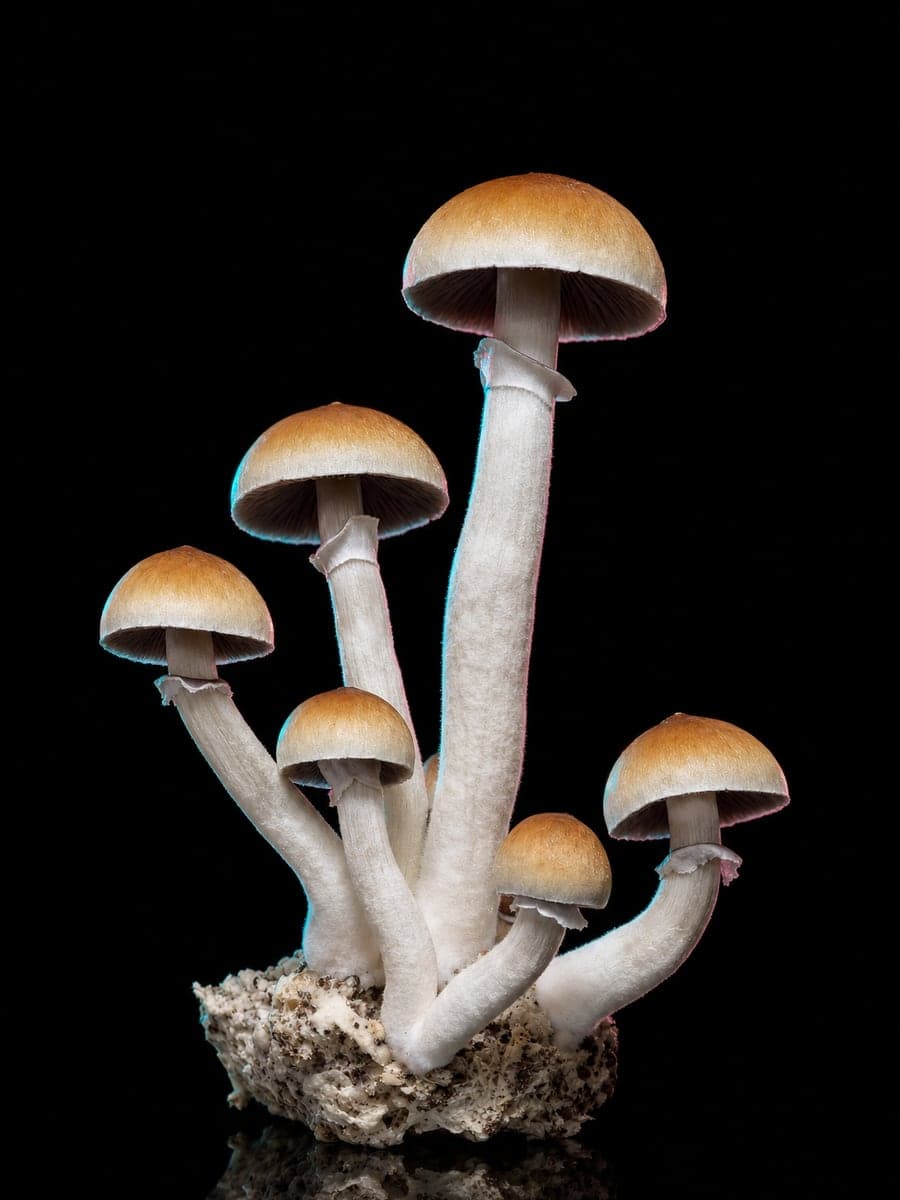
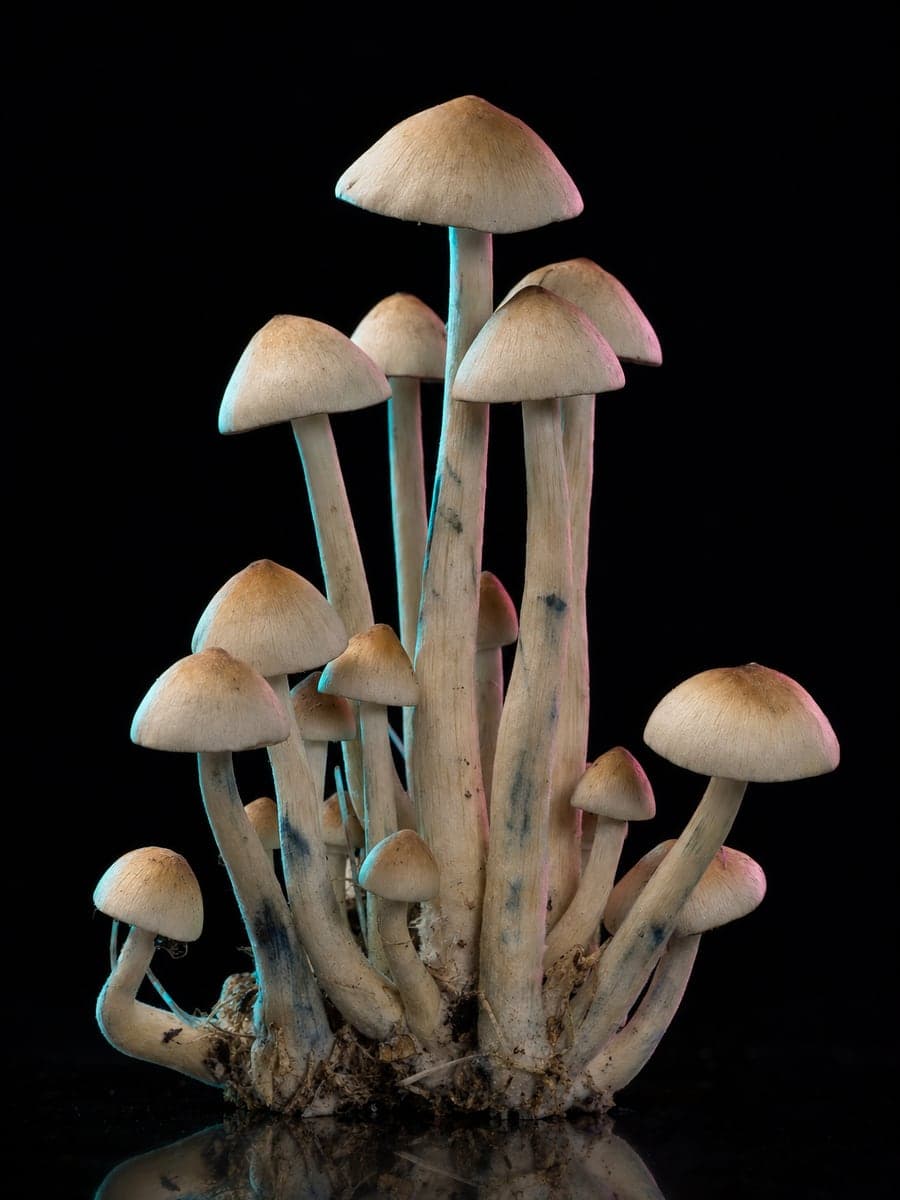
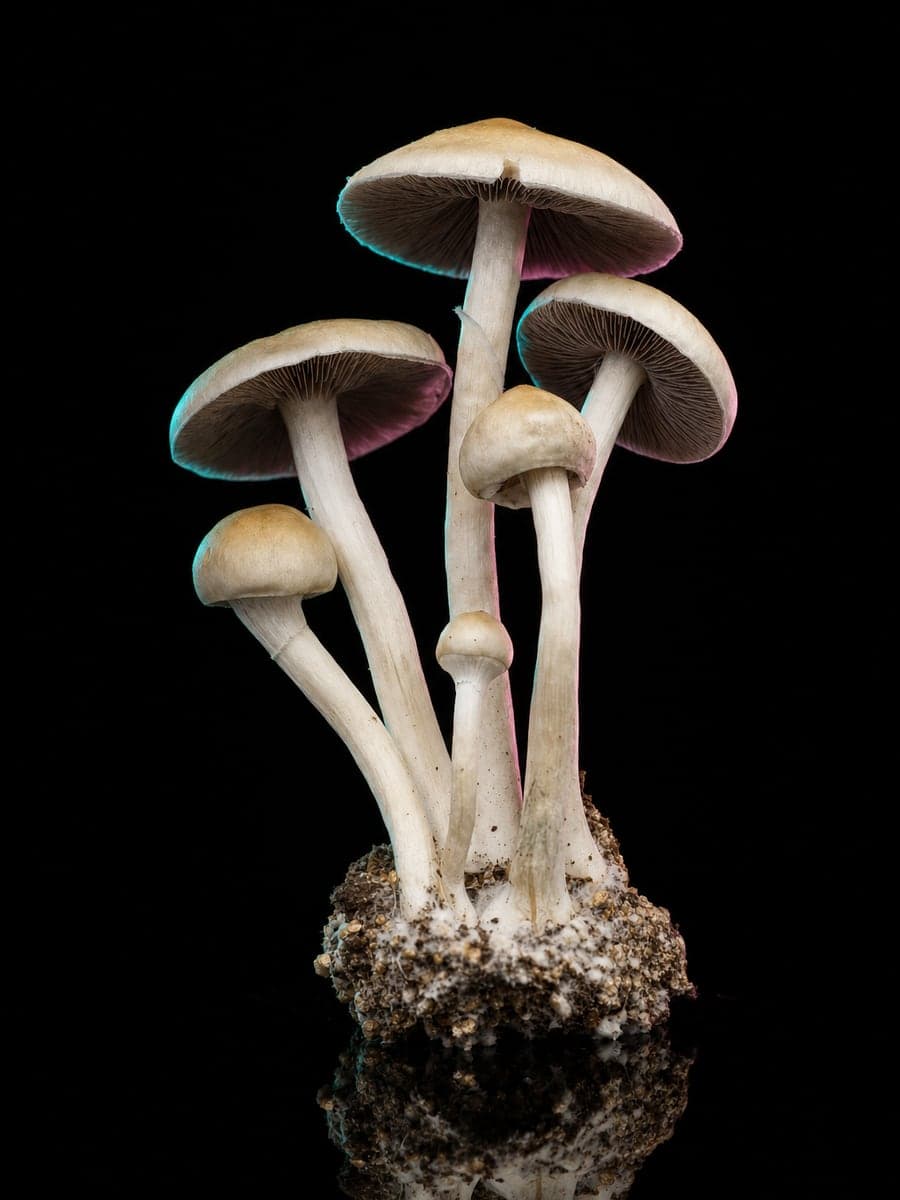
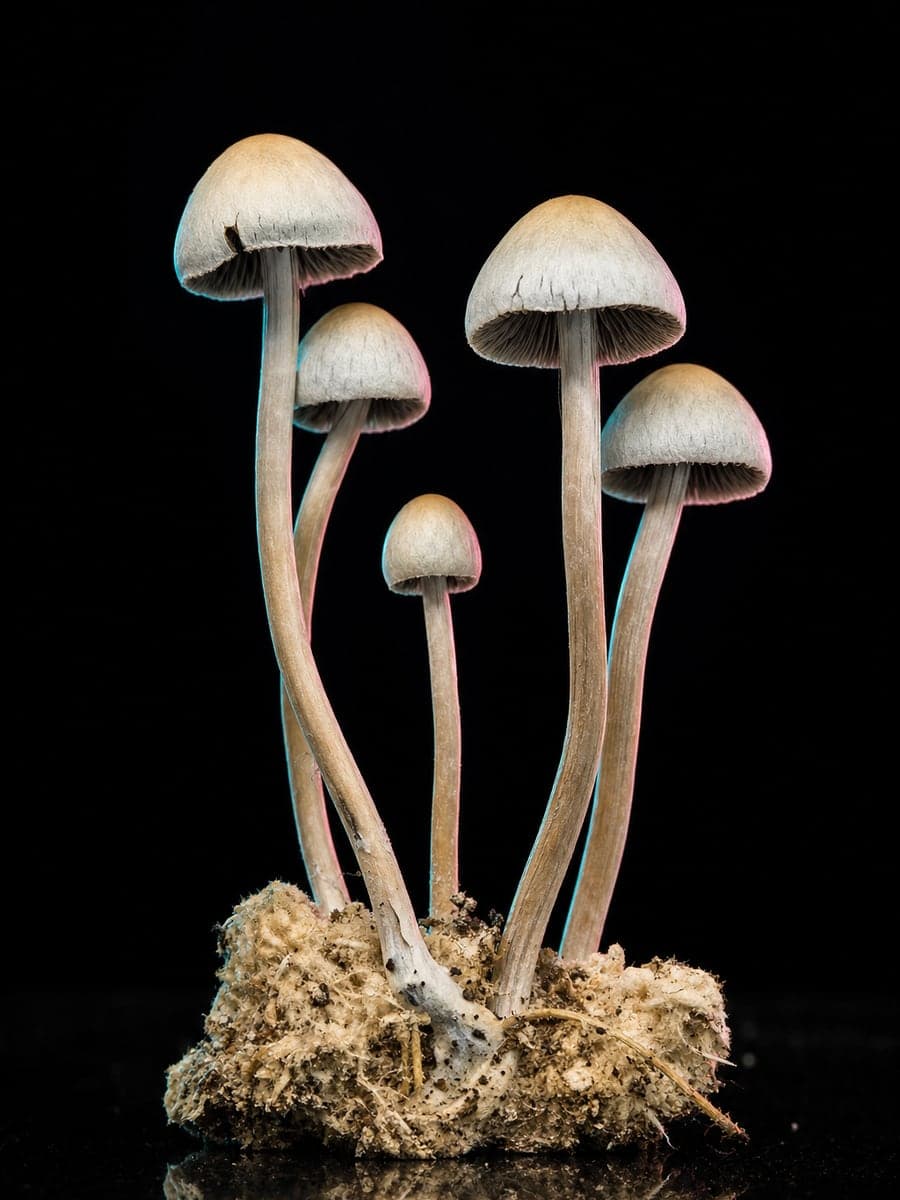
- Very small, about 7–15 mm across, conical to convex with a small pointed umbo. Reddish-brown and sticky when wet, with a peelable skin and a finely lined edge; drying to a paler yellow-brown.
- Stems
- Slender and hollow, about 4–6.5 cm tall and only 1.5–2 mm thick, whitish to pale straw, covered in fine white fibres, sometimes slightly swollen at the base.
- Notes
- Gills clay-coloured at first, turning violet-brown with white edges. Spore print dark purple-brown. Bruises blue. Smell and taste faintly of meal. Sporeworks notes it forms tiny sclerotia in culture.
- Growing
- Rarely grown. Gartz, Allen and Merlin's 1994 paper covered its cultivation, and Sporeworks sells prints and a DNA-checked isolate, noting it forms tiny sclerotia in culture.
How it is described
There is almost no trip-report record for this species. The one published assay puts its psilocybin in a moderate range, comparable to other small species of its section.
Based on: One 1994 tryptamine assay (summarised on Wikipedia); no trip-report consensus found.
Psilocybe samuiensis, asked and answered
Where does Psilocybe samuiensis come from?
It was first collected in 1991 in rice paddies on Koh Samui, Thailand, and described in 1993. It has since been reported elsewhere in Thailand, in Cambodia and probably in eastern Australia.
What does Psilocybe samuiensis look like?
A tiny mushroom: a reddish-brown, sticky, pointed cap about 1 cm across on a thin, hollow, whitish stem 4–6 cm tall. It bruises blue and drops a dark purple-brown spore print.
Is Psilocybe samuiensis strong?
One 1994 lab study measured up to about 0.9% psilocybin by dry weight, a moderate figure. Trip reports for it are almost non-existent.
Is it the same as the Koh Samui cubensis strain?
No. Koh Samui cubensis lines are Psilocybe cubensis from the same island. P. samuiensis is a separate, much smaller species.
Can I pick Psilocybe samuiensis in the wild?
It is a wild mushroom with deadly look-alikes among small brown grassland mushrooms. Never pick or eat a wild mushroom identified from a picture.
The Shroomdex records history and reputation, not advice: how a strain is described is never a promise of how it will feel, and nothing here is medical advice. Strength varies from batch to batch. Start low and see our dose calculator. Never forage from a website: deadly look-alikes grow wild.