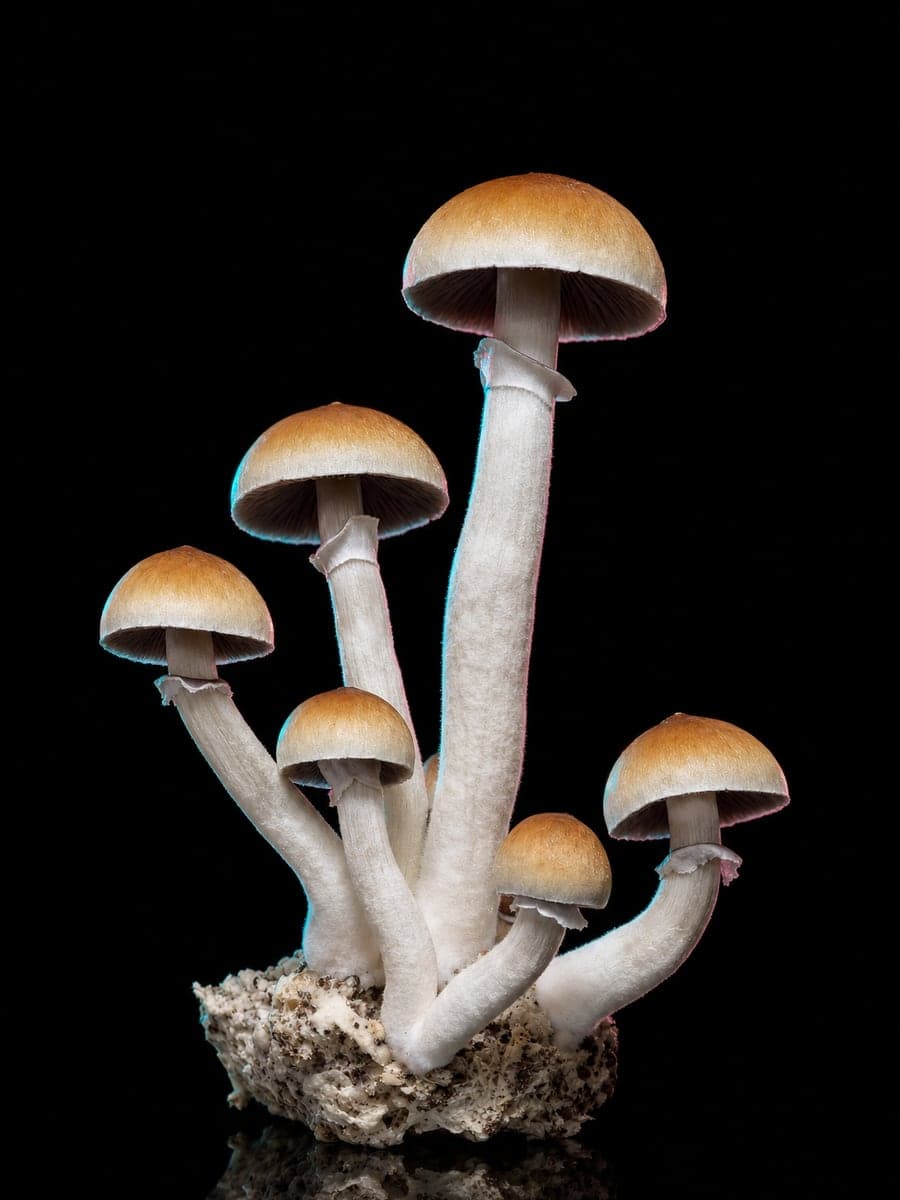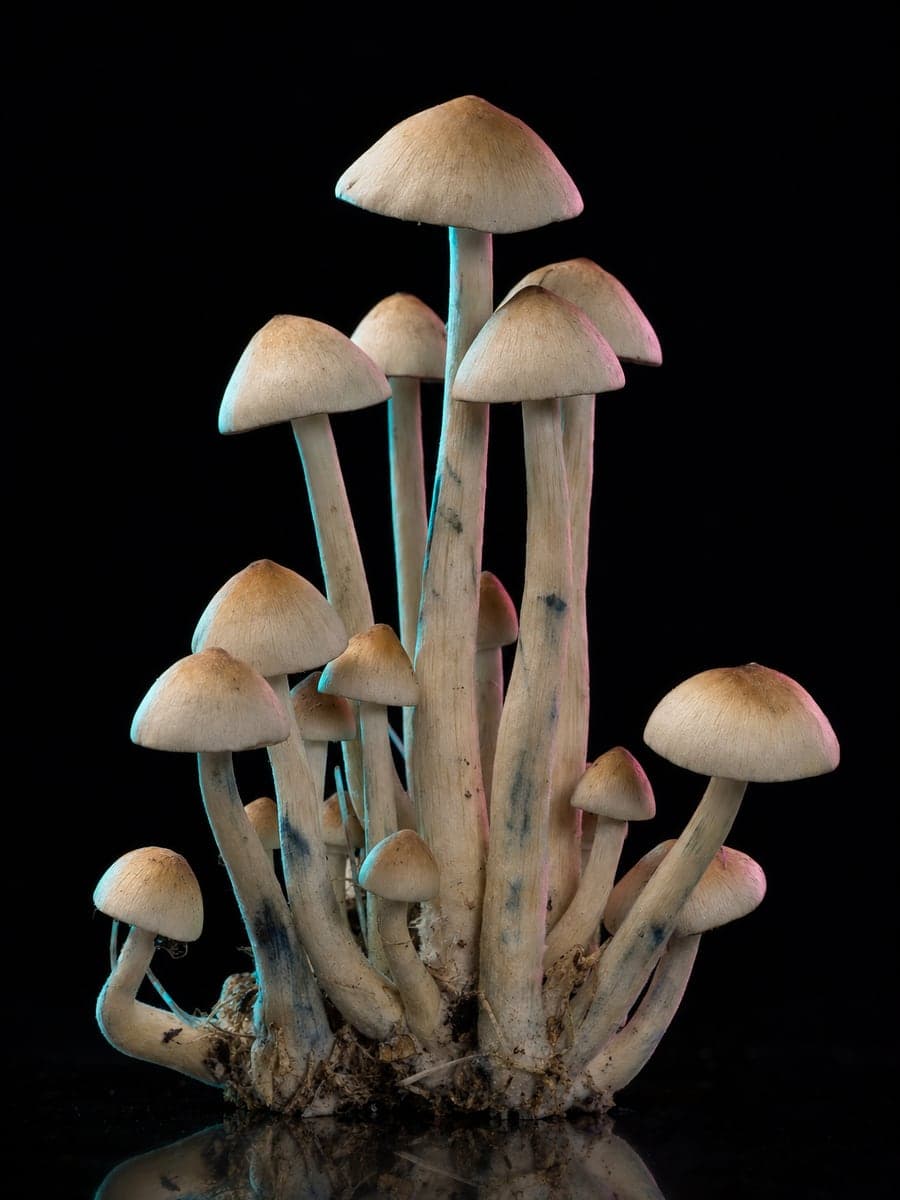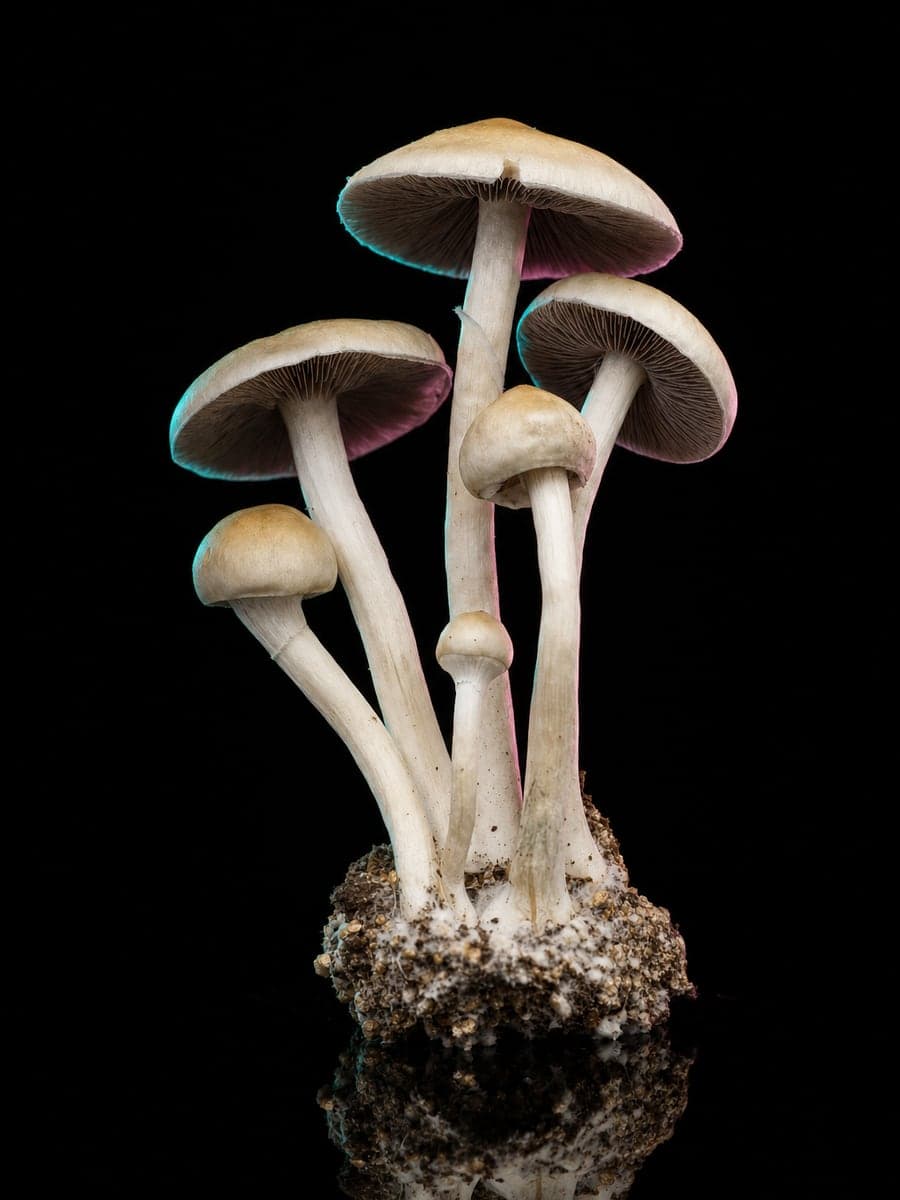
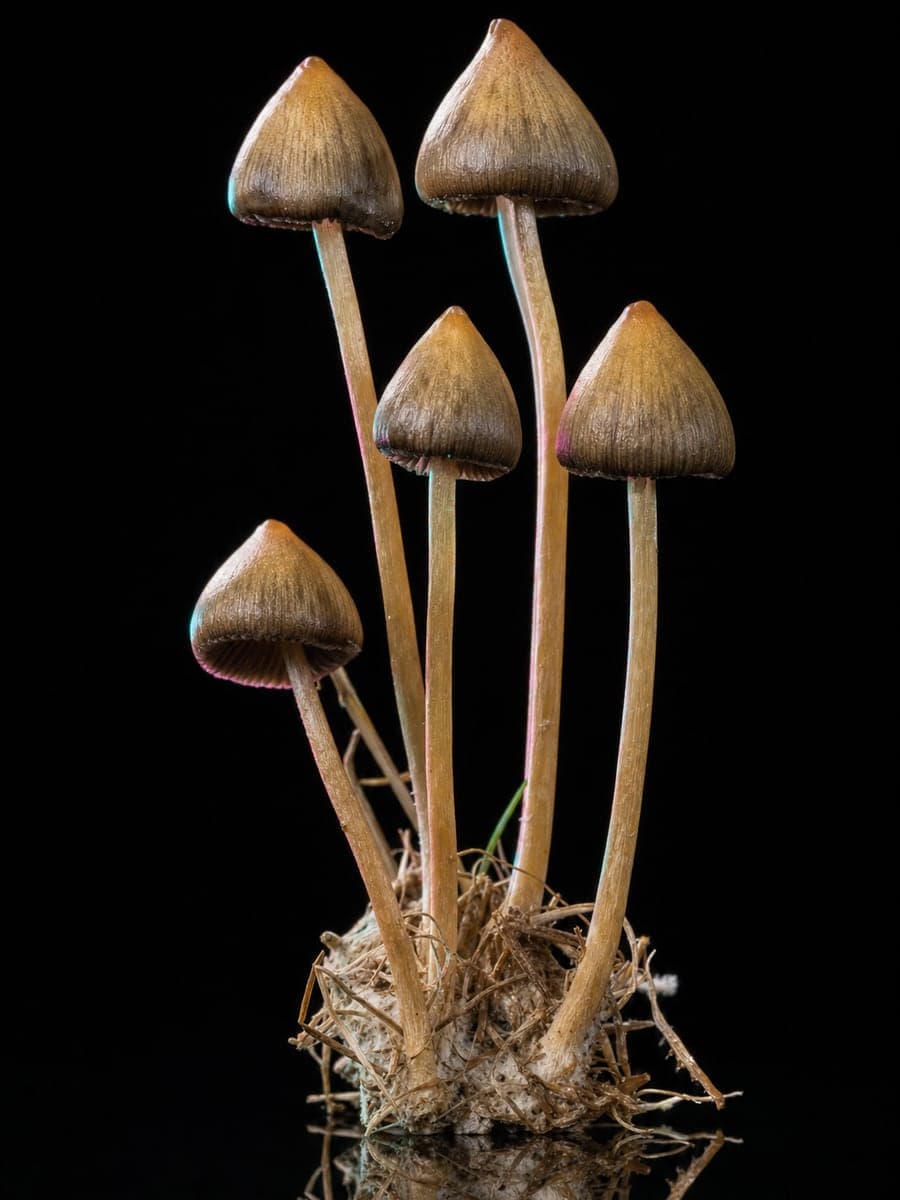
Psilocybe semilanceata
The pointed grassland cap, and the genus's own type.
Elias Fries described it in 1838 as Agaricus semilanceatus, and Paul Kummer moved it to Psilocybe in 1871. When the name Psilocybe was conserved in 2009, P. semilanceata became the genus's type species.
Its common name is said to come from its likeness to the Phrygian cap, the soft pointed hat also known as a liberty cap.
Where Psilocybe semilanceata comes from
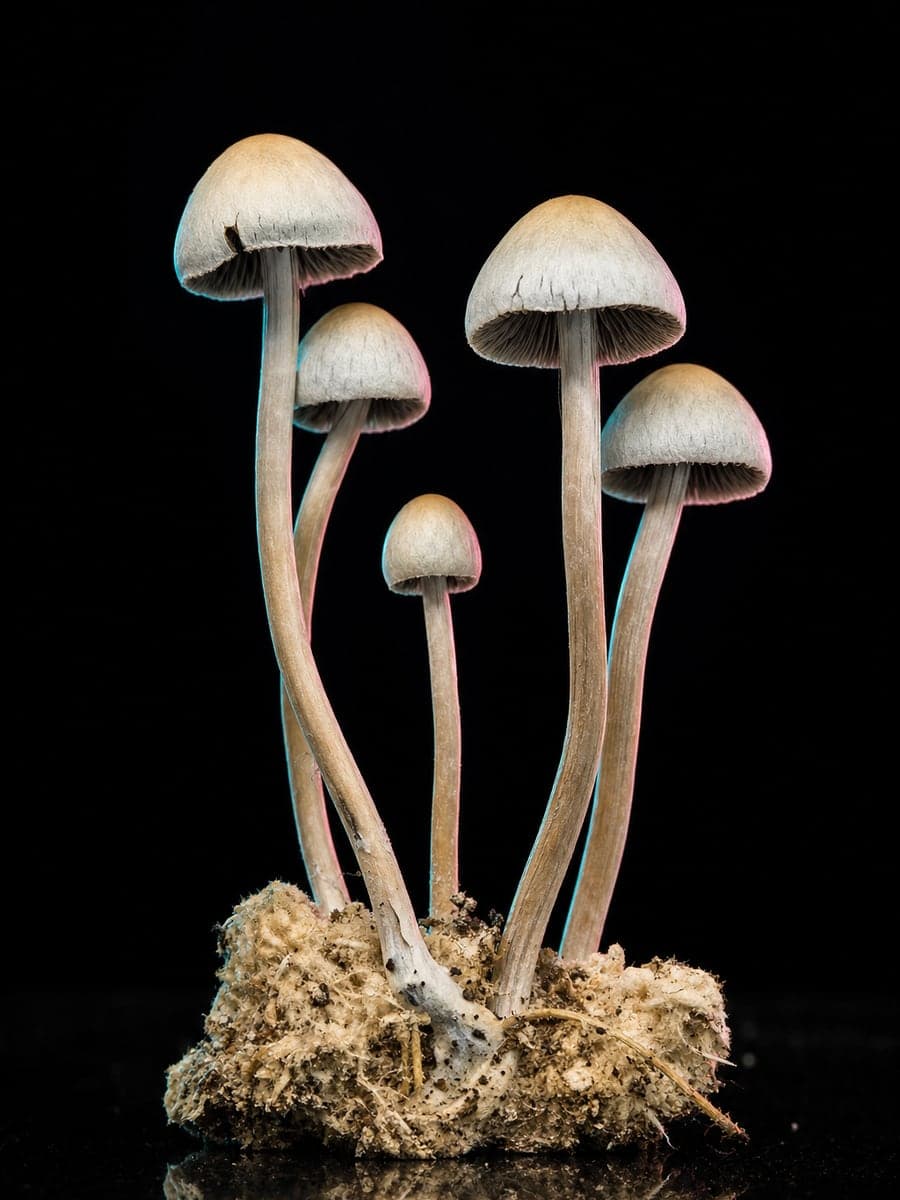
Psilocybe semilanceata, the liberty cap, is a small grassland mushroom with a sharply conical, often nippled cap on a long, thin stem. It is widespread in Europe and the Pacific Northwest, including British Columbia, and is the type species of the genus Psilocybe. It is a wild mushroom with deadly look-alikes.
- Origin
- Temperate grasslands of Europe, where it is considered native; also the Pacific Northwest and much of Canada, including British Columbia, and scattered records from Chile, New Zealand, Australia and South Asia · Described by Elias Fries in 1838
- Family
- Other species · Europe · Common
- Lineage
- A species, not a cultivated strain. P. pelliculosa looks almost the same in the field.
Elias Fries described it in 1838 as Agaricus semilanceatus, and Paul Kummer moved it to Psilocybe in 1871. When the name Psilocybe was conserved in 2009, P. semilanceata became the genus's type species.
Wikipedia: Psilocybe semilanceata (pointer to Fries 1838, Kummer 1871, Norvell 2009)It grows in meadows, pastures and lawns, often where sheep or cattle graze, but on decaying grass roots rather than directly on dung. In the Pacific Northwest it fruits mostly in autumn and early winter.
Wikipedia: Psilocybe semilanceata (pointer to Stamets 1996, Gartz 1997)In Canada it has been collected in British Columbia, Ontario, Quebec and the Atlantic provinces, and in the United States it is most common west of the Cascades. Mushrooms seized from students in British Columbia in 1965 were identified as this species, the first recorded recreational use in Canada.
Wikipedia: Psilocybe semilanceata (pointer to Guzmán et al. 1998; Heim et al. 1966)A 2022 lab study of five collections measured 1.28–11.42 mg/g psilocybin and only 0.03–0.62 mg/g psilocin, noting relatively high baeocystin as typical of the species. An earlier study of Pacific Northwest specimens found about 1% psilocybin on average, unusually consistent between samples.
Gotvaldová et al. (2022), Int. J. Mol. Sci. 23: 14068Wikipedia: Psilocybe semilanceata (pointer to Beug & Bigwood 1982)The earliest reliable account of its effects dates from 1799, when a London family fell ill after eating mushrooms picked in Green Park. Albert Hofmann's team reported psilocybin in it in 1963, the first finding of psilocybin in a European mushroom.
Wikipedia: Psilocybe semilanceata (pointer to Brande 1799; Hofmann et al. 1963)It is confused with poisonous mushrooms: the toxic, muscarine-containing Inocybe geophylla is named as a look-alike, and an Austrian man who mistook Cortinarius rubellus for liberty caps needed a kidney transplant.
Wikipedia: Psilocybe semilanceata (pointer to Franz et al. 1996)
Its common name is said to come from its likeness to the Phrygian cap, the soft pointed hat also known as a liberty cap.
What it looks like
- Caps
- Small, 0.5–2.5 cm across, sharply conical to bell-shaped and often topped with a nipple; chestnut to ochre-brown and sticky when wet, drying much paler, with fine radial lines.
- Stems
- Long and very thin, 4.5–14 cm by 1–3.5 mm, pale yellowish-brown, sometimes with a faint dark ring-zone.
- Notes
- Gills pale brown, darkening to purple-brown; spore print deep purple-brown. Parts may bruise blue. Grows in grass, not on dung.
- Growing
- Not grown commercially; it is known almost entirely as a wild mushroom of grassland.
How it is described
The liberty cap has long had a reputation as a strong mushroom for its size, and lab results support that, though they vary between collections. Older accounts describe visual effects building to hallucinations.
Based on: Lab analyses (Gotvaldová et al. 2022; Beug & Bigwood 1982 via Wikipedia) for potency; general reputation otherwise. No controlled data on effects.
Psilocybe semilanceata, asked and answered
Where does Psilocybe semilanceata come from?
It is a wild grassland species of Europe, where it is considered native, and of the Pacific Northwest and Canada, including British Columbia. It has also been recorded in Chile, New Zealand and parts of Asia.
What does Psilocybe semilanceata look like?
A small, sharply pointed brown cap, often with a nipple on top, on a long, thread-thin stem. It grows in grass and dries much paler.
Is Psilocybe semilanceata strong?
For its size, yes: lab studies find around 1% psilocybin on average, though results vary a lot between collections.
Can I pick Psilocybe semilanceata in the wild?
It is a wild mushroom with deadly look-alikes, including a toxic Inocybe and a Cortinarius that has caused kidney failure. It does grow wild in British Columbia, but never pick a wild mushroom to eat from a picture; only an expert identification can tell them apart.
The Shroomdex records history and reputation, not advice: how a strain is described is never a promise of how it will feel, and nothing here is medical advice. Strength varies from batch to batch. Start low and see our dose calculator. Never forage from a website: deadly look-alikes grow wild.