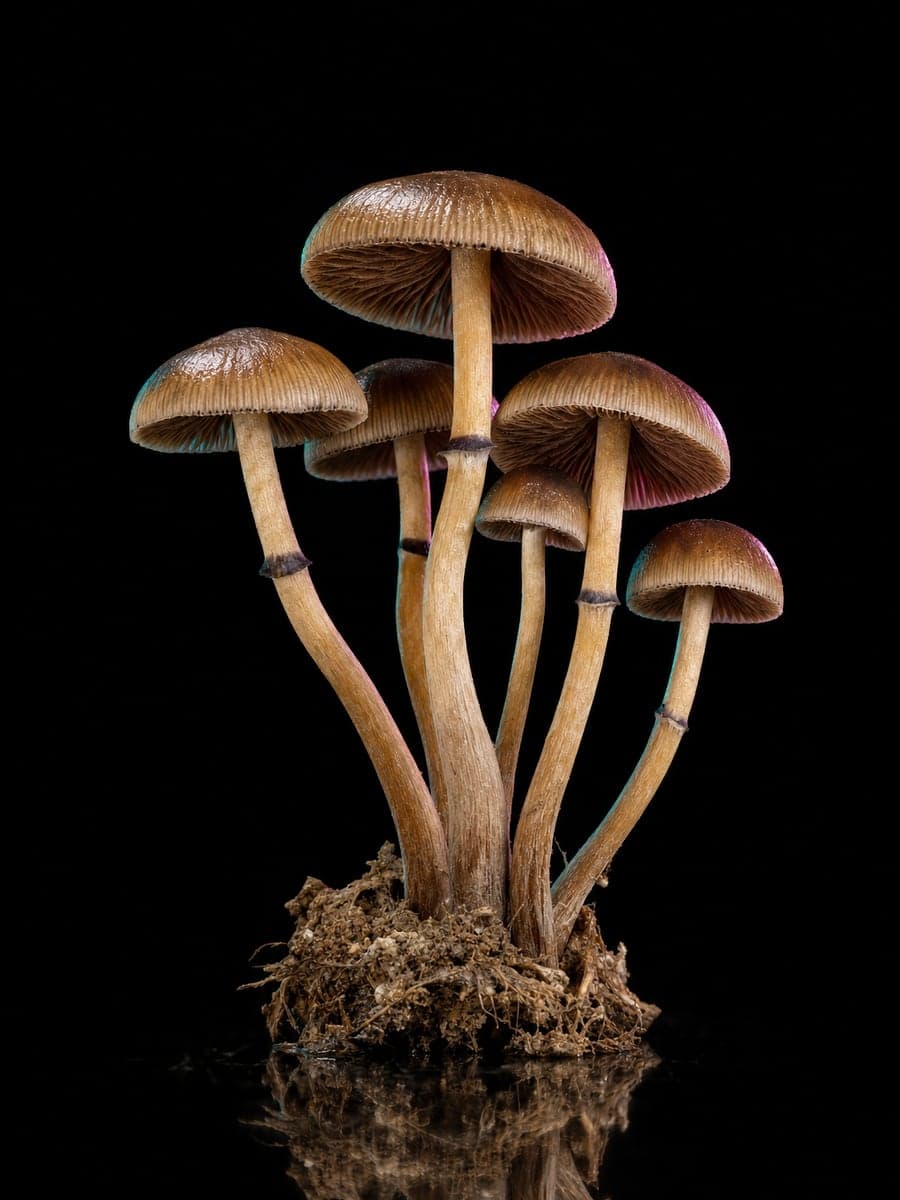
Psilocybe stuntzii
The campus lawn mushroom with a blue-staining ring.
Gastón Guzmán and Jonathan Ott described the species in Mycologia in 1976. It was first collected on the University of Washington campus in Seattle and named for Daniel E. Stuntz, the university's professor of botany, who made the type collection.
It is said to have once turned up in a large share of new lawns around Puget Sound, and to be much scarcer now.
Where Psilocybe stuntzii comes from
Psilocybe stuntzii is a small, wild psilocybin mushroom first collected on the University of Washington campus in Seattle and described in 1976. It grows on bark mulch, wood chips and new lawns in the Pacific Northwest, including Vancouver, and is known for a thin ring on the stem that stains blue. It closely resembles the deadly Galerina marginata and must never be picked from a picture.
- Origin
- First collected on the University of Washington campus, Seattle; western Washington and southwest British Columbia · Fruiting widely on campus in 1973; described 1976
- Family
- Other species · Americas · Uncommon
- Lineage
- A species, not a cultivated strain. Its describers placed it close to P. subaeruginascens of Java, separated by spore and cystidia size.
Gastón Guzmán and Jonathan Ott described the species in Mycologia in 1976. It was first collected on the University of Washington campus in Seattle and named for Daniel E. Stuntz, the university's professor of botany, who made the type collection.
Guzmán & Ott (1976), Mycologia 68(6) (PDF via MAPS bibliography)Wikipedia: Psilocybe stuntzii (pointer to Guzmán & Ott 1976 and Stamets 1996)The paper records that in autumn 1973 it fruited widely in bark mulch spread around the campus, that students began eating it despite a warning in the student newspaper, and that by 1975 it had been found around Seattle, Olympia and Tumwater. The authors knew of no hospitalisations from this use.
Guzmán & Ott (1976), Mycologia 68(6) (PDF via MAPS bibliography)The same paper reports it from Vancouver, British Columbia, as well as western Washington, growing alone or in dense clusters on lawns, in fields and on bark mulch from August to December. iNaturalist holds research-grade observations of it from British Columbia.
Guzmán & Ott (1976), Mycologia 68(6) (PDF via MAPS bibliography)iNaturalist: research-grade observations of Psilocybe stuntzii in British ColumbiaPaper chromatography of dried specimens found psilocybin; no psilocin was detected, which the authors put down to the age of the samples rather than its absence.
Guzmán & Ott (1976), Mycologia 68(6) (PDF via MAPS bibliography)It closely resembles the highly toxic Galerina marginata, and several poisonings have been blamed on collectors who ate Galerina mistaking it for P. stuntzii.
Wikipedia: Psilocybe stuntzii (pointer to Stamets 1996, p. 195)
It is said to have once turned up in a large share of new lawns around Puget Sound, and to be much scarcer now.
Pacific Northwest foragers treat the blue-stained ring as its giveaway, which is exactly why experts warn against relying on any single feature.
What it looks like
- Caps
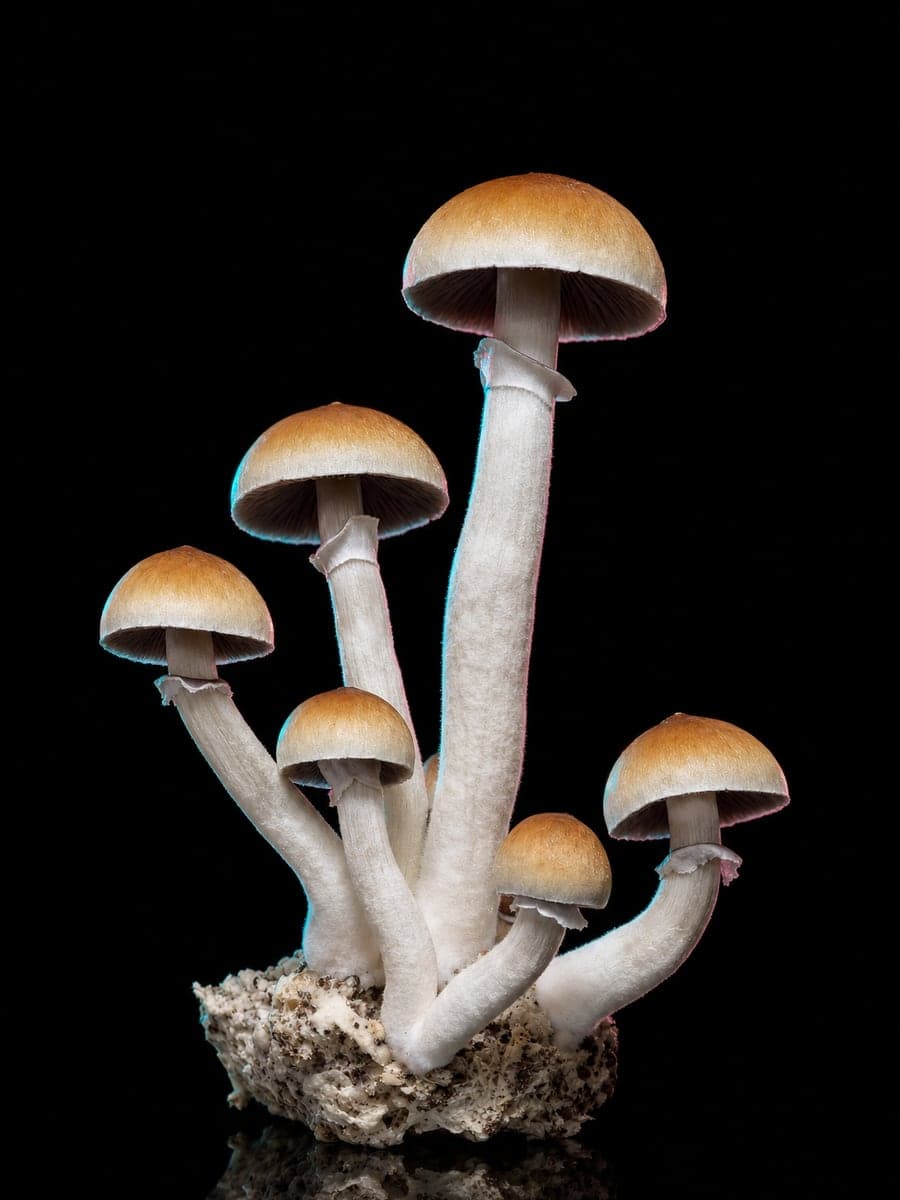
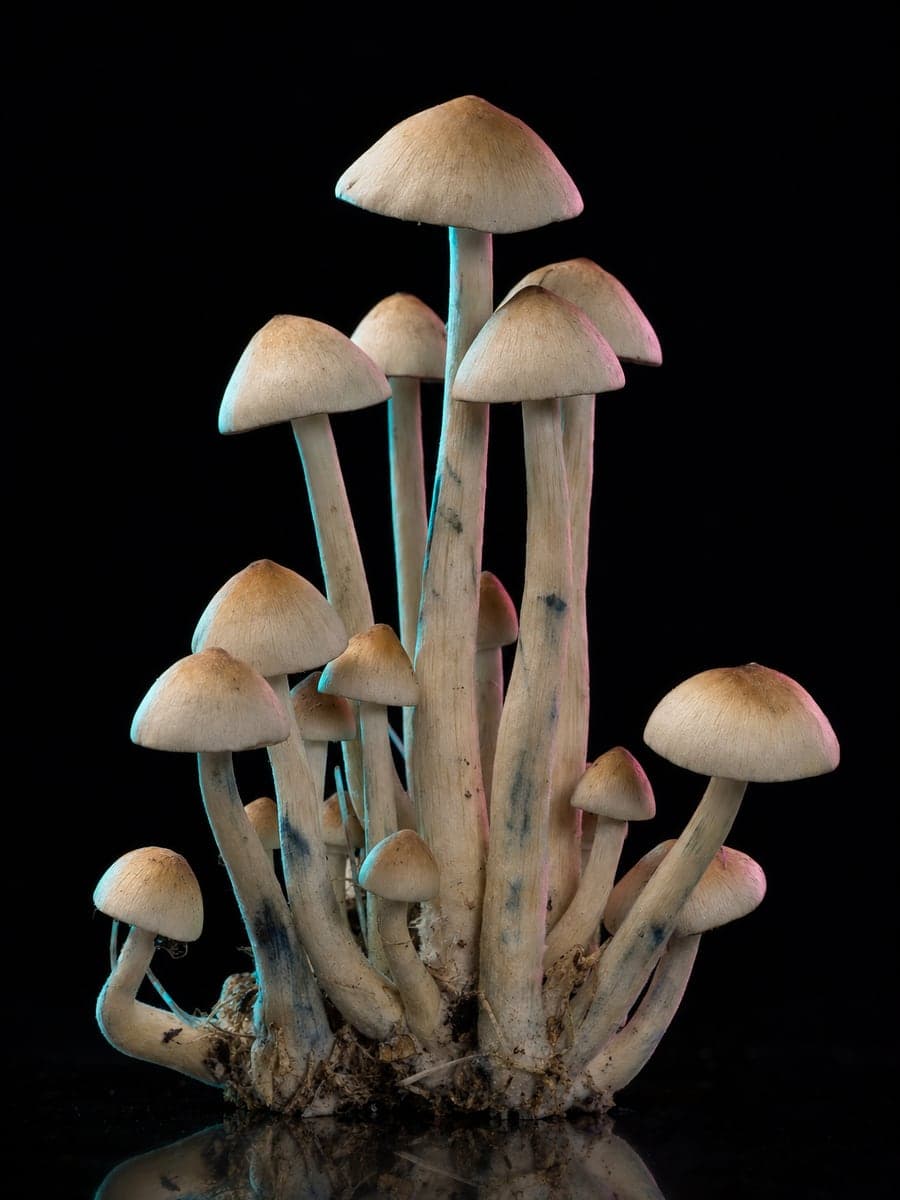
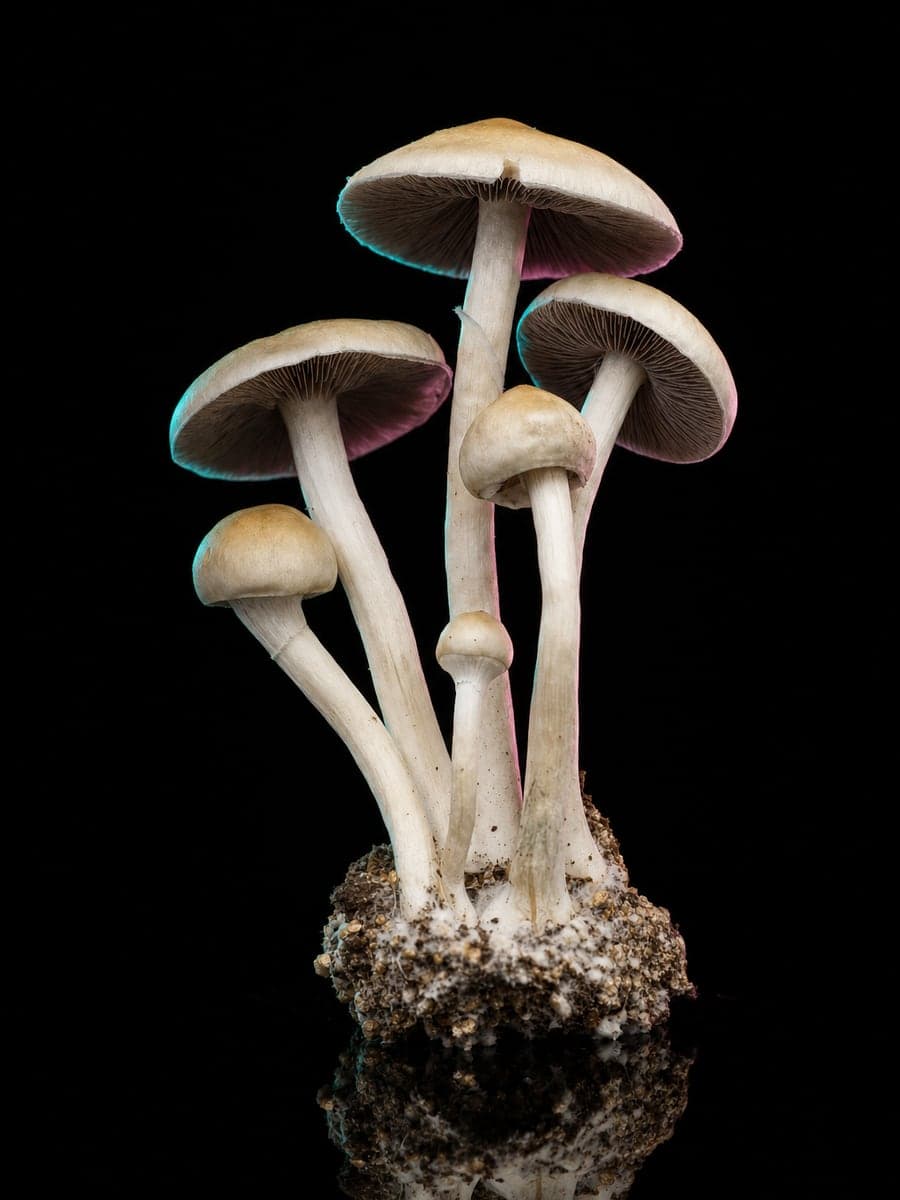
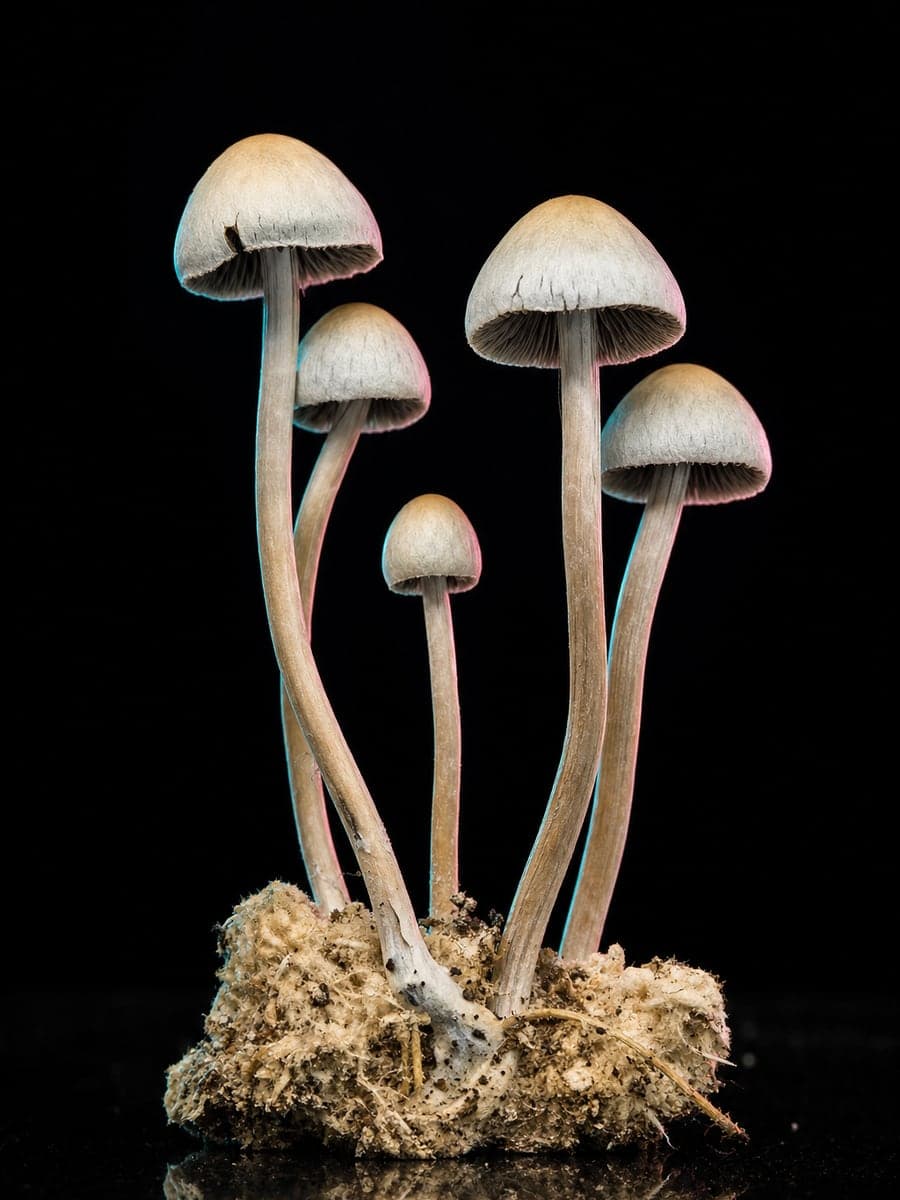
- 0.5–4 cm, conic to convex, becoming umbonate or flat; dark chestnut to olive-brown, sticky when wet, fading paler and yellowish as it dries, the margin sometimes greenish.
- Stems
- 2–7.5 cm long and 1.5–6 mm thick, whitish to yellowish or brownish, bruising blue-green.
- Notes
- A thin, membranous ring on the stem darkens with spores and stains blue, which gives the name Blue Ringer. Gills yellowish-brown, then violet-brown to chocolate with whitish edges; spore print dark violet-brown.
- Growing
- A wild species of mulch and new lawns rather than a tub strain; spores are sold for microscopy, and no cultivation reports were checked.
How it is described
Psilocybe stuntzii has a long history of recreational use around Seattle since the 1970s. No potency figures were found, so its strength relative to other species is not established here.
Based on: Guzmán & Ott (1976) for psilocybin presence and the history of use; no concentration figures or trip-report consensus gathered. The profile is a neutral default.
Psilocybe stuntzii, asked and answered
Where does Psilocybe stuntzii grow?
In the Pacific Northwest, on bark mulch, wood chips and new lawns from late summer to December. It was described from the University of Washington campus and is also recorded in Vancouver and elsewhere in British Columbia. It is a wild mushroom with deadly look-alikes and should never be picked from a picture.
What does Psilocybe stuntzii look like?
A small brown mushroom with a sticky chestnut cap that fades as it dries, a slender pale stem and a thin ring that turns blue, with dark violet-brown gills.
Is Psilocybe stuntzii strong?
It contains psilocybin, but no reliable potency figures were found. Strength in wild mushrooms varies a lot between collections.
Why is it called Blue Ringer?
For the thin ring on its stem, which stains blue when handled or as it ages.
Is it dangerous to confuse with other mushrooms?
Yes. It closely resembles the deadly Galerina marginata, and people have been poisoned by mistaking one for the other. Only an expert with the mushroom in hand can tell them apart.
The Shroomdex records history and reputation, not advice: how a strain is described is never a promise of how it will feel, and nothing here is medical advice. Strength varies from batch to batch. Start low and see our dose calculator. Never forage from a website: deadly look-alikes grow wild.