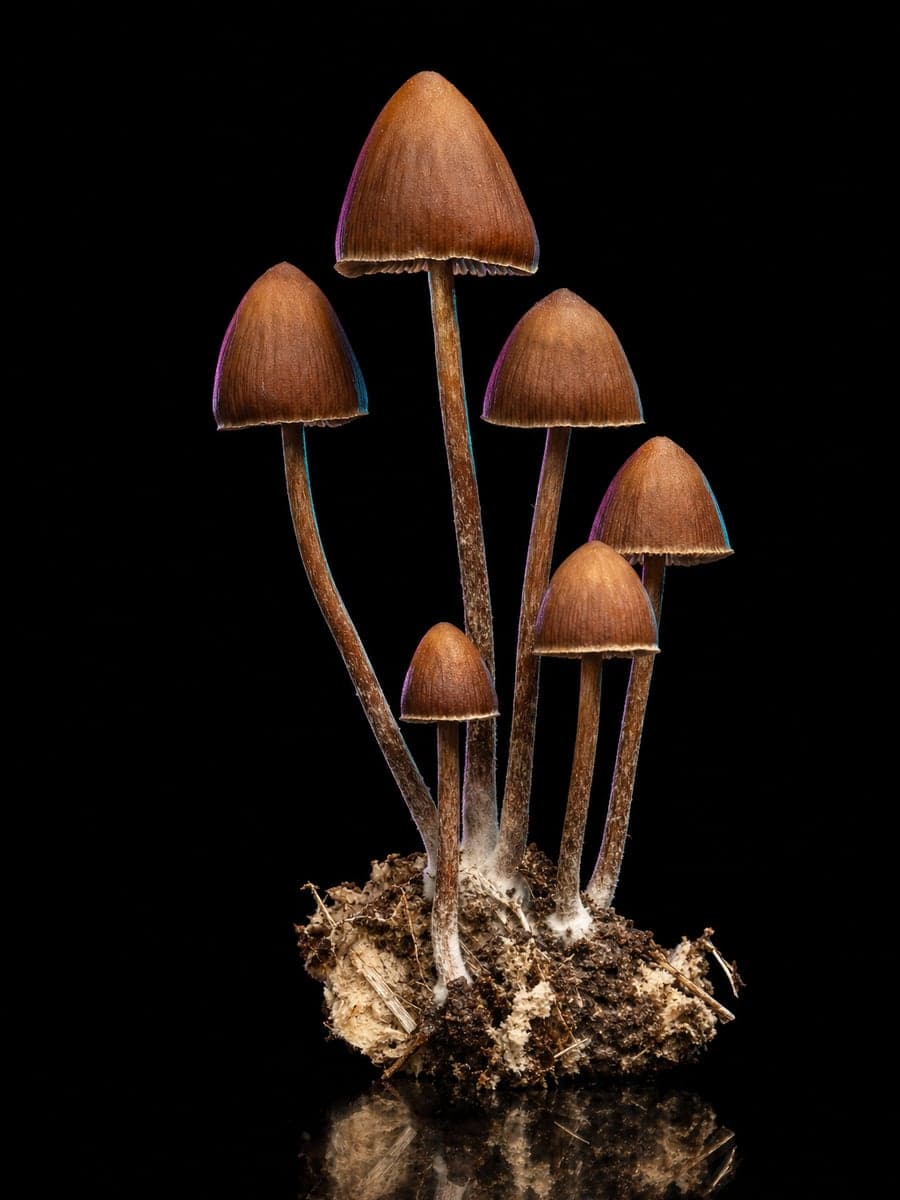
Psilocybe subtropicalis
A little-studied slender cap from Veracruz and Oaxaca.
Gastón Guzmán described P. subtropicalis in 1995. His worldwide checklist with John W. Allen and Jochen Gartz lists it among Mexico's neurotropic Psilocybe species.
One breeder's write-up links it with the 'ever-living' name semperviva and with Oaxacan ceremonial use; neither link is shown in the mycological record.
Where Psilocybe subtropicalis comes from
Psilocybe subtropicalis is a small, slender psilocybin mushroom of southern Mexico, described by Gastón Guzmán in 1995. It grows in grassy, disturbed ground in subtropical hill country such as the area around Xalapa, Veracruz. Very little has been published about it, and it is a wild mushroom with deadly look-alikes.
- Origin
- Southern Mexico, notably central Veracruz around Xalapa; the breeder's page adds Oaxaca and parts of Central America · Described 1995
- Family
- Other species · Americas · Rare
- Lineage
- A species, not a cultivated strain. Its relationship to P. hoogshagenii and the old name P. semperviva is disputed between sources.
Gastón Guzmán described P. subtropicalis in 1995. His worldwide checklist with John W. Allen and Jochen Gartz lists it among Mexico's neurotropic Psilocybe species.
Guzmán, Allen & Gartz (1998/2000), Ann. Mus. civ. Rovereto 14: 189–280Wikipedia: Psilocybe subtropicalis (pointer)Mushroom Observer holds a series of collections from central Veracruz around Xalapa (2008–2017). One collector notes it growing under oak, bruising blue, with strongly rope-like mycelium, and that it still needed sorting from P. zapotecorum.
Mushroom Observer: observation 127923 (Alan Rockefeller, 2012)Mushroom Observer: observation 107852 (A. Cortés-Pérez, Xalapa, 2012)Basidium Equilibrium, which sells an isolated culture, describes it as small and slender with hygrophanous brown caps and blue bruising, found along runoff channels, hill slopes and pasture edges in southern Mexico.
Basidium Equilibrium: Psilocybe subtropicalis bio (vendor page)Its naming history is disputed. Basidium Equilibrium writes that Heim and Cailleux's 1958 P. semperviva was later renamed P. subtropicalis, but Guzmán's own checklist places P. semperviva under P. hoogshagenii var. convexa and lists P. subtropicalis as a separate species.
Basidium Equilibrium: 'Psilocybe Subtropicalis: The Ever-Living Mystery of Semperviva…' (blog)Guzmán, Allen & Gartz (1998/2000), Ann. Mus. civ. Rovereto 14: 189–280
One breeder's write-up links it with the 'ever-living' name semperviva and with Oaxacan ceremonial use; neither link is shown in the mycological record.
What it looks like
- Caps
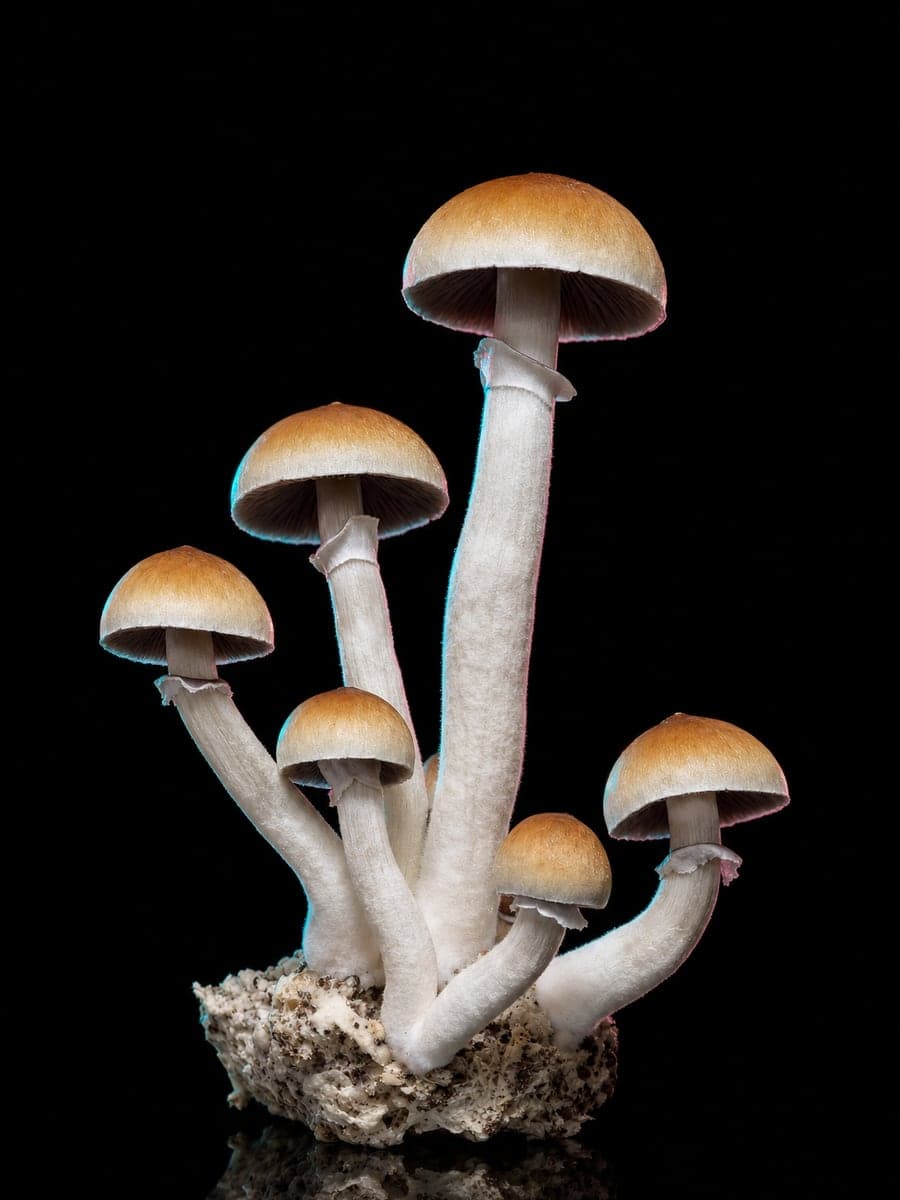
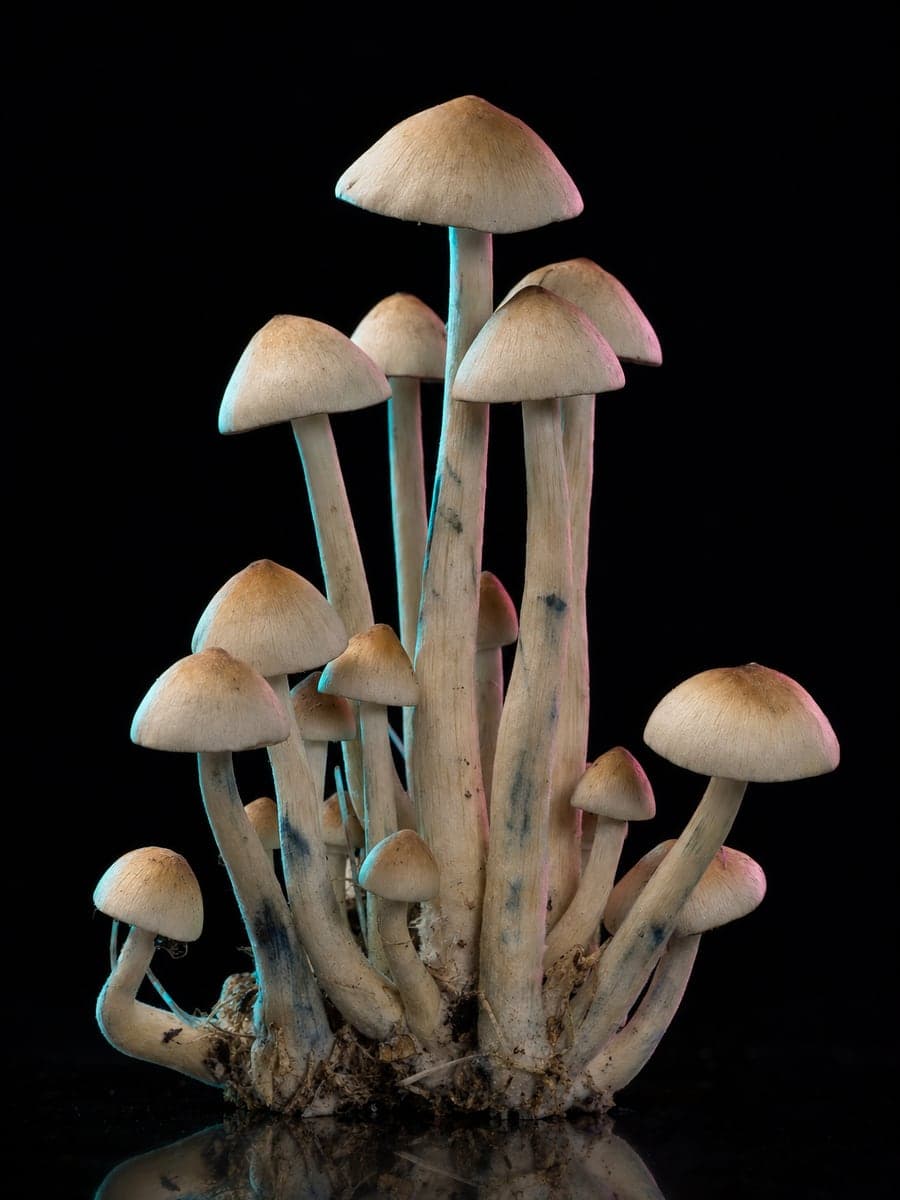
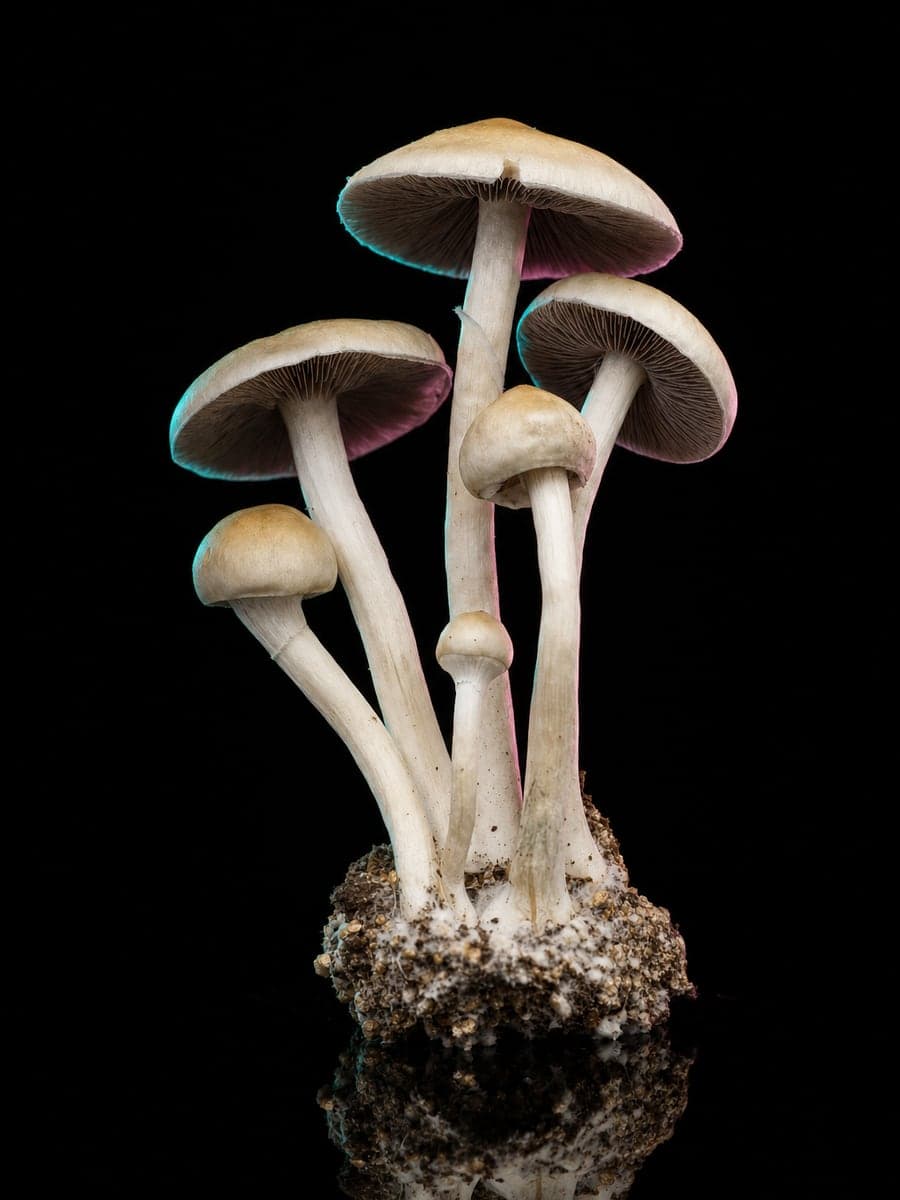
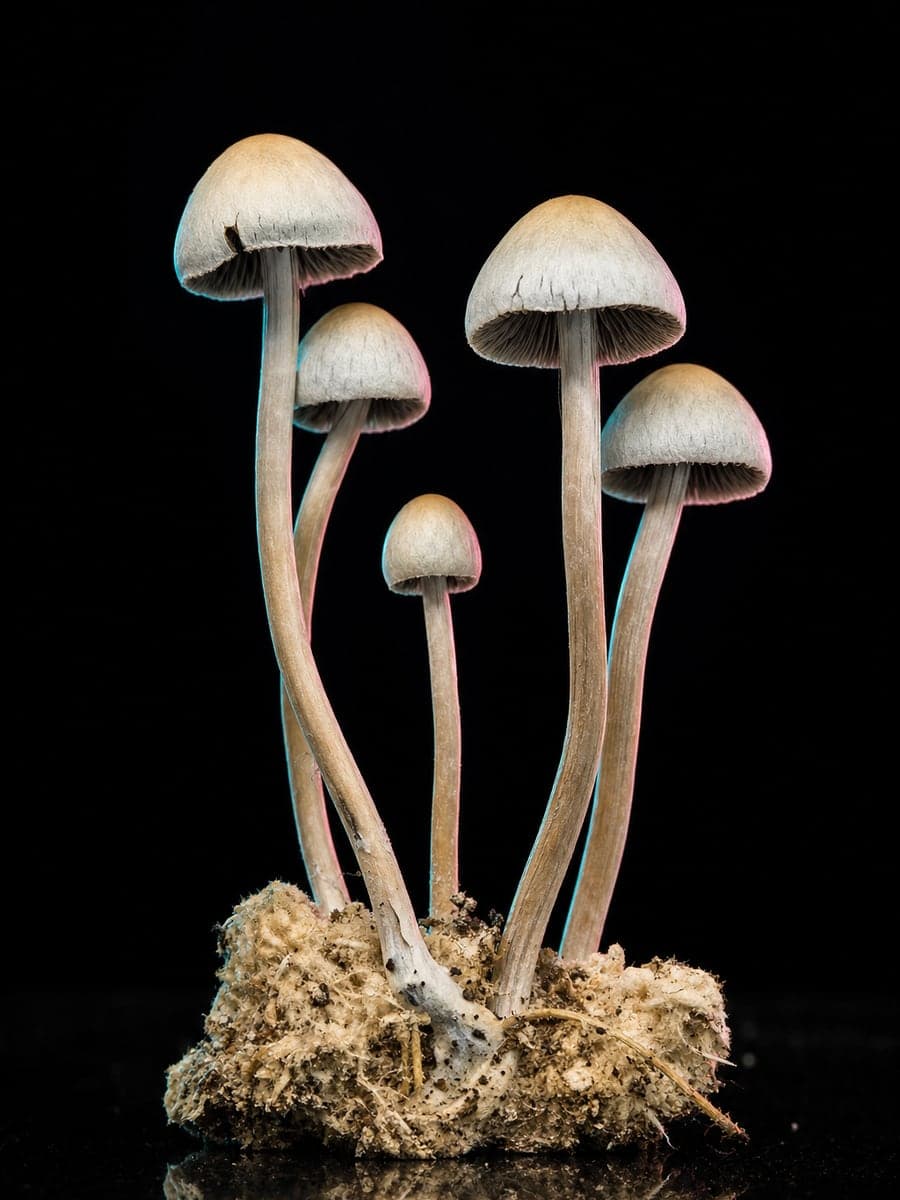
- Small, conical to bell-shaped, often with a pointed or knobbed top; chestnut to reddish-brown when wet, fading paler as it dries.
- Stems
- Long, thin and fibrous, reddish-brown to pale.
- Notes
- Bruises blue where damaged; one collector noted strongly rope-like mycelium at the base. Spore print dark purple-brown, as in other Psilocybe.
How it is described
Psilocybe subtropicalis has almost no public reputation; it is known mainly to mycologists and culture collectors. No lab analysis or trip-report consensus was found.
Based on: No lab data or trip reports found; profile left at the middle.
Psilocybe subtropicalis, asked and answered
Where does Psilocybe subtropicalis come from?
Southern Mexico. Most recorded collections come from the hills around Xalapa in Veracruz, in grassy, disturbed ground.
What does Psilocybe subtropicalis look like?
A small, slender mushroom with a conical to bell-shaped chestnut-brown cap, often pointed, on a long, thin stem. It bruises blue.
Is Psilocybe subtropicalis strong?
Nobody seems to have published a lab test of it, and it has no real reputation either way.
Is it the same as Psilocybe semperviva?
Sources disagree. One culture seller says semperviva was renamed subtropicalis, but Gastón Guzmán, who described subtropicalis, treated semperviva as a variety of P. hoogshagenii.
Can I pick Psilocybe subtropicalis in the wild?
It is a wild mushroom, and many small brown mushrooms, some of them deadly, look alike. Even experts need a microscope to separate it from its relatives. Never pick a wild mushroom to eat from a picture.
The Shroomdex records history and reputation, not advice: how a strain is described is never a promise of how it will feel, and nothing here is medical advice. Strength varies from batch to batch. Start low and see our dose calculator. Never forage from a website: deadly look-alikes grow wild.