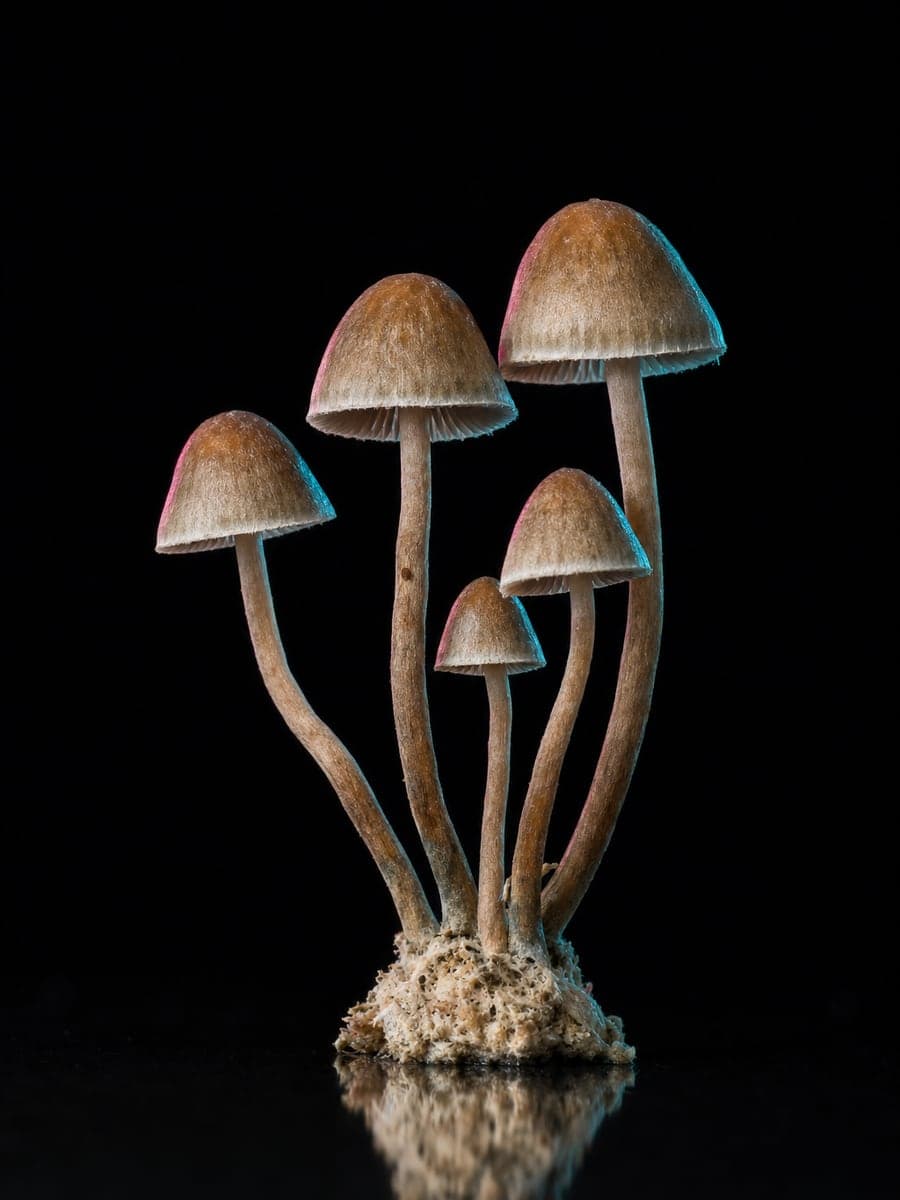
Psilocybe tampanensis
One Florida find, cloned into the world's magic truffles.
Gastón Guzmán and Steven H. Pollock described it in Mycotaxon in 1978 from Florida; Guzmán later recorded it from Mississippi (1996), and his checklist lists both states.
The usual story, told by Paul Stamets, is that Pollock skipped a dull conference near Tampa to hunt mushrooms and found a single specimen in a sand dune.
Where Psilocybe tampanensis comes from
Psilocybe tampanensis is a rare grassland psilocybin mushroom first collected near Tampa, Florida, in 1977 and described by Gastón Guzmán and Steven Pollock in 1978. Almost all the tampanensis in circulation descends from Pollock's cloned specimen, and it is best known for its truffle-like sclerotia, sold as 'philosopher's stones'. It is a wild mushroom with deadly look-alikes.
- Origin
- Sandy meadow near Tampa (south-east of Brandon), Florida, USA; later found in Pearl River County, Mississippi · Collected 1977; described 1978
- Family
- Other species · Americas · Rare
- Lineage
- A species. Cultivated material mostly descends from Pollock's single 1977 specimen; Basidium Equilibrium also keeps a wild Mississippi line.
Gastón Guzmán and Steven H. Pollock described it in Mycotaxon in 1978 from Florida; Guzmán later recorded it from Mississippi (1996), and his checklist lists both states.
Guzmán, Allen & Gartz (1998/2000), Ann. Mus. civ. Rovereto 14: 189–280Wikipedia: Psilocybe tampanensis (pointer)Pollock cloned the original specimen into a pure culture, and the commercial cultures and kits that followed derive from it. Its sclerotia are known in the trade as 'philosopher's stones' and became widely known through sales in the Netherlands.
Wikipedia: Psilocybe tampanensis (pointer)Basidium Equilibrium: Psilocybe tampanensis bio (vendor page)Gartz's analysis, as compiled by Paul Stamets, gave 0.68% psilocybin and 0.32% psilocin.
Erowid: comparative potency chart (Gartz 1994, via Stamets)In a 2000 study of mushrooms seized in Germany, P. tampanensis was the fourth most common species, after P. cubensis, P. semilanceata and Panaeolus cyanescens.
Musshoff, Madea & Beike (2000), Forensic Science International 113: 389–395 (PubMed)Wild finds remain scarce. iNaturalist has research-grade records from Escambia County, Florida, in 2018, and Basidium Equilibrium keeps a wild Mississippi line, found by a citizen scientist, that it contrasts with the widely circulated ATL7 culture.
iNaturalist: observation 13969284 (Cantonment, Florida, July 2018)Basidium Equilibrium: Psilocybe tampanensis bio (vendor page)
The usual story, told by Paul Stamets, is that Pollock skipped a dull conference near Tampa to hunt mushrooms and found a single specimen in a sand dune.
Sclerotia are often described as looking like congealed muesli, with a bitter, walnut-like taste.
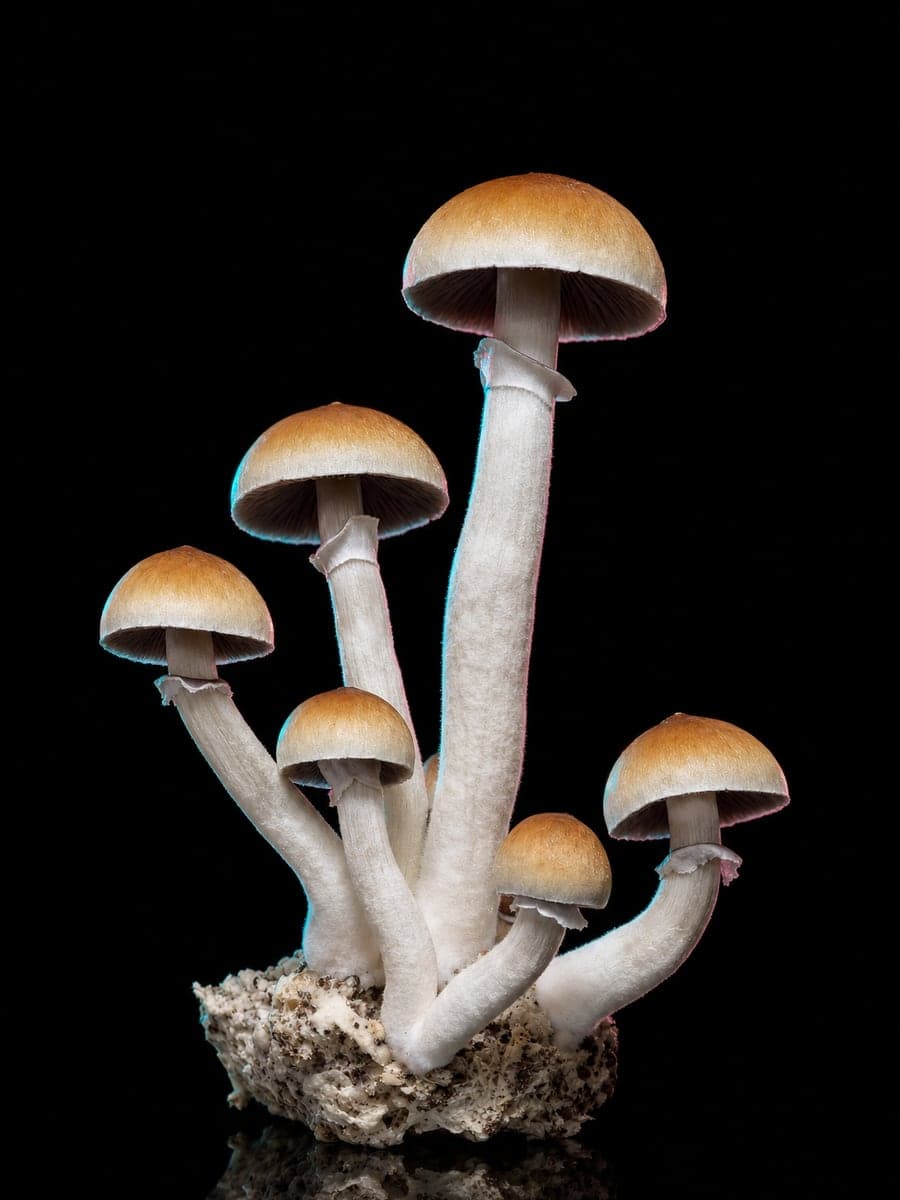
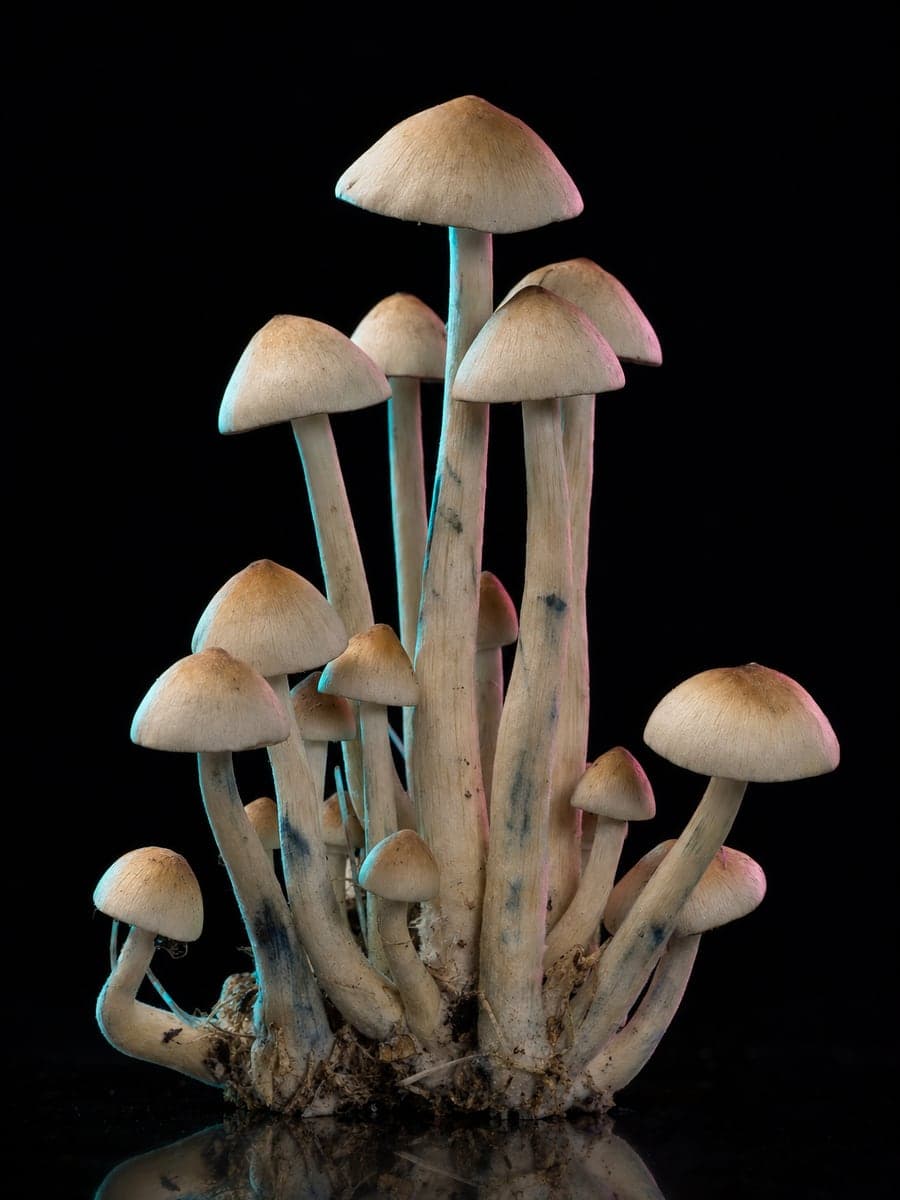
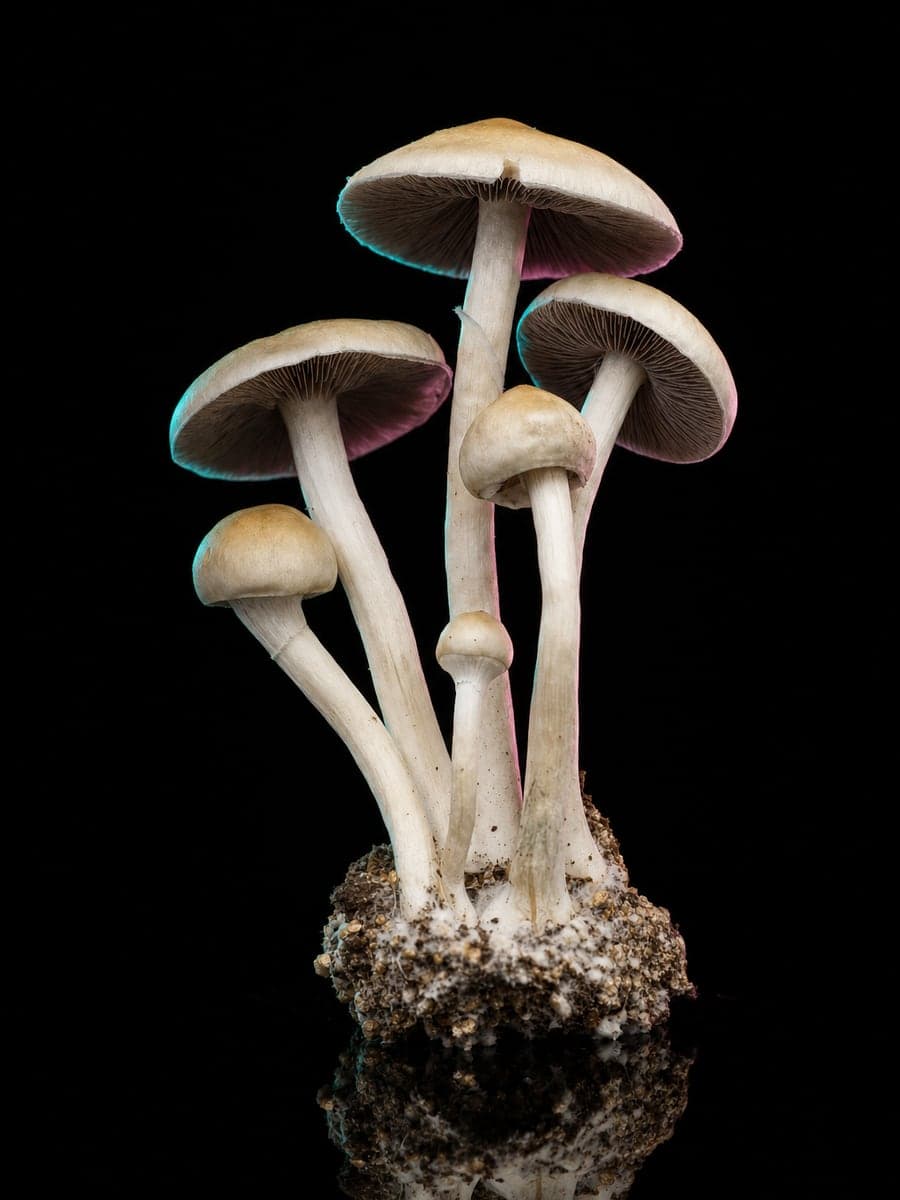
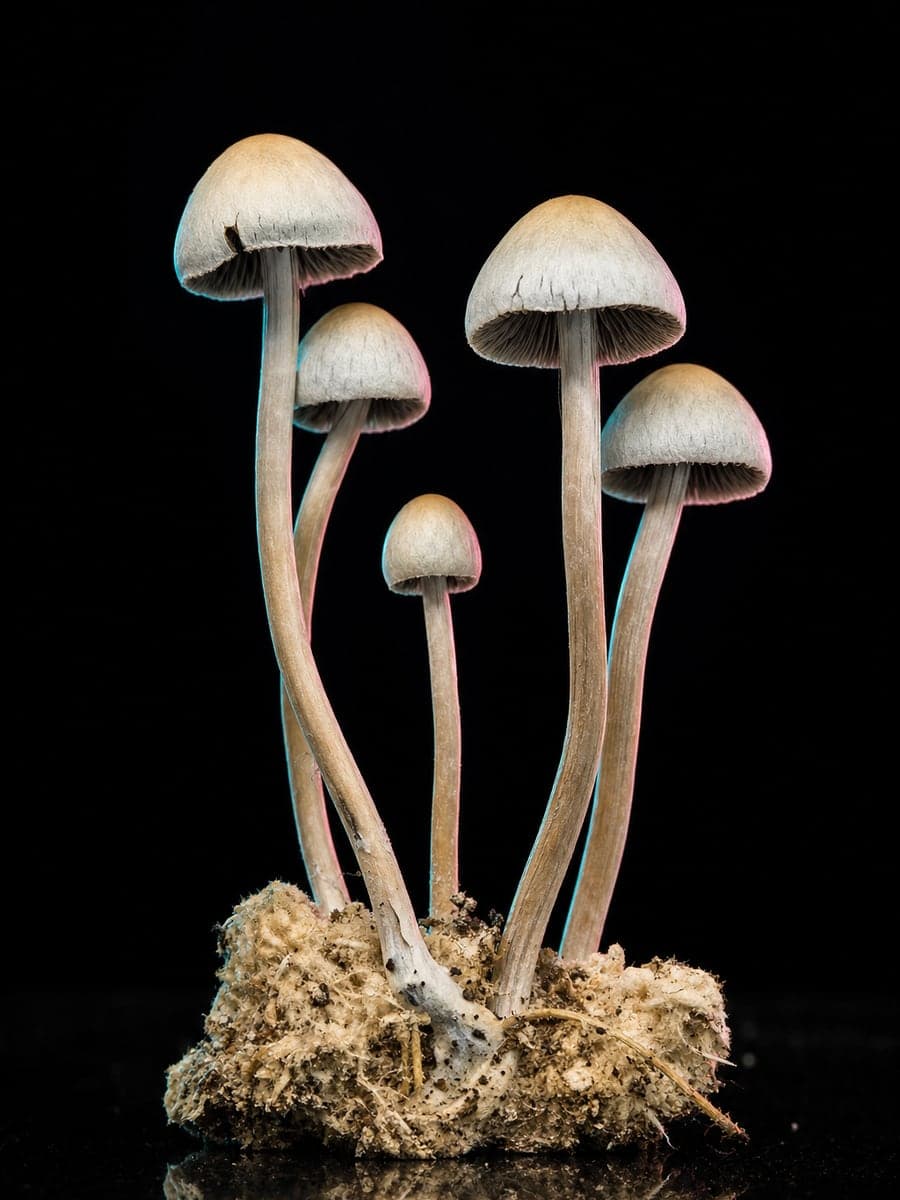
What it looks like
- Caps
- 1–2.4 cm, convex or conic with a slight knob, flattening with age; ochre to straw-brown when wet, buff to yellowish-grey when dry, sometimes bluish at the edge.
- Stems
- Thin, 2–6 cm by 1–2 mm, even or slightly wider at the base, pale brownish.
- Notes
- Flesh bruises blue. A cobwebby veil soon disappears. Spore print purple-brown. Forms sclerotia, hard underground masses of mycelium, both in the wild and in culture.
- Growing
- Grown mainly for its sclerotia, on rye grass seed or straw, taking about 3 to 12 weeks to form; the mushrooms themselves fruit readily from cultured material.
How it is described
Psilocybe tampanensis is described by Paul Stamets as moderately to highly active, and its sclerotia are generally described as milder than the mushrooms. Lab figures vary widely, from near zero in some seized samples to around a typical cubensis.
Based on: Gartz's analysis via Stamets (Erowid chart) and German forensic data (Musshoff et al. 2000); general reputation of truffles. No trip-report consensus used.
Psilocybe tampanensis, asked and answered
Where does Psilocybe tampanensis come from?
A sandy meadow near Tampa, Florida, where Steven Pollock found it in 1977. It was later found in Mississippi, and there are a few recent Florida records.
What does Psilocybe tampanensis look like?
A small mushroom with a convex to conic ochre-brown cap up to about 2.4 cm, on a thin stem. Underground it forms hard, knobbly sclerotia.
Is Psilocybe tampanensis strong?
Paul Stamets rates it moderately to highly active, and one analysis found 0.68% psilocybin and 0.32% psilocin. Samples vary a lot, and the truffles are usually described as milder.
What are philosopher's stones?
The trade name for its sclerotia: dense, truffle-like nodules of mycelium that form underground, also called 'magic truffles'.
Can I pick Psilocybe tampanensis in the wild?
It is extremely rare in the wild, and many small brown grassland mushrooms, some of them deadly, look alike. Never pick a wild mushroom to eat from a picture.
The Shroomdex records history and reputation, not advice: how a strain is described is never a promise of how it will feel, and nothing here is medical advice. Strength varies from batch to batch. Start low and see our dose calculator. Never forage from a website: deadly look-alikes grow wild.