These days it seems like every week, a new institution is publishing groundbreaking research reaffirming the incredible potential of magic mushrooms in the treatment of depression.
The link between psilocybin usage and recovery from depression is one that has been explored for decades, but scientists although the benefits of psilocybin treatment have been empirically substantiated and documented, the exact mechanics through which psilocybin interacts with the depressive brain are still a hotly debated issue in scientific communities.
In an attempt to shed more meaningful light on the issue, the team at Yale led by Alex Kwan, associate professor of psychiatry and neuroscience, found that administering a single dose of psilocybin to mice prompted an immediate and long-lasting boost in connections between neurons in the brain.
Patients suffering from depression and chronic stress often exhibit a lower level of neuronal connectivity, and it’s now hypothesized that repairing and strengthening these neuronal connections may partially explain the efficacy of psilocybin treatments in depressive patients, on a neurological level.
Alex Kwan elaborates, “We not only saw a 10% increase in the number of neuronal connections, but also they were on average about 10% larger, so the connections were stronger as well.”
Neurons, when observed under a microscope, have a feature called a dendritic spine – a protrusion responsible for receiving synaptic input, effectively allowing the neuron to “fire.” These dendritic spines were analyzed in mice administered a single dose of psilocybin, and researchers noticed that in addition to the amelioration of stress-related behavioral deficit, the following quantitative changes could be observed:
– Psilocybin increases spine density and spine size in frontal cortical pyramidal cells
– Psilocybin-evoked structural remodeling is persistent for at least 1 month
– The dendritic rewiring is accompanied by elevated excitatory neurotransmission
In layman’s terms, not only did the dendritic spines grow considerably, they appeared more communicative, and the effects appeared to be long-lasting.
“It was a real surprise to see such enduring changes from just one dose of psilocybin,” said Kwan.
Could this be the key to uncovering the scientific rationale behind psilocybin’s incredible curative properties? It’s possible! And in any case, it is encouraging to see research from one of the most reputable educational institutions in the world reaffirming what amateur psychonauts have known for so many years: magic mushrooms are so much more than a recreational drug – and we’re only beginning to understand the incredible potential they could have for humanity.
Why do magic mushrooms turn blue when they are cut? Chemists have now unravelled this decade-old mystery, in the process revealing that the dark blue pigments at the centre of the mystery are similar to indigo, the dye used to produce blue jeans.
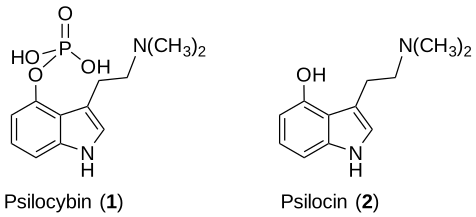
Magic mushrooms or Psilocybe are fungi producing the psychotropic compounds psilocybin and psilocin. They are one of several species that instantly develop a blue coloration when they are cut or bruised. In Boletales mushrooms, oxidised gyrocyanin or pulvinic acid are the source of the blue colour. But that isn’t the case in Psilocybe mushrooms.
Previous research had established that the blue colour was caused by oxidised psilocybin, but the nature of the pigment and the biochemical pathway producing it had remained elusive.
Magic mushrooms contain a number of psychotropic compounds including psilocybin and psilocin.
Dirk Hoffmeister from the Leibniz Institute for Natural Product Research and Infection Biology, Germany and his team had been working with Psilocybecubensis for several years. Growing the mushrooms in their lab, they had seen the mysterious blueing reaction countless times. ‘We were just curious and tried to solve a phenomenon that’s been known for decades,’ Hoffmeister says.
But when they tried to extract and purify the blue compound, they failed. ‘It puzzled and challenged us,’ says Hoffmeister. ‘This is where previous researchers – very talented people – had to give up, and that’s where we went one step further with unconventional analytical methods.’
The researchers dug deep into the analytical toolbox with liquid chromatography–mass spectrometry, Maldi mass spectrometry, infrared spectroscopy, as well as time-resolved nuclear magnetic resonance spectroscopy to observe the compounds as they form.
The pigment, as it turns out, is not just a single compound but a complex mixture of linked psilocybin oxidation products. Most of them are quinoid psilocyl oligomers – compounds not unlike indigo, a deep blue pigment used to dye jeans. ‘[The blue compounds and indigo] share structural similarities in the indole core, and in both the basis for the colour is a quinoid,’ says the study’s lead author Claudius Lenz.
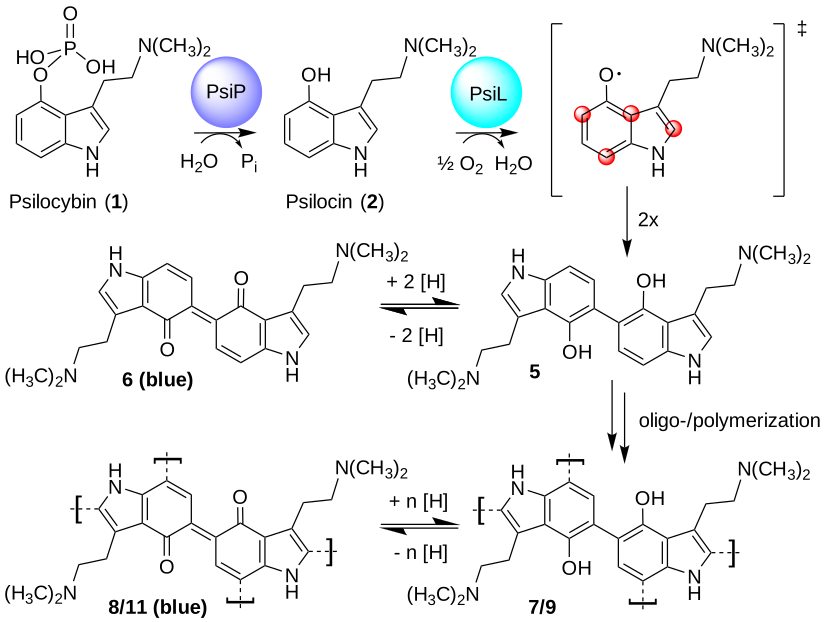
All of the six mushroom pigments the team identified are products of a cascade reaction starting with psilocybin. A phosphatase enzyme takes off its phosphate group, converting it into psilocin. An oxidising laccase then creates psilocyl radicals, which combine to form C-5 coupled subunits and then further polymerise via C-7. ‘I think they did a beautiful job of showing the cascade reaction,’ says Jaclyn Winter, who studies natural product biosynthesis in bacteria and fungi at the University of Utah, US.
Proposed reaction scheme for the conversion of psilocybin into blue pigments
What exactly the blue pigments do, however, remains a mystery. ‘Our hypothesis – and we don’t have any evidence for this yet – is that it might serve a protective role, like an on-demand repellent against predators,’ says Hoffmeister. The compounds might produce reactive oxygen species, which are toxic to any insect nibbling on the mushrooms. ‘I think we’re going to see a lot of follow-up studies on the true ecological role of these molecules,’ Winter says.
Hoffmeister hopes that his study not only inspires others to study fungi from a chemistry perspective but also changes people’s mind about psilocybin. ‘Psilocybin is looked at as this illegal, recreational drug, but it has a fantastic potential as a medication for therapy resistant depression,’ he says.
Winter agrees. ‘There’s quite a few groups who are studying psilocybin, and especially because it’s been legalised in the US in various states, and because it’s in clinical trials,’ she says. ‘I think [this study] is going to have a huge impact in the field.’
We’ve previously covered in-depth some of the research that has been conducted regarding the potential efficacy of magic mushrooms in the treatment of depression. You can read our article for a bit of the background, but the gist of it is this: psilocybin (the psychoactive component found in magic mushrooms) has repeatedly been shown to be helpful in treating depression, along with a host of other mental illnesses.
What has been lacking for some time, however, is comparative research looking into how well psilocybin therapy can work compared with more traditional methods of psychological treatment. However, a study recently published by The New England Journal of Medicine provided some preliminary insight into just that – we read the study, and prepared an article here to help summarize its goals and findings for you!
The purpose of this study more specifically was to compare the efficacy of psilocybin and escitalopram in the treatment of depression. Before diving into the comparison, let’s talk a little bit about escitalopram.
Escitalopram Background
Escitalopram (frequently sold under the brand names of Cipralex and Lexapro,) is an SSRI (selective serotonin reuptake inhibitor) antidepressant. Many patients suffering from the symptoms of depression exhibit signs of serotonin imbalance. Serotonin is a very complex neurotransmitter that is naturally produced by the human body. We could write an entire series about this chemical, its role in the human body, and the research that has been done around it – but for now, the important thing to know is that serotonin is synthesized in the central nervous system, and some of its functions include the regulation of mood, appetite, and sleep as well as some cognitive functions such as memory and learning.
People suffering from depression often exhibit lower-than-average levels of serotonin production, and so drugs like Escitalopram were developed to help these patients regulate levels of serotonin production, and alleviate some of the symptoms of depression (and potentially even cure it!)
Psilocybin and Serotonin
Sounds pretty helpful, right? So where does psilocybin fit into this, and what does it have to do with serotonin? Well, there’s a little journey to follow there as well. When magic mushrooms are ingested, psilocybin is metastasized into a sister chemical called psilocin. Once processed, the psilocin is believed to stimulate serotonin receptors in the brain – effectively mimicking the body’s naturally occurring serotonin. With the oversight of a trained medical professional, psilocybin has been used as a more natural alternative to manufactured drugs with the aim of balancing serotonin levels in the human body.
In another word, doctors have been experimenting with using shrooms instead of meds to help regulate levels of serotonin in depressive patients. It has been effective, but thus far there has been little research done to compare just how effective it is compared with pharmaceuticals.
Okay, so I think that’s enough of a background for us to go on. So, let’s talk about the study itself.
The Methods of the Study
The study was conducted as a double-blind, randomized, controlled trial involving patients with long-standing, moderate-to-severe major depressive order. Psilocybin was compared with escitalopram over a 6-week period; patients were assigned in 1:1 ratio, and received comparable doses of both drugs depending on the group they were assigned to. In the end, the patients were re-assessed on their depressive symptoms to compare the efficacy of both courses of treatment. The changes are measured via a Quick Inventory of Depressive Symptomatology-Self-Report (QIDS-SR-16) – and differences in their scores on those reports before and after treatment.
In laymen’s terms, people were scored on their levels of depression, randomly sorted into two groups, given one drug or the other without knowing which was which, and the results were studied at the end. At the end of the trial, their level of depression was tested again.
Results of the Study
Of the 59 patients in the study, 30 were given psilocybin and 29 escitalopram. The QIDS-SR-16 is scored from 0 to 27, with a higher number indicating a greater level of depression. After the trial was completed, patients in the psilocybin group saw their QIDS-SR-16 scores drop by an average of 8 points, while patients in the escitalopram group saw their scores drop by only 6 points. Although both treatments were observed to be effective, it’s notable that the psilocybin group saw, on average, a reduction in levels of depression over 30% greater than those in the escitalopram group.
Additionally, secondary endpoints were studied, evaluating the work, social functioning, anxiety, and general wellbeing of patients in both groups. Similar patterns favouring psilocybin were found in these trials as well.
Conclusions of the Study
Although it is tempting for any advocate of psychoactive medicine to point to the results of this trial as conclusive proof of the superiority of psilocybin to pharmaceuticals, the reality is that these results are far from conclusive.
Medical research is slow work – and it has, over the past couple of decades, been especially slow regarding psilocybin therapy owing to the illegal status of the drug in most first-world countries. However, that trend is shifting – and more and more money is being poured into psilocybin research every day, with research continuously coming back in support of this amazing drug.
At the end of the day, this was a small trial conducted over a short period with a small number of patients. Before any kind of definite conclusion can be reached, there is much more clinical research that needs to be done. George Goldsmith, CEO, and Co-founder of Compass Pathways, a psilocybin-focused research group working on discovering new therapies for the treatment of depression, had this to say:
“In a field of research where it is very difficult to separate treatments in head-to-head comparative efficacy trials, this study found signals favouring psilocybin therapy over escitalopram. This is an encouraging investigator-initiated study that supports the need for additional clinical investigations in larger, well-powered studies to more accurately determine the efficacy of psilocybin in treating major depressive disorder.”
Parting Thoughts
The evidence of the incredible healing and restorative properties of psilocybin mushrooms continues to mount each day. However, this is a relatively new frontier of scientific research and something about which we are only beginning to scratch the surface.
We want to emphasize that the writer of this article is not a medical professional – and if you think you are suffering from the symptoms of depression or any other mental illness, we recommend speaking with a trained medical professional to seek treatment.
However, those looking to buy shrooms online can find many places to do so!
There is some amazing news for mental health professionals in Canada who are interested in learning more about psychedelic-assisted therapy and receiving dedicated instruction on and insight into how psychedelic medicines can be leveraged as they become legally accessible across Canada.
Back in February, the ATMA Journeys Centers in Calgary, AB announced their Psychedelic Therapy Training Program for Mental Health Professionals program – providing Canadian mental health professionals for the first time with access to top-tier training in magic mushroom therapy. The initiative was launched with the full blessing of the Federal and Provincial governments, in conjunction with the Wayfound Mental Health Group, Inc. and the Psychologists Association of Alberta.
The course was massively popular, selling out in a matter of days, and now boasts a substantial waiting list as rave reviews have come pouring in after the first 3-month cohort concluded.
About ATMA Journeys Centers
ATMA Journey Centers is a clinic founded by Dr. David Harder and Dr. Vu Tran in Calgary, AB. ATMA is dedicated to advancing accessibility to psychedelic therapy in Canada. On their website, they claim that they “believe that psychedelics hold the key to actually resolving the root causes of mental health issues that affect so many.” Their self-stated mission is “to deliver effective and innovative healing and transformative experiences that awaken the inner healer and allow a deeper connection with self and with the world.”
About The Wayfound Mental Health Group
The Wayfound Mental Health Group was founded in Calgary, AB over 21 years ago by Dr. William McElheran. McElheran has been widely regarded as a pioneer at the cutting edge of the most effective emerging techniques in trauma treatment, and this reputation has attracted some of the best counseling talent in the world to his clinic. The partnership with ATMA represents their first official foray into the world of psychiatric therapy.
About The Program
It is unsurprising that the demand for mental health therapists has shot up dramatically over the course of the COVID-19 pandemic. Rising unemployment, concerns about health, and increasingly isolated lifestyles are suspected to contribute to this unprecedented level of demand.
David Harder, Co-CEO of ATMA says, “we’re seeing substantial interest from therapists who are looking for more effective tools to help their clients. Significant evidence-based research around psychedelic medicine continues to emerge which is highlighting how promising psychedelic medicine is. There appears to be a shift in the industry where therapists have heard about the potential of psychedelic medicine and are now stepping forward to learn about it.”
ATMA and Wayfound saw a gap in the increasing demand from Canadian patients and the availability of training for mental health professionals in this same area. Harder commented,
“One of the major obstacles in increasing access to psychedelic therapy is an acute shortage of therapists who have the education, knowledge, and resources both from a psychological and psychedelic perspective to provide the necessary support and guidance to patients. This training program provides an accredited base of understanding for therapists who are seeking information and therapy involving psychedelics.”
Consulting with leading authorities on psychedelic therapy from all over the world, this course consolidates their teachings to help address that problem, and provide Canada’s most forward-thinking therapists with access to top-of-the-line training in therapy with magic mushrooms in Canada.
On the importance of training mental health professionals on how to properly apply psychedelic therapy in their own practices, Megan McElheran, CEO of Wayfound said:
“Research has shown that psychologists are uniquely skilled to support the psychedelic process, and the psychotherapeutic process is proven to be an essential component to the success of psychedelic treatment. For this reason, I support psychologists and other health care providers to build their capacity and skills through training that prioritizes professional, clinically-sound, ethical practice and due diligence in the delivery of care.”
With psychedelics increasingly entering into the mainstream of the media, more and more people looking for access to magic mushrooms in Calgary, and all signs pointing to rapidly impending legalization in Canada, Vu Tran emphasizes the importance of trained therapists in helping guide psychedelic therapy. He commented,
“The training program is just the first step of our plan to create solutions for the industry to scale and support therapists who wish to participate in psychedelic-assisted therapy…. We want to see more therapists educated on the benefits of psychedelic therapy in hopes that more awareness will help the legislative and policy frameworks move forward in a timely manner. Mental health professionals will face great challenges with capacity in the coming years, so we’re working towards a support structure for therapists to progressively look at psychedelic therapy as a growing part of their business without a steep learning curve. Psychedelics have the proven ability to reduce lifelong ongoing patient therapy, and this can assist in reducing the burden on the health care system.”
Rave Reviews
The first cohort of the month-long program concluded in May, and the 2nd sold-out cohort began in June of this year. One of the therapists who graduated from the first training, Dr. Angela Grace, had this to say:
“The training program provides an excellent overview of psychedelic therapy with experienced practitioners and researchers in the field. The learning, discussions, experiences, and connections made are invaluable as an introduction to the field.”
Information on Upcoming Programs
According to ATMA and Wayfound, the feedback has been immensely positive across the board. So much so that they immediately launched a second training, and have three more planned for later this year, on September 7, October 5, and November 2.
David Harder comments: “We encourage any mental health professional to contact us to discuss the training programs. This emerging field is a significant opportunity for licensed therapists who want to add another effective tool to their practice and learn how psychedelics can integrate into an existing practice.”
There are many wonderful ways to use magic mushrooms, but more and more everywhere you look, you are reading about the incredibly beneficial therapeutic applications of shrooms. One of the institutions leading the way in this research is The Johns Hopkins Center for Psychedelic and Consciousness Research, out of Johns Hopkins University in Baltimore, MD. Since 2000, and backed by tens of millions of dollars in funding, Johns Hopkins was the first clinical center given regulatory approval in the United States for conducting clinical research using psychedelics as therapeutic aids.
Since that time, they have remained at the forefront of psychedelic research and clinical advancements, demonstrating how magic mushrooms can be effectively used to help in the treatment of depression, anxiety, post-traumatic stress disorder, and many other mental health conditions.
Of course, not everyone can make the trip to Baltimore to receive their patented brand of psychedelic therapy – but we’ve done a little bit of digging to uncover some tools you can use right in your own home.
This playlist is 7 hours and 40 minutes in length, and its beautiful progression of concertos, baïlèros, and symphonies has been painstakingly and thoughtfully tweaked over decades of research into psychedelic medicine. The playlist is designed to help carry patients through every stage of the psilocybin session. The music starts simple and relaxing, increasing in complexity and intensity over time as it guides the patient from the beginning of their session, through ingesting the medicine, to beginning to climb and hitting the peak, and the eventual coming down.
The History of the Playlist
The playlist is the brainchild of psychologist Bill Richards, who has been involved in psychedelic research since the early 1960s. As one of the leading researchers at the Johns Hopkins Center, he has this to say about the effects this playlist can have on those who listen to it during their trip:
“We’re exploring the human psyche, which might take you through some painful things in childhood. It may take you into some archetypal or visionary realms that you never knew were possible. It might take you beyond usual consciousness into a realm that feels eternal.
The music chromatically develops, and it goes up and reaches this exquisite climax and then comes back down… It’s going somewhere, it’s picking you up and carrying you. It’s got some force, some substance. It doesn’t have very unpredictable changes of rhythm or something that’s going to startle or frighten you. So, it’s a net of reassurance, almost, and of leadership.”
The music helps keep participants from prematurely returning to normal conscious awareness, Richards says.
“I think of it as a nonverbal support system, sort of like the net for a trapeze artist,” he says. “If all is going well, you’re not even aware that the net is there — you don’t even hear the music — but if you start getting anxious, or if you need it, it’s immediately there to provide structure.”
Recently, the playlist was featured prominently and supported the experiences of all those who participated in a new study published by Johns Hopkins on Nov 4, which found that psychedelic substances can have profoundly beneficial effects on those suffering from Major Depressive Disorder.
How to Use the Playlist
The best way to use the playlist is as follows:
The first 30 minutes of the playlist are designed to help set the patient up for the impending psychedelic experience. So, you should start the playlist before taking the mushrooms, somewhere where you can be relaxed, with your eyes closed, in meditation, or a state of deep relaxation. This time should be spent on what we call intention-setting: becoming clear with yourself on what the purposes of this session are, and what you want to get out of it.
It is important in the use of mushrooms for therapy not to skip this step. We must be clear with ourselves in what we want to get out of the experience – this will help shape the course of our trip, and help keep us grounded in the psychedelic journey that is to follow.
Once you feel that your intentions are clear, it’s time to dose yourself. The playlist is designed to support a more moderate to heavy usage. Depending on your tolerance, somewhere from 2.5 to 4 grams should be appropriate. Once the mushrooms have been ingested, lie back again and close your eyes – try not to focus too hard on the music, but rather lean into it as a guide that will help guide your mind through the trip to come.
Your mind may wander to different subjects, but you would do best to keep your intention in mind. If negative thoughts or feelings arise, you shouldn’t try to run from them or shut them down, but allow them to wash over you as you relax further into the playlist. About 85 minutes in, the playlist begins to seriously increase in its complexity and intensity, as you approach your peak. Follow the trip – go where it wants to take you, and allow the music to be your tether to the world.
The songs contain no English lyrics at all (and few lyrics in general) during the first 6 hours of the playlist. This is on purpose so the music will not provide any kind of distraction from the important work that’s happening inside your mind, but rather serve as a guide. Says Richards,
“I think of it as a nonverbal support system, sort of like the net for a trapeze artist, if all is going well, you’re not even aware that the net is there — you don’t even hear the music — but if you start getting anxious, or if you need it, it’s immediately there to provide structure.”
As the playlist winds down, you will begin to hear some more recognizable songs with recognizable lyrics, designed to help you transition smoothly back to reality.
In closing, Bill Richards had this to say about the playlist and how it affected his patients:
“It spoke [to them]. It took on meaning in the struggle, the unfolding, the dissonance being resolved. They could understand that that type of classical music is a language about life and human experience. And when you’re in the music, it’s so different from listening to the music.”
Can magic mushrooms help me quit smoking or drinking?
Do magic mushrooms help with cluster headaches?
Are magic mushrooms addictive?
New research is revealing that magic mushrooms could play a role in the future of mental health treatment for Canadians.
After decades of little or no investigation into the clinical potential of mushrooms, scientists are conducting exploratory research into magic mushrooms as mental health therapy, targeting common conditions like depression, anxiety, and addiction.
Some of these studies were so compelling that Health Canada recently granted 24 special medical exemptions allowing Canadians to receive psilocybin therapy.
If you’re excited to learn more about the potential of magic mushrooms as a treatment for some of the most common mental health issues, we’ve got you covered. We’ve created this guide to bring you the most up-to-date information on what we’re learning about magic mushrooms and mental health.
We’ll start with a basic overview of magic mushrooms, explaining what they are and how they work. Then, we’ll talk about some of the latest research we’ve uncovered on the treatment potential of magic mushrooms for depression, anxiety, addiction, and more. We’ll also share what we’ve learned about whether mushrooms are addictive or safe to use.
<Hey Reader! Just want to remind you that we’re not your doctor, we’re not diagnosing you, and we’re not prescribing your magic mushrooms. This article is for educational purposes and should not be taken as medical advice. If you’re concerned about your mental health, please talk to your doctor.>
Let’s get started!
What are Magic Mushrooms?
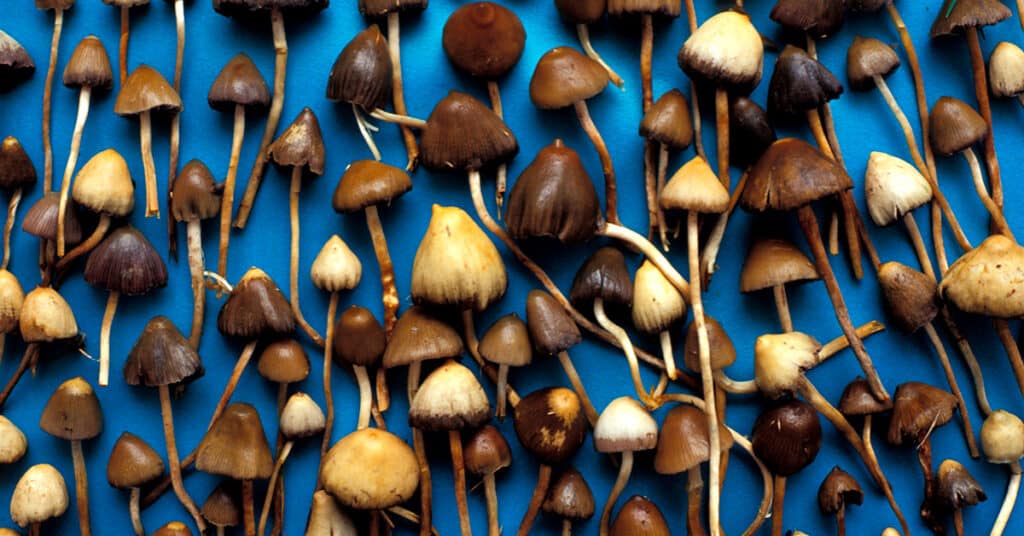
Magic mushrooms are a family of naturally-occurring psychedelic mushrooms. There are over 180 different known varieties of magic mushrooms, with names such as:
Psilocybe cubensis – the easiest magic mushroom to cultivate indoors, there are now 60+ different strains of P. cubensis.
Psilocybe semilanceata – also known as Liberty caps, they grow commonly all over the world.
Psilocybe azurescens – also known as flying saucers, blue runners, blue angels, or azzies.
Psilocybe tampanensis – they produce yellow-brown, psilocybin-containing truffles.
Psilocybe cyanescens – also known as wavy caps, they grow in Central Europe and the Pacific Northwest.
Psilocybe mexicana – the species of magic mushrooms used ceremoniously by the Aztec people and called “Teonanacatl”, meaning “flesh of the gods”.
Magic mushrooms contain a chemical compound known as psilocybin that gives them their hallucinogenic properties. In clinical research, psilocybin is extracted from magic mushrooms before being administered to patients. This allows researchers to carefully control the dosages of psilocybin received by patients in the study.
Magic mushrooms grow naturally on all six continents, but little was known about them before the 1960s when Westerners first experienced magic mushroom ceremonies while visiting Mexico. Consuming magic mushrooms is known to produce effects that include hallucinations, dilated pupils, relaxed muscles, altered experiences of time and space, altered perceptions of tactile stimulation and sensory perception, and reduced concentration.
How Do Magic Mushrooms Work?
Like we just mentioned, the medicinal or “active” ingredient in magic mushrooms is a compound called psilocybin.
Psilocybin is also known as 4-phosphoryloxy-N,N-dimethyltryptamine. It is classified as an indole-alkylamine in the tryptamine family. Other drugs in this family include lysergic acid diethylamide (LSD) and N,N-dimethyltryptamine, the dream-inducing compound known as DMT or the “spirit molecule”.
On a physiological level, psilocybin in the brain interacts with the serotonin system. It has a high affinity to bind with specific types of serotonin receptors in several areas of the brain, including the thalamus and the cerebral cortex. The thalamus is involved in the regulation of consciousness and alertness, as well as relaying sensory and motor signals, while the cerebral cortex acts as the main site of neural integration and plays a role in sensory, visual, and motor processing.
Some researchers believe that interactions with serotonin receptors in areas of the brain responsible for visual processing are the physiological cause of hallucinations when taking psilocybin, and there’s a growing body of evidence that these same interactions could provide relief for individuals with mental health issues.
Let’s now take a closer look at the connection between magic mushrooms and mental health.
Magic Mushrooms and Mental Health
The connection between magic mushrooms and mental health is an emerging area of science. We’ve seen a few promising studies so far, but there’s a lot more work to be done before we can fully understand the impact of magic mushrooms on mental health.
Below, we’re going to explore and highlight the most significant investigations that have taken place so far into the clinical potential of magic mushrooms for treating anxiety, depression, addiction, cluster headaches, and epilepsy. We’ll give a brief overview of each illness, then highlight the latest research into how magic mushrooms and psilocybin can help.
Magic Mushrooms and Anxiety
What is Anxiety?
Anxiety can be simply described as a feeling of fear or apprehension that may or may not have an environmental trigger. Symptoms of anxiety may include:
Increased heart rate
Rapid breathing
Generalized feelings of fear and worry
Difficulty sleeping
Difficulty concentrating
Shortness of breath
Dizziness or feeling faint
Restlessness
Anxiety is part of how humans respond to stressful situations, acting as a precursor to the “fight, flight, or freeze” response to environmental dangers or threats. When we experience life events that make us fearful or nervous, we may experience temporary anxiety.
An anxiety disorder occurs when feelings of anxiety begin to emerge at inappropriate times, and when those feelings are so severe and intense that they interfere with an individual’s daily life and activities. Anxiety disorders are the most common forms of mental disorder, according to the American Psychiatric Association.
Can Magic Mushrooms Treat Anxiety?
So far, there have been just a handful of studies done on magic mushrooms and anxiety.
The first such study was published in the Archive of General Psychiatry in 2010 by a group of researchers at the University of California, Los Angeles (UCLA) and titled “Pilot study of psilocybin treatment for anxiety in patients with advanced-stage cancer”. The research participants were a group of twelve late-stage cancer patients who had also been diagnosed with anxiety.
Researchers started by measuring the anxiety of each participant using the State-Trait Anxiety Inventory. Then, researchers administered a dosage of psilocybin to each participant according to their body weight. The State-Trait Anxiety Inventory was administered to patients one, three, and six months after the treatment to measure any changes or improvements in mood.
Ultimately, researchers found that psilocybin treatment resulted in a significant mood improvement and decreased anxiety at both one month and three months after treatment. The effect seemed to drop off by the six-month follow-up, indicating that additional rounds of psilocybin therapy would be needed to sustain the positive effects.
This time, research participants included 51 late-stage cancer patients that were also diagnosed with either depression or anxiety. Participants received two psilocybin therapy sessions with two different dosages – a high dose and a low dose. Patients were evaluated after each session and 6 months after the end of the treatments to assess the benefits. Researchers also rigorously documented the behaviour and mood of patients during the treatment.
Research participants reported significant positive mood changes after participating in the psilocybin treatment and at the six-month follow-up. Overall, 82.6% of participants said that the treatment increased their well-being or life satisfaction either “moderately” or “very much”.
Depression is a mood disorder that causes the affected person to experience persistent feelings of sadness, despondence, hopelessness, and/or disinterest. It is one of the most common emotional disorders, affecting more than 250 million people worldwide.
Some people may be unsure whether their emotional experiences count as depression. It is normal to feel sad, tired, or lonely sometimes in response to challenging life events. Depression becomes a disorder when those feelings persist over time, sometimes even when there’s nothing materially wrong.
Common symptoms of depression include:
Increased irritability or restlessness
Unpredictable mood swings
Erratic sleep patterns
Loss of energy or initiative
Shallow affect
Lack of productivity and low self-esteem
Researchers have identified many potential causes of depression, including early childhood trauma, structural differences in the brain, certain medical conditions, and a family history of mood disorders.
Can Magic Mushrooms Treat Depression?
In just the past five years, researchers have learned a lot about the impact that magic mushrooms can have on treating depression.
Addiction sometimes called “substance use disorder”, is a complex mental health issue that can be described as compulsive substance use despite harmful consequences. Addiction is rooted in the dysfunction of chemical systems in the brain that regulates reward, motivation, and memory.
Drug addiction is a major public health issue. Below are listed the ten types of drugs most often implicated in substance use disorders in North America:
Tobacco/nicotine
Alcohol
Painkillers like oxycontin, codeine, and vicodin
Cocaine and its variants
Heroin
Benzodiazepines like valium and xanax
Stimulants like methamphetamine and adderall
Inhalants
Sedatives, including sleeping pills like ambien and lunesta
Cannabis
Symptoms of substance use disorder may be grouped into four categories:
Drug Effects – Addicts increase their tolerance to their substance of choice over time. Eventually, they require larger amounts to get the same effects. They may experience withdrawal symptoms when losing access to the drug.
Impaired Control – Addicts experience cravings and strong urges to engage with their drug of choice, often resulting in failed attempts to quit.
Risky Use – Addicts may take risks to acquire or use their drug of choice. They may continue to engage in risky behavior despite knowledge of the potential consequences.
Social Problems – Addicts may find that drug use interferes with their ability to function in society, including holding down a job and maintaining relationships with friends, colleagues, and family members.
Can Magic Mushrooms Treat Addiction?
While no single treatment is appropriate for every person suffering from depression, there has been some evidence that psilocybin therapies could be useful for some individuals trying to quit smoking or reduce their dependence on alcohol.
Studies in this area have been extremely limited so far, but we’re hoping that future research will look more closely at how magic mushrooms can trigger behaviour changes that lead people away from addiction.
Can Magic Mushrooms Help Me Quit Alcohol?
A 2015 study conducted by Michael P Bogenschutz and colleagues at the University of New Mexico Health Sciences Center was the first to investigate the efficacy of psilocybin for alcohol dependence. The study was published in the Journal of Psychopharmacology under the title “Psilocybin-assisted treatment for alcohol dependence: a proof-of-concept study”.
The study involved 10 research patients with a diagnosis of alcohol dependence. The participants were given 8 weeks of motivational enhancement therapy and received two doses of psilocybin – one after the fourth week, and one after the final week of therapy.
Researchers found that the participants all showed increased rates of alcohol abstinence after receiving the psilocybin treatment. The intensity of their psychedelic experiences during week 4 of the study correlated strongly with a reduction in alcohol consumption during weeks 5-8. These preliminary findings seem to suggest that psilocybin therapies can actually help reduce alcohol dependency in chronic drinkers.
Can Magic Mushrooms Help Me Quit Smoking?
So far, we’ve seen just one small study that investigates whether magic mushrooms could be used to help quit smoking.
This study included 15 participants who had been smoking an average of 19 cigarettes per day for an average of 31 years, with an average of 6 previous attempts to quit smoking. The participants were given 15 weeks of structured smoking cessation therapy, during which they received moderate or high doses of psilocybin. At the 6-month follow-up, a biomarker assessment demonstrated that 12 of the 15 participants had abstained from smoking over the prior seven days.
This study shows a lot of promise that magic mushrooms could be used in the future in therapies that help people quit smoking, even after they’ve smoked for decades and failed to quit multiple times.
Magic Mushrooms and Cluster Headaches
What are Cluster Headaches?
Cluster headaches are not very common, as they seem to affect just 0.1% of the population. Still, cluster headaches are considered one of the most painful and unpleasant types of headaches. They are characterized by intense pain localized around one eye or on one side of the head.
Cluster headaches may occur in cyclical patterns known as cluster periods. A cluster period lasts between one week and one year, during which the patient experiences headaches almost every day, or even multiple times per day. A cluster period may be followed by a period of remission where the individual experiences no headaches for a period of months or years.
Common symptoms of cluster headaches may include:
Severe pain on one side of the head or around one eye
Restlessness
Teary eyes, facial sweating, or runny nose
Swelling around the eye, redness of the eye, or a droopy eyelid
Can Magic Mushrooms Treat Cluster Headaches?
If you’re currently suffering from cluster headaches, the available evidence suggests that magic mushrooms might be the solution to your problems.
One of the first research papers on the medicinal properties of magic mushrooms was written in 2006 by R Andrew Sewell and colleagues at Harvard University and published in the journal Neurology with the title “Response of cluster headache to psilocybin and LSD”.
Sewell and his colleagues interviewed 53 cluster headache patients who had self-medicated using either magic mushrooms or LSD. Their findings can be summarized as follows:
85% of psilocybin users who were interviewed said that taking magic mushrooms allowed them to abort cluster headache attacks at their onset.
52% of psilocybin users reported that using magic mushrooms resulted in the termination of a cluster period and the onset of a remission period.
95% of psilocybin users reported that using magic mushrooms extended their remission period, effectively increasing the length of time between cluster headache attacks by months or years.
The war on drugs in North America began in 1971 and was characterized by the suppression of research into psychedelic medicine and the widespread distribution of misinformation about drugs like psilocybin. This climate has created big misconceptions that need to change if Canadians are going to benefit from psilocybin treatments in the future.
According to Matthew W. Johnson, Ph.D., Professor at Johns Hopkins University and career researcher into magic mushrooms, the biggest misconception about magic mushrooms is that it’s highly addictive.
In fact, Johnson said in a 2019 interview that magic mushrooms don’t really have the same addictive properties as other drugs that are more commonly abused (like the kind we listed under the “What is Addiction?” header in this article). Johnson also points out that magic mushrooms don’t interact with the dopamine system, so they’re not producing a reliable feeling of euphoria or the typical dopamine response you see with a smoker or an alcohol abuser.
Based on this understanding, researchers at Johns Hopkins are now recommending that psilocybin be reclassified from Schedule I to Schedule IV in the controlled substances act. This change would acknowledge its low potential for abuse and accepted medical uses, opening the door to future clinical investigation.
Are Magic Mushrooms Safe?
Magic mushrooms can only be used to treat mental health issues if they don’t cause other kinds of harm. Unfortunately, there are widespread misconceptions about the kinds of harm that magic mushrooms can cause.
A 2011 literature review analyzed pooled data from 8 different studies involving psilocybin administration to assess the short-term and long-term safety concerns. In total, the analysis included data from 110 research participants who received a total of 227 doses of psilocybin.
This review found that more research participants reported pleasurable, enriching, and non-threatening experiences while under the influence of magic mushrooms. While there were some adverse reactions reported, they were generally related to the highest dose conditions and successfully managed using interpersonal support.
Follow-up questionnaires with research participants revealed that none of them had experienced:
Any subsequent issues with substance abuse,
Any persisting disorders of perception,
Any symptoms of prolonged psychosis,
Any long-term functional impairment.
Based on these results, it appears that psilocybin is quite safe to use in the clinical context. This is great news for both clinicians and mental health patients who are excited about the therapeutic potential of magic mushrooms for mental health.
Summary
Thanks for checking out our ultimate guide to magic mushrooms and mental health in 2021!
Here’s a quick summary of what we covered in this article:
Exciting new research is showing that magic mushrooms might be helpful in treating a variety of mental health conditions
Research into magic mushrooms and anxiety showed that participants do experience increased levels of well being and life satisfaction after receiving psilocybin therapy
Research into magic mushrooms and depression has found that therapies involving psilocybin do result in mood improvements for patients.
Early experimental results have shown that psilocybin therapies might help to elevate the success rate of addiction therapies, including tobacco cessation therapies and motivation enhancement therapy for recovering alcoholics.
Many people who suffer from cluster headaches have reported significant relief after taking magic mushrooms.
Leading psilocybin researchers say that magic mushrooms and other psychedelics do not share the same addictive properties as alcohol and tobacco.
Magic mushrooms are being used safely in clinical research, with participants reporting generally positive experiences and no long-term negative side effects.
Based on everything we’ve shared here, we’re excited about the future of magic mushrooms as a treatment for mental health disorders in Canada. We hope the next generation of Canadians will benefit from interventions for depression, anxiety, and addiction that harness the therapeutic power of magic mushrooms – a power we’re just beginning to understand.
Magic mushrooms are the safest of all recreational drugs
For most of us who grew up and went to school in Canada — and probably everywhere else, for that matter — warnings about the harms of “drugs” were so pervasive that just reading the title of this article, Long Term Effects of Magic Mushrooms, probably conjures up a bit of fear. Surely these “long term effects” will be bad!
But what does the most up to date research actually tell us about the effects of psilocybin (the active ingredient in magic mushrooms)? Were these well intended warnings we got from our teachers and parents actually based in reality? And is it possible that the long term effects of magic mushrooms might actually be positive?
In this article we aim to paint a more realistic picture of the risks and benefits of magic mushrooms, and to show that the fears we might be carrying about their long term effects are likely unwarranted.
Magic Mushrooms In History
Varieties of magic mushrooms are found growing on every continent on earth (except, obviously, Antarctica), and there is evidence for their use by humans going back thousands of years, in places as widely separated as Mesoamerica, Australia, and ancient Greece.
None of this ancient world use of magic mushrooms automatically rules out the possibility of negative long term effects — it’s probably tricky to detect long term effects when hardly anybody’s living past age 50 — but at the very least the consistent use for thousands of years by cultures around the globe suggests that nobody noticed anything going wrong. It’s a starting point.
And it’s not all ancient history: shamans and healers in the Mesoamerican region use psychedelics in ritual ceremonies to this day, and don’t seem worried about it.
But us supposedly scientific minded folk, we like our studies. So what, if anything, do our studies say?
Short Term vs Long Term
Let’s start with the short term.
By short term we mean the trip itself, or the same day. We have a pretty good idea about the obvious and easy to describe short term effects like euphoria, vivid colours and other visual effects, as well as the potential short term dangers (which are rare, usually related to anxiety or panic, and “successfully managed by providing interpersonal support”).
Long term is harder to define. A recent (2020) study that showed psilocybin’s supposed “long term” positive effect on mood showed that lasting effect by following up a mere one month later! But while that’s interesting, we’re probably less concerned with what happens a month later. We want to know if magic mushrooms will do something to us that only shows up way down the road — perhaps along the lines of radiation damage from too much sun, or heart disease from lack of exercise.
The trouble is that magic mushrooms only entered the awareness of US and Canadian culture in 1957, with the first documented recreational use of magic mushrooms in Vancouver in 1965. That, along with magic mushrooms being mostly illegal since the seventies, has put a limit on how much long term research there can be.
But there is some longer term research.
The Surprising (?) Results of Longer Term Studies
Anyone searching for studies showing negative long term effects from using magic mushrooms quickly runs into a problem: there aren’t any.
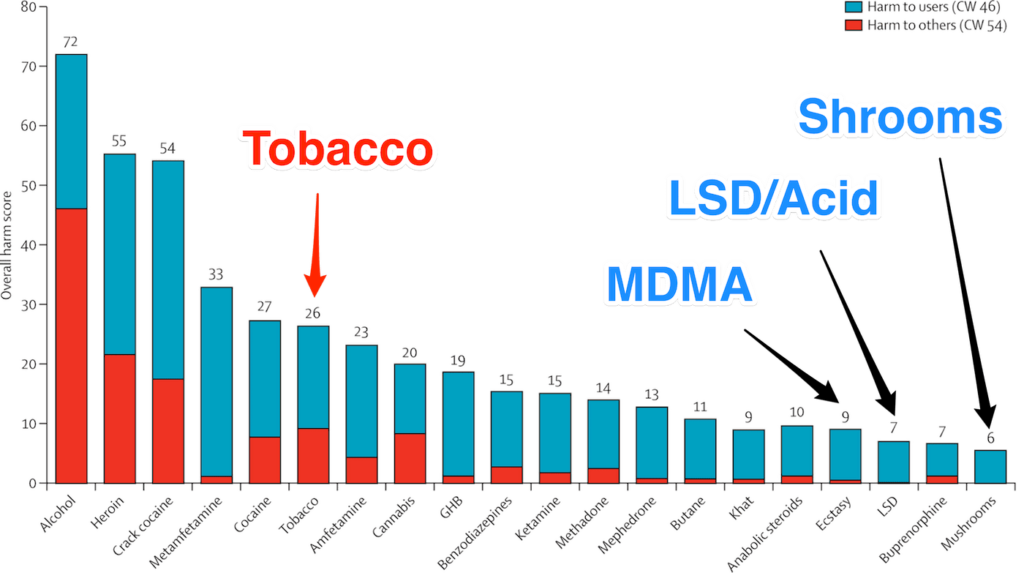
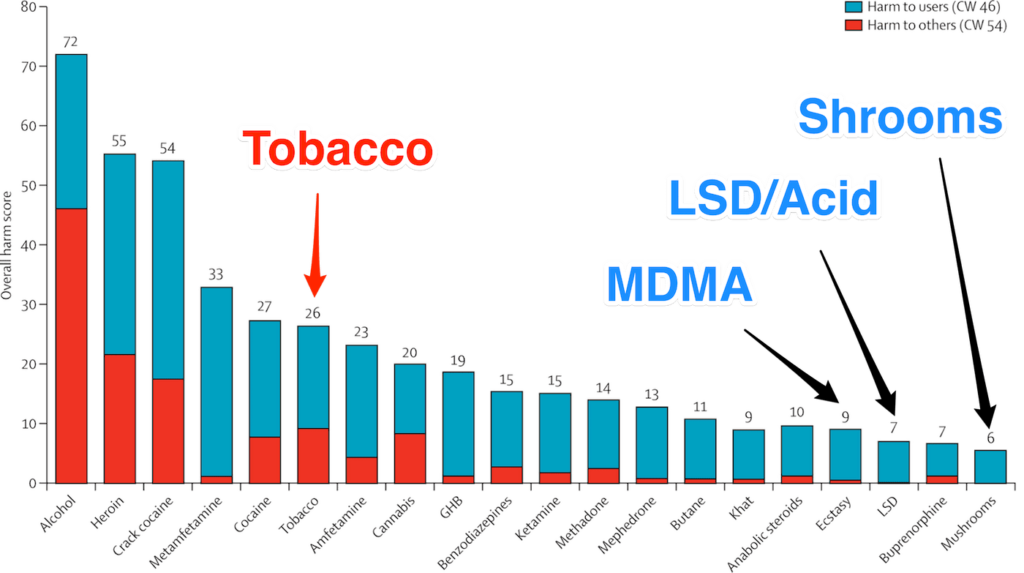
In his book “Drugs Without the Hot Air: Making Sense of Legal and Illegal Drugs” (2020), author David Nutt assesses psilocybin to be the least harmful drug, ten times less harmful than the worst drug (alcohol). In their paper, “Psychedelics and Mental Health: A Population Study”, authors Teri S. Krebs and Pål-Ørjan Johansen open with the following claims.
“The classical serotonergic psychedelics LSD, psilocybin, mescaline are not known to cause brain damage and are regarded as non-addictive. Clinical studies do not suggest that psychedelics cause long-term mental health problems. Psychedelics have been used in the Americas for thousands of years. Over 30 million people currently living in the US have used LSD, psilocybin, or mescaline.”
Yes, there are cases of negative effects to be found here and there, but it’s very difficult to find widespread long term negative effects that hold up to scrutiny. The biggest example, the one that comes up the most often, is the idea of “flashbacks”, or, “hallucinogen persisting perceptual disorder” (HPPD). Krebs and Johansen discuss this issue, and though they are here referencing LSD and peyote as well as psilocybin, it’s worth hearing what they have to say.
“In this study, lifetime use of psychedelics and past year use of LSD was not associated with past year symptoms of visual phenomena (‘‘seeing something others could not’’), panic attacks, psychosis, or overall serious psychological distress. Thus, our findings does not support either the idea of ‘‘flashbacks’’ described in extreme cases as recurrent psychotic episodes, hallucinations, or panic attacks, or the more recent ‘‘hallucinogen persisting perceptual disorder’’ (HPPD) described as persistent visual phenomena with accompanying anxiety and distress…. Overall, the validity of the HPPD diagnosis remains scant.”
Evidence of long term harm may yet be discovered, but at this point it’s almost impossible to find any.
There are, however, some interesting positive results.
Long-Term Benefits of Magic Mushroom Use
For example, a study that suggests that psilocybin can have an effect on the personality trait of openness, one of the “five broad domains of personality”, and that the effect of increased openness was stable a full year later.
There is a less robust but still interesting paper that suggests that psilocybin assisted therapy can have a positive effect on the mental health of cancer patients four years later.
Or a 2013 paper where, “21,967 respondents (13.4% weighted) reported lifetime psychedelic use. There were no significant associations between lifetime use of any psychedelics, lifetime use of specific psychedelics (LSD, psilocybin, mescaline, peyote), or past year use of LSD and increased rate of any of the mental health outcomes. Rather, in several cases psychedelic use was associated with lower rate of mental health problems.”
Yes, the group that had used psychedelics at some point in their life in several cases had a lower rate of mental health problems.
There’s even a survey showing some success with using psilocybin to quit smoking, with the results lasting over two years.
Positive results are very easy to find — and more are coming all the time.
What are the Long Term Effects of Magic Mushrooms?
All that said, it’s difficult to give a truly conclusive answer about the long term effects of magic mushrooms. While there are positive studies, a long history of use all around the world, and no research showing evidence of long term harm, nobody has yet done the large scale, long term, high quality studies that would be needed to remove all doubt.
The government of Canada’s website offers that, “Currently, no studies have evaluated the long-term effects of repetitive use of magic mushrooms.” And that’s not completely unfair. Much of the work cited above regarding long term effects is using the best available data, but that data is sometimes old, or self reported and based on surveys. Solid as far as it goes, but not as conclusive as one might hope.
We expect that as the world reopens to the possibilities of magic mushrooms — see for example Oregon’s successful 2020 vote to legalize psilocybin — research will get easier, and we might begin to get the full and definitive picture of their long term effects.
In the meantime, we can say this: the best evidence available today suggests a range of possibilities. At worst there may be no detectable long term effects from magic mushrooms at all. And at best there may be positive ones.
The image from the very top of this post, which we will also leave directly below for convenience is taken from TripSafe – a website for education on psychedelics like shrooms and LSD. It shows that in comparison with virtually every other “drug” known to mankind, mushrooms are the safest and least addictive. We don’t know everything about the long term effects of psychedelic mushroom use, but there is one fact that seems abundantly clear and is supported by virtually all of the research into the subject:
Magic mushrooms remain the safest of all recreational drugs.
Over the past five years, researchers in Canada and the United States have changed the public narrative around psychedelic substances with revolutionary new research into the potential of magic mushrooms as a treatment for depression.
The legal landscape for magic mushrooms is also changing, with several U.S states pushing for legalization or decriminalization and Health Canada having granted 24 legal exemptions for end-of-life psilocybin therapy since August of 2020.
As a result of these changes, Canadians are increasingly curious about the possibility of treating symptoms of depression with magic mushrooms – but can we be sure that it works?
If you’re interested in learning more about the connection between magic mushrooms and depression in 2021, we’ve got you covered. We’ve created this guide to bring you up-to-date on the most current clinical investigations into treating depression with magic mushrooms.
We’ll start with a short overview of both magic mushrooms and depression, defining the terms that are most important in this article. Next, we’ll review findings from five key studies on magic mushrooms and depression to get a better understanding of whether magic mushrooms can really make a difference. Following that, we’ll look at more research that tries to explain how magic mushrooms work in the brain to influence mood and emotions. Finally, we’ll answer some of the most frequently asked questions about magic mushrooms and depression in 2021.
Let’s dive right in!
<Hey Reader! We just wanted to take a second to remind you that we’re not your doctor. We’ve done our due diligence in creating this educational article and provided links to every study we reference, but this article is not medical advice and should not be taken as such. If you need medical advice, talk to your doctor!>
What are Magic Mushrooms?
Magic Mushrooms and Depression
Magic mushrooms are a family of mushrooms that contain the hallucinogenic compound known as psilocybin.
Because of their hallucinogenic properties, magic mushrooms have been used in religious, healing, and divine rituals throughout human history, dating back to at least 6,000 years ago. The Aztec people of Mexico and Central America, who referred to psilocybin mushrooms as “the divine mushroom”, consumed it during religious and civic ceremonies.
Knowledge of magic mushrooms spread around the world during the 1960s as westerners engaged in spiritual tourism trips to Mexico where they would take magic mushrooms in ritualistic ceremonies with indigenous peoples. It was soon discovered that mushrooms containing psilocybin grow naturally on all six continents.
Consuming psilocybin mushrooms has been observed to produce a variety of sensory and emotional effects, including:
Visual and auditory hallucinations,
Altered perception of time and space,
Altered perception of tactile and sensory stimulation,
Muscle relaxation and dilated pupils,
Reduced concentration.
In addition to the hallucinogenic symptoms enjoyed by recreational and spiritual mushroom-lovers, new research has emerged that reveals more about the long-term emotional impacts of taking magic mushrooms (more on this later), including the potential impact for treating depression.
What is Depression?
Magic Mushrooms and Depression
Depression is a common mood disorder and the world’s leading cause of disability, with over 264 million people affected around the world.
Depression is not the same as occasional mood fluctuations or emotional responses to life’s daily challenges – episodes of depression are often longer-lasting and result in more severe symptoms that may include:
Increased aggressiveness or irritability,
Increased anxiety or restlessness,
Unpredictable mood swings,
Disrupted or erratic sleep patterns,
Reduced sexual desire or lack of performance,
Feelings of despair and hopelessness,
Physical symptoms such as chronic pain, headaches, digestive problems, or chronic fatigue,
Lack of productivity and low self-esteem,
Slowed speech and cognition,
Reduced appetite, leading to weight loss, or increased cravings for food that result in weight gain,
Behavior changes, such as loss of energy or initiative, no longer enjoying favorite activities, self-medicating with harmful drugs or alcohol, and suicidal ideation.
Despite the high number of people suffering from depression in the world today, researchers still haven’t nailed down exactly why some people experience depression and others don’t. Family history seems to play a role, as people with a family history of mood disorders are more likely to develop a mood disorder themselves.
Early childhood trauma, individual variations in brain structure, a history of drug use, and some medical conditions like ADHD or insomnia have all been associated with the onset of depressive symptoms.
Depression on its own can cause a tremendous amount of suffering. If left untreated, depression can worsen over time, potentially leading to substance abuse issues or problems with professional and interpersonal relationships. In the worst cases, individuals with depression may socially isolate themselves and engage in self-harm or suicidal ideation.
All of this is to say that depression is a truly terrible disorder, one that we should be addressing with every tool available to improve the lives of Canadians who are suffering.
Now let’s take a look at how that might be possible with the help of magic mushrooms.
Do Magic Mushrooms Help Depression?
Research into the potential therapeutic benefits of magic mushrooms began in the early 1960s, but came to an abrupt halt in 1970 when the United States Controlled Substances Act listed psilocybin and other psychedelics as banned substances, excluding them from further studies due to a lack of perceived benefits.
Eventually, in the year 2000, after three decades of zero development in our scientific knowledge about psilocybin, researchers at Johns Hopkins University were given permission to administer high doses of psilocybin to healthy and willing participants. The resulting study was published in 2006, opening the door to further investigation into psilocybin, including its therapeutic properties for treating depression.
Research conducted in the past five years indicates that magic mushrooms may be quite effective at treating depression in a variety of contexts, including treatment-resistant depression, end-of-life depression, and major depressive disorders.
Below, we highlight the five most significant studies into magic mushrooms and depression, and what they reveal about the powerful therapeutic properties of psilocybin.
Authors: Robin L. Carhart-Harris, Mark Bolstridge, James Rucker, Camilla M. J. Day, David Erritzoe, Mendel Kaelen, Michael Bloomfield, James A. Rickard, Ben Forbes, Amanda Feilding, David Taylor, Steve Pilling, Valerie H. Curran, and David J. Nutt.
Journal of Publication: The Lancet.
Date Published: July 2016.
Overview: This was one of the first studies conducted into magic mushrooms and depression, led by Dr. Robin L Carhart-Harris of the Faculty of Medicine at London’s Imperial College. The goal of this research was to investigate the feasibility, safety, and effectiveness of using psilocybin as a therapy for treatment-resistant depression.
Key Findings: This study involved 12 patients who suffered from treatment-resistant depression. The 12 patients were given two doses of psilocybin: a 10mg dose to start, and another 25mg dose after 7 days. Researchers observed no unexpected adverse events among the patients, indicating that the drug was well-tolerated and could be safely administered. One week after the second dosage, patients were observed to have reduced symptoms of depression and anxiety, along with a heightened capacity to experience pleasure.
Authors: Roland R. Griffiths, Matthew W. Johnson, Michael A. Carducci, Annie Umbricht, William A. Richards, Brian D. Richards, Mary P. Cosimano, and Margaret A. Klinedinst.
Journal of Publication: Journal of Psychopharmacology.
Date Published: November 30th, 2016.
Overview: This study and the next one on our list were published side-by-side in the same issue of the Journal of Psychopharmacology. The goal of this study was to evaluate the treatment potential of psilocybin therapy for patients with a life-threatening cancer diagnosis.
Key Findings: This study involved 51 patients, all of whom were experiencing psychosocial distress following a life-threatening cancer diagnosis. The study investigated the impacts of both low-dose (1 or 3 milligrams per 70kg of bodyweight) and high-dose (22 or 30 milligrams per 70kg of bodyweight) psilocybin treatments. It was found that participants who received a high dose of psilocybin showed a decrease in both self-reported and clinically-evaluated depression and anxiety. Other benefits such as increased quality of life, a stronger sense of meaning in life, greater optimism, and reduced anxiety about death were also reported.
Authors: Stephen Ross, Anthony Bossis, Jeffrey Guss, Gabrielle Agin-Liebes, Tara Malone, Barry Cohen, Sarah E. Mennenga, Alexander Belser, Krystallia Kalliontzi, James Babb, Zhe Su, Patricia Corby, and Brian L. Schmidt.
Journal of Publication: Journal of Psychopharmacology.
Date Published: November 30th, 2016.
Overview: This study was released in conjunction with the previous study in our list. The goal of this research was to evaluate the potential role of psilocybin as a treatment for cancer-related anxiety and depression.
Key Findings: This clinical investigation involved 29 patients who had been diagnosed with cancer and a cancer-related mood disorder – either anxiety or depression. Patients received either a single dose of psilocybin (0.3 milligrams per kilogram of bodyweight) or a placebo. The single dose of psilocybin was reported to reduce symptoms of anxiety and depression, while lessening cancer-related demoralization and improving spiritual wellbeing. A follow-up was conducted after 6.5 months where it was found that 60-80% of patients continued to show reduced depression and anxiety.
Authors: Robin L. Carhart-Harris, Leor Roseman, Mark Bolstridge, Lysia Demetriou, J. Nienke Pannekoek, Matthew B. Wall, Mark Tanner, Mendel Kaelen, John McGonigle, Kevin Murphy, Robert Leech, Valerie H. Curran, and David J. Nutt.
Journal of Publication: Nature.
Date Published: October 13th, 2017.
Overview: This study of magic mushrooms and depression used functional magnetic resonance imaging (fMRI) to analyze changes in cerebral blood flow and other physiological markers for patients being treated with psilocybin. The purpose of this study was to investigate the therapeutic mechanism by which psilocybin treats depression and anxiety.
Key Findings: This study involved 19 patients, but the research team was only able to collect quality results from 16 of them. Patients in the study were given two doses of psilocybin 7 days apart – the first one a 10mg dose, and the second one a 25mg dose.
Researchers observed that all 19 patients showed signs of decreased depressive symptoms one week after treatment, though just 47% of participants showed enduring benefits after five weeks. Researchers came up with the term “after-glow” to describe the period after treatment during which patients experienced stress reduction along with improvements to mood and general wellbeing.
Overall, psilocybin treatment was found to produce rapid and ongoing anti-depressant effects. fMRI scans completed after treatments showed decreased cerebral blood flow in the amygdala, the part of the brain responsible for driving the stress response. This reduction in blood flow correlated with reduced symptoms of depression.
Authors: Alan K. Davis, Frederick S. Barrett, and Darrick G. May.
Journal of Publication: JAMA Psychiatry.
Date Published: November 4th, 2020.
Overview: Published in November 2020, this study from researchers at Johns Hopkins School of Medicine is the latest investigatory paper with a focus on magic mushrooms and depression. The goal of this study was to investigate the therapeutic potential of psilocybin for patients suffering from a major depressive disorder.
Key Findings: This study involved 27 patients, but only 24 completed the entire treatment schedule and both follow-up assessments. Participants were administered two different dosages of psilocybin (20mg/70kg and 30mg/70kg) during two separate sessions of supportive psychotherapy. Following the two sessions, researchers conducted follow-up assessments with each patient, evaluating depressive symptoms with the latest diagnostic tools.
This study ultimately found that magic mushrooms were an effective treatment for major depressive disorder when combined with supportive psychotherapy.
Research Summary
Taken together, these studies constitute a strong body of evidence for the therapeutic benefits of magic mushrooms in treating depression. Researchers have clearly demonstrated that patients with symptoms of depression who take psilocybin in the right context are likely to experience a reduction in those symptoms, along with other positive benefits.
In the 2017 study conducted by Carhart-Harris and friends, we saw that psilocybin therapy could lead to decreased blood flow in the amygdala, suggesting a possible mechanistic link between psilocybin and reduced depression. In the next section, we’ll take a closer look at research papers exploring the following question: How do magic mushrooms work mechanistically to relieve symptoms of depression?
How Do Magic Mushrooms Help with Depression?
Magic Mushrooms and Depression
So far, the available research indicates that magic mushrooms can have a lasting impact when it comes to reducing symptoms of depression and anxiety.
Now, researchers are working hard to develop a better understanding of the underlying mechanisms at work when treating depression with magic mushrooms. Understanding how psilocybin works in the body and the brain to reduce depression will allow clinicians and medical professionals to develop stronger treatment protocols that maximize the potential of psilocybin therapy.
Below, we summarize some of the key findings from current research investigating how magic mushrooms help with depression.
Authors: Robin L. Carhart-Harris, David Erritzoe, Tim Williams, James M. Stone, Laurence J. Reed, Alessandro Colasanti, Robin J. Tyacke, Robert Leech, Andrea L. Malizia, Kevin Murphy, Peter Hobden, John Evans, Amanda Feilding, Richard G. Wise, and David J. Nutt.
Journal of Publication: Proceedings of the National Academy of Sciences (PNAS).
Date Published: February 7th, 2012.
Overview: This study, conducted by a team of researchers from throughout Europe and the UK, was one of the first to use neuroimaging to understand the transition between normal consciousness and the psychedelic state. The goal of this study was to better understand how psilocybin works in the brain.
Key Findings: This study used neuroimaging techniques to monitor the effects of psilocybin in the brain for a group of 30 patients. The main finding in the study was that psilocybin decreased cerebral blood flow in the posterior cingulate cortex (PCC) and decreased positive coupling between the PCC and the medial prefrontal cortex (mPFC). The size of this decrease was directly correlated to the subjective hallucinogenic effects of psilocybin.
Activity in the mPFC is known to be elevated during depression, so the deactivation of the mPFC by psilocybin seems to indicate a possible mechanism for relieving depression via psilocybin therapy.
Authors: Rainer Kraehenmann, André Schmidt, Karl Fristone, Katrin H. Preller, Erich Seifritz, and Franz X. Vollenweider.
Journal of Publication: NeuroImage: Clinical.
Date Published: August 22nd, 2015.
Overview: At the time of this study, researchers were already aware that psilocybin therapy seemed to reduce blood flow to the amygdala, potentially accounting for the mood-enhancing effects of magic mushrooms. The goal of this study was to understand more about the influence of psilocybin on threat-processing in the brain.
Key Findings: This study was conducted by analyzing neuroimaging data that was collected from patients during a previous experiment. The analysis ultimately showed that psilocybin decreased threat sensitivity in the visual cortex by activating a special type of serotonin receptor that helps reduce activity in the amygdala. This process suppresses the processing of negative stimuli and enhances the processing of positive stimuli, a mechanism which may explain the mood-improving effects of psilocybin therapy.
Authors: Rosalind Watts, Camilla Day, Jacob Krzanowski, David J. Nutt, and Robin L. Carhart-Harris.
Journal of Publication: Journal of Humanistic Psychology.
Date Published: June 19th, 2017.
Overview: While other investigations into the mechanisms by which psilocybin can moderate depression have focused on neuroimaging techniques, this study focuses on how patients experience the therapy and the long-term emotional impacts that result. The goal of this study was to better understand how patients perceive the value of magic mushrooms as a treatment for depression.
Key Findings: This study involved 20 patients who received psilocybin therapy treatments and were interviewed about their experiences. Patients identified two emotional changes that were brought on by the therapy and believed to help with symptoms of depression:
Increased feelings of connectedness – Patients who previously reported feeling disconnected from themselves, others, and the world, said that they felt a stronger overall sense of connectivity after undergoing psilocybin therapy.
Increased feelings of acceptance – Patients who previously reported avoidant and detached behaviors with respect to their own emotions said that they felt a pervasive sense of acceptance of their emotional state and reported decreased avoidant behaviors.
These findings seem to indicate that psilocybin treatment can produce emotional and behavioral changes that combat symptoms of depression. Patients also reported that while other treatments like talk therapy reinforced their feelings of disconnectedness and habit of emotional avoidance, psilocybin therapy seemed to have the opposite effect.
Authors: Leor Roseman, David J. Nutt, and Robin L. Carhart-Harris.
Journal of Publication: Frontiers in Pharmacology.
Date Published: January 17th, 2018.
Overview: Researchers conducting this study believed that the quality of a therapeutic experience involving psilocybin could be highly predictive of long-term mental health improvements. The purpose of this study was to test this belief using data from patients who received psilocybin treatments for treatment-resistant depression.
Key Findings: This study ultimately revealed a strong connection between the quality of psychedelic experiences in the context of psilocybin therapy and the overall impact on mental health. This finding indicates that clinicians should be able to maximize patient outcomes by optimizing their therapy protocols to deliver a more intense, profound, and psychologically transformative experience.
Research Summary
While the exact mechanisms that underlie the reduction of depression symptoms via psilocybin therapy are not totally clear, researchers have identified several factors that play a role.
We’ve identified that psilocybin acts on special serotonin receptors in the brain known as 5-HT2A receptors. We know that this process seems to decrease activity in both the amygdala and the medial prefrontal cortex, which serves to mitigate the fight-or-flight response and make patients less reactive to negative stimuli (and more reactive to positive ones).
We also know that emotional experiences can play a role in reducing depressive symptoms, especially when patients have high-quality experiences that enhance their sense of connectedness and acceptance of their own emotions.
Still, there’s plenty of additional research to be done before we can fully understand why magic mushrooms seem to work so well for treating depression.
Magic Mushrooms and Depression FAQ
Before we wrap up, we just want to quickly address some of the most common questions that come up during conversations about magic mushrooms and depression.
What is treatment-resistant depression?
The most common treatments for depression include antidepressants like Prozac and Zoloft, along with various forms of psychotherapy. These treatments work for many people suffering with depression – but they do not work for everyone.
You may be diagnosed with treatment-resistant depression if your symptoms fail to improve after receiving psychotherapy or taking antidepressants. When this is the case, a clinician may pursue additional treatment options in hopes of mitigating your symptoms and improving your quality of life.
Which magic mushrooms are the best for treating depression?
There are many different species of magic mushrooms that grow in the wild – so which one is the best for treating depression?
In a way, this is the wrong question.
It isn’t the mushrooms themselves that treat the depression – it’s the hallucinogenic compound psilocybin that seems to produce the positive effects. In most studies, patients are administered a purified form of psilocybin either orally or intravenously without ever seeing a mushroom.
Based on our review of the available research, a dosage of 20-30 milligrams of psilocybin per 70kg of body weight seemed to produce good results for most people.
Can magic mushrooms cure depression?
Whether magic mushrooms can cure your depression depends on a variety of factors, such as the underlying causes of your depression, the quality of your psychedelic experiences, the overall quality of your treatment program, and the dosage of psilocybin that you receive.
While there’s no guarantee that taking magic mushrooms will cause your depression to permanently vanish, there’s plenty of evidence that psilocybin therapy often results in the long-term reduction of depressive symptoms and improved quality of life.
Summary
Thanks for reading all the way to the end!
Here’s a quick summary of everything we covered:
Researchers have found magic mushrooms to be effective in the treatment of end-of-life depression, major depressive disorder, and treatment-resistant depression.
Researchers are still unsure of how exactly psilocybin works to decrease depressive symptoms, although several mechanisms have been evaluated and proposed.
The effectiveness of psilocybin therapy depends on the quality of the experience, so there’s plenty of room for clinicians to develop strong treatment protocols that enhance therapeutic outcomes.
Based on these findings, we’re tremendously excited for what the future holds and the incredible potential of magic mushrooms to treat depression and other mental disorders. We hope you are too!
What does the future hold for magic mushrooms in Canadian law?
New research has Canadians increasingly interested in the potential medicinal benefits of magic mushrooms and their active ingredient, the hallucinogenic compound psilocybin. Recent studies indicate that taking magic mushrooms under the right conditions can produce positive personality changes, help treat addictions, and reduce (or even eliminate) symptoms of depression.
We know millions of Canadians are struggling with depression and addictions, especially during the COVID-19 pandemic, so what’s preventing more Canadians from taking advantage of the potential benefits of magic mushrooms? For many, it’s the relationship between magic mushrooms and Canadian law.
The legal status of magic mushrooms in Canada is going through a period of intense change, but don’t worry if you’re having trouble keeping up – we’ve got you covered.
This article will explain everything you need to know about magic mushrooms and Canadian law. We’ll start with a primer on the history of magic mushroom laws in Canada, review the current legal status of magic mushrooms in Canadian law, then look into the future and try and predict how Canada will be regulating magic mushrooms in the years and decades to come.
Note: We have to put a disclaimer here and let you know that we’re not your lawyer and this article is not legal advice. If you need legal advice, get a lawyer.
A History of Magic Mushroom Laws in Canada
Very few Canadians had ever heard of magic mushrooms before 1957, when Life Magazine published an article called “Great Adventures III: Seeking the Magic Mushroom” by Robert Gordon Wasson, an amateur mycologist.
In the article, Wasson described his experience travelling to Oaxaca, Mexico and taking magic mushrooms with Mexico’s indigenous people known as the Mazatec. He claimed to be “the first white man in recorded history to eat the divine mushrooms”.
The article served as a roadmap that would lead countless Canadians, Americans, and Europeans to Mexico in the 1960s, in pursuit of the same hallucinogenic and spiritual experiences that Wasson had described.
After these tourists returned home, they began to recognize pasture mushrooms in the local environment that were similar to those they encountered in Mexico – as it turns out, mushrooms with hallucinogenic properties occur naturally on every continent of the world.
Magic mushrooms began to be used in Canada in the mid-1960s. The first criminal seizure of magic mushrooms took place in Vancouver in 1965, when RCMP officers confiscated psilocybin-containing liberty cap mushrooms from a group of students at the University of British Columbia.
Magic mushrooms continued to grow in popularity through the hippie movement in the late 1960s and early 1970s. Liberty cap mushrooms grew abundantly in the pastures, meadows, and fields of British Columbia, attracting thousands of pickers from across the country.
Pickers would arrive in autumn when the mushrooms were in season, establishing tent cities around the most productive areas and often committing petty crimes like trespassing or property damage to access liberty caps growing on private land. Magic mushrooms were still technically legal in Canada, but the practices around accessing the mushrooms were often illegal or disruptive to the community.
While disruptive mushroom pickers may have created problems for local police, they may not have influenced the development of Canadian Law as much as a single document from the United Nations: the Convention on Psychotropic Substances, 1971. This was an International treaty where 71 states agreed to participate in a worldwide program to limit the availability of psychotropic substances to the general public and restrict the use of psychotropics to medicinal and scientific settings.
The 1971 Convention listed psilocybin as a Schedule I drug, the most restrictive designation possible. Schedule I drugs were characterized as having a high potential for abuse and no known therapeutic value, a description that no longer seems to suit magic mushrooms. Ultimately, the convention on psychotropic substances influenced how Canada, as well as other countries, wrote laws to govern the use of psychotropics. In many cases, complying with the convention meant banning psychotropic substances like magic mushrooms entirely, often without complete knowledge of their effects – either positive or negative.
Predictably, magic mushrooms were prohibited in Canada in 1974, by their addition to the Food and Drug Act – sort of. In fact, the government of Canada added the compound Psilocybin to the Food and Drug Act – not the mushrooms themselves (this becomes important later). Between 1974 and 1979, approximately 350 individuals were convicted under the Food and Drug Act for possessing magic mushrooms.
Then, in 1979, the British Columbia Court of Appeals ruled that possession of magic mushrooms in their natural state (freshly picked and not dehydrated) did not constitute possession of psilocybin. For three years, between 1979 and 1982, magic mushrooms were completely legal in Canada and pickers rejoiced.
But their joy was short-lived, as a 1982 decision from the Canadian Supreme Court would overrule the B.C. Court of Appeals decision, stating that possession of magic mushrooms in their raw form did actually constitute possession of psilocybin. Magic mushrooms were illegal in Canada once again and would remain illegal for decades to follow.
Magic Mushrooms in Canada: What Does the Law Say Today?
Magic mushrooms are still under prohibition in Canada, although recent legislative changes indicate that this could change in the near future. Still, our review of magic mushrooms and Canadian law would be incomplete without a thorough analysis of how mushrooms and psilocybin are regulated in Canada today.
Here’s everything you need to know.
Magic Mushrooms are Regulated Under the Controlled Drugs and Substances Act
Magic mushrooms are not explicitly mentioned in the Controlled Drugs and Substances Act (CDSA). However, Psilocybin, the active ingredient in mushrooms, belongs to the list of Schedule III controlled substances which includes other recognized psychotropics, such as:
Methylphenidate (Ritalin/Concerta, used to treat ADHD)
Lysergic acid diethylamide (LSD)
Mescaline (Hallucinogenic, occurs naturally in Peyote cactus)
Dimethyltryptamine (DMT, a hallucinogenic compound produced by the human brain and associated with dreaming)
Possession of magic mushrooms in their natural state is still considered to constitute possession of psilocybin. The CDSA even states that any reference it makes to a controlled substance also includes a reference to any substance containing the controlled substance.
Thus, all of the laws which apply to Schedule III controlled substances may be applied to psilocybin itself or to magic mushrooms in any form that contain psilocybin
Possession of Magic Mushrooms is Regulated in Canada
The CDSA prohibits anyone in Canada from possessing psilocybin or magic mushrooms except as authorized under Canadian law. Medical practitioners such as doctors, lawyers, or veterinarians, may be authorized under the regulations to prescribe psilocybin treatments to their patients.
Patients seeking a prescription for magic mushrooms from a practitioner are required by law to disclose any other acquisitions of drugs in Schedule I, II, III, or IV, along with any prescriptions received for such substances in the past 30 days.
Selling of Magic Mushrooms is Regulated in Canada
The CDSA prohibits anyone from possessing magic mushrooms for the purpose of trafficking them to others.
Importing/Exporting Magic Mushrooms is Regulated in Canada
The CDSA prohibits anyone from importing or exporting magic mushrooms except as authorized under Canadian regulations.
Growing Magic Mushrooms is Regulated in Canada
The CDSA prohibits anyone from producing magic mushrooms in Canada.
How Are Magic Mushroom Laws Enforced in Canada?
The general trend in Canada is that enforcement of drug crimes is declining. The number of yearly arrests for drug-related offences has dramatically dropped by 30% in the last 5 years, as documented by Statistics Canada.
In 2015, police arrested 99,827 Canadians for drug-related offences.
In 2016, police made a total of 95,417 arrests in Canada for drug-related offences, 46% of which were for cannabis possession.
In 2017, the total number of arrestsfell to 90,625 and just 42% were for cannabis possession.
In 2018, the total number of arrests fell again, this time to 84.927, driven in part by the legalization of cannabis in October same year. Still, cannabis-related offences accounted for 43% of all arrests.
There are many other promising developments in these areas, and arrests for possession rarely result in any major penalties for those with clean criminal records.
As a result of these considerations, the courts tend to show leniency to first-time offenders with a clear record, especially in cases of simple possession where the penalty for a first-offence is sometimes just a fine of $250-500.
Magic Mushrooms and Canadian Law: Indications of a Bright Future
Historically, the courts haven’t always agreed on whether magic mushrooms should be illegal in Canada.
What’s also clear is that the Canadian lawmakers who pushed for prohibition were unaware of the medicinal benefits of psilocybin that have been uncovered by modern research into psychedelic substances.
But now that those benefits are coming to the surface, we’re seeing our government and our courts change their stance on magic mushrooms. Just like when cannabis was legalized, we’re starting to see “soft changes” in how magic mushrooms are regulated that could ultimately lead to decriminalization and more widespread usage in the future.
Below, we highlight some of the critical milestones that have been reached in the past five years for the legal status of magic mushrooms in Canada.
Magic Mushrooms are Openly Sold Online
Despite their questionable legal status, magic mushrooms are openly sold online in Canada. Digital dispensaries sell a variety of shroom products to Canadians over 19 years of age, with or without a medical prescription. The authorities know about these dispensaries but have chosen to focus their limited resources on criminal activities involving more harmful drugs.
Vancouver City Council Killed Motion to Crack Down on Psilocybin Sales
The lack of political will to prosecute Canadians for magic mushrooms has never been more clearly evident than it was on September 11th, 2019, in a meeting of the Vancouver city council.
This was when Councillor Melissa De Genova filed a motion with the title: “Deterring and Preventing the Distribution and Sale of Psilocybin Mushrooms and/or Other Illicit or Controlled Drugs Unlawfully Sold in the City of Vancouver”.
Breaking the fourth wall here for a moment, I can honestly say that I have never witnessed any occurrence of a government body who introduced a motion on whether or not it should enforce the de facto laws of the land. Why should politicians need to file a motion that mandates police to do their job? Aren’t the police already mandated to do their job?
The truth is that the police are too busy dealing with the impacts of hard drugs like opioids to bother chasing people around for magic mushrooms, especially now that they’ve been associated with positive health benefits for so many people.
While the practice of cultivating magic mushrooms is technically illegal, magic mushroom spores and growing kits may be purchased in Canada, both in stores and online. It is not explicitly legal to purchase these kits, but nowhere is it prohibited and the kits themselves do not contain any psilocybin.
It may be illegal under 7.1(1) of the CDSA to sell mushroom growing kits, as they will be used to produce a controlled substance, however, the sale of mushroom kits is a common and generally tolerated practice.
Magic Mushrooms Approved for Palliative Patients
In April of 2020, four Canadians in palliative care with terminal illnesses petitioned the Canadian Health Ministry for a legal exemption that would allow them to use magic mushrooms to relieve the depression and anxiety associated with dying.
On August 4th, it was revealed that their request had been granted and they would be the first four people to legally use magic mushrooms in Canada since the Supreme Court decision of 1982, a period of 28 years. Since then, at least 7 other legal exemptions have been awarded for psilocybin use, including at least 1 exemption for a non-palliative case.
Ministry of Health Supports Research into Psychotropics
At the beginning of this article, we talked about some of the research that has uncovered new benefits of magic mushrooms that were previously not known.
The promising results obtained in these studies have led Health Canada to hand out more legal exemptions to health professionals who wish to conduct research and develop therapies involving psilocybin.
In December 2020, Health Canada granted 16 exemptions to a selection of social workers and medical professionals. This gave them permission to possess and use psilocybin themselves, without the risk of legal consequences, for the purpose of developing new treatment protocols for patients.
Growing Magic Mushrooms Could Soon Be Legal for Medicinal Purposes
In the year 2000, the Ontario Court of Appeals determined that Canada’s anti-cannabis laws were unconstitutional because they did not provide an exemption for medical use.
This, the court said, violated the individual’s right to “life, liberty, and security of the person” as outlined in Section 7 of the Canadian Charter of Rights and Freedoms.
The legal precedent established here is essentially that the government shouldn’t prohibit a private citizen from being prescribed a medicine that can improve their quality of life. This designation might not have applied to magic mushrooms six or seven years ago, but with the new research and developments we’re seeing, it sure seems to apply today.
If precedent holds, it could mean that Canadians have a constitutional right to access medicinal psilocybin or even to grow it for personal use.
Magic Mushrooms and Canadian Law: What’s Next?
It appears that magical mushrooms are on the same path to legality that cannabis started on in 2001.
While magic mushrooms are still technically illegal, individuals are rarely prosecuted for simple possession and penalties for first-time offenders usually consist of a fine that costs less than a traffic ticket.
The general trend of drug enforcement is on the decline and government bodies like the Vancouver City Council have voted not to ramp up enforcement activities against psilocybin dispensaries, both online and in the city.
It’s also important to look at what’s happening across the border. Magic mushrooms are still illegal the federal level in the United States, but simple possession has already been decriminalized in places like:
Ann Arbor, Michigan,
Denver, Colorado,
Oakland, California,
Santa Cruz, California,
Washington, D.C
Oregon
Magic mushrooms will be legal for use in supervised clinical settings in Oregon as of February, 2021.
In the future, we expect to see more legal exemptions for magic mushroom usage, both for medical professionals who wish to conduct studies and develop treatments and for private individuals who wish to enjoy the health benefits of psilocybin.
More research is now being conducted into the health benefits of magic mushrooms than at any other time in our history. We believe this research will only yield additional evidence of the health benefits of magic mushrooms. As this body of evidence continues to grow, Canadians who claim the constitutional right to access medical psilocybin will start having their voices heard.
If all of the above holds true, the question isn’t “if” magic mushrooms will be legal in Canada one day – but “when?” and “how?”.
One path to legality involves the Federal government choosing to remove psilocybin from the list of Schedule III substances. This could depend very much on how Canadians vote: while Prime Minister Justin Trudeau has stated that he won’t consider decriminalizing drugs besides cannabis while he is in office, NDP leader Jagmeet Singh has publicly stated his intention to decriminalize all illegal drugs if elected.
The other path is a successful constitutional challenge, alleging that Canadians have the right to grow and possess magic mushrooms for medical purposes. If we collectively assert our rights to life, liberty, and security of the person, our government should recognize that access to beneficial medicine, including psilocybin, is protected under the Canadian Charter of Rights and Freedoms.
Live Chat
AI Agent
Hello! How can I assist you today?
Hey there! Ask me anything!
1
Join WaitlistWe will inform you when the product arrives in stock. Please leave your valid email address below.