


Last updated: 2026
“Should I smoke weed on mushrooms?” is one of the most common questions in the psychedelic community—and one of the least satisfying to answer with a simple yes or no.
Some people swear cannabis and psilocybin create their best nights. Others describe the same combination as a fast track to anxiety, paranoia, looping thoughts, or a trip that feels “too loud” to navigate. Both stories can be true—because cannabis and psilocybin do not combine in a predictable, linear way.
This guide explains why mixing weed and shrooms is unpredictable: different brain systems, different timelines, THC vs CBD differences, edible timing traps, and why tolerance to cannabis does not automatically prepare you for magic mushrooms. It is educational harm reduction, not a mixing guide.
For a related read on another common combo, see Is It Safe to Mix Alcohol with Psilocybin?. For session prep, see The Do’s & Don’ts for a Magic Mushroom Trip.
Disclaimer: Educational information only. Not medical advice. If someone is in danger, medically unwell, or unable to stay safe, seek emergency help.
Why Cannabis and Psilocybin Feel Like a Gamble (Even for Experienced Users)
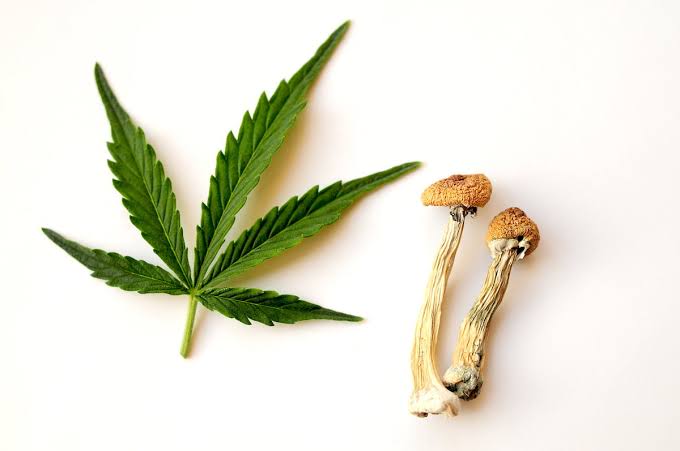
Psilocybin is a classic serotonergic psychedelic. After ingestion, your body converts it to psilocin, which strongly affects serotonin receptors—especially 5-HT2A—and produces dose-dependent changes in perception, emotion, and self-referential thinking.
Cannabis is a different pharmacological world. THC (delta-9-tetrahydrocannabinol) acts primarily on the endocannabinoid system, especially CB1 receptors in the brain, influencing mood, memory, sensory filtering, anxiety circuits, and interoception (how you feel your body from the inside).
So when people ask about mixing weed and magic mushrooms, they are not stacking two versions of the same effect. They are stacking two different “operating systems” on one nervous system—often while both are still booting up.
That is the root of unpredictability.
What “unpredictable” actually means in practice
Unpredictable does not always mean “bad.” It means:
- The same person can have different outcomes on different days
- The same dose of THC can feel mild alone and intense during a psilocybin peak
- A “calming” cannabis strain can still trigger paranoia in the wrong setting
- Delayed cannabis edibles can arrive late and collide with a mushroom peak you thought was settling
If your goal is a manageable magic mushroom experience, the most reliable approach is still psilocybin alone with strong set, setting, and support. Mixing is where variance explodes.
What Psilocybin Does During a Magic Mushroom Trip
Magic mushrooms are not standardized pharmaceutical pills. Potency varies by variety, growing conditions, storage, and product format (dried, freeze-dried, chocolate, gummies, tea). But the general arc of a full psilocybin experience is familiar to many users:
- Come-up: restlessness, nausea for some, sensory sharpening, emotional sensitivity
- Peak: strong perceptual changes, introspection, time distortion, meaning salience
- Comedown: gradual return toward baseline, fatigue, emotional openness
For timing basics, read How Long Do Shrooms Last? For high-dose intensity patterns, see 5 Grams of Shrooms: A Minute-by-Minute Timeline.
Psilocybin can amplify whatever is already present—mood, bodily sensations, unresolved stress, environmental cues. That amplification is a key reason polysubstance psychedelic use is harder to plan than single-substance sessions.
What Cannabis Does—and Why “Weed” Is Not One Substance
When people say they “smoke weed on mushrooms,” they might mean:
- High-THC flower
- THC vape concentrates
- Edible THC gummies or chocolates
- CBD-dominant products (which may still contain THC)
- Balanced THC:CBD products
Each route has a different onset and duration—and that matters enormously when combined with psilocybin.
Smoked or vaped THC: fast onset, fast surprises
Inhaled cannabis often hits within minutes. That speed is exactly what makes it disruptive during a mushroom come-up: the brain is already shifting, then THC adds a rapid second layer before the traveler has footing.
Edible cannabis: the delayed double peak problem
THC edibles can take 30 to 120+ minutes to fully express themselves, then last longer than many people expect. If someone also ate psilocybin edibles (chocolate, gummies), they may now be managing two delayed curves—a common recipe for accidental intensity.
Read: How Do You Dose Psilocybin Edibles? A Practical Math Guide.
CBD and psilocybin: not a reliable “trip stabilizer”
Online forums sometimes recommend CBD for mushroom anxiety. Some individuals report CBD feels calming. Others notice no effect. Some CBD products still contain enough THC to matter—especially for low-tolerance users.
CBD is not a clinically established “off switch” for difficult psilocybin experiences. Treat CBD and psilocybin as another variable, not a safety net.
7 Reasons Mixing Weed and Shrooms Is Unpredictable
1) Two timelines, one nervous system
Psilocybin often unfolds over hours with a gradual rise, a sustained peak, and a long landing. Cannabis—especially inhaled THC—can spike quickly. Your brain may be processing a rising psilocybin curve and a sudden THC pulse at the same time.
That overlap is one of the most common contexts for “I wasn’t ready for that” stories.
2) Cannabis can amplify mushroom trip anxiety and paranoia
THC is well known for increasing anxiety or paranoia in some users, particularly when:
- tolerance is low or rusty
- the environment is overstimulating
- the person is already uncertain or frightened
- the dose is higher than expected (common with edibles and concentrates)
Psilocybin can intensify emotion and suggestibility. THC can add a suspicious, jittery, or “everything means something” tone. Together, that can become a thought loop that is hard to steer.
3) Sensory intensity can flip from beautiful to harsh
Many people take magic mushrooms for visual and sensory richness. THC can sharpen perception too—but not always in a pleasant way. Some users report cannabis on mushrooms makes lights feel aggressive, sounds feel sharp, or textures feel overwhelming.
So “stronger visuals” is not always “better visuals.”
4) Memory and orientation can get harder to track
THC can disrupt short-term memory and continuity (“What was I thinking?”). Psilocybin can disrupt normal self-narrative and time tracking. Combined, some people feel less able to use grounding tools because they cannot hold a stable thread of orientation.
That is one reason trip sitters often treat cannabis as a wildcard during psilocybin sessions.
5) Physical side effects can stack and feed psychological distress
Both cannabis and psilocybin can contribute to:
- nausea or stomach discomfort
- dizziness or lightheadedness
- heart rate changes
- dry mouth and dehydration sensations
- temperature swings (chills/warmth)
During psychedelic states, bodily sensations are often interpreted with high emotional weight. Physical discomfort can become psychological fuel.
Related: Why Do Magic Mushrooms Cause Nausea?
6) Set and setting becomes less forgiving
Set and setting already matter on mushrooms alone. Adding THC often reduces the margin for error. A messy room, harsh lighting, social tension, or unpredictable group dynamics can escalate faster when two psychoactive systems are active.
For sitter tactics, see How to Trip Sit: A 15-Step Playbook.
7) Tolerance does not transfer the way people assume
Regular cannabis users sometimes assume they are “used to altered states.” But cannabis tolerance is not psilocybin preparedness. Likewise, experienced psychonauts can still have unexpectedly difficult cannabis + psilocybin combinations when timing, dose, or setting shifts.
Your friend’s story is not your pharmacology.
Smoking Weed During the Mushroom Come-Up, Peak, and Comedown
None of this is a recommendation to combine substances. These are common timing patterns that explain why outcomes swing.
Weed during the psilocybin come-up (often the riskiest window)
The come-up is when many people feel vulnerable: nausea, restlessness, “is it happening?” energy, and rising sensory sensitivity. Adding THC here—especially via vape or high-THC flower—can spike anxiety before the traveler has psychological traction.
This is a frequent context for mushroom trip anxiety reports involving cannabis.
THC during the psilocybin peak (high variance, high intensity)
Some users report intensified awe, laughter, or visual richness. Others report confusion, paranoia, or a sense of losing the plot. At peak, small THC increases can feel disproportionately large because the brain is already in a highly plastic, highly suggestible state.
If someone is aiming for depth or emotional processing, THC at peak can also distract from integration-quality material by adding noise.
Cannabis on the mushroom comedown (not automatically “safe”)
Some people use cannabis to relax after intense experiences. It can help some individuals unwind. It can also:
- re-trigger anxiety loops when the mind is tired
- worsen next-day fog or emotional rawness
- blur the line between “landing” and “re-dosing” the altered state
For next-day planning (including why “I feel fine” can still be misleading), see How Long After Psilocybin Can You Drive?
Edible THC + Psilocybin Edibles: The Timing Trap Nobody Plans For
One of the most underestimated polysubstance scenarios is edible cannabis + psilocybin edibles (chocolate bars, gummies, drink mixes).
Why it goes wrong so often:
- Both formats can have delayed onset
- People re-dose because “nothing is happening yet”
- Two delayed peaks overlap
- Homogeneity issues in edibles create uneven intensity (one piece hits harder than expected)
This is also where label confusion matters. A mushroom chocolate might be discussed in “grams of mushroom material,” while THC edibles are discussed in milligrams of THC—two different languages that brains merge into one false sense of control.
Pair with: The Science: Why Mushroom Chocolate Hits Different and Magic Mushroom Gummies: Benefits and What to Expect.
What People Commonly Report When Mixing Cannabis and Magic Mushrooms
Community reports are anecdotal, but the patterns are consistent enough to be useful for harm reduction.
“Positive synergy” reports (why people keep trying it)
- Increased laughter and social warmth (more common in low-stress group settings)
- Heightened music appreciation
- Stronger visual saturation
- A sense of “softening” or body relaxation early on (sometimes before anxiety appears)
Difficult experience reports (why sitters worry)
- Paranoia and suspicion of friends or the environment
- Racing, looping thoughts
- Feeling “too high” with no clear off-ramp
- Dissociation or depersonalization sensations
- Panic spikes during transitions (come-up, peak shift, comedown)
- Nausea and dizziness that feel harder to manage than on mushrooms alone
Important nuance: a difficult experience is not always a “bad trip” in the long-run meaning sense—but it can be unsafe in the moment, especially without a sober sitter and a stable environment.
For general difficult-experience framing, see How Shrooms Make You Feel and What Are the Risks of Psychedelics?
Who Should Be Especially Careful About Weed and Psilocybin
Some people are more likely to have chaotic outcomes when mixing. Extra caution (or avoiding mixing entirely) is reasonable if you:
- Are newer to psilocybin or returning after a long break
- Have a history of cannabis-induced anxiety or paranoia
- Are already sleep-deprived, dehydrated, or emotionally unstable going in
- Are in an unfamiliar setting or with people you do not fully trust
- Are combining additional substances (including alcohol)
- Are using high-potency concentrates or unfamiliar edibles
- Have medical conditions affected by heart rate, blood pressure, or psychiatric stability (talk to a qualified clinician—this article cannot assess individual risk)
If you take medications that affect serotonin signaling, read Psilocybin + SSRIs/SNRIs: What People Say vs What Studies Suggest before making any changes or experiments. Do not alter prescribed medication based on a blog.
Harm Reduction If Cannabis Enters the Picture Mid-Trip
If someone already consumed cannabis during a psilocybin session and anxiety rises, the best interventions are usually environmental and relational—not adding more substances.
Sitter moves that often help
- Lower the lights; remove harsh overhead LEDs and flashing visuals
- Reduce music intensity; switch to minimal or near-silence if lyrics feel intrusive
- Offer one simple thing at a time: water, blanket, bathroom, fresh air (if safe and agreed)
- Use short reassurance: “You’re safe. I’m here. This will pass.”
- Change one variable at a time (music OR lighting OR room), then wait
Phrases that usually help vs phrases that often backfire
Usually helpful:
- “You’re safe right now.”
- “Want the lights lower?”
- “We can sit quietly.”
Often backfires:
- “You’re fine, stop tripping.” (invalidating)
- “Why are you scared?” (forces analysis)
- “Just smoke more CBD, it’ll fix it.” (adds another variable)
If distress is severe, sustained, or escalating, treat it as a real-world safety issue—not a willpower contest.
Cannabis vs Alcohol With Psilocybin: Different Risks, Same Harm-Reduction Principle
People often compare polysubstance choices. Alcohol and cannabis are not identical companions for psilocybin.
Alcohol commonly adds dehydration, nausea, motor impairment, and judgment errors—people may misread how impaired they are. Read: Is It Safe to Mix Alcohol with Psilocybin?
Cannabis more often adds anxiety/paranoia loops, sensory harshness, and timing surprises—especially with edibles and concentrates.
The shared harm-reduction principle is simple: if you are trying to understand psilocybin, adding second substances makes the data noisy and the experience harder to support.
Microdosing Mushrooms and Using Cannabis: A Separate Kind of Unpredictability
Some people microdose psilocybin while using cannabis regularly. Even when a psilocybin dose feels “sub-perceptual,” interaction reports still vary:
- Some feel scattered or anxious
- Some feel fine and cannot isolate which substance caused what
- Some unknowingly build a story about microdosing benefits that is actually confounded by cannabis habits
If your goal is clean self-observation, separating substances makes interpretation easier. For microdosing basics, see Microdosing 101 and Psilocybin Tolerance.
The Next Day: Why Cannabis + Psilocybin Can Leave a “Foggy Landing”
Even when the main effects end, people sometimes report:
- poor sleep or restless sleep
- emotional sensitivity
- mental fog or slower focus
- anxiety hangover (especially after high-THC combinations)
That matters for real-life responsibilities—not just because of impairment ethics, but because the combo can affect recovery quality. Plan the day after like part of the session: hydration, food, rest, low social demand, and no safety-sensitive tasks if you do not feel fully baseline.
Frequently Asked Questions
Can you smoke weed on mushrooms safely?
There is no universally “safe” way to mix psychoactive substances. Many harm-reduction-oriented communities advise learning psilocybin on its own first, with a sober sitter and a stable setting. If cannabis is added, outcomes are highly variable.
Does weed make shrooms stronger?
Sometimes it feels stronger; sometimes it feels stranger, anxious, or fragmented. “Stronger” is not always enjoyable, and it is not consistent across sessions.
Why do I get paranoid when I mix THC and psilocybin?
THC can increase anxiety and paranoia in some users, while psilocybin amplifies emotion and suggestibility. That combination can turn small worries into loops—especially during come-up or in overstimulating environments.
Are cannabis edibles more risky with mushroom edibles?
They can be, because both may have delayed onset. People often re-dose too early, then get hit by overlapping peaks. Edible homogeneity issues can make intensity uneven.
Does CBD cancel out a mushroom trip?
Not reliably. CBD is not an established clinical “trip stopper” for psilocybin. Products labeled CBD may still contain THC.
Is it okay to use cannabis only on the comedown?
Some people do; some regret it. Comedown cannabis can relax—or re-trigger anxiety and worsen next-day fog. It is still an added variable.
Does cannabis tolerance help?
Not necessarily. Familiarity with THC does not guarantee a smooth psilocybin interaction, especially with edibles, concentrates, or high-stress settings.
What should a trip sitter do if someone smokes weed mid-trip and panics?
Stabilize the environment: lower lights, simplify sound, offer water/blanket, use short reassurance, avoid arguing about their perceptions, and change one variable at a time. Seek emergency help if safety is in question.
The Bottom Line
Cannabis and psilocybin can produce wildly different outcomes from session to session because they act on different brain systems, hit on different timelines, and multiply set-and-setting sensitivity. That is why mixing weed and shrooms remains popular in culture—but unpredictable in practice.
If you want the clearest, most supportable magic mushroom experience, treat polysubstance use as an advanced complication—not a default. Prepare the session, keep a sober sitter when appropriate, and plan the full arc including sleep and the next day.
Explore more on our Magic Mushroom Blog.
Sources (general references)
- Peer-reviewed reviews on psilocybin/psilocin pharmacology and 5-HT2A receptor mechanisms
- Peer-reviewed literature on THC/CB1 receptor effects, anxiety response, and route-dependent pharmacokinetics (inhaled vs oral)
- Psychedelic harm-reduction and challenging-experience research literature (survey and qualitative studies on difficult experiences and support)
Disclaimer: Educational content only. Not medical advice. Never drive impaired. Laws vary by jurisdiction. Consult a qualified professional for personal medical or medication questions.